

Champagne
Nine authorised grapes. Four sub-regions. Two schools: grower and house. Everything we wrote about it, in one place.
1 · Start here
What Champagne is, how it comes to be, and why it is wine above all.
Why Champagne Is Expensive: The Price Explained
Champagne starts at 30 euros a bottle. What sits inside that price: land, labour, ageing, marketing. An honest breakdown.
Champagne vs Prosecco, Cava and other sparkling
Champagne, Crémant, Cava, Prosecco, Franciacorta, English sparkling. Method, grapes and price-quality laid out side by side.
The Champagne AOC cahier des charges explained
What the Champagne AOC actually requires: area, grapes, pruning, yield, press quota, second fermentation, ageing, alcohol and dosage.
Crémant vs Champagne: Just as Good for Less?
Crémant vs champagne: same method, often the same grapes, a third of the price. Which to choose, when, and what you taste in the glass.
2 · Grapes
Chardonnay, Pinot Noir and Meunier drive the area. Plus Arbane, Petit Meslier, Pinot Blanc, Pinot Gris, Chardonnay Rose (2025) and Voltis (VIFA).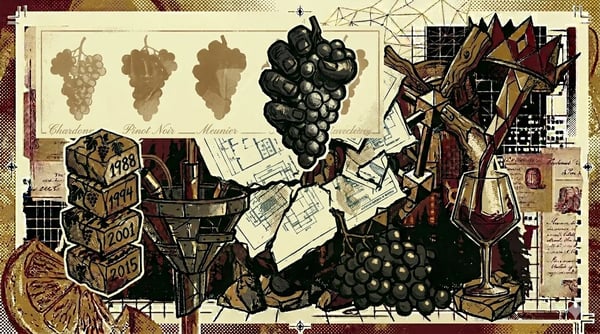
Arbane and the forgotten Champagne grapes
Four forgotten Champagne grapes together cover 0.3 percent of the area. What they do, where they survive, and why growers are replanting them.
Pinot Meunier: from peasant grape to grower icon
Pinot Meunier was long the underrated third grape of Champagne. Today growers build mono-cuvées on it that have given the variety its due.
Pinot Noir in Champagne: power, flesh and structure
Pinot Noir is the largest grape variety in Champagne at 38 percent. On the Montagne and in the Aube it brings body, red fruit and great ageing capacity.
Chardonnay in Champagne: the white backbone
Chardonnay in Champagne is more than a blend partner. On chalk it brings chalky tension, length of finish and the base of every Blanc de Blancs.
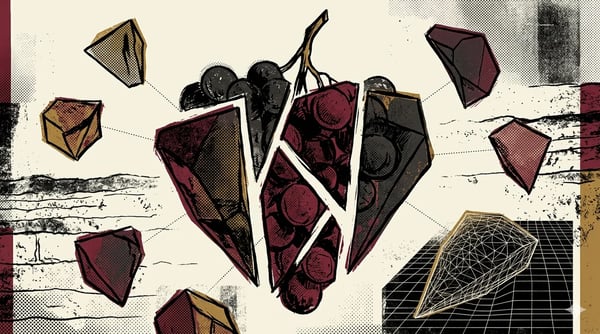
The nine grapes of Champagne (not three)
Champagne now allows nine grape varieties. Eight vinifera plus Voltis as an experimental hybrid. What they do, where they grow, and why it matters.
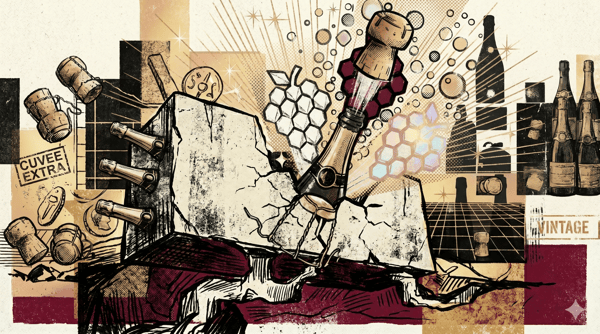
Champagne: Grapes, Region and Styles
Complete guide to Champagne wine: grapes, appellations, styles from blanc de blancs to rosé, grower champagne versus the grandes maisons, and what cuvées mean.
3 · Styles
Brut Nature, Extra Brut, Brut, Demi-Sec, Rosé, Blanc de Blancs, Blanc de Noirs, Prestige Cuvée.
Vintage vs Non-Vintage Champagne: What Differs
The split between vintage and non-vintage Champagne sits in blending philosophy, ageing requirements and vintage expression. When to pick which one?
Prestige Cuvée Champagne: What Sets It Apart
A prestige cuvée is the top of a Champagne house. What sets Dom Pérignon, Cristal, Comtes and La Grande Dame apart from an ordinary vintage.
Rosé Champagne: saignée versus assemblage explained
Rosé Champagne comes from two fundamentally different methods: saignée (maceration) or assemblage (blending red and white). What each one does.
Blanc de Blancs: Champagne from white grapes alone
Blanc de Blancs Champagne is made from white grapes only, almost always 100 percent Chardonnay from the Côte des Blancs. The style, villages and icons.
Brut Nature and Extra Brut: Champagne without a mask
Brut Nature and Extra Brut Champagne carry little to no dosage. What the numbers mean, which houses lead the style, and how it tastes.
Demi-Sec and Doux Champagne: the forgotten sweet
Demi-Sec and Doux Champagne were once the standard. What they are, why they fell out of fashion, and where they still pair brilliantly.
Blanc de Noirs: white Champagne from black grapes
Blanc de Noirs is white Champagne made only from Pinot Noir and/or Meunier. How white comes from black grapes, and where the style is strongest.
Champagne styles: from Brut Nature to Rosé
The eight Champagne styles explained: from Brut Nature to Demi-Sec, plus Blanc de Blancs, Blanc de Noirs, Rosé and Prestige Cuvée. What dosage means.
4 · Production & method
Tirage, autolysis, riddling, disgorgement, dosage. What second fermentation adds and how long it sits on the lees.
Autolysis: how Champagne earns its brioche
Autolysis is the self-breakdown of dead yeast on the lees in the bottle. What it does biochemically, how long it takes and why it gives Champagne brioche.
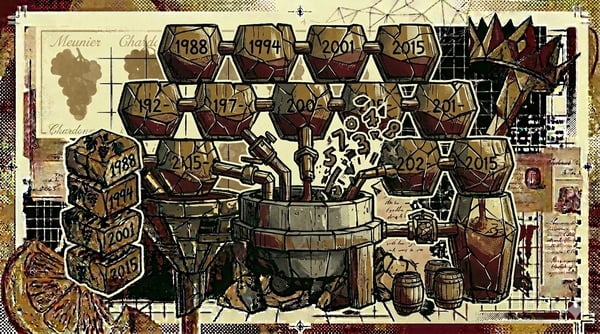
Champagne blending and reserve wines
Blending with reserve wines is the technique that makes Champagne consistent year after year. How houses keep their style, and which solera systems work.
Champagne Riddling and Disgorgement Explained
Riddling collects the yeast deposit in the neck, disgorgement ejects it. Manual on pupitres or by giropalette, à la glace or à la volée.
Champagne dosage and the liqueur d'expédition
Dosage sets the taste of Champagne after disgorgement. What the liqueur d'expédition is, how much sugar sits where, and why modern houses go lower.
Méthode champenoise: step by step
How Champagne is made: from pressing and first fermentation through tirage, autolysis and remuage to dégorgement and dosage. Every step explained.
5 · Region & terroir
Montagne de Reims, Côte des Blancs, Vallée de la Marne, Côte des Bar. Plus Grand Cru and Premier Cru explained.
Montagne de Reims: the Pinot Noir kingdom
The Montagne de Reims is the horseshoe-shaped wooded plateau south of Reims, where Pinot Noir on chalk and clay delivers the backbone of Champagne.
Côte des Blancs: the Chardonnay heart of Champagne
The Côte des Blancs is the sub-region south of Épernay where Chardonnay finds its classical expression on pure chalk. Geography, villages and style.
Champagne Grand Cru: What the Label Really Means
What Grand Cru and Premier Cru really mean in Champagne. The échelle des crus, its 2010 abolition, and what the terms are worth today.
Côte des Bar: Champagne's southern outsider
The Côte des Bar in the Aube sits 100 km south of Reims on Kimmeridgian marl. Pinot Noir-driven and the epicentre of grower Champagne.
Vallée de la Marne: the Meunier bastion of Champagne
The Vallée de la Marne follows the river west from Épernay. Meunier dominates on clay and marl, with the grower revolution as a constant thread.
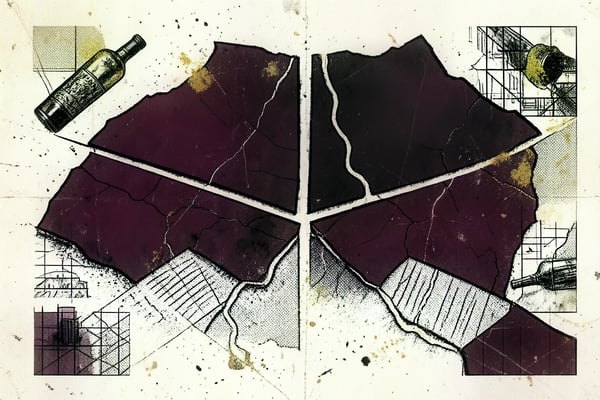
Champagne region and terroir: four subregions, one AOC
Montagne de Reims, Côte des Blancs, Vallée de la Marne and Côte des Bar. The four subregions of Champagne, their soils and what Grand Cru means.
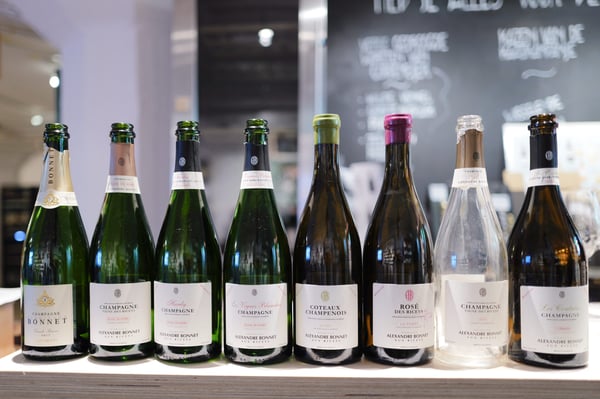
Les Riceys: Champagne's Best-Kept Secret
Les Riceys lies at the southern edge of Champagne, near Burgundy. This village legally produces three different AOC wines, including the rare Rosé des Riceys.
6 · History & makers
Dom Pérignon, the big houses versus the grower revolution. The story behind the glass.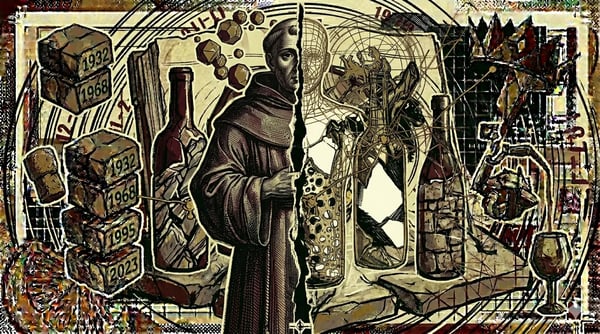
Dom Pérignon: myth versus reality
Dom Pérignon is often called 'the inventor of Champagne'. The reality differs. What the monk actually did, and what marketing made of him.
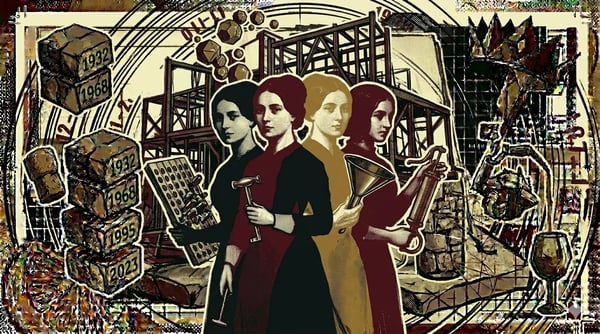
Champagne Widows: Five Women Who Built the Industry
Clicquot, Pommery, Bollinger, Roederer and Laurent-Perrier were houses built or saved by widows. Their stories are the modern Champagne industry.
Grower Champagne: How Small Farms Took Over
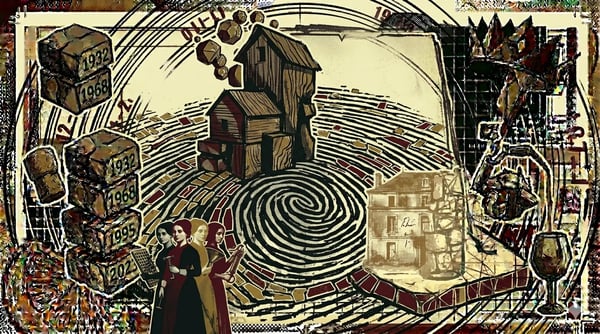
Since 2000, small growers (récoltants-manipulants) have reshaped how Champagne is seen. Selosse, Egly-Ouriet, Larmandier and the quiet rise.
Champagne history: Dom Pérignon to the grower
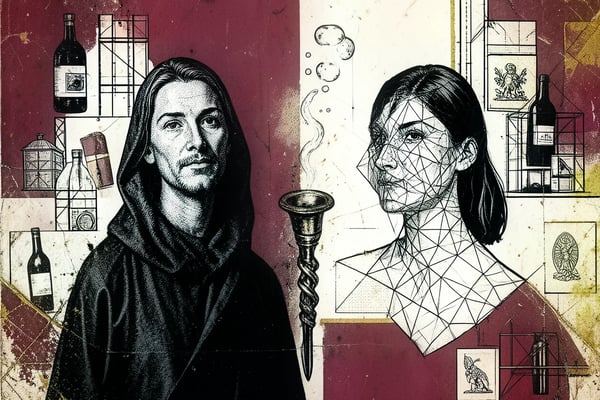
How Champagne emerged, how the big houses shaped its image and how the grower movement has reopened the region since the 1980s. Four centuries on one page.
7 · Glossary
The recurring Champagne terms — explained in one sentence, clickable to the full lexicon entry.Ambonnay
Grand Cru village on the southern slopes of the Montagne de Reims. 387 hectares, 81 percent Pinot Noir. Home of Egly-Ouriet and Krug Clos d'Ambonnay.
→GrapeArbane
Rare white grape of Champagne, less than 0.3 percent of plantings. Late-ripening, high acidity. Preserved by a handful of growers in the Aube.
→TechniqueAutolysis
Breakdown of dead yeast cells during extended lees ageing in the bottle. Source of brioche, hazelnut and creamy texture in Champagne and other traditional-method sparkling wines.
→RegionAvize
Grand Cru village on the Côte des Blancs, near 100 percent Chardonnay. Central position on the Montagne d'Avize, home to a string of leading growers.
→RegionAÿ Grand Cru
Historic village on the southern slope of the Montagne de Reims, known for powerful Pinot Noir and one of the seventeen Grand Cru communes of Champagne.
→StyleBlanc de Blancs
Champagne made from white grapes only, which in practice almost always means one hundred percent Chardonnay.
→StyleBlanc de Noirs
White Champagne made entirely from black grapes, typically Pinot Noir, Pinot Meunier or a blend of both.
→RegionBouzy
Grand Cru village on the southern Montagne de Reims. 378 hectares, 87 percent Pinot Noir. Known for Bouzy Rouge, a still red Coteaux Champenois.
→StyleBrut
Dosage category for sparkling wine: up to 12 g/l residual sugar. The de-facto standard for non-vintage Champagne, around 95 percent of production.
→StyleBrut Nature
Strictest dosage category: 0 to 3 g/l residual sugar, no added sugar. Also Pas Dosé or Zéro Dosage. Shows the base wine without mercy.
→GrapeChardonnay
White grape, about 30 percent of Champagne's vineyard area. Near-monoculture on the Côte des Blancs. Base of nearly every Blanc de Blancs.
→GrapeChardonnay Rose
Pink-skinned natural mutation of Chardonnay. Officially added to the Champagne AOC in June 2025. Genetically identical to white Chardonnay, only the skin colour differs.
→This is the reference. For reviews, opinion and podcast conversations about Champagne: see the blocks below.
About Champagne, not in the Library
Reviews, opinion and market news about Champagne are under Articles. 30 pieces.
Champagne on Sparks (podcast)
Conversations with champagnistes and cellar masters. 14 episodes.
Work together around Champagne
Do you import Champagne in the Netherlands or Belgium? Run a house looking for a Dutch-speaking audience? Give masterclasses or tastings? I write, taste and speak.
Work with me →