

How to Taste Champagne Like a Specialist
Forget the flute. Pour a third of a glass. Taste in four steps and notice what is actually in your glass, from bubble to finish.
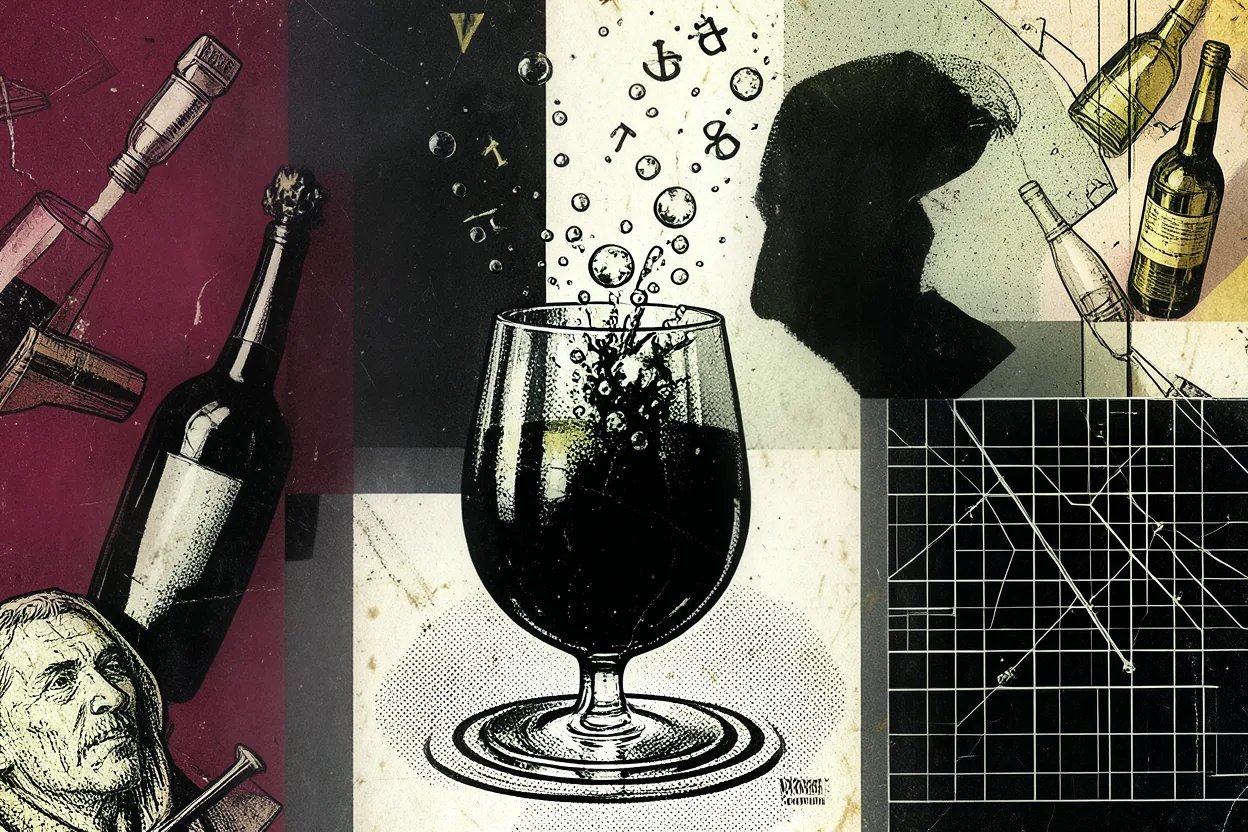
Most people drink Champagne the same way every time: cold, fast, standing up at a party. That is fine. But you have probably noticed that a grower Champagne from a single vineyard tastes nothing like a prestige cuvée. Or that the same bottle says different things on two different nights. Tasting Champagne like a specialist is not ceremony. It is slowing down enough to notice what is in the glass.
The CIVC (Comité Champagne) has a structured method that sommeliers use everywhere. Here it is, stripped of jargon.
The Glass First
Forget the flute. A tulip-shaped white wine glass or an INAO tasting glass works far better. The flute concentrates CO₂ right under your nose, masks the aromas, and leaves you with prickle. A wider opening gives the aromatics room.
Pour about a third. No more. You want headspace for the aromas to gather.
Visual Assessment
Hold the glass against a white background and look at three things.
Colour. Non-vintage Champagne runs pale gold to straw yellow. Blanc de Blancs leans pale gold with greenish highlights. Blanc de Noirs is deeper gold. Aged Champagnes pick up amber and copper. Rosé ranges from pale salmon to deeper pink depending on production.
Bubbles. Fine, persistent bubbles rising in steady streams (the cordon) signal quality. Larger, irregular bubbles suggest a young wine or a glass with soap residue (which kills bubble formation).
Clarity. Most Champagnes are crystal clear. Slight haze in a minimally filtered grower is not necessarily a fault.
The Nose
Bring the glass up without swirling. CO₂ carries aromas naturally. Take a first impression. Then a brief, gentle swirl (less vigorous than for still wine) and nose again.
Three categories.
Primary (from the grape):
Chardonnay: citrus, green apple, chalk, white flowers Pinot Noir: red fruit, cherry, structure Meunier: round red fruit, softness, sometimes a rustic earthy edge
Secondary (from fermentation): brioche, bread dough, cream, butter. These yeast-derived notes develop during alcoholic and malolactic fermentation.
Tertiary (from ageing, especially in prestige cuvées): toasted bread, hazelnut, walnut, honey, dried fruit, smoke, mushroom. These come from time on lees and in bottle.
Also note intensity (expressive or closed?), complexity (how many layers?), and condition (vinegar, brett, reduction?).
The Palate
Take a small sip, hold it briefly, then swallow. You are assessing:
Sweetness. Most Champagne is Brut (under 12 g/L residual sugar), dry to off-dry. Extra Brut and Brut Nature have almost no dosage and taste austere. Sec and Demi-sec are noticeably sweet.
Acidity. High. That is what gives Champagne its freshness, length and ageing potential. Lively and mouthwatering, not sharp or aggressive.
Mousse. The texture of bubbles in your mouth. Fine and creamy integrates with the wine. Coarse or aggressive points to younger wine or sloppier production.
Body. Blanc de Blancs is usually lighter and more linear. Blanc de Noirs is fuller and more structured. Prestige cuvées have greater depth from older vine material and longer ageing.
Length. How long does the flavour persist after swallowing? A long, complex finish is one of the clearest quality markers.
Quality Indicators
Balance. Acidity, fruit and dosage in harmony.
Complexity. Multiple layers that unfold over time.
Length. At least 10 to 15 seconds in a quality wine.
Autolytic character. The toasty, bready quality from extended lees ageing.
Terroir expression. Especially in grower Champagnes, the ability to taste a specific village or vineyard.
Serving Conditions
Temperature. 9 to 12°C for non-vintage, 10 to 13°C for aged or prestige. Too cold closes the wine. Too warm coarsens the mousse.
Glass. Tulip or white wine glass. Not a flute, not a coupe.
Timing. Open the bottle 15 to 20 minutes before serving. Let it breathe briefly in the glass.
Order. Lightest to richest, younger to older, driest to sweetest.
A Practical Framework
For any Champagne, work through these in order:
What do I see? (colour, bubbles, clarity)
What do I smell? (fruit, yeast, age)
What do I taste? (sweetness, acidity, mousse, body)
How long is the finish?
What does this tell me about style, origin and age?
The more you run through this, the less you have to think about it. And the more clearly you will tell a young NV apart from a blanc de blancs grower or a vintage prestige cuvée.
Frequently asked questions
Which glass is best for Champagne?
A tulip-shaped white wine glass or an INAO tasting glass, not a flute and not a coupe. The flute funnels CO₂ straight up your nose, masking the aromas and leaving mostly prickle. Fill it a third full so the aromas have room to gather above the wine.
What temperature should Champagne be served at?
Nine to twelve degrees for a non-vintage, ten to thirteen for a mature or prestige cuvée. Too cold shuts the wine down; too warm coarsens the mousse. Open the bottle fifteen to twenty minutes before pouring.
How do you spot good Champagne in the glass?
By fine, persistent bubbles rising in a steady stream, the cordon. Large, irregular bubbles point to a young wine or to soap residue in the glass, since soap destroys bubble formation. Beyond that: balance between acidity, fruit and dosage, and a finish of at least ten to fifteen seconds.
Sources
- Comité Champagne (CIVC): champagne.fr
- INAO, Cahier des charges Champagne: inao.gouv.fr
More on Wine Guide
How to Spot Real Champagne: What Fakes It on the Shelf
Aviva at 9.29 euros, Piper-Heidsieck at 45.99, side by side on the shelf. Why only one may call itself champagne, and how to tell them apart.
Read on →
Is Austria really the top organic wine country?
Austria leads on organic wine by share, not by claims. Not 35 percent but 25.0 percent of its vineyards are certified organic. Here is what the figures say.
Read on →
The solera method in Champagne, explained
The solera method in Champagne: how a perpetual reserve works, why it is rare, and how Monmarthe ages 100% Meunier in one. Borrowed from sherry in Jerez.
Read on →