

The solera method in Champagne, explained
The solera method in Champagne: how a perpetual reserve works, why it is rare, and how Monmarthe ages 100% Meunier in one. Borrowed from sherry in Jerez.

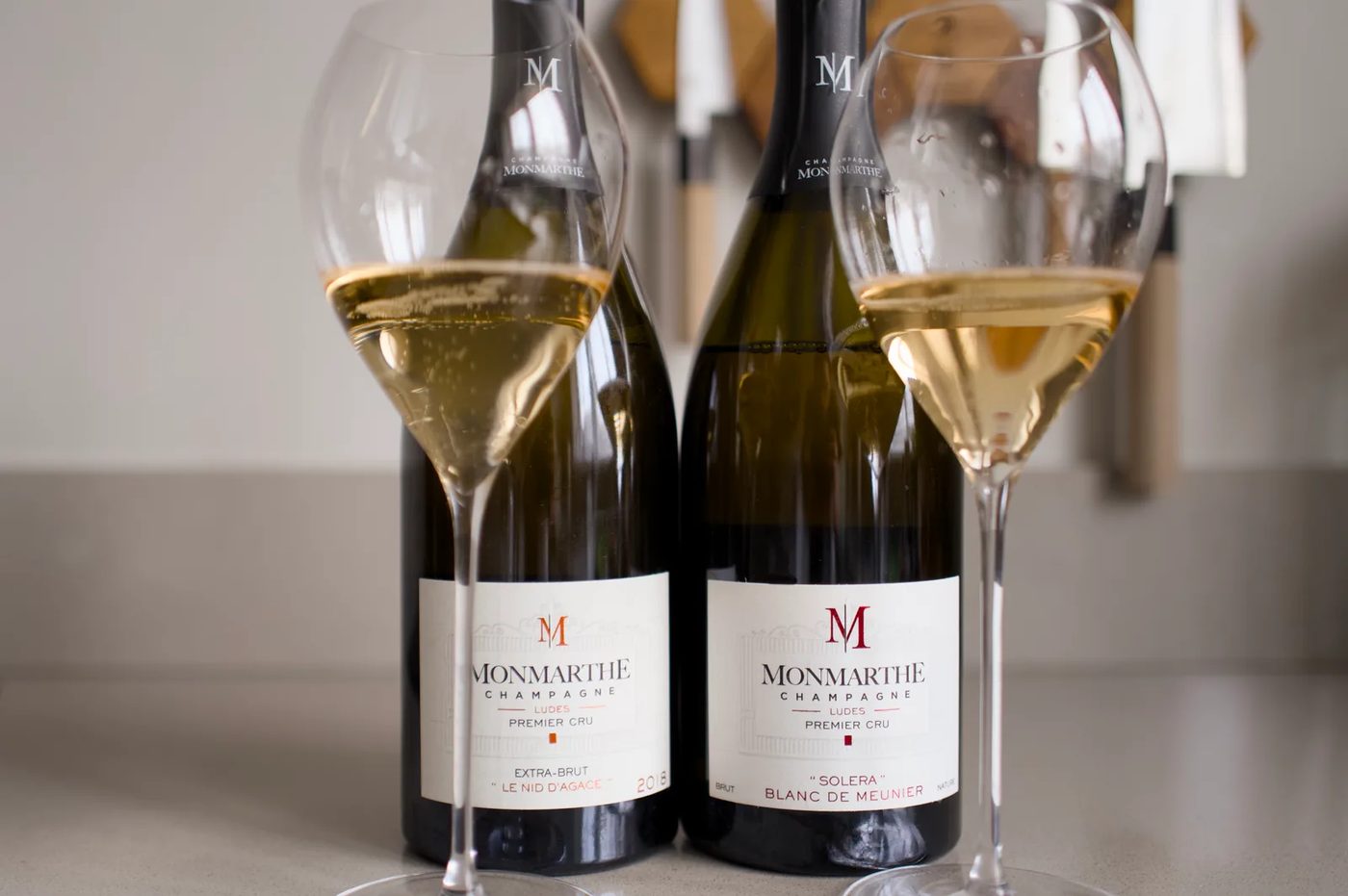
The solera method in Champagne is borrowed from a region more than a thousand kilometres away. In Jerez, in the south of Spain, sherry has aged for centuries in a system of barrels that never fully empties. Each year you draw a portion off and top it up with young wine. What stays behind grows more complex. A handful of Champagne makers apply the same principle, and it gives you something a straight vintage wine cannot.
I ran into the method at Champagne Monmarthe in Ludes. Gauthier Monmarthe ages 100% Pinot Meunier in a perpetual reserve there. Time to explain how it works, and why it happens so rarely.
What a solera is
A solera is not a barrel, it is a system. You start with a quantity of wine in a vat or tank. Each year you draw off a portion to bottle, and you replenish that same portion with wine from the new harvest. The vat never empties.
The result is that a trace of every previous harvest stays inside. This year’s wine mixes with last year’s, and the year before, and so on back to the beginning. The longer the system runs, the more vintages sit in the glass and the deeper the complexity.
In Jerez this often happens across several rows of barrels, the criaderas, where the wine moves down step by step. In Champagne the execution is usually simpler: one reserve you add to and draw from.
Why it is rare in Champagne
Blending is in the DNA of Champagne. The classic art is mixing plots, grapes and vintages into a recognisable house style that tastes the same every year. A non-vintage Champagne is meant to be consistent. That is the opposite of what a solera does, because a solera changes a little every year.
Patience comes on top of that. A solera that has only run a few years does not yet give the layering the system is known for. You invest in something that only shows its value after ten or twenty years. For a large house making thousands of bottles per style, that is a hard sum. For an independent grower wanting to make a statement on a single plot, it is ideal.
How Monmarthe does it
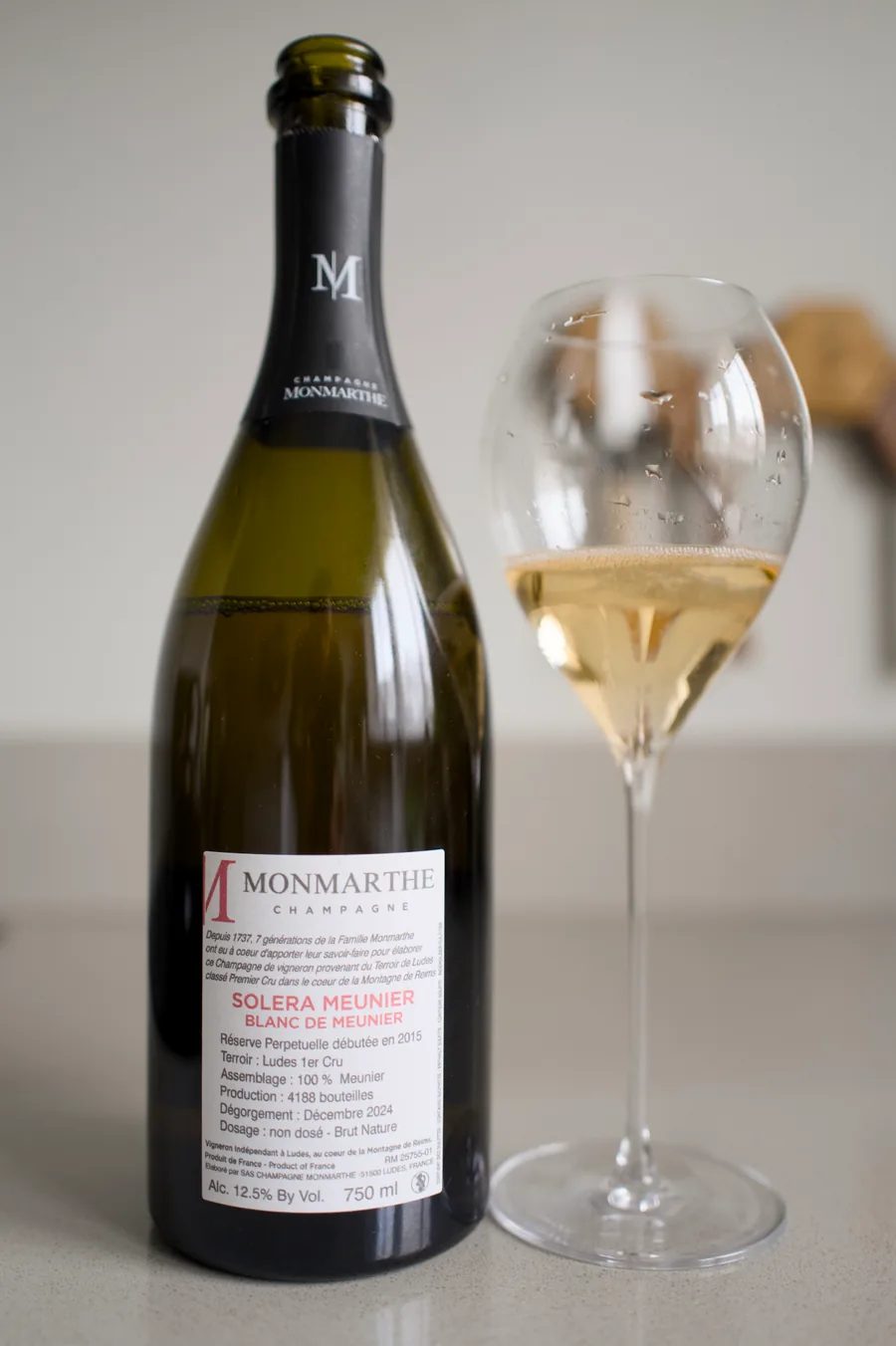
Gauthier Monmarthe started his solera in 2015. The wine sits in the estate’s oldest concrete vat, installed by his great-grandfather. That choice for concrete is deliberate. Concrete holds the temperature steady and preserves the freshness and the fruit, without adding flavour the way oak would.
The mechanism is precise. Each year he draws off roughly 30% for the release and tops it up with wine from the new harvest. Of that new harvest, 40% first goes through a barrel vinification before being added to the reserve. The rest rests in concrete.
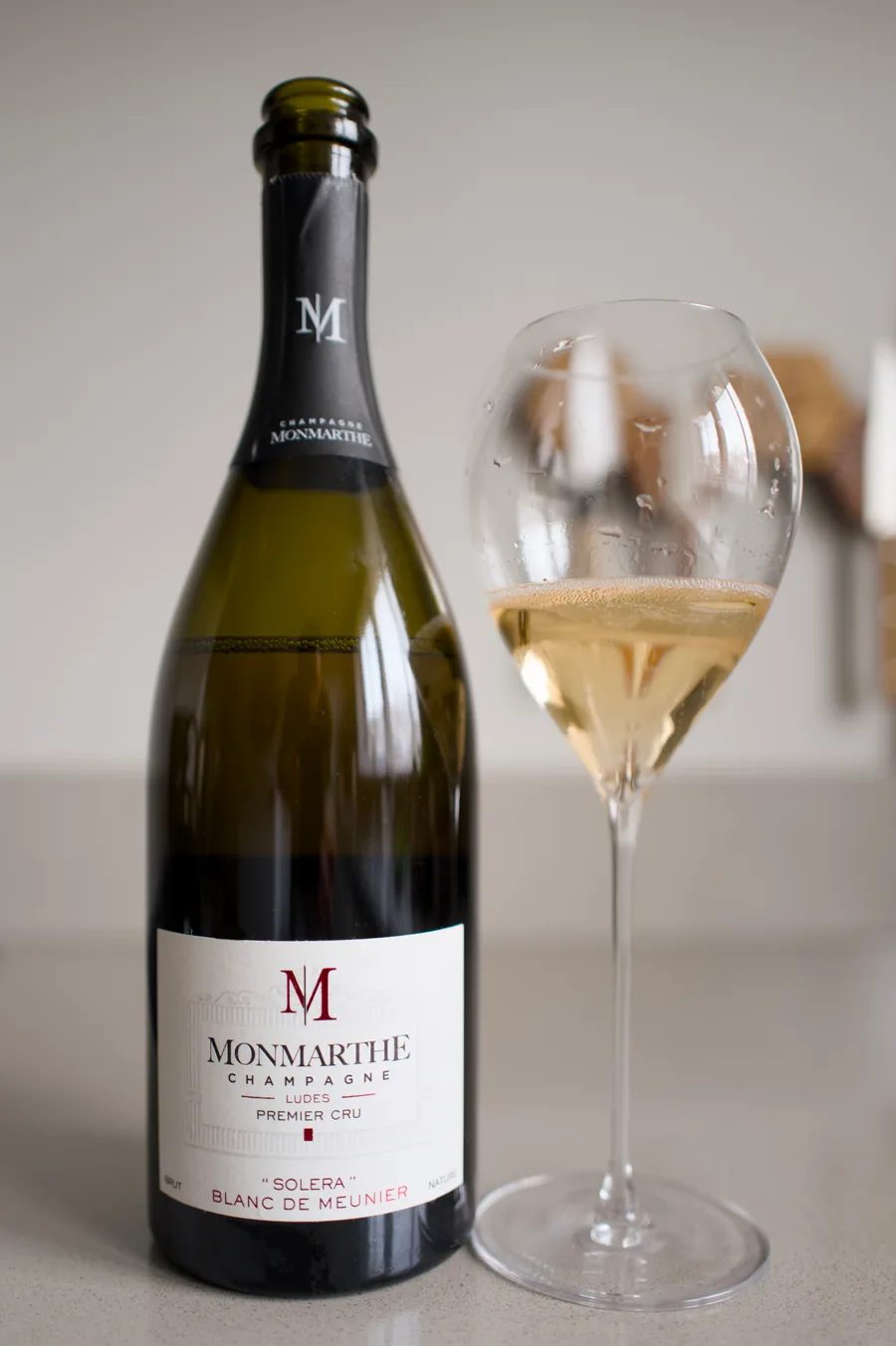
The first release was a blend of 70% reserve, built from seven vintages, and 30% from the 2022 harvest. One hundred percent Meunier, grown on chalk rather than the clay of the Vallée de la Marne where the grape usually comes from.
And then the surprise: no sugar goes in. “At the end we don’t need any sugar at all,” Gauthier says. The fruit and the ageing give enough apparent sweetness. So it became a Brut Nature, zero dosage. There are 4,188 bottles.
Concrete, oak or steel
The material of the reserve shapes what the solera does. Oak gives micro-oxidation and flavour, and pushes a wine towards nuts and vanilla. Stainless steel is neutral and tight, but gives little texture back. Concrete sits in between: it barely breathes, keeps the temperature in check and lets the fruit lead.
For a grape like Meunier on chalk, where Gauthier wants to keep the pure fruit tones, that is the logical choice. The wine does not taste of the vat. It tastes of a place and a method.
More about the estate: champagne-monmarthe.com
Frequently asked questions
What is the difference between a solera and an ordinary reserve wine in Champagne?
Almost every house keeps reserve wines on hand to season the non-vintage blend. A solera goes a step further: it is a running system you draw from and top up every year, so a trace of every harvest since the start ends up in the bottle. An ordinary reserve is a stock, a solera is a living blend that keeps growing.
Can you cellar a solera Champagne?
You can, but the heart of the method already lies in the ageing before bottling. The complexity comes from the stacked vintages in the reserve, not only from bottle age. A Brut Nature with no dosage, like Monmarthe’s, is also drinkable straight away and does not need to wait.
Why don’t you taste vat flavour when the wine sits in concrete?
Concrete adds no aroma. It mainly manages temperature and protects the fruit. So you taste the grape and the place, not the material of the reserve, unlike ageing in oak.
Sources
- Primary source: Sparks by VinoVonk, episode 38 with Gauthier Monmarthe (recording and show notes)
- Producer: champagne-monmarthe.com
- Comité Champagne (CIVC): champagne.fr
- Consejo Regulador Jerez (solera tradition): sherry.wine
More on Wine Guide

Is Austria really the top organic wine country?
Austria leads on organic wine by share, not by claims. Not 35 percent but 25.0 percent of its vineyards are certified organic. Here is what the figures say.
Read on →
How to Read a Champagne Label: Everything That Matters
A Champagne label hides more useful information than almost any other wine label in the world. Two letters and a number tell you who actually made the wine.
Read on →
What Is Grüner Veltliner? Austria's Signature White
Grüner Veltliner is Austria's signature white. Crisp, peppery, food-friendly. Here's what makes it distinctive and how to drink it well.
Read on →