Tasting Methodology

A score without context is noise. An 8.2 for a young Barolo means something completely different from an 8.2 for a Muscadet — unless you know how that score was reached.

Here’s how I taste, why I make the choices I make, and what my scores mean for you as a reader.

Tasting conditions

Temperature shapes everything. A white wine served too cold locks its nose shut. A red wine that is too warm loses structure and turns flat. I taste at controlled temperatures:

  • White and rosé wines: 10–12°C (50–54°F)
  • Sparkling wines and Champagne: 8–10°C (46–50°F)
  • Light reds (Pinot Noir, Gamay): 14–16°C (57–61°F)
  • Full-bodied reds: 16–18°C (61–64°F)
  • Sweet and fortified wines: 12–14°C (54–57°F)

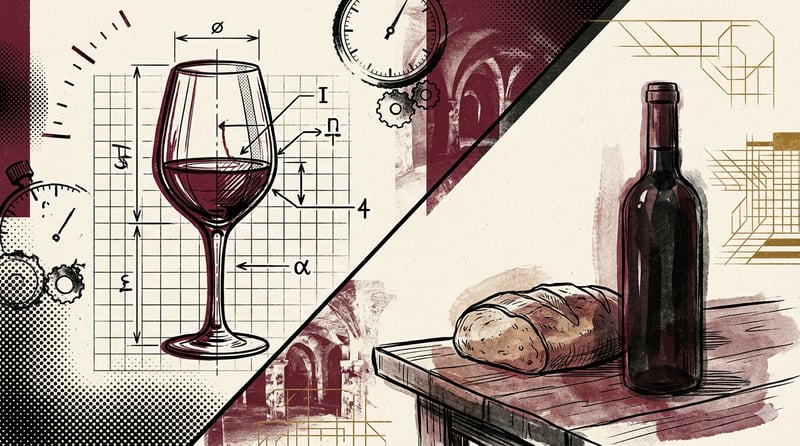
I use ISO-standard tasting glasses as a baseline. For Champagne, I switch to a tulip glass — not a flûte, which suffocates the nose. For specific styles (oxidative whites, heavy reds), I use the appropriate format.

I taste in neutral conditions: no coffee, strong food, or fragrance in the hours beforehand. Lighting is neutral — no yellow-tinted artificial light that distorts colour assessment.

How I evaluate

I use the WSET systematic approach as a framework: appearance, nose, palate, and conclusions, not as a bureaucratic checklist, but because the sequence works. The nose tells you what to expect on the palate. The palate confirms, contradicts, or deepens it.

Appearance — colour, clarity, depth, bead formation in sparkling wines.

Nose — primary aromas (fruit, floral, herbal), secondary (fermentation-derived: yeast, butter, cream), tertiary (maturation: oak, leather, earth, oxidative notes). I note intensity and complexity separately.

Palate — structure first: acidity, tannin (in reds), sweetness, alcohol warmth, body. Then the flavour profile and finish. Finish length is one of the most reliable quality indicators I use.

Conclusions — quality assessment, ageing potential, food pairing relevance, where applicable.

The scoring system

I use a 10-point scale with one decimal place.

ScoreMeaning
9.0 – 10.0Exceptional. A reference wine. Taste it if you can.
8.5 – 8.9Outstanding. A wine I actively recommend and buy myself again and again.
8.0 – 8.4Very good. Clearly above average, with character and depth.
7.5 – 7.9Good. Solid, enjoyable, worth the money. Not a revelation.
7.0 – 7.4Correct. Meets expectations, nothing more.
Below 7.0I rarely publish scores below 7.0. If I don’t like a wine, I usually don’t write about it.

A score always reflects value for money within its segment. An 8.0 for a €12 wine carries more weight than an 8.0 for an €80 bottle.

Blind or non-blind?

I taste non-blind for published reviews. That’s a deliberate choice.

My reviews aren’t clinical assessments — they’re stories. The context of a wine (who makes it, where, with what intent, why it matters) is part of what I want to convey. Blind tasting removes exactly that.

For personal calibration and study — WSET exercises, comparative tastings, horizontal flights — I do taste blind. It keeps me honest.

How many times do I taste a wine?

  • Event coverage: one moment, on-site. I note impressions and give a general assessment, not a formal score.
  • Wine reviews: minimum two pours from the same bottle, at two moments within the same session (immediately after opening and after 20–30 minutes). Oxidation and temperature changes reveal what the first glass hides.
  • Cellar candidates: I revisit wines worth ageing after 6–12 months, sometimes longer. A score for a young Nebbiolo or a green Riesling is always provisional.

What this means for you

A score of 8.5 or above on VinoVonk is a wine I recommend without qualification. Not “maybe if you like this style” —buy it.

Everything between 7.5 and 8.4 is solid. These are wines I drink with genuine pleasure, but where context — your taste, the occasion, the price — determines whether it’s right for you.

I publish scores only on formal wine reviews, not on event reports or tasting journeys.

Questions about how I assessed a specific wine? Drop me a message via the contact page.