

Champagne Monmarthe Le Nid d'Agace 2018
Champagne Monmarthe Le Nid d'Agace 2018: co-planted Extra Brut from Ludes, six to seven years on the lees, eight months in foudre. Full, and still fresh.

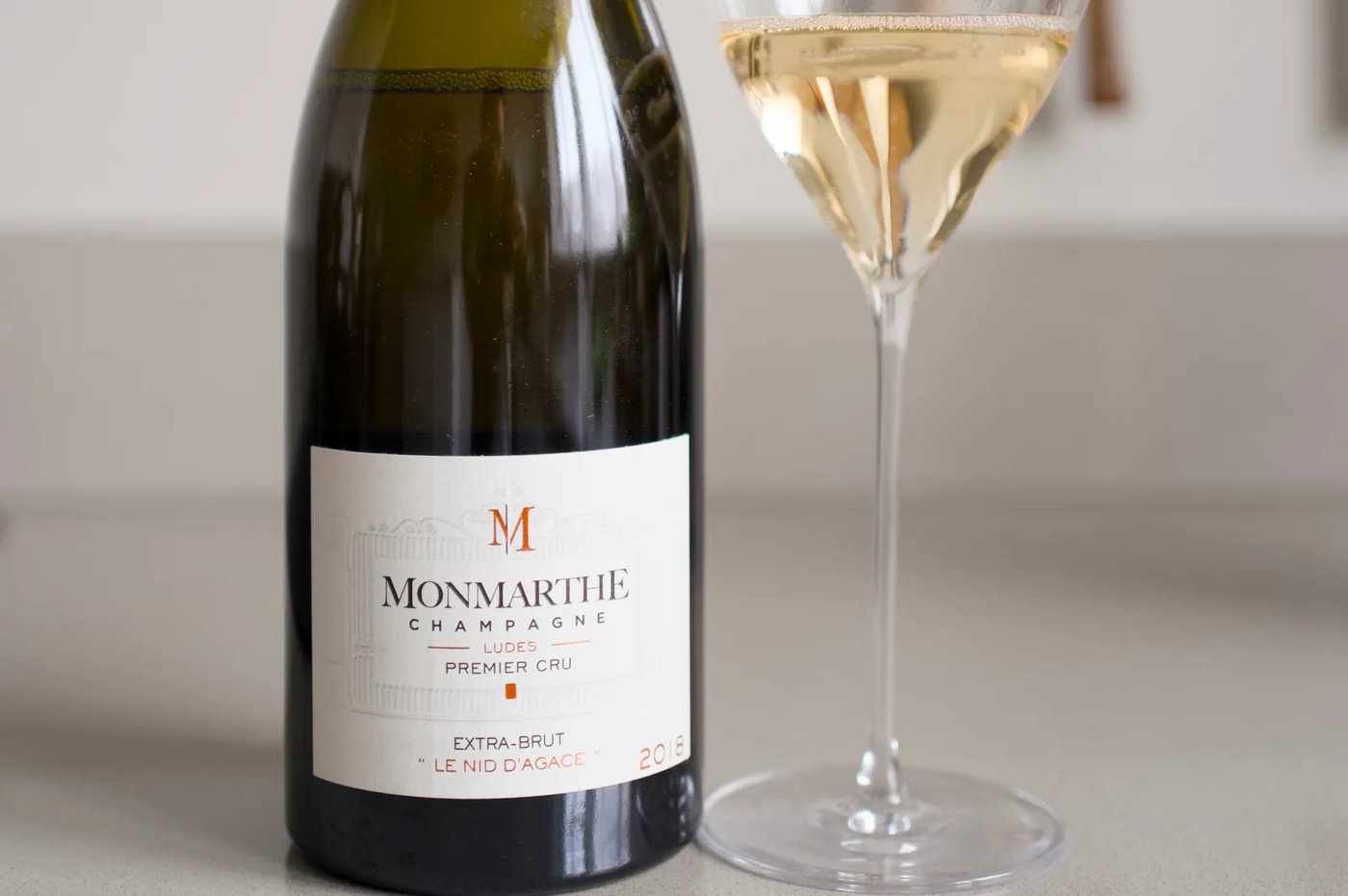
Champagne Monmarthe Le Nid d’Agace 2018 is an Extra Brut from a single plot in Ludes, where Chardonnay and Pinot Noir are planted together. I got in touch with Gauthier Monmarthe after seeing his Solera Blanc de Meunier on Instagram, and he sent this bottle along with it. We tasted it together for Sparks, him in Ludes and me in the Netherlands.
The name is the plot’s. Agace means magpie, so Le Nid d’Agace is the magpie’s nest.
The wine
- Producer
- Champagne Monmarthe
- Wine
- Le Nid d'Agace Extra Brut Premier Cru
- Vintage
- 2018
- Region
- Ludes, Montagne de Reims, Champagne
- Grapes
- Chardonnay and Pinot Noir, co-planted
- Plot
- One hectare
- Dosage
- Extra Brut
- Vinification
- Eight months in foudre, no malolactic
- Ageing
- Six to seven years on the lees
- Disgorged
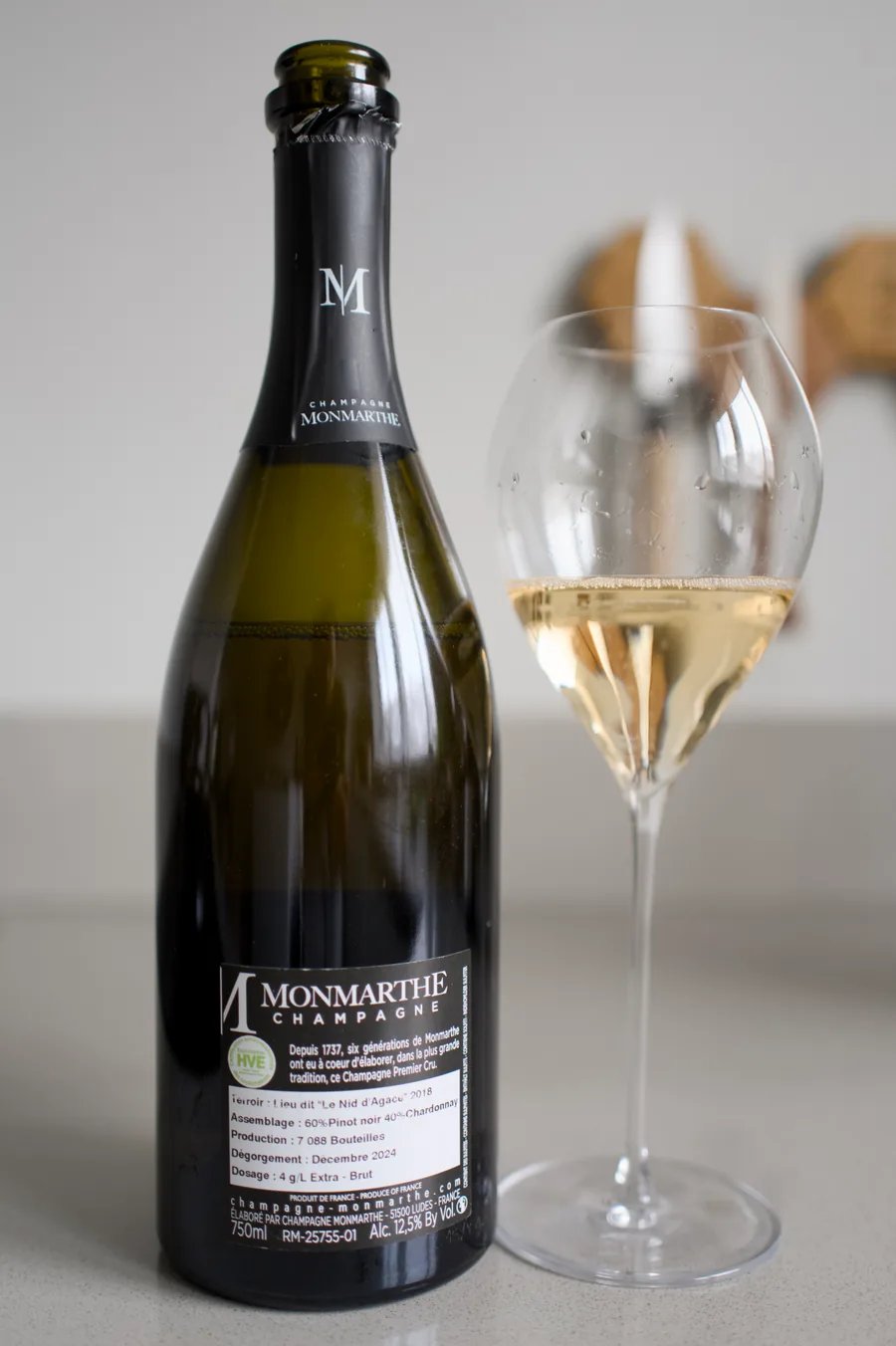
- December 2024 (bottle tasted)
One plot, two grapes
For Gauthier, blending is what Champagne is about: different harvests and different grapes in one wine. The estate’s first range is built on it, and he calls that range more his father’s. Le Nid d’Agace takes another route, with two grapes from one plot, pressed together.
The plot is a single hectare, co-planted with Chardonnay and Pinot Noir. Very old Chardonnay grows at the top, and Gauthier talks of 60-year-old vines. Lower down, on more clay, is young Pinot Noir. The grapes are picked together and blended at the press.
The Pinot Noir on clay brings roundness and richness, Gauthier says. The old Chardonnay brings elegance, minerality and more acidity.
The wine belongs to a newer range of single-plot cuvées: one terroir, one plot, one way of making the wine. Gauthier sees these as wines for a Champagne dinner, and the estate’s blends more as aperitif Champagne.
Six to seven years on the lees, no malo
Gauthier blocks the malolactic fermentation to hold on to freshness. According to him, that freshness works as a natural preservative, which is why the wine spends six to seven years on the lees.
It is vinified for eight months in foudres, large wooden casks. He avoids small barrels because neither he nor his father wants an oaky taste in Champagne. A foudre, in his view, adds vinosity and a gastronomic side to the wine without tasting of wood. Vinosity is the vinous weight on the palate, the sense of a still wine underneath the bubbles.
Tasting note
Tasting Note
Nose
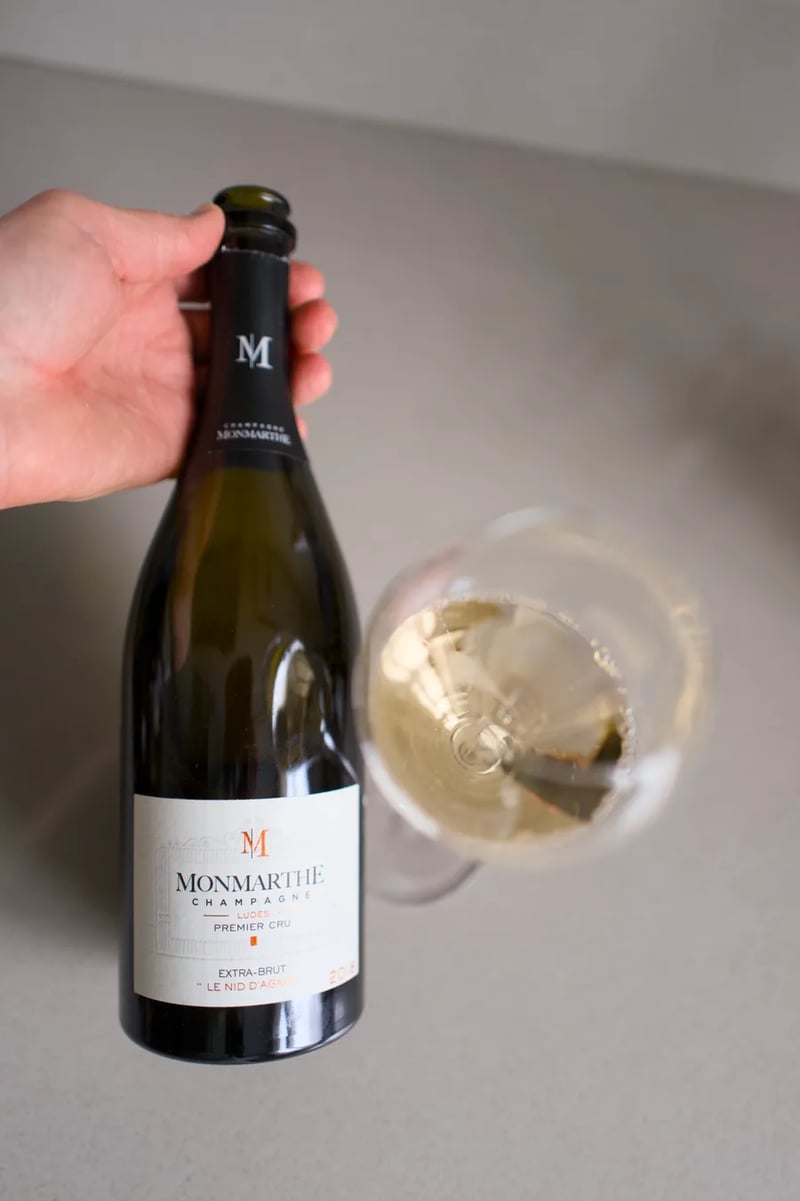
Plenty of cookie dough and vanilla biscuits, cloves, and herbs such as rosemary and thyme. Cream, butter and toast as well.
Palate
Full, round and rich. The label says Extra Brut, yet there is none of the sharp acidity that usually comes with it. It still tastes fresh.
Quality
Very complete. What surprised me is that it is fresh and so full at the same time.
Caveats
Gauthier chooses foudre because it gives no oaky taste. Even so, I picked up vanilla biscuit, cloves and cookie dough. Whether that comes from the wood, I can’t say.
The label says Extra Brut. I don’t know the dosage in grams for this bottle.
I tasted one bottle, a press sample, with the winemaker during the recording. Gauthier also says disgorgement stresses the wine and changes the taste a lot, so he releases a bottle only six months after disgorging. Mine was disgorged in December 2024, his in February 2025, so a bottle with a different date may taste different.
Verdict
Le Nid d’Agace 2018 is full, round and rich, without the sharp acidity I expected from an Extra Brut. Gauthier puts it among his wines for the dinner table. A full Extra Brut from a single plot.
More about the estate: champagne-monmarthe.com
Sources
- Primary source: Sparks by VinoVonk, episode 38 with Gauthier Monmarthe (recording and show notes)
- Producer: champagne-monmarthe.com
This article is based on a press sample from Champagne Monmarthe. No payment, the assessment is independent.
More on Wine Review
Barbadillo Jopo de Lobo: Organic Pedro Ximénez
Jopo de Lobo from Barbadillo: organic Pedro Ximénez from sun-dried grapes. Coffee, dark fruit, blossom. €15.95 for a half bottle of 0.375 litres.
Read on →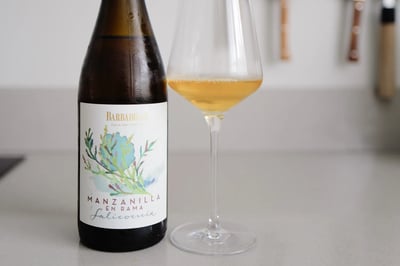
Barbadillo Salicornia: Organic Manzanilla en Rama
Salicornia, Barbadillo's organic manzanilla en rama: flor, baked apple, salt and a brand-new solera. €25.95 at Granada Wijnen, with discount code.
Read on →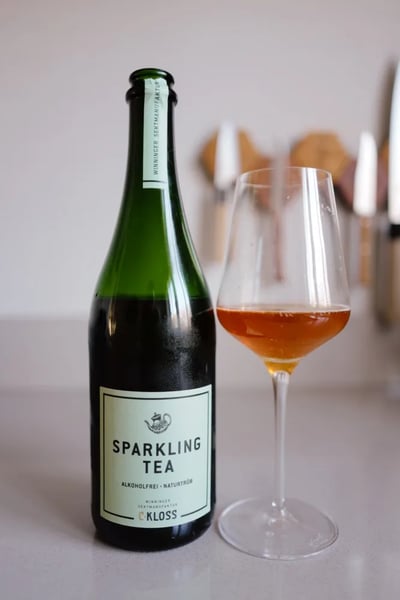
C. Kloss Sparkling Tea Weiss: Fermented Celery
Non-alcoholic sparkling tea Weiss from C. Kloss: linden blossom, nettle and fermented celery. Dry, 2.7 g sugar per 100 ml, €14.99 at Amavine.
Read on →