

Fifteen euros. That’s what a good bottle of Crémant d’Alsace costs. Put it blind next to a non-vintage champagne from a major house and ask someone which one is more expensive. The answer surprises more often than you’d expect. That’s the right starting point for crémant vs champagne: not which is better, but what the difference actually is.
Crémant vs champagne in one table
| What you’re comparing | Champagne | Crémant |
|---|---|---|
| Origin | The Champagne region in northern France only, protected in law | Eight French appellations outside Champagne, plus Crémant de Luxembourg |
| Production method | Méthode traditionnelle: second fermentation in bottle, lees aging, dégorgement | Méthode traditionnelle, technically identical to champagne |
| Minimum lees aging | 12 months for non-vintage, 36 months for vintage | 9 months as the baseline requirement; Crémant d’Alsace 12 months from the 2025 harvest |
| Grapes | Chardonnay, Pinot Noir and Pinot Meunier | Different per appellation: Chenin Blanc in the Loire, Poulsard in the Jura, Clairette in Die |
| Entry-level price | 40 to 60 euros for non-vintage from a major house | 10 to 20 euros for good Crémant d’Alsace or de Bourgogne |
| Top-end price | Prestige cuvées from 150 euros up | 20 to 35 euros from serious producers |
| What the price gap buys | Aging time, blending expertise and the protected name | The same method, different grapes, and a shorter aging period |
The rest of this guide explains why those rows read the way they do, and where the comparison stops being fair.
The Baseline: Same Method
Both are made using the méthode traditionnelle. Second fermentation in the bottle, CO2 trapped in the wine, lees aging, dégorgement. The technique is identical. What differs: region, grape varieties, aging time, and price.
Champagne can only be called champagne if it comes from the eponymous region in northeastern France. That monopoly is legally protected. Crémant covers all other French sparkling wine made with the same method outside the Champagne zone.
Eight French appellations carry the name:
- Crémant d’Alsace (Pinot Blanc, Riesling, Auxerrois, Pinot Gris, Pinot Noir, Chardonnay)
- Crémant de Bourgogne (Chardonnay, Pinot Noir, Gamay, Aligoté)
- Crémant de Loire (Chenin Blanc, Cabernet Franc, Chardonnay)
- Crémant de Bordeaux (Sémillon, Sauvignon Blanc, Muscadelle, Cabernet Franc)
- Crémant du Jura (Chardonnay, Pinot Noir, Poulsard, Trousseau)
- Crémant de Limoux (Mauzac, Chardonnay, Chenin Blanc)
- Crémant de Die (Clairette)
- Crémant de Savoie (Jacquère, Altesse, Chasselas, Mondeuse)
Luxembourg also has its own Crémant de Luxembourg appellation, with the same technical rules.
Lees Aging: Where Champagne Actually Differs
This is the biggest functional gap. Non-vintage Champagne requires a minimum of 12 months on the lees and 15 months total cellar ageing; vintage Champagne requires a minimum of 36 months in the cellar from tirage, which in practice is spent almost entirely on the lees. Crémant appellations use a 9-month-on-lees baseline (Crémant d’Alsace raised this to 12 months from the 2025 vintage onwards).
That extra time gives champagne its autolytic character: brioche, toasted bread, roasted nuts. You don’t build that profile with faster production. A crémant aged 9 months tastes different. Not worse.
That’s why the crémant vs champagne comparison breaks down when it’s framed purely as a price argument. You’re partly comparing aging time, and that’s a very different variable from quality.
Grapes: The Real Surprise
Champagne works with three varieties: Chardonnay, Pinot Noir, Pinot Meunier. That framework is fixed. Crémant offers something champagne never can: different grapes, different flavors.
Crémant de Loire runs on Chenin Blanc. Honey, quince, chalk, beeswax. A profile champagne doesn’t replicate, even come close to. Crémant du Jura with Poulsard brings a faint red fruit character that exists nowhere else. That’s not lower quality. That’s a different grape, a different logic.
In that sense, crémant vs champagne is also a question about what you’re looking for in a glass.
Price: What Are You Actually Buying?
Non-vintage champagne from a major house: 40 to 60 euros. Prestige cuvées start at 150 euros. Grower champagnes sit in between, often 30 to 70 euros.
Good Crémant d’Alsace or Crémant de Bourgogne: 10 to 20 euros. Top-tier from serious producers: 20 to 35 euros. At 25 euros, you can find crémant that regularly beats 45-euro champagnes in blind tastings.
That doesn’t mean champagne is overpriced. The name, the aging requirements, the blending expertise of major houses, and global demand all set the price. That said, if you’re paying for bubbles in a glass and not for a label, crémant is objectively better value.
I Poured Them Blind: €25 Against €55
A Crémant d’Alsace at 25 euros against a Dosnon champagne at 55. Same method, comparable grapes, one label with a protected name. I tasted them without knowing which glass was which.
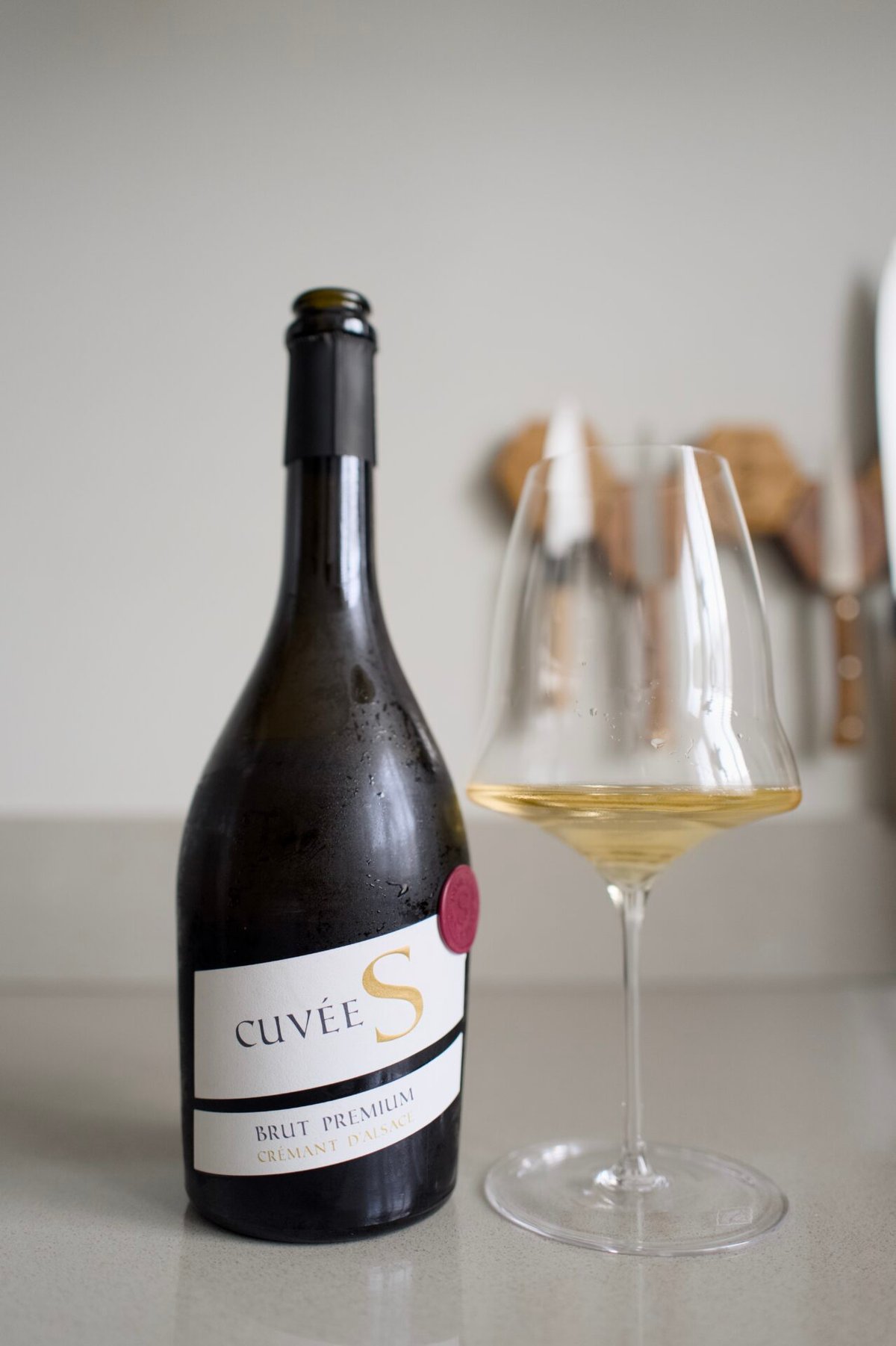
The first glass was lighter in colour, with green apple, lime and a hint of bread dough. Complete on the nose, and fresh. On the palate the fruit carried well, but the finish was short. A slight bitterness underneath, the kind that points at a young wine.
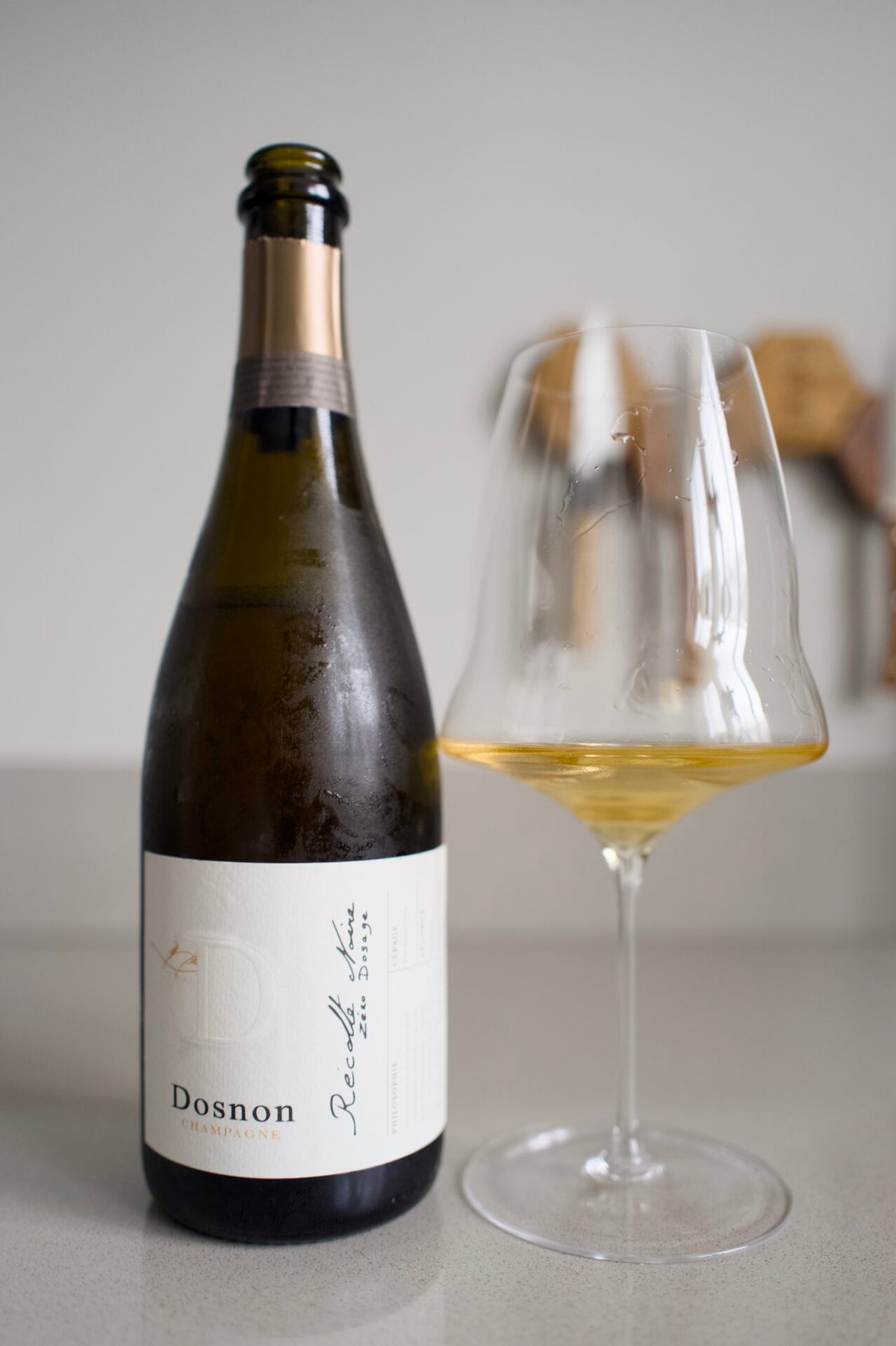
Glass two announced itself before I tasted it. Deeper colour, and on the nose brioche, toasted hazelnut, vanilla, a little nutmeg. Then marzipan and baked apple. The bubble was finer while there was more of it, and the wine kept unfolding instead of stopping.
I picked the second glass as the champagne, and I was right. So yes, the difference is there and it is not subtle.
What the tasting did not show was a quality gap. The crémant was a good aperitif that asked nothing of me. The champagne had a dimension the crémant lacked, and for 30 euros more that dimension had better matter to you that evening. Most evenings it doesn’t.
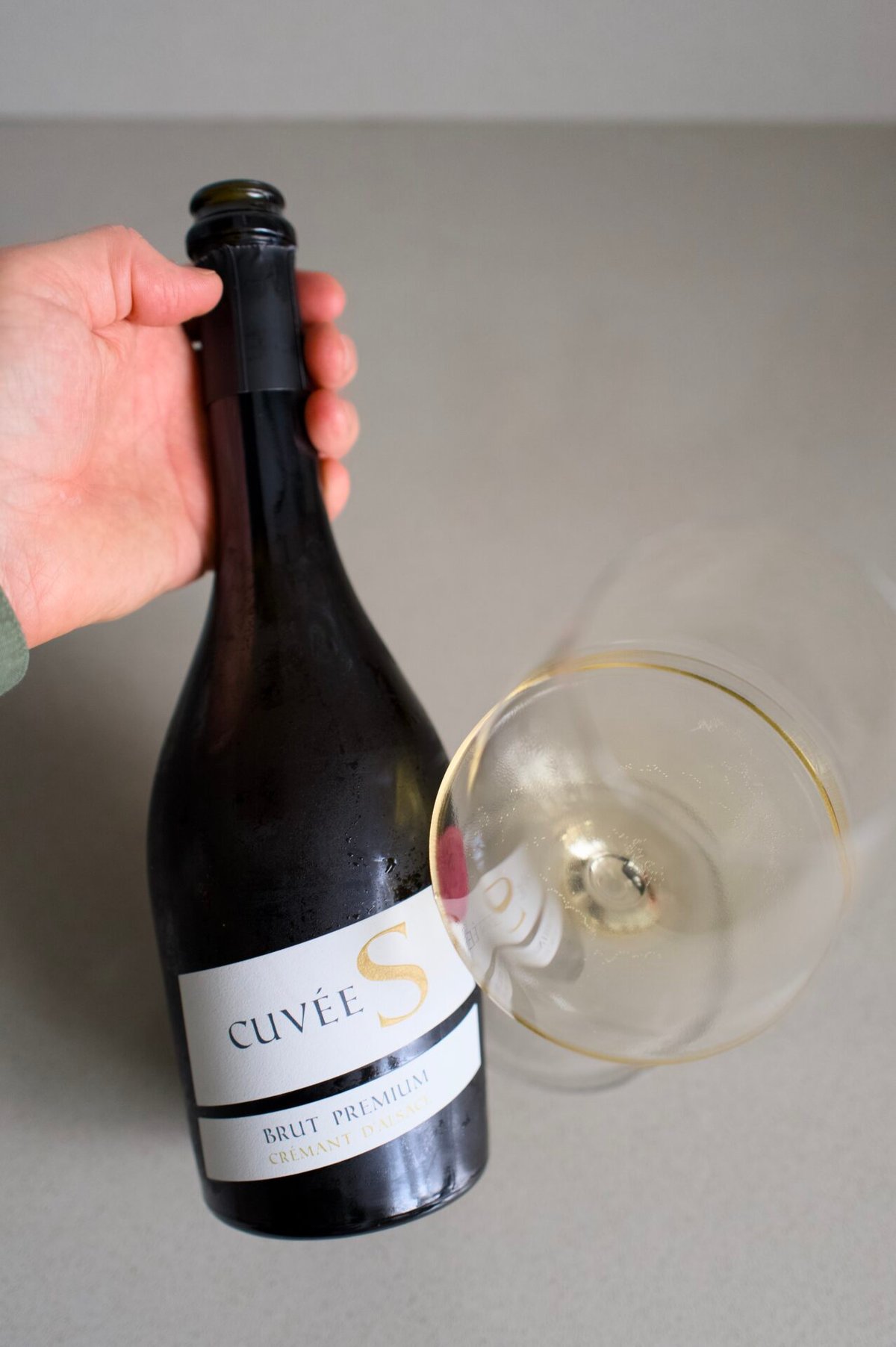
The 15 months of minimum aging against 9 for crémant is where that extra dimension comes from. Time on the spent yeast builds the brioche and the roasted notes. You are paying for months in a cellar, not for the word on the label.
Flavor by Style
Champagne, major houses (non-vintage): fine persistent bubbles, green apple, citrus, toasted bread. Consistent, polished, built for broad appeal.
Grower champagne: more pronounced terroir. Can be earthy, chalky, sharp. Less predictable, more interesting if you want character over consistency.
Crémant d’Alsace: fresh, aromatic, pear, white flowers. Approachable, works well with food.
Crémant de Bourgogne: the most champagne-adjacent crémant. Chardonnay and Pinot Noir, comparable structure. Rounder, riper fruit.
Crémant de Loire: Chenin Blanc at the core. Honey, quince, chalk. A character of its own, not comparable to anything else.
When to Choose Which
Choose champagne when the occasion calls for the name. When the bottle sits on the table and people look at it. Or when you want to explore grower champagnes that actually say something.
Choose crémant when you want to impress without wrecking the budget. When you’re serving a group. When you’re curious about Chenin Blanc, Mauzac, or Jacquère as a base for sparkling wine. In those cases, crémant isn’t the cheaper option. It’s the better choice.
What the Comparison Actually Gives You
Crémant vs champagne isn’t a hierarchy. It’s a range of choices. Champagne has more depth at the top end, more aging time, more consistency from the major brands. Crémant offers diversity, value, and flavor profiles champagne doesn’t have.
Buy both at some point. A Crémant de Loire from a serious producer, a grower champagne from someone you don’t know yet. Taste them next to each other. The comparison makes the argument better than any recommendation.
Frequently asked questions
Is crémant made the same way as champagne?
Yes, same method: a second fermentation in the bottle. The difference is ageing time. Crémant appellations require a minimum of 9 months on the lees (Crémant d’Alsace raised this to 12 months from the 2025 harvest), champagne non-vintage at least 12 months on the lees and 15 months total, vintage 36 months.
How big is the price gap between crémant and champagne?
Considerable. Good Crémant d’Alsace or Crémant de Bourgogne costs 10 to 20 euros, top examples 20 to 35 euros. Non-vintage champagne from a big house runs 40 to 60 euros; grower champagnes sit in between at 30 to 70 euros.
Is Crémant better than Champagne?
Not always. For 25 euros you can buy crémant that regularly beats 45-euro champagne in blind tastings. Longer lees ageing does give champagne more depth at the top end, but if you mainly want fruit and freshness, champagne charges you for something else.
Which Crémant is closest to Champagne?
Crémant de Bourgogne is the closest match. It shares Champagne’s chardonnay and pinot noir plus limestone soils, so you get the same citrus, orchard fruit and crisp acidity. Crémant d’Alsace leans whiter and more floral. If you want the Champagne profile for less, start with the Burgundy version.
Why is Crémant so good?
Crémant delivers Champagne’s method without the Champagne premium. The second fermentation happens in the bottle, giving fine bubbles and real texture, while grapes from Alsace, Burgundy or the Loire bring freshness and character. Strict regional rules keep quality honest. You pay for the wine, not the postcode on the label.
Is Crémant better than Prosecco?
They are different animals. Crémant is bottle fermented like Champagne, so it shows finer bubbles, more bread and nut character and drier styles. Prosecco ferments in tank, staying fruity, floral and softer. Crémant is the better Champagne stand-in, Prosecco the easier aperitif.
When do you pick crémant and when champagne?
Crémant for the apéro, for groups, and for anyone curious about Chenin Blanc, Mauzac or Jacquère as a base for sparkling wine. Champagne when the occasion calls for the name, or when you want to explore grower champagnes that actually say something. It is a choice per moment, not a ranking.
Sources
- INAO: Cahiers des charges Crémant (8 French AOCs): inao.gouv.fr
- Comité Champagne (CIVC): ageing rules and grapes: champagne.fr
- CIVA: Crémant d’Alsace (12-month lees ageing from the 2025 harvest): crementdalsace.fr
- Commission de Promotion des Vins de Luxembourg: Crémant de Luxembourg: vins-cremants.lu