

Champagne Monmarthe Solera Blanc de Meunier
Champagne Monmarthe Solera Blanc de Meunier Brut Nature: 100% Pinot Meunier on chalk, from a perpetual solera reserve in Ludes. 4,188 bottles.

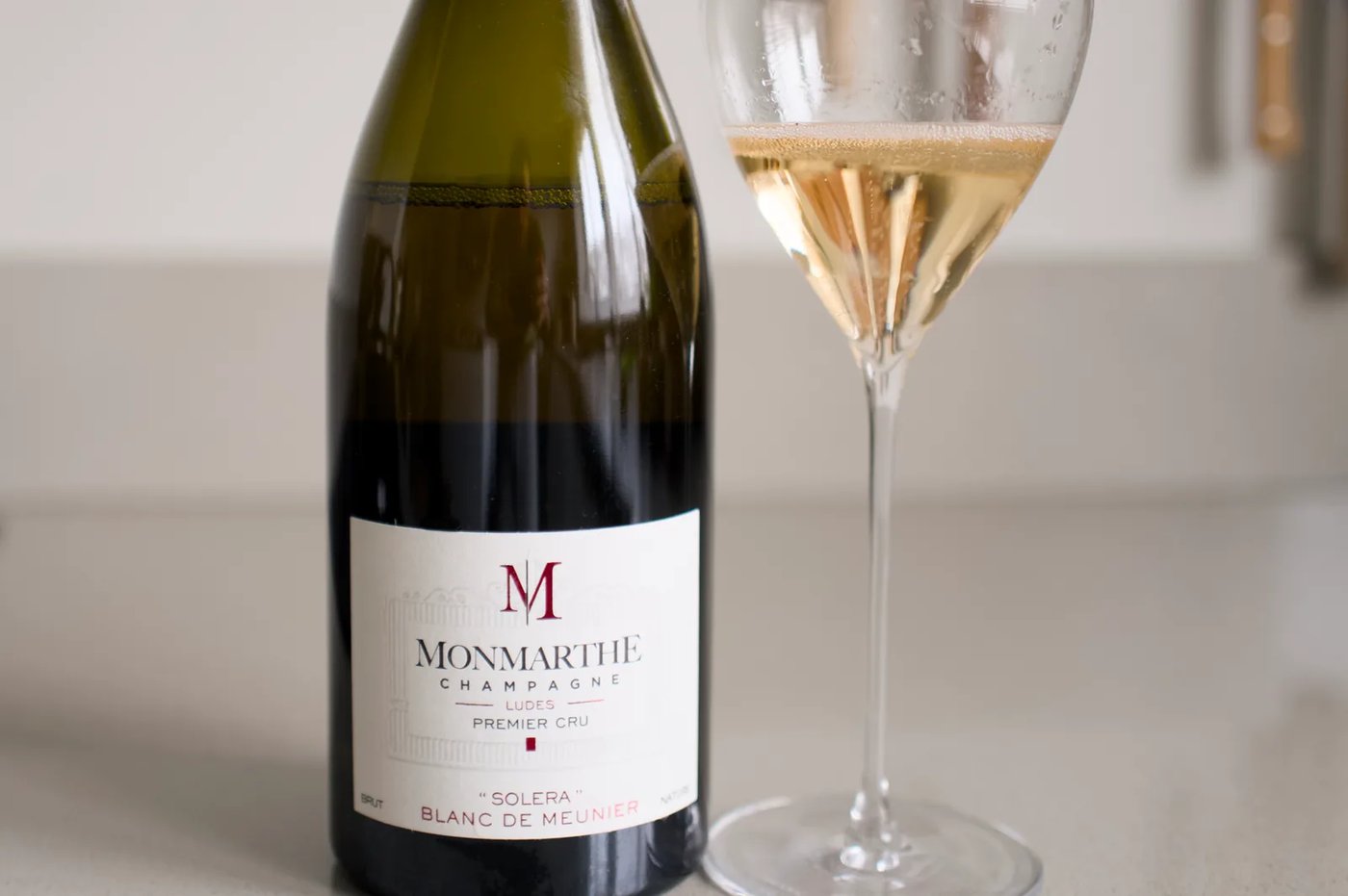
Champagne Monmarthe Solera Blanc de Meunier turned up on my Instagram feed before I had ever tasted it. Someone was clearly delighted with it. I had no idea what it was, but I wanted to understand it. One message to Champagne Monmarthe later, a bottle was on its way to Amstelveen and a recording was in the diary.
I have tasted it twice. The first time with winemaker Gauthier Monmarthe for an episode of Sparks, him in his cellar in Ludes and me in the Netherlands. The second time the following day, on my own and with more time. I now understand the delight on Instagram.
The wine
- Producer
- Champagne Monmarthe
- Wine
- Solera Blanc de Meunier Brut Nature Premier Cru
- Vintage
- NV, perpetual reserve started in 2015
- Region
- Ludes, Montagne de Reims, Champagne
- Grape
- 100% Pinot Meunier
- Dosage
- Brut Nature (zero dosage)
- Disgorgement
- December 2024
- Production
- 4,188 bottles
Why Gauthier Monmarthe chose a solera
Gauthier Monmarthe wanted to make a 100% Meunier champagne. Meunier is traditionally planted in the frost-prone Vallée de la Marne, on clay-rich soils, and has long played a supporting role in Champagne. Useful in blends for its fruit and softness, but rarely bottled on its own. Not the grape of the big names.
In Ludes, though, Meunier grows on chalk rather than clay.
“Normally, we know Meunier more from the Vallée de la Marne, on clay soil,” Gauthier explains. “Here in Ludes, it’s Meunier on chalk. So it’s a different expression. And I like the perpetual reserve Solera method for this cuvée because each year you bring in new wine, bringing freshness. For me, the character of Meunier on chalk is the fruit, a very beautiful purity of fruit.”
The solera comes from the world of sherry. Gauthier’s perpetual reserve of Meunier began in 2015 and sits in a large concrete vat in the cellar. It was his great-grandfather’s, and it is the oldest on the estate. Each year roughly 30% of the tank is refreshed with wine from the new harvest. Of that harvest, 40% is first vinified in barrels. The remainder ages in concrete, which holds the temperature steady and preserves the fruit.
The first release blended 70% solera wine, seven vintages deep, with 30% from the 2022 harvest.
Tasting note
Tasting Note
Appearance
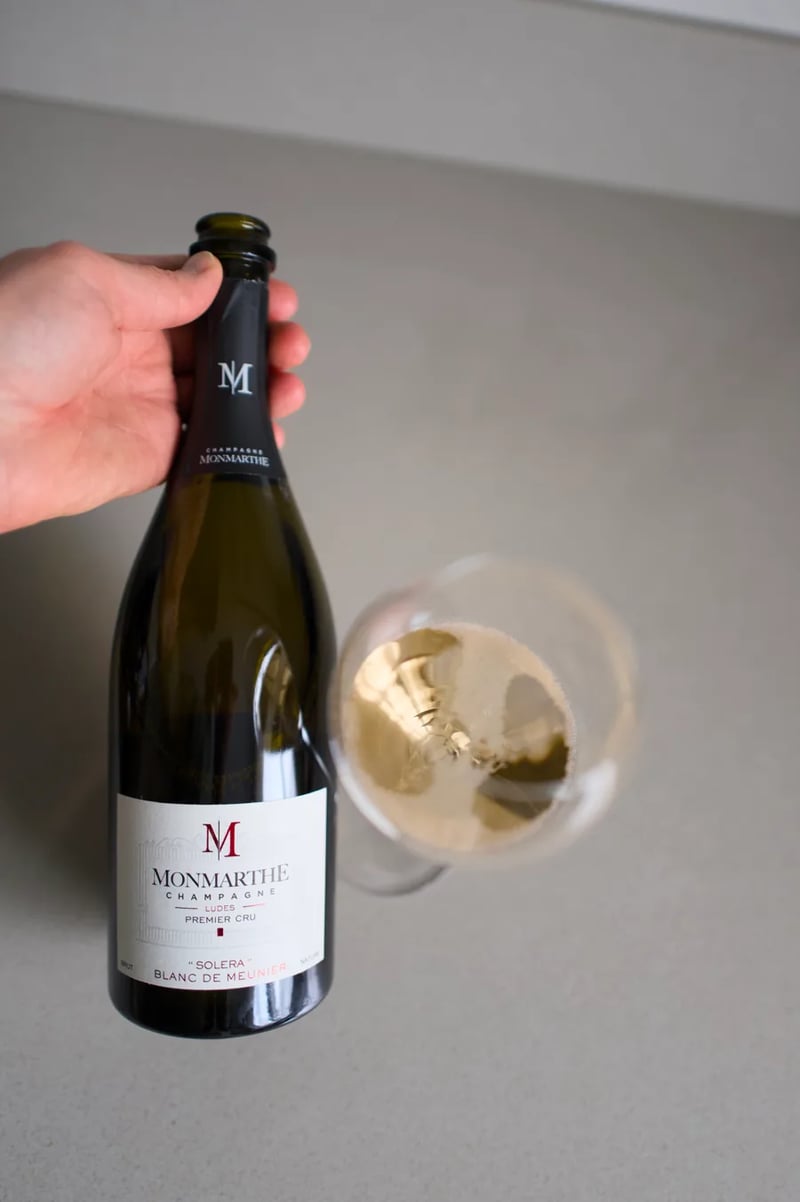
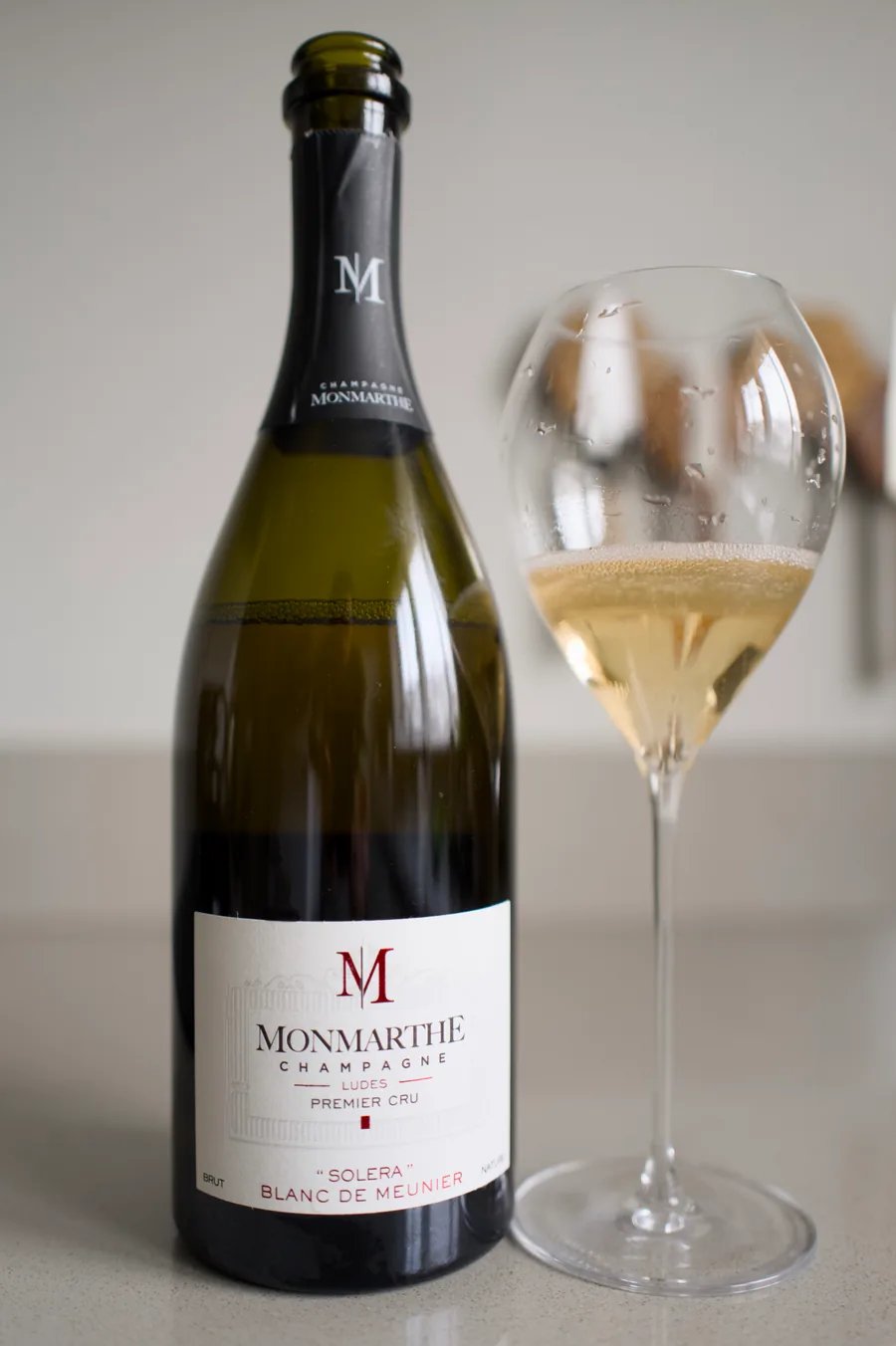
Clear, medium gold with a warm gleam. The mousse is very fine and well integrated. It tingles on the tongue.
Nose
Floral first, with orange blossom, jasmine and acacia. Then citrus: lemon, lime, bergamot, orange peel. Stone fruit follows, peach, nectarine and apricot, and then, more surprisingly, dark fruit in the shape of black cherry, blackcurrant and bramble. That dark fruit is uncommon in a champagne. Meunier is a black grape, and here it holds on to some of that character. Around it sit herbs (oregano, rosemary, fennel), white pepper, wet stone and chalk. Underneath, kept in check, are brioche, toast, a hint of vanilla and toffee. The older reserve wines bring dried fig, dried apricot, caramel, honey and dried herbs. A lot of complexity for a wine with no dosage.
Palate
Dry, with no added sugar, yet never lean or severe. The pure fruit Gauthier talks about gives enough sense of sweetness to carry a zero dosage. The acidity is fresh and taut and keeps the wine upright. It fills the mouth, more than many blanc de blancs and more than Meunier’s reputation would lead you to expect.
Finish
Long and dry.
Quality
Generous despite the zero dosage. The reserve gives depth and the young wine keeps it fresh.
What makes this wine different
Other champagnes use a perpetual reserve. There are other 100% Meunier cuvées, and other Brut Natures. All three at once, from one village, on chalk: I don’t know that combination from any other champagne.
The concrete vat explains a good deal of the result. Concrete holds the temperature without adding flavour and protects the fruit character that Gauthier sees as the heart of Meunier on chalk.
Then there is time. According to Gauthier, seven different harvests are in the glass right now. Each year adds another.
“In the future, the goal is to have maybe 20, 30, 40 different years in the glass. So I’m very excited to taste it in the future too.”
Caveats
The solera is young. Gauthier himself calls it “only seven years old”. The depth of twenty to forty vintages he is aiming for lies years ahead. What you taste now is a solera of seven harvests.
If you are after the round, soft Meunier of the Vallée de la Marne, this is a different wine. There is no dosage to lean on, and the fruit is taut and pure.
Finding a bottle is tricky. Vinétiq works mainly with the hospitality trade, and 4,188 bottles is not many. I don’t know the price, so I haven’t listed one.
Verdict
This is the champagne that has surprised me most lately. It goes against Meunier’s reputation, and against the idea that zero dosage has to taste severe. It is approachable straight away and keeps opening up the longer it sits in the glass.
Open it with scallops, oily fish, mature cheese, charcuterie or roasted vegetables with herbs.
The run was 4,188 bottles.
Listen to the episode
Gauthier Monmarthe and I tasted this wine together for Sparks by VinoVonk, him in his cellar in Ludes and me in the Netherlands. He talks about seven generations of family winegrowing in Ludes, the choice of a solera and what chalk does to Meunier.
More about the estate: champagne-monmarthe.com
Sources
- Primary source: Sparks by VinoVonk, episode 38 with Gauthier Monmarthe (recording and show notes)
- Producer: champagne-monmarthe.com
This article is based on a press sample from Champagne Monmarthe. No payment; the assessment is independent.
More on Wine Review
C. Kloss Sparkling Tea Weiss: Fermented Celery
Non-alcoholic sparkling tea Weiss from C. Kloss: linden blossom, nettle and fermented celery. Dry, 2.7 g sugar per 100 ml, €14.99 at Amavine.
Read on →
Barbadillo Sábalo: Organic Palomino Without Flor
Organic Palomino Sábalo from Barbadillo: no flor, salt from albariza soil. Chamomile, apple, sea. €17.95 at Granada Wijnen, with discount code.
Read on →
Tua Rita Lodano Rosso 2024: Petit Verdot Leads
A €50.95 Super Tuscan built on 60 percent Petit Verdot and 18 months of barrique. Why I chill it, decant it and never drink it without food.
Read on →