

1979 Kalos Thalassino 2022: A Retsina from the Sea
What happens when your resin comes from pine trees growing at the edge of the sea
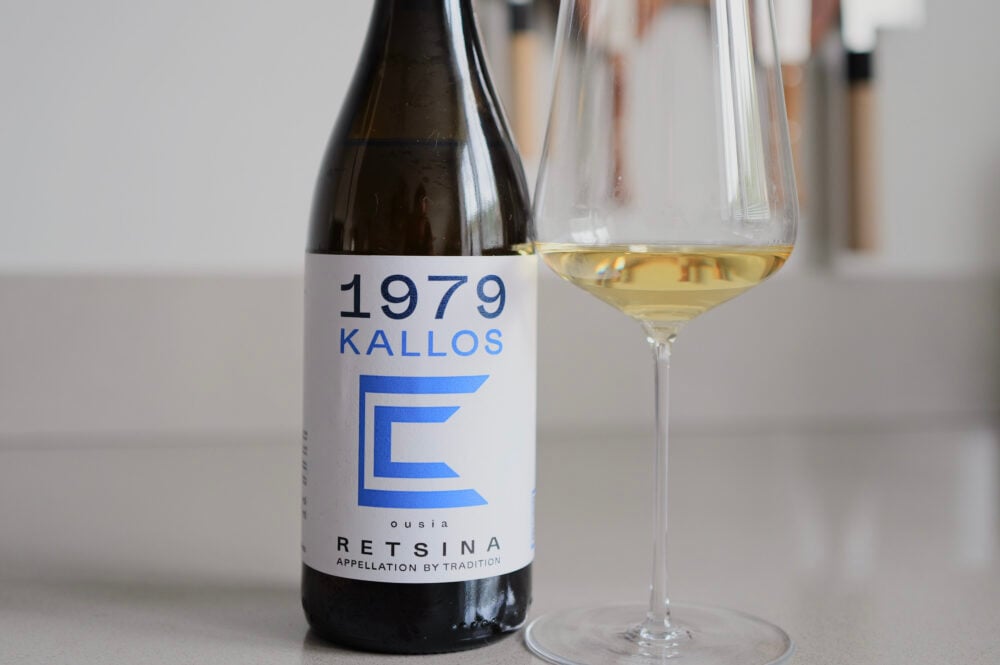
The word thalassino means “of the sea” in Greek. It’s a fitting name. Before I even read the label properly, before Eleni Kechri explained where this resin comes from, the first thing I noticed was that there’s something coastal about this Kalos Thalassino retsina. An iodine lift. A mineral saltiness. Something that puts you at the edge of the water.
That quality doesn’t come from the vineyard. It comes from the forest.
The wine
- Producer
- 1979 Wines
- Wine
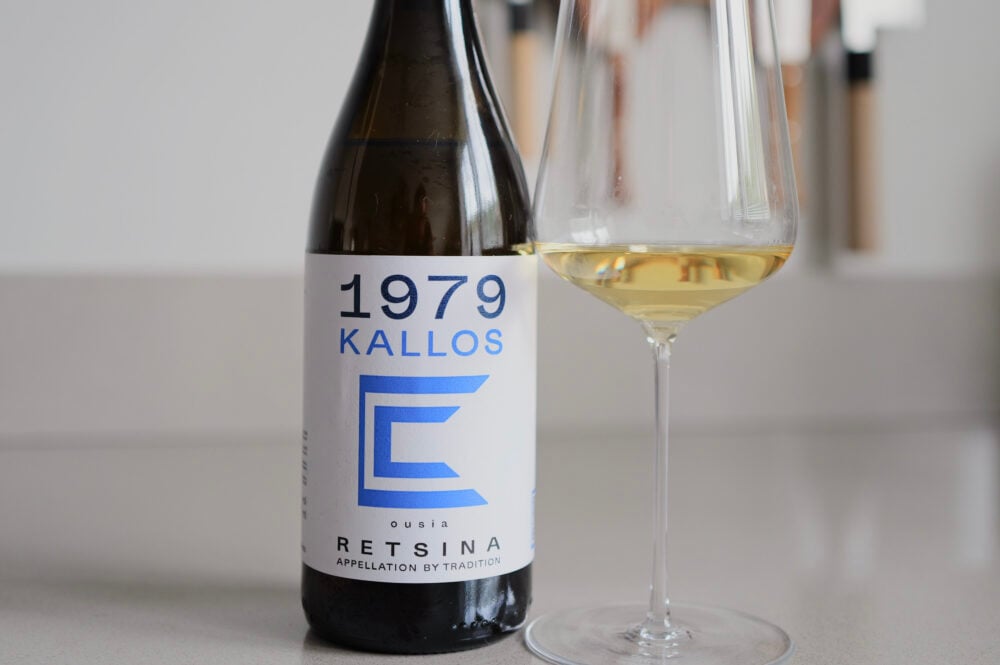
- Kalos Thalassino 2022
- Region
- Emathia, Northern Greece
- Grape
- Assyrtiko
- Vineyard
- Gerakona, Kilkis, 350m
- Resin
- Pinus halepensis, coastal forest Halkidiki
- Harvest
- Sustainable, no sulphuric acid
- Alcohol
- ~12.5%
- Price (GR)
- approx. €16
Available in Germany, Belgium, the UK and Canada. Dutch distribution coming soon. More: 1979.gr/en.
Tasting Note
Appearance
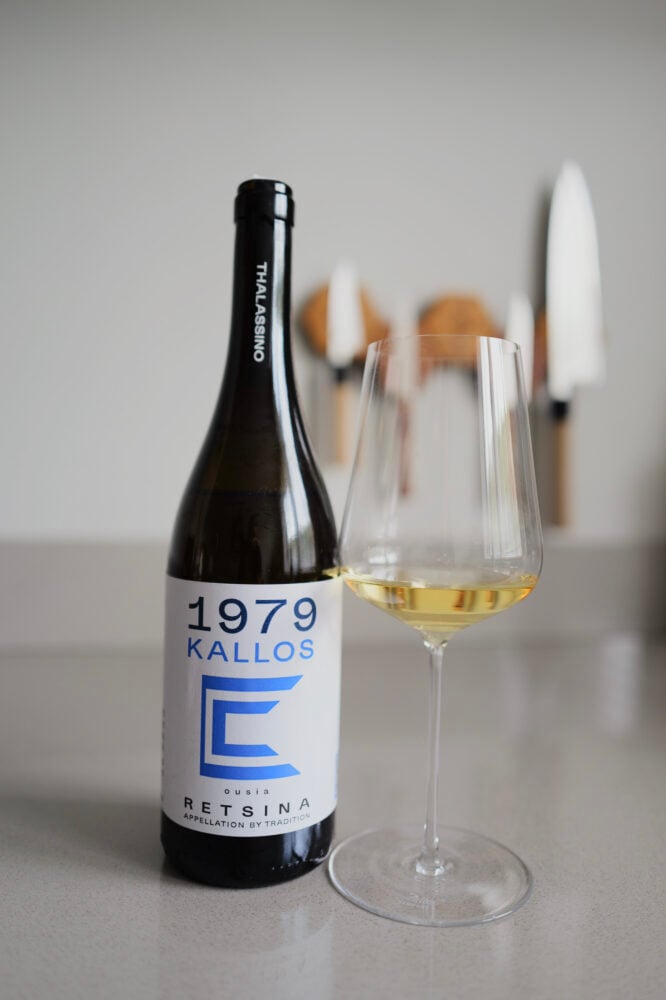
Pale gold with a bright, clean rim. Clear and luminous.
Nose
The opening is immediate and precise: lemon zest, white grapefruit, a faint thread of green apple. As the glass opens up, something unexpected arrives: iodine, sea spray, a clean shellfish quality that calls to mind oyster shells more than brine. Behind that, the pine resin makes itself known, but in a lifted, lemon-tinted register rather than heavy turpentine. Nothing clumsy. After five minutes small white flowers emerge.
Palate
The attack is fresh and precise, with high, clean acidity: exactly what you’d expect from Assyrtiko grown at altitude. The mid-palate has more texture than the nose suggests: a waxy, almost grapefruit-pith quality that gives the wine body without weight. The resin integration is complete; you’re not tasting resin and wine separately, you’re tasting one thing. The finish is long, saline, and mineral, with the lemon-citrus note carrying through cleanly to the end.
Quality
Technically accomplished winemaking applied to a style that has historically been treated carelessly. The acidity is well-managed, the resin is in balance, and the forest character of coastal iodine is genuinely distinctive rather than forced. It tastes like a specific place.
The Story Behind the Resin
Eleni Kechri didn’t start with flavour. She started with science.
Her research showed that the location of the pine forest, specifically the soil composition, proximity to the sea, and the micro-climate around the trees, directly shapes the aromatic compounds in the resin. The Halkidiki pines grow in sandy coastal soil, feet from the Aegean. The combination of salt air, high light intensity, and coastal temperatures produces a resin profile dominated by lighter, fresher terpene compounds, including more delicate forms of terpinen-4-ol that translate to iodine and citrus notes in the wine rather than heavy aldehydes.
Crucially, this only shows up when the resin is harvested sustainably. The old method of applying sulphuric acid paste to the bark to force the tree to produce more resin overwrites these subtle forest characteristics. The tree, under chemical stress, produces a cruder, more uniform output. Remove the acid and harvest at the tree’s own pace, and suddenly the forest terroir becomes legible.
This is what Eleni means when she talks about forest terroir. It’s not a marketing concept. It’s the result of years of gas chromatography analysis and controlled trials, applied to a wine tradition that is nearly as old as winemaking itself.
Food Pairing
Thalassino was made for seafood. The saline, iodine-forward character is a near-perfect mirror for shellfish: oysters, clams, sea urchin, grilled octopus with olive oil and lemon. The acidity pairs beautifully with olive oil, historically one of the reasons Retsina has persisted in Greek food culture, where olive oil is present in almost everything.
For something more substantial: grilled sea bass with lemon and herbs, or a simple prawn risotto without cream. Avoid heavy red meat or anything with a strong, competing bitterness. This wine wants to be the most distinctive thing on the table, and it usually is.
Serve at: 8–10°C. Give it time in the glass; it opens significantly over 15–20 minutes.
The Verdict
If you’ve written off Retsina based on everything you’ve tasted before, the Thalassino 2022 is the bottle that should change your mind. It’s precise, coastal, genuinely complex, and like nothing else in the glass. At approximately €16 in Greece, it’s also significantly underpriced for what it delivers.
Buy it if you see it. Open it with oysters. Then reconsider your assumptions.
Part of a three-bottle tasting with Eleni Kechri of 1979 Wines on Sparks by VinoVonk.
Frequently asked questions
What exactly is retsina?
Greek wine with pine resin added during fermentation. At 1979 Wines that is not a flavouring but the whole premise: the same Assyrtiko, the same fermentation and the same winemaker, with only the origin of the resin as the variable.
Why does the Thalassino taste of the sea?
Because its resin comes from coastal pines in Halkidiki, on the Aegean shore, which brings iodine, sea air and a salty minerality. The name says it: thalassino means “of the sea”. The character comes from the forest rather than the vineyard.
How does it differ from the Stergianos?
Only in the forest. The Stergianos takes resin from the Megara plateau, further inland, on stonier soil at greater altitude, and tastes of dry herbs and mineral dust instead of iodine and shellfish. Both cost around 16 euros.
Sources
- 1979 Wines (officieel, Eleni Kechri): 1979wines.com
- Wines of Greece, retsina tradition: winesofgreece.org
More on Wine Review
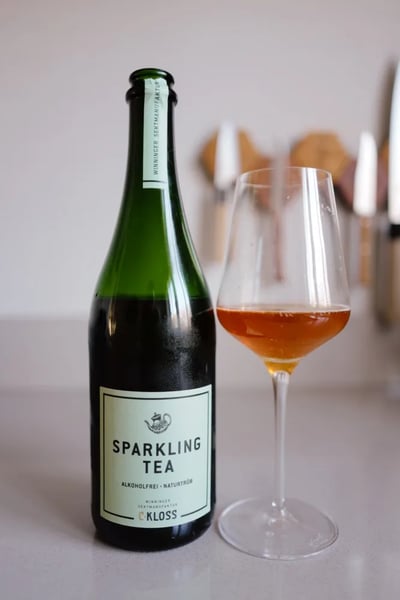
C. Kloss Sparkling Tea Weiss: Fermented Celery
Non-alcoholic sparkling tea Weiss from C. Kloss: linden blossom, nettle and fermented celery. Dry, 2.7 g sugar per 100 ml, €14.99 at Amavine.
Read on →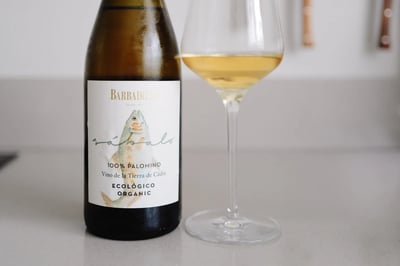
Barbadillo Sábalo: Organic Palomino Without Flor
Organic Palomino Sábalo from Barbadillo: no flor, salt from albariza soil. Chamomile, apple, sea. €17.95 at Granada Wijnen, with discount code.
Read on →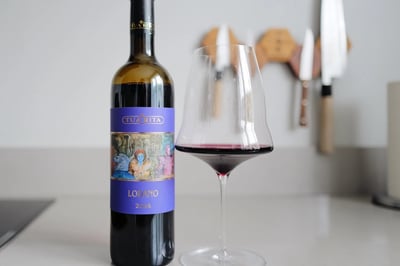
Tua Rita Lodano Rosso 2024: Petit Verdot Leads
A €50.95 Super Tuscan built on 60 percent Petit Verdot and 18 months of barrique. Why I chill it, decant it and never drink it without food.
Read on →