

1979 Wines: Eleni Kechri's Science-Driven Retsina
Eleni Kechri of 1979 Wines makes retsina with sustainably tapped resin from different forests. Three bottles, one vineyard, and what the resin changes.

Most people have one retsina memory, and it is rarely a fond one: a sharp bottle on holiday that smelt more of turpentine than of wine. After that the verdict is in. Retsina, no thanks.
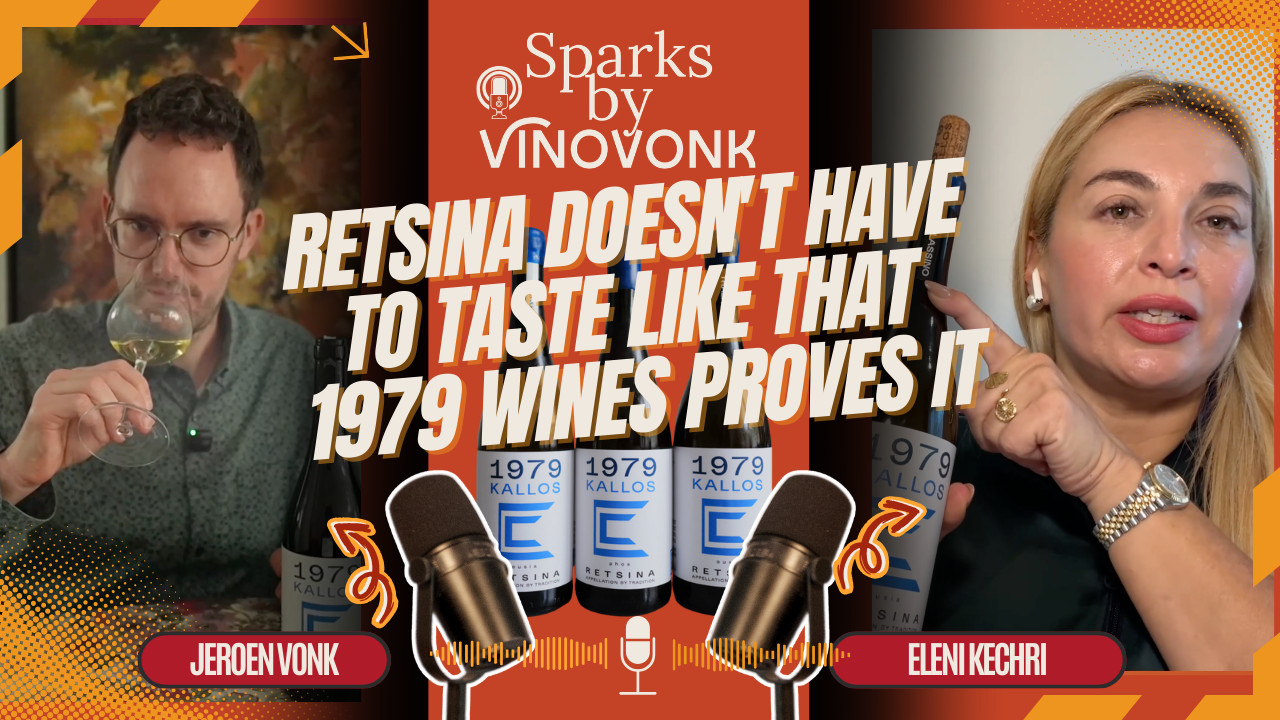
So I opened this episode of Sparks by VinoVonk with a request. If you don’t like retsina, stay with me. Three bottles from 1979 Wines were on the table, and Eleni Kechri and I tasted them together during the conversation.
Eleni has been an oenologist for more than thirty years. She first studied chemical engineering at the university in Thessaloniki, then oenology and wine business management in Bordeaux. Retsina is her family’s tradition, and the chemist in her wanted to know what actually happens when resin meets wine. Her answer is that resin has a provenance, just as grapes do. So she treats the pine forest as a second vineyard.
I’ll admit I first thought it was my wine. 1979 is the year I was born.
A Very Old Wine Style
According to Eleni, retsina goes back some 7,000 years. The ancient Greeks fermented and stored wine in amphorae that didn’t seal properly. Pine resin coated the walls and sealed the lid, keeping oxygen out in an age before silicone. The vine and the Aleppo pine, Pinus halepensis, shared the same landscapes, and people got used to the taste.
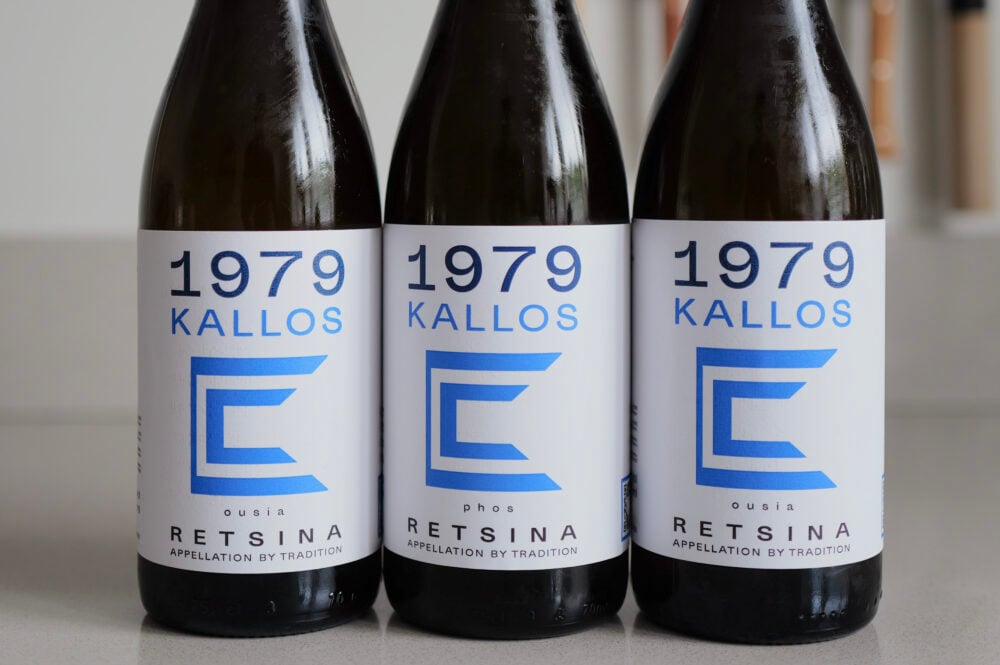
In 1979 retsina was given protected status in Greece as a traditional designation, which is where her company takes its name. The same rules specify that the resin must come from Pinus halepensis. The grape is not fixed, but Eleni calls using an international variety “hybris”: you simply don’t. She works with Assyrtiko, her favourite grape, because of its ability to age.
The technique is easy to describe. During alcoholic fermentation the resin sits in contact with the must, up to one gram per litre as EU rules allow, and comes out at the first racking. Eleni sees it as an extraction running alongside the fermentation. Some of what it extracts is good and some is not, and her work is about steering that balance.
Where It Went Wrong
Eleni puts retsina’s poor reputation down to the cheap versions made over recent decades. Producers improved the grapes and the winemaking, but the resin stayed a black box. You told the collector “bring me resin” and asked nothing more.
For years she worked with a collector who smeared sulphuric acid paste on the bark to make the tree bleed more resin. Since 2018 she has run two major research projects on retsina, comparing acid-stimulated resin with resin the tree gives up on its own. In the sustainably tapped resin, the compounds behind heavy, oily pine aromas were close to zero. What she did find were compounds such as terpinen-4-ol. Without the acid, she says, the tree can express itself fully.
I only know those results from what she told me in the interview. I haven’t seen the data.
Forest Terroir
Working with sustainable resin, Eleni noticed something the acid method had masked: resin from different forests tastes different. She calls it forest terroir. Her wines therefore carry two terroirs at once, the vine’s and the pine’s.
To show it, she made two wines that differ only in their resin. The grapes come from her own vineyard at Gerakona, in the Emathia region near Kilkis, at 350 metres. Same Assyrtiko, picked together, sharing a tank for the first two days until the first racking. Then the must goes into separate barrels, each with its own resin. She ferments cool, at 14 to 16°C, to keep the fruit. It isn’t a perfectly controlled comparison: when I asked whether the amount of resin was the same, she said “not exactly”.
The resin for Thalassino comes from pines on the Halkidiki coast, trees that in Eleni’s words almost have their feet in the sea. The resin for Stergianos comes from Megara in Attica, further inland. The 2020 blends resin from three areas: Halkidiki, Megara and Corinth in the Peloponnese. In 2020 she wasn’t yet sure the differences would show every year, so she blended, and did the same in 2021. From 2022 she has bottled the forests separately.
The Wines
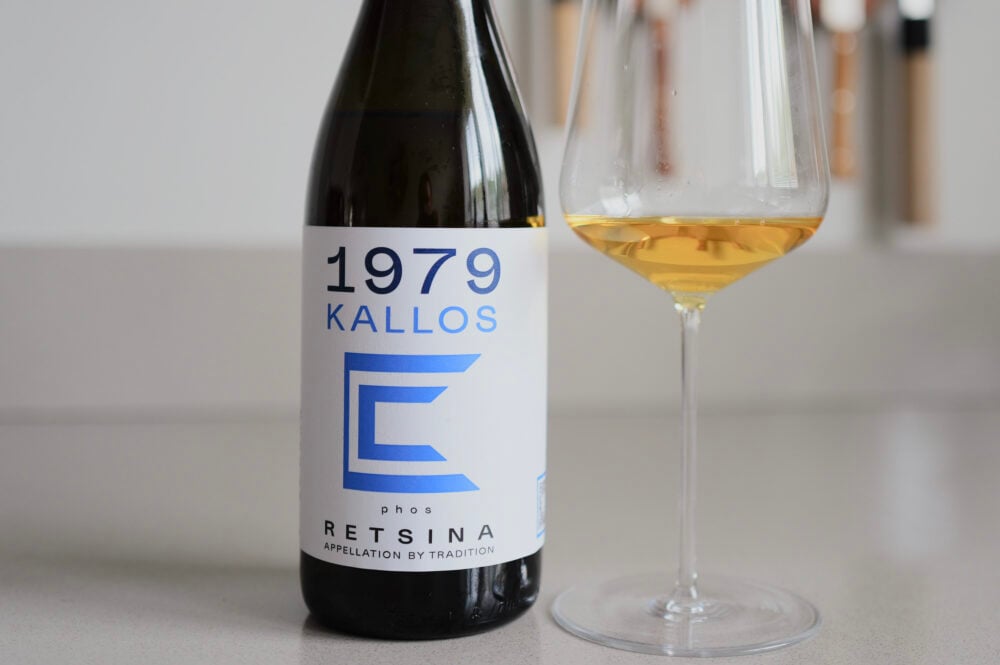
1979 Kallos Thalassino 2022 opens with Assyrtiko’s citrus. Behind it, Eleni finds the sea: iodine, something of oysters, and a pine note that leans towards lemon rather than turning heavy. I found it refreshing, and it reminded me of Chios, where mastic is tapped from trees. Eleni agreed that mastic and pine resin belong to the same aromatic family, though they come from different trees. She would serve it with fish and oysters, sea bass, olive oil-based dishes, even pizza.
1979 Kallos Stergianos 2022 smells rounder, more complex and a little waxy. Underneath, Eleni picks up a herbal layer of rosemary and thyme, compounds she also found in her chemical analysis. The acidity felt lower to me than in the Thalassino, which is sharper. Eleni agreed, while pointing out that the grape’s acidity is identical. She expects this style to age well, as she knows it from earlier vintages. Her pairing is white meat, or fish with butter.
1979 Kallos 2020 is the oldest and the blend. Eleni finds nuts, citrus marmalade, minerality and a petrol note, and says it sometimes reminds her of Gewürztraminer. I got fresh lemon and lime zest, some grapefruit peel with a touch of bitterness, and less acidity than the first wine. It is complex but doesn’t overwhelm you; you don’t have to puzzle over what you’re drinking. Eleni pairs it with heavier meat, hard yellow cheese, Camembert, or fried cheese with marmalade.
She added one tip: give these wines time, in the bottle and in the glass. She keeps smelling her glass after it’s empty, which she says is often the best part.
Retsina as Culture
“For me, retsina is a culture, not only a wine,” Eleni said early on. Later it became clear what she meant. Pines are protected in Greece. You can’t fell one, not even in your own garden, and a newly planted tree needs more than twenty years before it can be tapped. She owns no forest herself. The state grants the right to collect resin to people who meet social criteria, and tells them which trees they may use. Eleni works with collectors willing to do it without sulphuric acid, which she calls the hardest part, because the tree then yields less.
Price and Availability
The wines have been on the market for ten to eleven months and are sold in Germany, Belgium, the UK and Canada. At the time of recording there was no Dutch importer. Eleni hoped the Netherlands would follow but couldn’t give a Dutch price. In Greece, she said, the 2020 costs about €16 and the 2022 micro-vinifications about €25. Prices elsewhere are unknown.
I came across this retsina through the Great Greek Wines list and my conversation with Yiannis Karakasis. Judge Julie Harding MW gave it 18 points on the Jancis Robinson scale, and Stelios Thalassinos scored it 17.5. Eleni says that gave her confidence. She isn’t entering any other competitions with this project.
This was one tasting of three bottles, with the maker at the table. The chemistry and the forest stories are her account.
She isn’t finished. She is researching families within the Aleppo pine and resin from more regions. A rosé or claret-style retsina may come later, but for now she is sticking with white Assyrtiko, perhaps in a fresher style without barrel. Her advice to anyone curious: try it without preconceptions.
Yamas.
Try These Wines
1979 Kallos Thalassino 2022: resin from coastal pines in Halkidiki. Citrus, iodine, oyster shell. With shellfish and fish. Around €25 in Greece.
1979 Kallos Stergianos 2022: resin from Megara, Attica. Rounder, herbal. With white meat or fish in butter. Around €25 in Greece.
1979 Kallos 2020: resin from three forests. Nuts, marmalade, petrol. With heavier meat and cheese. Around €16 in Greece.
More information at 1979wines.com. There was no Dutch importer at the time of recording.
Watch or listen to the episode
Sources
- 1979 Wines (official, Eleni Kechri): 1979wines.com
- Wines of Greece: retsina tradition: winesofgreece.org
- Sparks by VinoVonk ep. 34, conversation with Eleni Kechri (video above)
More on Sparks

Enrico Rivetto: Barolo, Biodiversity, DOC Rules
Enrico Rivetto planted over a thousand trees among his Barolo vines. I tasted his Langhe Nascetta and we talked Demeter, daughter-drawn labels and doubt.
Read on →
Stamatis Mylonas: Savatiano That Ages Well
Stamatis Mylonas on Savatiano from Attica: old bush vines, mineral soils and a 2016 Gran Reserva that still tasted fresh and taut when I opened it.
Read on →
Bodegas Viuda de Manjón: Sherry's Renaissance
Pablo García de León on Bodegas Viuda de Manjón: 175 years of sherry from Sanlúcar and Jerez, four Leaena sherries tasted, a vino de pasto on the way.
Read on →