Les Riceys: One Village, Three Champagne AOCs
Les Riceys sits on the Burgundy border with 866 hectares of vines and three of its own AOCs: Champagne, Coteaux Champenois and Rosé des Riceys.

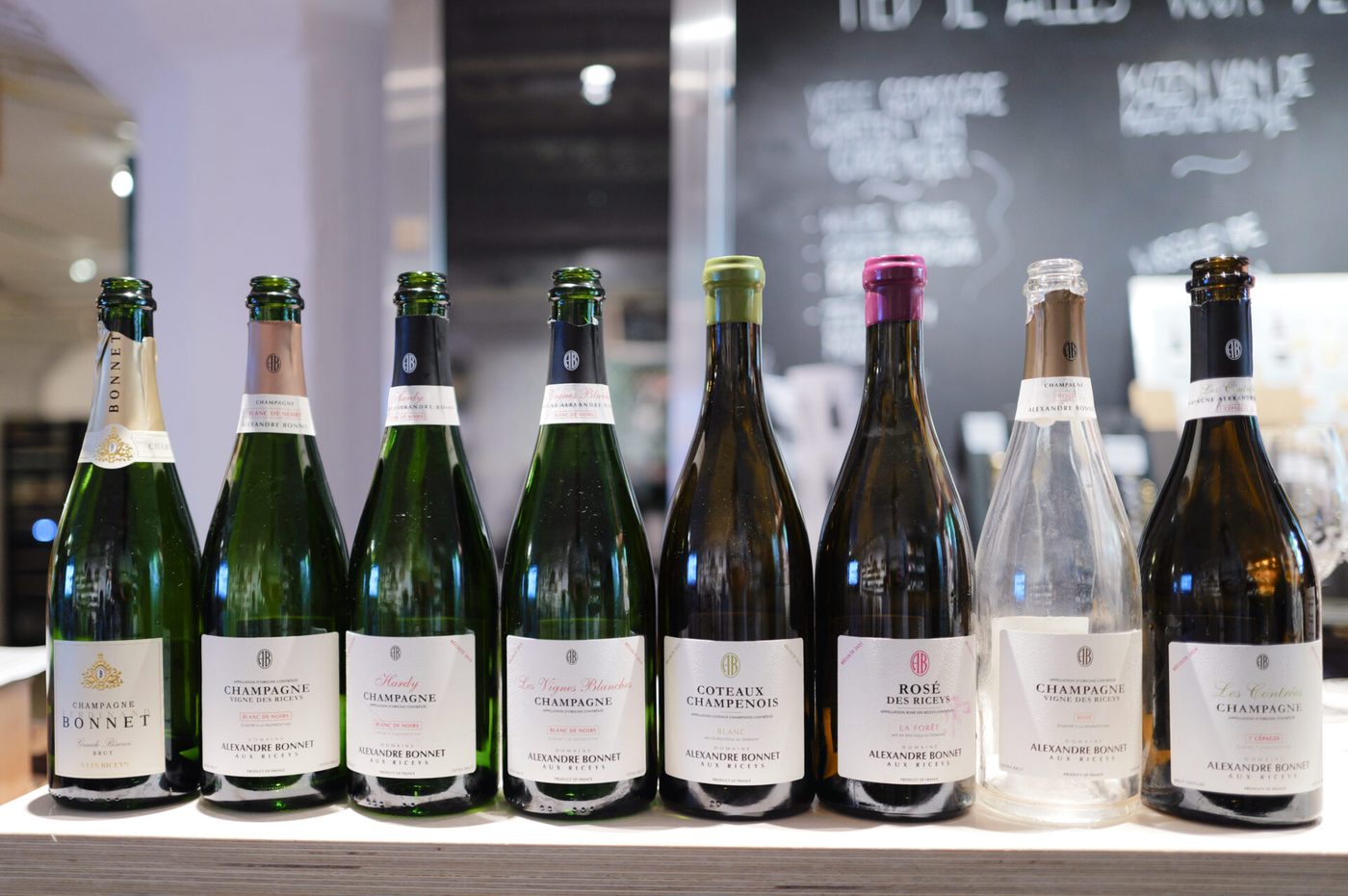
Les Riceys sits 50 kilometres south of Troyes, in the Côte des Bar of the Aube. The village is closer to Chablis than to Reims, and that geography explains almost everything unusual about the place. With 866 hectares of vines it is the largest wine-producing commune in the entire Champagne appellation. Yet it appears on virtually no standard Champagne map handed to tourists.
The commune consists of three historically separate hamlets: Ricey-Bas to the north, Ricey Haute-Rive in the middle of the valley, and Ricey-Haut on the plateau toward the south. The Laigne river runs between them, and the slopes above grow almost exclusively Pinot Noir. That is no accident. The Kimmeridgian subsoil, marl and limestone from the Jura period with fossils of Exogyra virgula oysters, is the same geological layer that lies beneath Chablis. The Côte d’Or begins less than 60 kilometres further on.
Three AOCs in one commune
Les Riceys is the only Champagne village that hosts three of its own appellations: Champagne (sparkling), Coteaux Champenois (still wine), and Rosé des Riceys (still rosé). The last was formally granted on 8 December 1947 and applies exclusively to this single commune. No other village in France carries a comparable combination of sparkling and still appellations under one roof.
In practice: most growers deliver grapes to large Champagne houses or bottle their own grower-champagne. Coteaux Champenois and Rosé des Riceys are niche volumes, made by the same winemakers in years where the Pinot Noir ripens fully without rot pressure. In cool or wet years all the fruit goes into Champagne base wine. That is economic logic, and it explains why rosé volume fluctuates so sharply.
Rosé des Riceys: rules and reality
The AOC demands 100% Pinot Noir (since 1971), max 30 hl/ha (against 50 hl/ha for regular Champagne), a mandatory minimum of 10% natural alcohol which leaves chaptalisation rarely used in practice, manual bunch selection, and a maceration of 3 to 6 days with partial whole-cluster (semi-carbonic). During maceration the winemaker checks daily using the so-called goûte: a tasting ladle drawn from the vat that pinpoints the exact moment of pressing. Too early and the wine is pale and flat, too late and the tannins overshoot. That window sometimes lasts only a few hours.
Volumes stay small as a result. Of the 350 hectares formally inside the Rosé AOC, in practice only around 30 hectares are actively harvested for rosé. Total production in a good vintage: 30,000 to 70,000 bottles, spread across about 25 active producers, of whom fewer than twenty actually bottle Rosé des Riceys and only a handful do so every year. In unsuitable vintages the entire appellation skips a round.
Stylistically the wine sits closer to a light Burgundy Pinot Noir than to a Provençal rosé. The colour is more red-pink than salmon; the palate runs on cherry, spice and an earthy minerality the Kimmeridgian soil delivers. Good bottles can age ten to fifteen years.
Where the “best-kept secret” claim holds and where it wobbles
Plenty of English-language wine press describes Les Riceys as “Champagne’s best-kept secret”, complete with the standard Louis XIV anecdote: workmen at Versailles were unusually cheerful, the Sun King discovered their pink wine from Les Riceys, and from then on the bottle stood on his table. Primary seventeenth-century sources confirming that under the same name are missing; the story comes mostly out of later Champagne marketing. The core probably holds (the wine was drunk at court), but the precise royal preference is hard to document.
What is verifiable is that the village sits structurally in the shadow. Marne-Champagne built an international brand narrative around Reims and Épernay from 1900 onward, while the Aube remained administratively borderline inside Champagne for decades. Only in 1927 was the Aube definitively added to the appellation, after years of grower protests. That historical fact explains why Les Riceys lags behind grand-cru villages such as Aÿ or Cramant in marketing visibility, not the quality of what now comes off its slopes.
Producers to remember
- Marie and Olivier Horiot (8.5 ha, biodynamic) makes Rosé des Riceys at single-vineyard level, with cuvées such as En Barmont and En Valingrain. The most internationally cited name.
- Alexandre Bonnet is larger, with a broad Champagne range and a reliable Rosé des Riceys.
- Jacques Defrance (since 1867, fourth generation) and Champagne Morel sit in the same niche: local Pinot Noir, own bottlings.
- Pascal Walczak works smaller, with a focus on single-parcel cuvées.
International price range: €40 to €80 retail for Rosé des Riceys from Horiot or Bonnet, comparable to a serious Burgundy Pinot Noir or a grower Champagne from the same village. This is not entry-level rosé, and it is not meant to be.
Why the village matters
Les Riceys is not an alternative to classic Champagne. It is a different wine region that happens to fall inside the same appellation. The combination of Kimmeridgian soil, dominant Pinot Noir, three AOCs and a vinification tradition older than the first sparkling Champagne turns the village into its own case study within the French wine system.
For anyone wanting to understand Champagne beyond the house marketing, a bottle of Rosé des Riceys alongside a grower Champagne from the same village delivers the most instructive tasting moment. Two wines, same soil, same grape, completely different styles.
Frequently asked questions
Where is Les Riceys?
Les Riceys lies in the Aube, the southernmost part of Champagne, close to the Burgundy border. The commune has around 866 hectares of vineyard, planted mostly with Pinot Noir on the chalky Kimmeridgian soil you also find in Chablis.
Which three AOCs does Les Riceys have?
Les Riceys can bottle under three names: Champagne (the sparkling wine), Coteaux Champenois (still red and white) and Rosé des Riceys (a still rosé). Few French communes hold three appellations of their own.
What is Rosé des Riceys?
Rosé des Riceys is a still rosé made from 100 percent Pinot Noir through short skin maceration (saignée). It is made only in good years and in small quantities. The style is deeper and more vinous than an average rosé, with earthy red-fruit notes.
Is Les Riceys really a hidden gem?
Partly. Prices sit below the Marne and the best growers make high-quality wine. But “best-kept secret” is relative: growing demand for Aube Champagne and grower names is slowly pushing prices up. Step in now and you are still buying under the radar.
Sources
- Comité Champagne, Côte des Bar region: champagne.fr
- INAO, AOC Rosé des Riceys cahier des charges
- Peter Liem, Champagne (Ten Speed Press, 2017)
- Marie et Olivier Horiot: horiot.fr
- Alexandre Bonnet: alexandrebonnet.com