

Late Bloomer's Advantage: Belgian and Dutch Wines
Belgium and the Netherlands prove that late-arriving wine industries have advantages. No expensive retrofits, just sustainability from day one.
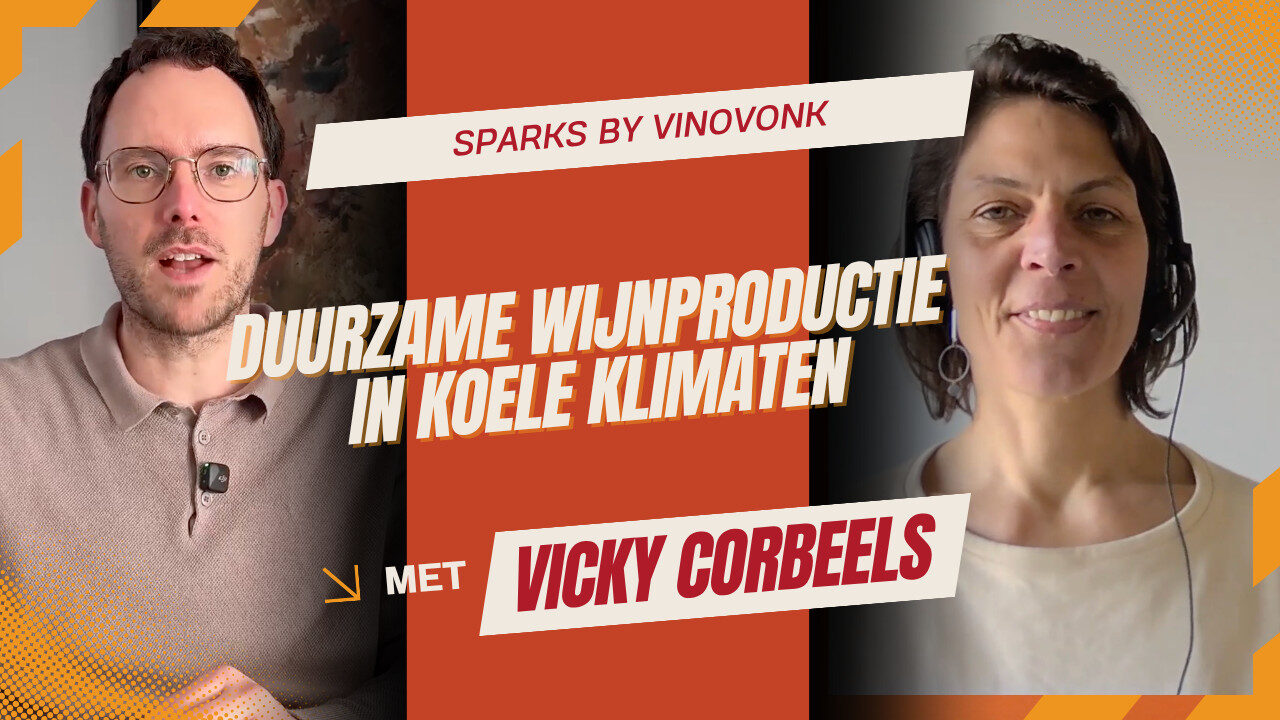
3.5 million liters of wine per year. That is what Belgium now produces, making it one of the largest cool-climate producers in Europe. Yet researcher Vicky Corbeels at KU Leuven still calls the sector “embryonic”, and that is not a contradiction. That is the entire point.
In other industries, arriving late means playing catch-up. For 21st-century viticulture, the math runs differently. Belgian and Dutch producers are building their infrastructure now, in an era where sustainability is not an extra but a starting point.
The advantage of arriving late
While Bordeaux estates trace back to the 1600s, a Belgian grower in 2024 plants his first hectare. That sounds like a deficit. In practice it is a clean slate. No 1850 cellar that needs retrofitting for modern environmental rules, no inherited vineyard with the wrong grapes, no equipment that was “good enough” in the 1980s.
Last year’s Low Countries Wine Festival drew 400 visitors. The question is no longer whether this sector grows, but how differently. Two-thirds of Belgian vineyards still plant traditional varieties, but that is shifting fast. Modern crossings bred for cooler climates need less spraying and give more consistent harvests.
The maturity gap as opportunity
Corbeels’ research calls it a “maturity gap”: traditional regions have decades of established practice, but much of it needs expensive retrofitting to meet today’s environmental standards. Cool-climate regions simply skip that step.
Investment costs stay high. Setting up a vineyard and winery costs serious money no matter where you start. But building correctly from the start costs less than building conventionally and renovating later. That is not environmental idealism. That is arithmetic. Climate economics keeps landing on the same result, from the Stern Review to the European Environment Agency’s cost-of-inaction work: postponing the investment makes it dearer, not cheaper.
Learning from other people’s mistakes
Here is where timing matters. Traditional wine regions are suffering from climate change now, while cool-climate areas benefit from gradual warming. More consistent ripening, fewer failed harvests. That gives northern producers room to observe what works in the south, and what does not.
Corbeels found, for instance, that some certified-organic producers use highly polluting frost protection, burning materials in the vineyard to push frost away. A Belgian or Dutch winemaker sees that mistake and chooses differently from the start.
The key is not blind copying but strategic learning. Why repeat Bordeaux’s trial-and-error when you can study the results and adapt them? The problem: learning needs research funding, and traditional regions have more access to it via EU channels. Cool-climate regions have to work harder for that funding, exactly when they are trying to avoid expensive mistakes.
The consortium approach
Belgian universities are building a consortium with the Netherlands, Denmark, and Estonia to pursue EU agro-ecology funding. The collaboration reveals how diverse “cool climate” actually is. Denmark has areas where figs and olives grow. Estonia faces very different challenges above the 56th parallel.
For the full discussion of this research and the commercial opportunities that follow, listen to the Vicky Corbeels interview on the VinoVonk Sparks podcast.
The strategic position
The pioneer phase here is not a weakness but a position. Cool-climate regions are building a sector with sustainability as core infrastructure, not as an expensive retrofit. They learn from the mistakes of traditional areas and benefit from gradual warming at the same time. They collaborate across borders rather than just competing.
Consumer demand is proven. Production is substantial and growing. The economic logic is plain: build it right the first time. For producers, investors, and consumers the opportunity is clear. Back an emerging wine industry that is getting it right from day one.
Domein Holset Novo 2022: proof of Dutch ambition
An inspiring Dutch winemaker story: Joni Sloesen (podcast)
Sources
- Vicky Corbeels (KU Leuven), research on cool-climate viticulture; the full conversation is in Vicky Corbeels on Cool-Climate Winemaking
- Vereniging Nederlandse Wijnproducenten: nederlandsewijnproducenten.nl
- Stern Review on the Economics of Climate Change (2006), on the cost of delay
- European Environment Agency, cost of inaction versus cost of adaptation: eea.europa.eu
More on Wine Region

The Champagne boundary was drawn by politics
New research in Journal of Wine Economics: villages inside the Champagne AOC have 10% lower unemployment. And the boundary itself is a compromise from 1911.
Read on →
Les Riceys: One Village, Three Champagne AOCs
Les Riceys sits on the Burgundy border with 866 hectares of vines and three of its own AOCs: Champagne, Coteaux Champenois and Rosé des Riceys.
Read on →