

Henri Chauvet Adonis 2020: the first drop
House du Champagne launches its first drop with Henri Chauvet's Adonis 2020. A Blanc de Blancs from Rilly-la-Montagne, Chardonnay on unexpected terroir.

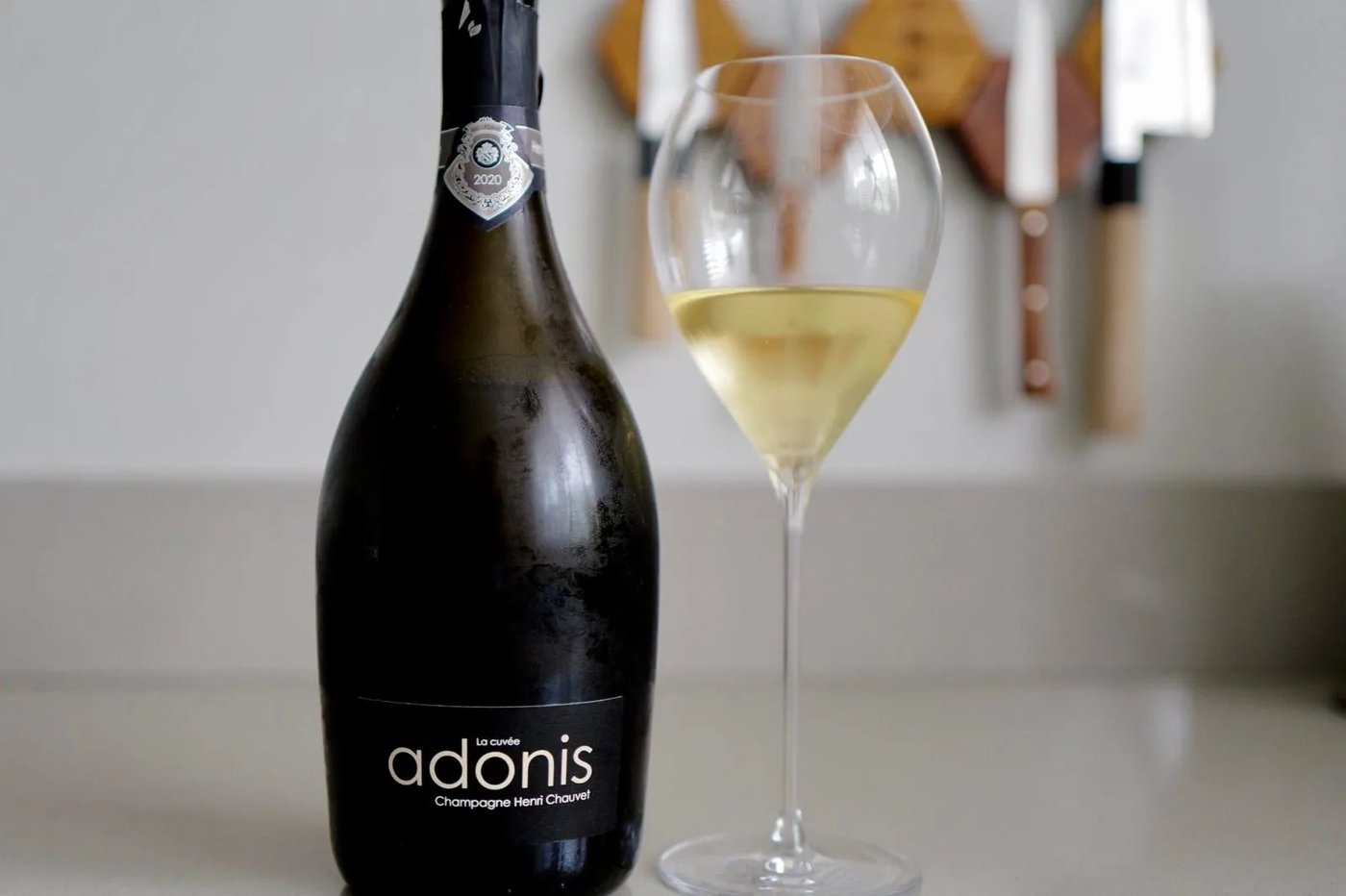
A club that drops champagne the way a label releases a single: that is the idea behind House du Champagne. No shelf full of familiar grandes marques, but a closed circle where members are offered one carefully chosen bottle at a time. For the very first drop the choice falls on the Henri Chauvet Adonis 2020, a Blanc de Blancs with more to say than its label lets on.
It makes sense as an opening move. House du Champagne built its name on grower champagne, on houses that farm their own grapes and fill their own bottles. Henri Chauvet fits that story: a family house in Rilly-la-Montagne making wine since the nineteenth century, now run by a new generation. Anyone meeting the club through this bottle gets the founding premise straight away.
- Producer
- Henri Chauvet
- Cuvée
- Adonis, Vintage 2020
- Style
- Blanc de Blancs, 100% Chardonnay
- Classification
- Premier Cru
- Origin
- Rilly-la-Montagne, Montagne de Reims
- Ageing
- 4 years, partly in wood
- Disgorgement
- May 2025
- Dosage
- 7 g/l (brut)
- Alcohol
- 12.5%
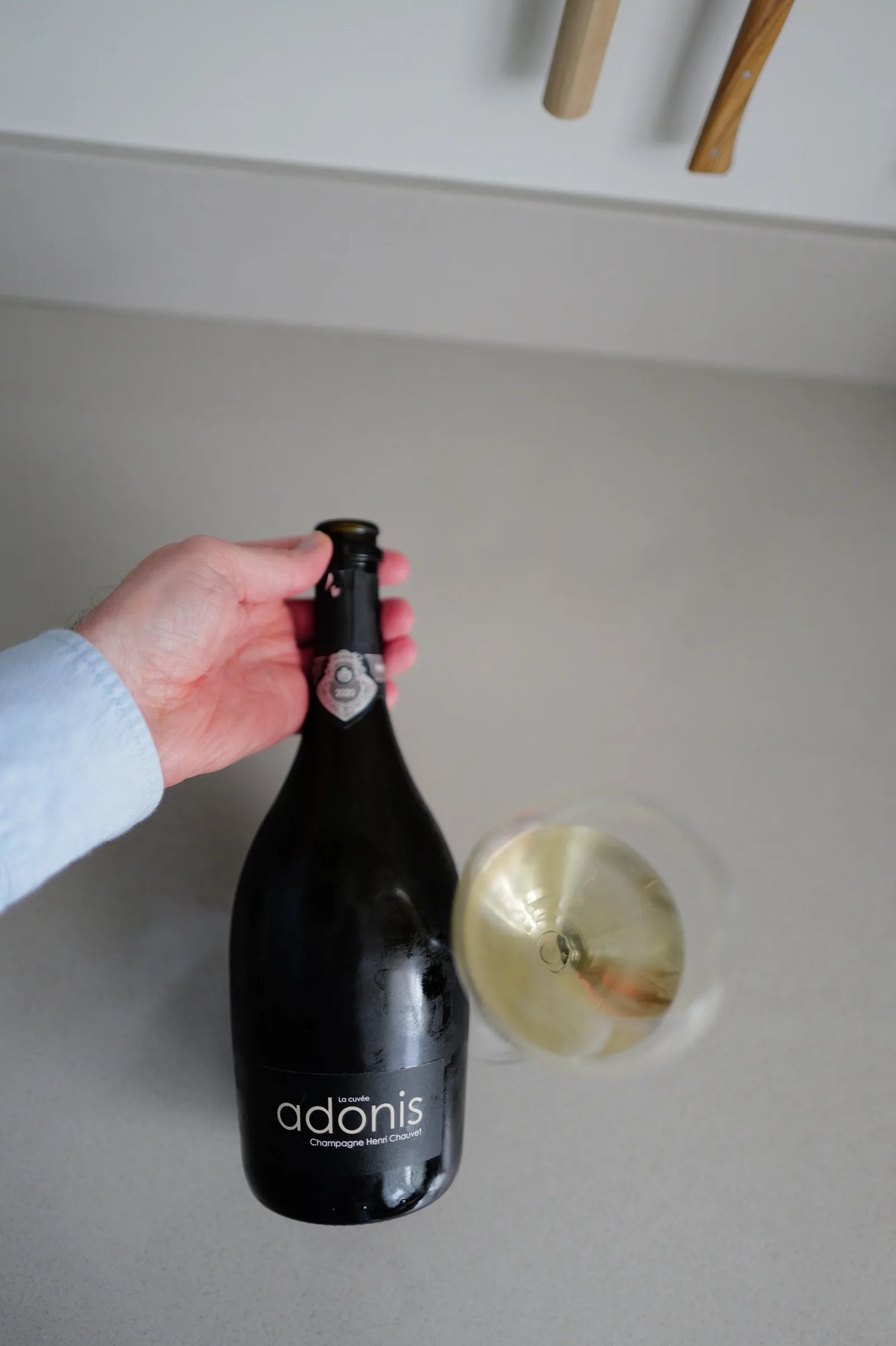
Chardonnay on the wrong mountain
This is where it gets interesting. Rilly-la-Montagne sits in the Montagne de Reims, and that is Pinot country. The hills around Reims are classically the domain of Pinot Noir and Pinot Meunier, the grapes that give champagne its body and red-fruit frame. Chardonnay has its permanent address further south, on the chalk slopes of the Côte des Blancs. A Blanc de Blancs from Rilly is therefore not a given but a decision, almost a statement.
That puts a question right inside the wine. Chardonnay from the Montagne de Reims ripens on a different subsoil, catches a different light, and usually turns out fuller and less linear than its cousins from the Côte des Blancs. Whether that reads as an advantage or a compromise in this glass only the tasting can settle.
Four years, partly in wood
The numbers tell the second half of the story. Four years of ageing is generous for a vintage in this price bracket, and the portion raised in wood explains what House du Champagne flags in its own note: a first impression of youthful freshness that gives way to secondary notes of toast and vanilla as the bottle opens.
There is tension in that too. A dosage of 7 grams per litre puts the Adonis at the upper end of what now counts as brut, at a moment when many growers are shifting toward extra brut or even brut nature. Combined with wood ageing on a still-young vintage, it raises the risk that warmth and a hint of sweetness override the chalky tension of the Chardonnay, the very quality that gives a Blanc de Blancs its backbone. The May 2025 disgorgement also means this bottle comes fresh off the lees and is still very much in motion. None of this is a verdict in advance, but these are exactly the points I judge the wine on.
Tasting note
Tasting Note
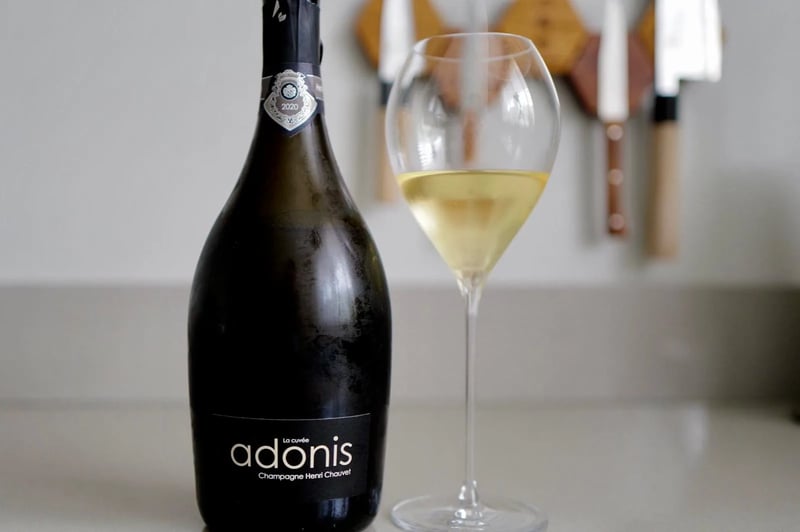
Appearance
Pale lemon-yellow in the glass.
Nose
Fresh and youthful right away. Apple and pear up front, with a whole spread of citrus behind them: mandarin, a strip of orange peel, a touch of grapefruit. What strikes me is that I do not pick up much classic Chardonnay straight off, exactly the question the origin raised. Underneath, a small wood note still holds back.
Palate
Rich and fresh at the same time, with a thick, creamy mousse. A buttery tone, a hint of crème fraîche, and again that full citrus with apple and a whisper of pear. There is something smoky in there, and the wood notes come back with a light spiciness. Toward the back it turns more generous: vanilla, butterscotch, something almost marzipan-like, creamy without ever turning heavy.
Quality
This is where my two doubts get answered. The wood ageing and the 7-gram dosage do not pull the wine off balance: freshness and citrus keep the upper hand, and the wood plays a supporting role rather than the lead. And the fact that the Chardonnay does not announce itself loudly is no flaw; it is what makes the bottle wilful. A fun, non-standard champagne that holds up both at the table and as an aperitif through a whole evening.
A good first impression?
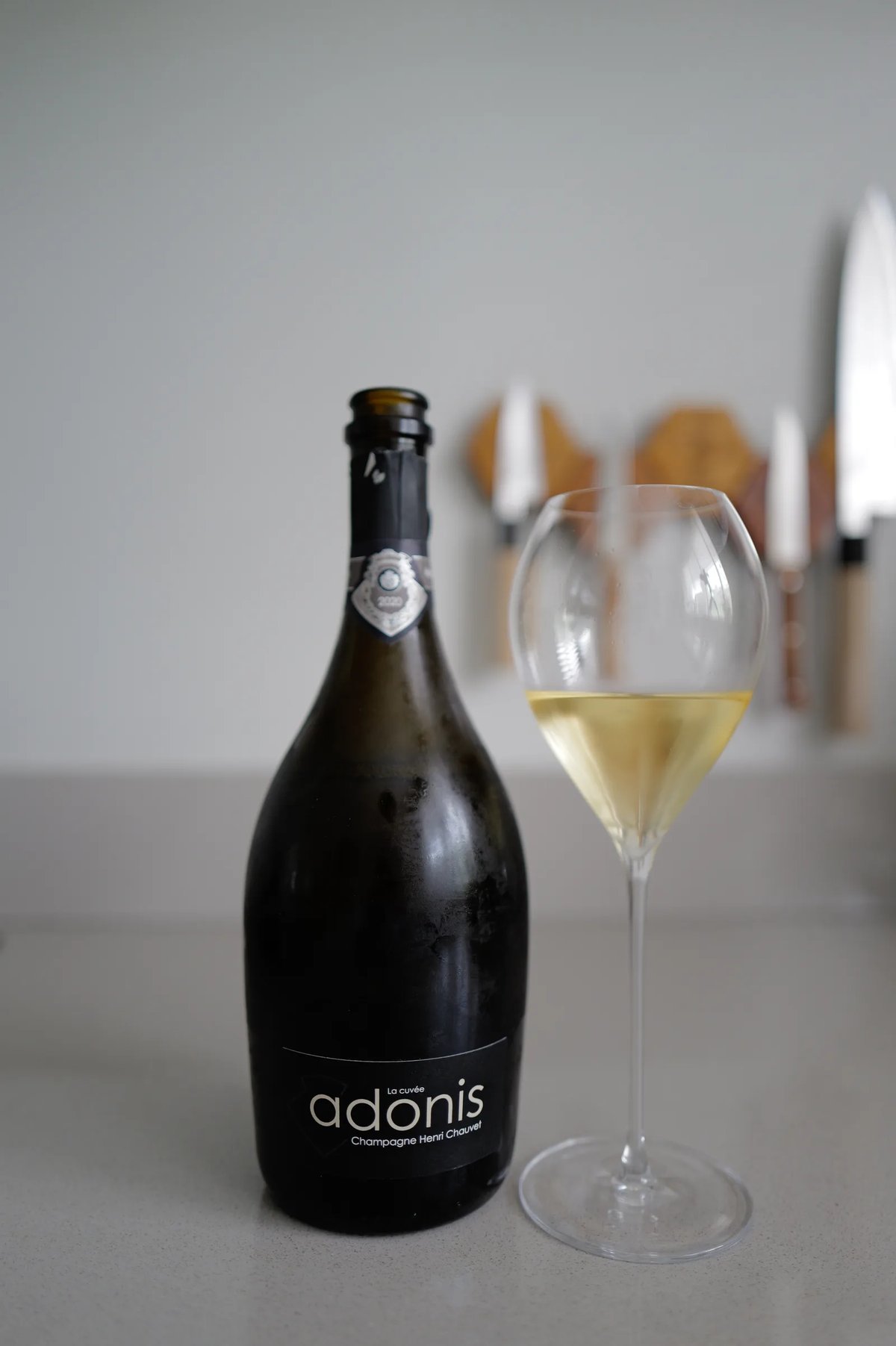
A first drop sets the tone for everything that follows. With the Adonis, House du Champagne skips the safe marquee bottle and picks a grower with a wilful story: Chardonnay where you would expect Pinot, wood where many houses now go without. After tasting it, that judgement holds. The bottle answers its own questions: the wood and the dosage stay inside the lines, and it is precisely that unexpected Chardonnay that makes it worth the detour. A strong opening for the club.
For more on the house behind this drop, read Hidden Gems of Champagne: House du Champagne’s artisanal treasures, where I go deeper into Henri Chauvet and the thinking behind the selection.
About House du Champagne
The app group this bottle was offered through is an extension of the champagne business at House du Champagne. In the group they offer wines they drink themselves and stand behind. The focus is on France, mainly Burgundy and Champagne, with the occasional detour to Germany or South Africa. Where they can, they import directly, with a story attached. From affordable to a bit more exclusive: many of these bottles are hard to find elsewhere, which makes it a little more fun.
The bottle arrived as a press sample from House du Champagne, found on Instagram at @houseduchampagne. No payment, the opinion stays mine.
More on Wine Review
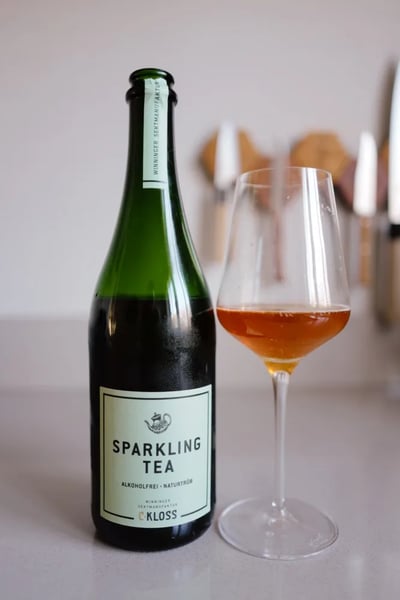
C. Kloss Sparkling Tea Weiss: Fermented Celery
Non-alcoholic sparkling tea Weiss from C. Kloss: linden blossom, nettle and fermented celery. Dry, 2.7 g sugar per 100 ml, €14.99 at Amavine.
Read on →
Barbadillo Sábalo: Organic Palomino Without Flor
Organic Palomino Sábalo from Barbadillo: no flor, salt from albariza soil. Chamomile, apple, sea. €17.95 at Granada Wijnen, with discount code.
Read on →
Tua Rita Lodano Rosso 2024: Petit Verdot Leads
A €50.95 Super Tuscan built on 60 percent Petit Verdot and 18 months of barrique. Why I chill it, decant it and never drink it without food.
Read on →