

Weingut Götz: Rheinhessen organic riesling
Holger Götz makes organic riesling and pinot noir in Rheinhessen. Twelve hectares, seventy thousand bottles, German precision without overstatement.
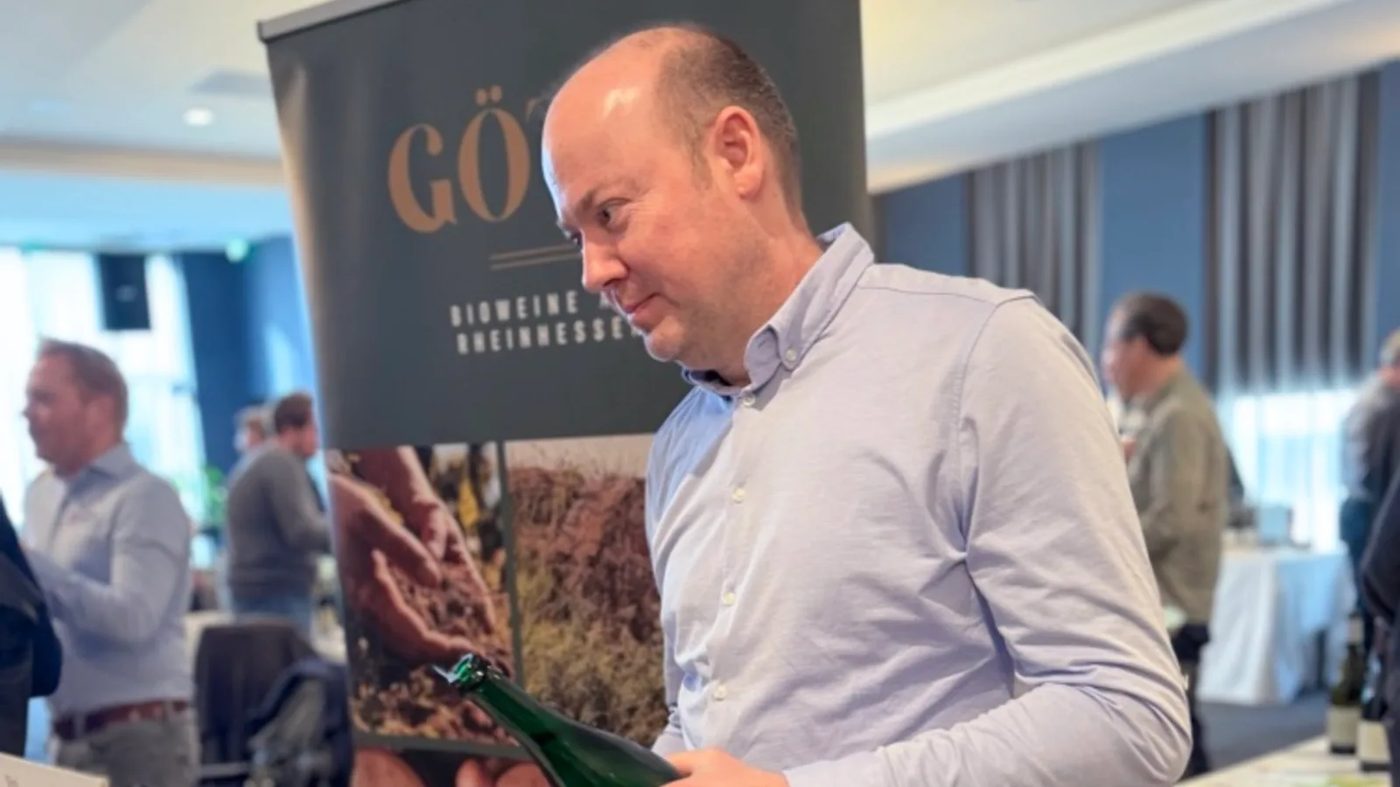
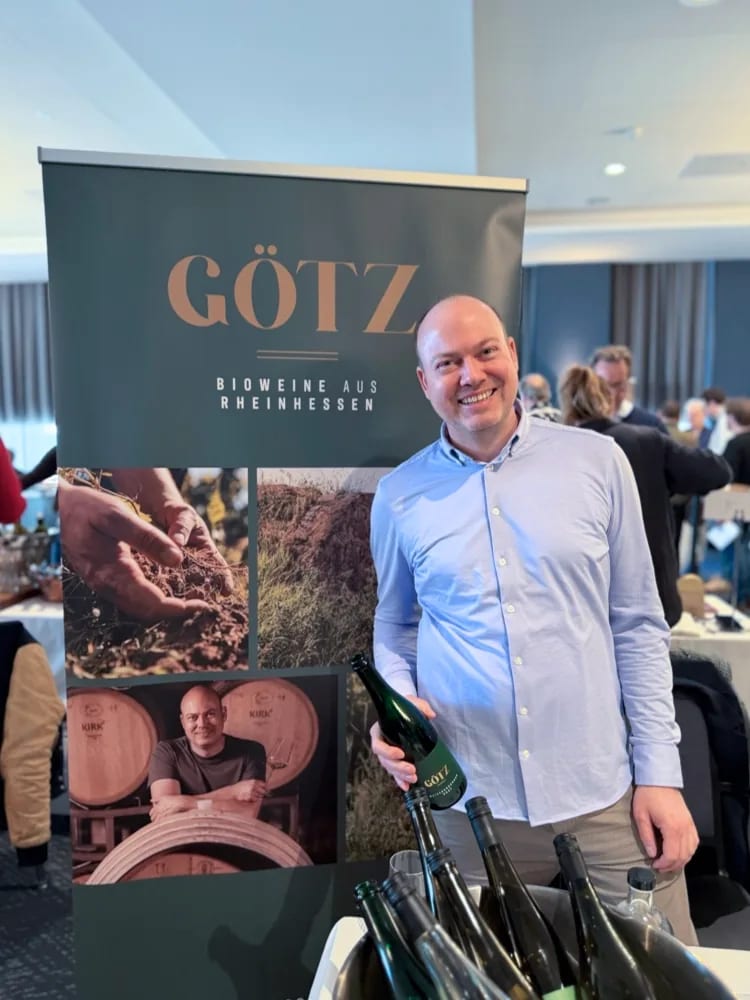
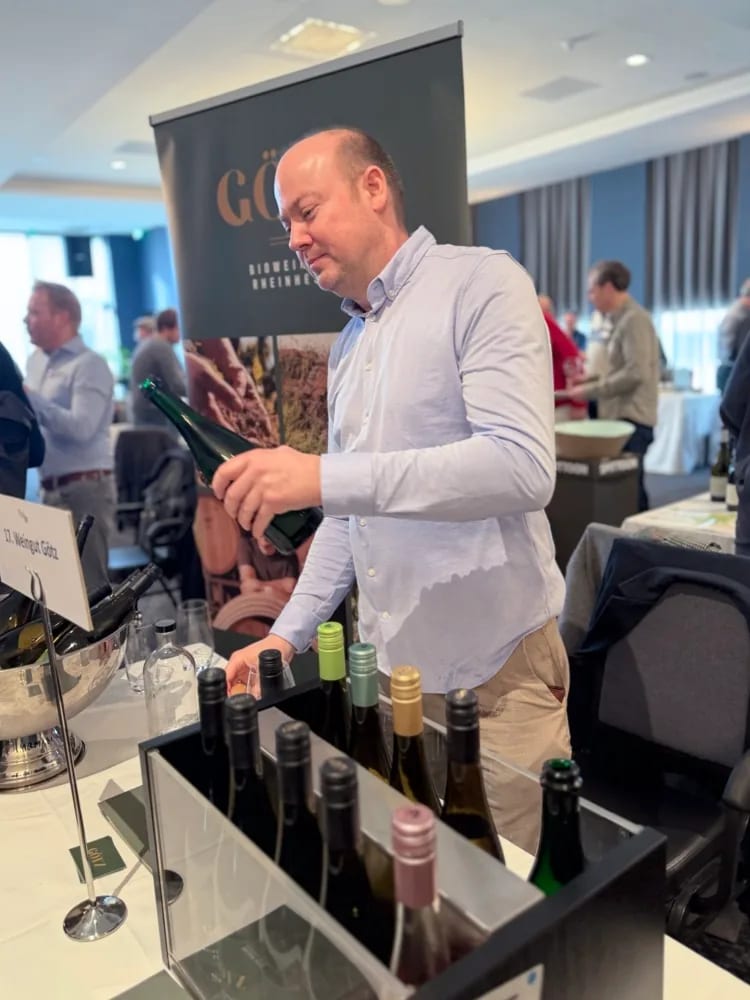
Holger Götz poured without much commentary. A Rheinhessen riesling, vintage 2024, organic certified. No sales line around it. Just “taste it” and waited until I lifted my glass. That was how the Weingut Götz table at ViniBio 2026 worked.
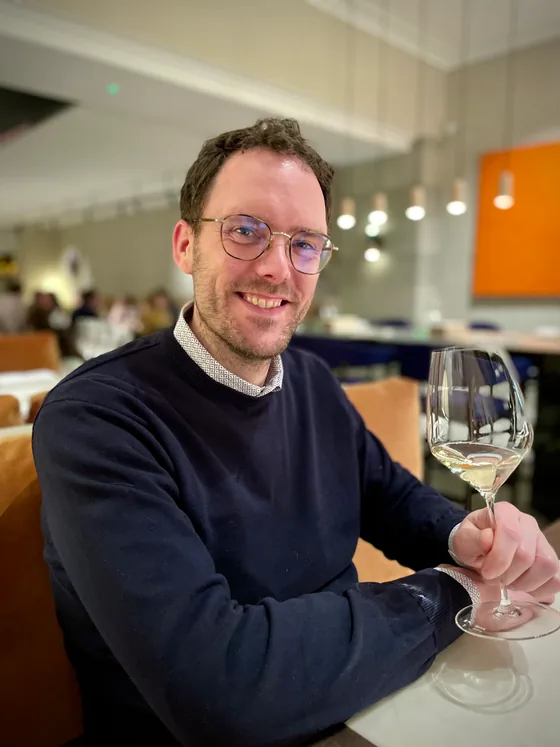
We had been in touch via Instagram, this ViniBio was the first time we met in person. The estate was already in my head as a reliable Rheinhessen source, not a discovery. Tasting the wines on the table confirmed what I thought. This is German winemaking with focus and intent, without the lapses the natural scene sometimes falls into.
The numbers and the place
Twelve hectares under vine. Seventy thousand bottles a year. Organic certified. In Rheinhessen context that is a mid-sized family estate. Small enough to know every parcel personally. Large enough to make a difference in importer conversations.
Rheinhessen itself is Germany’s largest wine region by area. For a long time it was best known for Liebfraumilch and sweet supermarket wine. That past has been buried by a generation of growers who reset the cutlery in the 2000s and 2010s. Tighter vinification, lower yields, terroir focus, and organic conversion.
Holger sits in that generation. Not the loudest, but one of the most consistent. Comparing his rieslings to better-known Mosel names shows the difference in character immediately. Mosel slate, Rheinhessen limestone and loess. Different soil, different wine profile.
Riesling with clarity
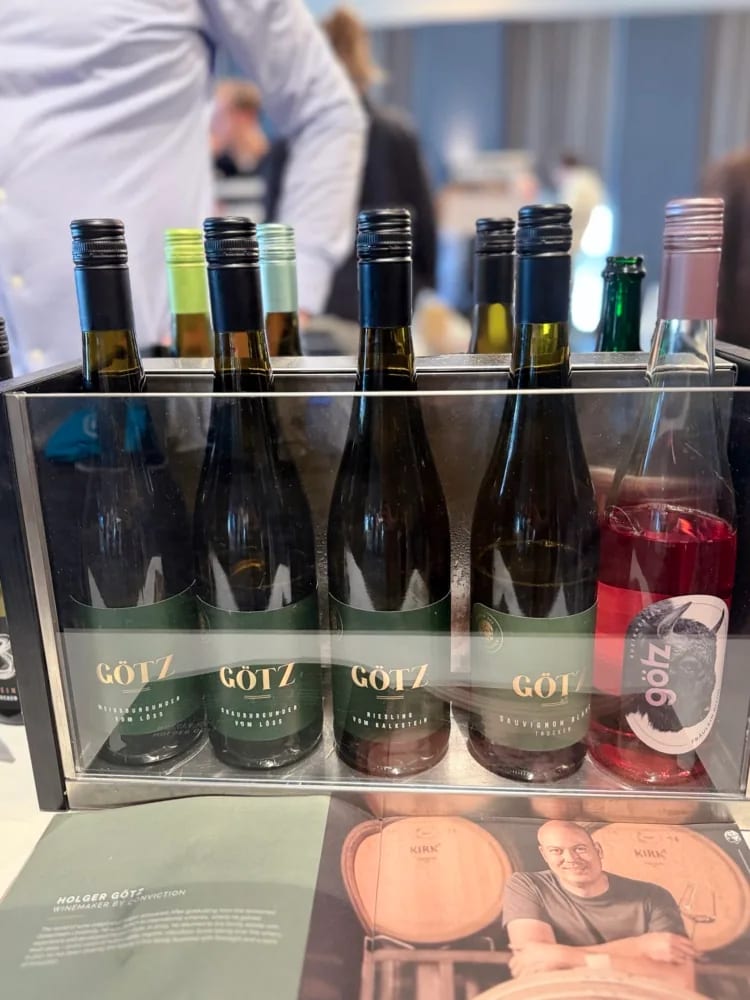
The rieslings sit at the centre of the portfolio. Three expressions on an ascending line.
The entry-level riesling, dry, fresh, apple and lime. Not seeking complexity, but clean. The kind of bottle that works in a wine bar without explanation.
The Trocken from a specific parcel showed more weight. Yellow fruit, a herbal edge, residual acidity that stays taut. Here is why high-end Rheinhessen riesling stays so underrated outside Germany. This is not Mosel style, not Rheingau style, but its own profile with focus and length.
The single-vineyard riesling closed it. Minerals, yellow stone fruit, a texture closer to white Burgundy than to Germany. No modernist setup, no oak dominance. Structure that gets better over the next few years.
Pinot noir that does the region justice
Next to the rieslings stands pinot noir, or spätburgunder as it is called in Germany. Holger has reached a level here that surprises many international buyers.
The wines are not the heavy, oaky spätburgunders that used to be exported from Germany. They are lean, with fresh red fruit, fine tannins and acidity that keeps the wine open and food-friendly. The kind of pinot noir that pairs with a light meat course or roasted fish without dominating.
For context: German pinot noir is in a growth phase on the international market. Producers like Holger show that the variety can reach the same finesse here as in parts of Burgundy, for a fraction of the price. For a serious wine list, that is an argument.
Why this is not entry-level Rheinhessen
Anyone looking for Rheinhessen organic riesling will find plenty of suppliers. Not all of them work at the level Weingut Götz holds. The combination of scale, organic certification, single-vineyard vinification and stylistic restraint is not common.
For anyone wanting to compare this style to Loire precision or Rhône sun, the portfolio sits well next to Daxivin’s Loire biodynamic selection. It also fits the broader organic line at ViniBio 2026.
The verdict
Holger Götz makes wines that work on a wine list because they have personality without dominating. For wine shops looking to deepen their German section beyond Mosel and Rheingau, this is exactly the kind of estate that completes the offer.
Not a discovery for anyone who already knows Rheinhessen. A confirmation of where the region moves at its best: certified organic, parcel-driven, and without the pretension you sometimes hear elsewhere in Germany. Holger is currently still looking for a Dutch importer, anyone wanting to add Rheinhessen organic to their list can reach out directly.
Contact: Holger Götz Website: weingut-goetz.de
Sources
Tasted at ViniBio 2026, the Dutch trade fair for organic wine, on 2 March in Amsterdam. No partnership with the imported producers.
ViniBio 2026 deep-dives
Other articles from the ViniBio 2026 cluster:
More on Wine Review
Cantina Tramin Troy Riserva 2022: Alpine Burgundy
Cantina Tramin Troy Riserva 2022, a Chardonnay from Alto Adige that leans toward Burgundy. Creamy, taut and exciting. My tasting note on the flagship white.
Read on →
Domaine du Bouchot: Three Pouilly-Fumés, One Hard Year
Eight euros between the cheapest and the dearest. Three biodynamic Pouilly-Fumés by Antoine Gouffier, 2023, tasted side by side on one table.
Read on →
Cantina Tramin Stoan 2023: stone in the glass
Cantina Tramin Stoan 2023, a white blend from Alto Adige. Fresh, mineral and precise, but with a finish that stays average. My tasting note.
Read on →