

Domaine du Bouchot: Three Pouilly-Fumés, One Hard Year
Eight euros between the cheapest and the dearest. Three biodynamic Pouilly-Fumés by Antoine Gouffier, 2023, tasted side by side on one table.
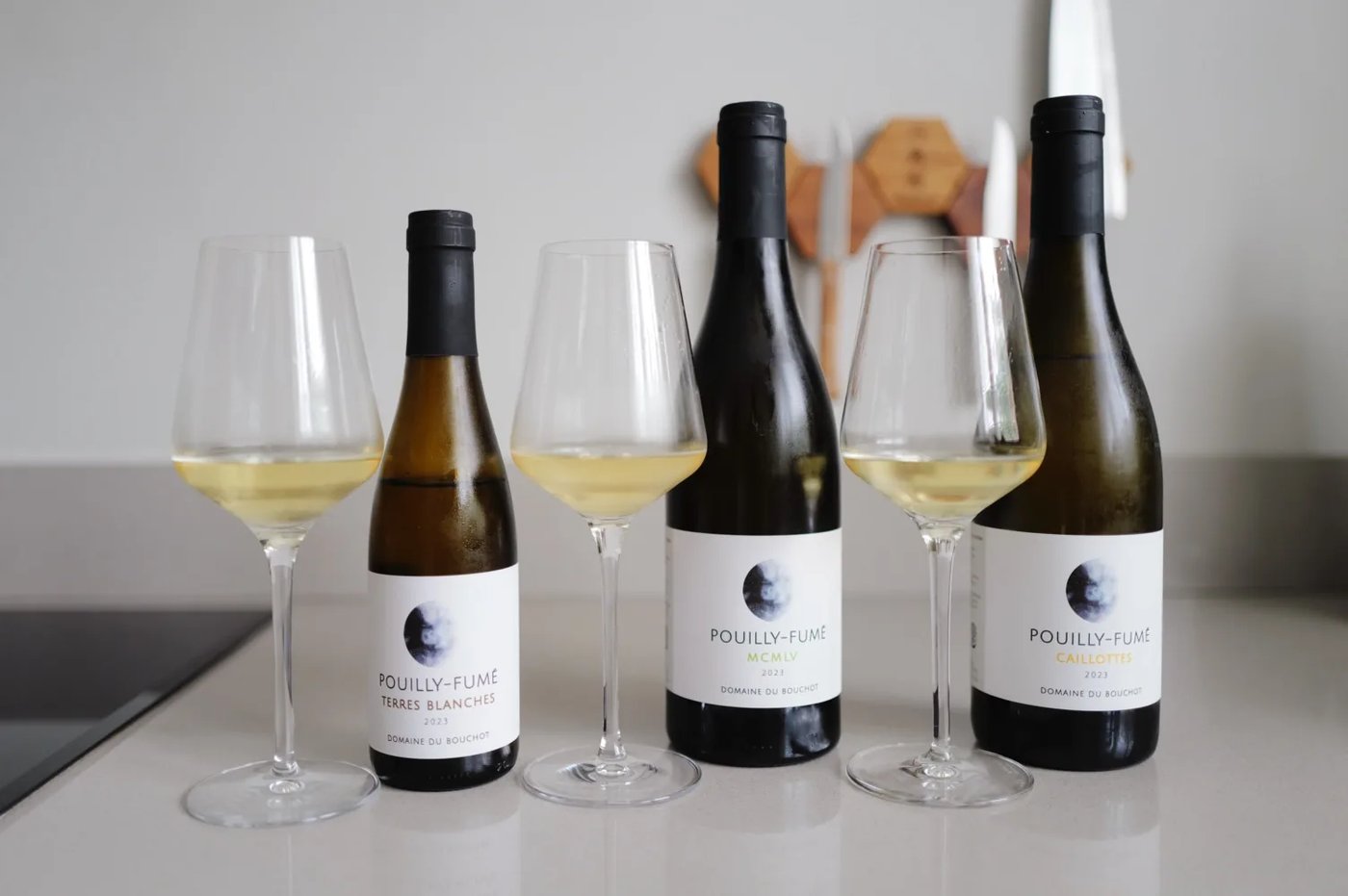
Thirty-two euros, thirty-six, forty. Three bottles made by the same man, from the same grape, the same village, the same year. Eight euros between the cheapest and the dearest, which is a quarter on top.
There is a second thing. For a biodynamic estate, 2023 was the worst kind of year there is. Mildew from April into September, and not a single product you are allowed to reach for.
So, two questions. Can you taste where the money goes. And did the rain win.
One thing on the record before we start: importer Qualivin sent me these three bottles. No payment, and no agreement about what I write.
Fumé has nothing to do with smoke
Almost everybody arrives at the glass with the wrong expectation. Fumé means smoked, and yet nothing here is smoked. No wood fire, no toasted barrel. The name points at the flint in the soil and at the grey bloom that sits on ripe grapes.
If you are hoping for the smoky weight of a heavily toasted Chardonnay, you are in the wrong aisle. What you do get is a kind of flinty tension, and it is subtle.
Antoine Gouffier and the appellation’s first organic estate
Domaine du Bouchot sits in Saint-Andelain, on top of the hill that gives Pouilly-Fumé its name and its reputation. The estate dates from 1987. Antoine Gouffier has run it since 2018 with his partner Ilse Nel, and signed for the purchase in December 2019.
The organic history runs deeper than Gouffier himself. The estate converted in 2004, the first organic property in the whole appellation, and was certified in 2009. Biodynamic practice from 2015, Demeter in 2020, and a Biodyvin member since 2021.
- Estate
- Domaine du Bouchot, Saint-Andelain
- Vigneron
- Antoine Gouffier, since 2018
- Size
- 10 hectares in production, 1 hectare newly planted
- Grapes
- Sauvignon blanc, plus a small parcel of chasselas
- Certification
- Organic 2009, Demeter 2020, Biodyvin member since 2021
- Soils
- Kimmeridgian marl and Portlandian caillottes
- Winemaking
- Hand harvest, indigenous yeasts, sulphur added late
- Cuvées
- Five, three of them Pouilly-Fumé
Gouffier sums up his own method as ninety-nine percent in the vineyard and one percent in the cellar. Any winemaker can say that sentence. Here you can check it: hand harvest, indigenous yeasts, and sulphur that only appears halfway through ageing and again at bottling.
In 2022 the Revue du Vin de France named the estate its discovery of the year.
Why 2023 was the hardest test
The Vins du Centre-Loire vintage report reads like a warning. A cold, wet winter that filled the water reserves. Budburst around mid-April. Then a wet, humid late spring, with mildew pressure that never let go all season. Little frost damage, good flowering, high yield potential. And a hot spell right before picking that finished the ripening after all.
The result: high yields, healthy fruit, sugars a shade lower than 2022. Set against the sunnier 2022, the 2023s are less concentrated and, in exchange, finer and more classical, with alcohol back at a normal level.
For a conventional estate that is a difficult year. For a biodynamic one it is the hardest test that exists, because the toolbox against fungus simply is not there. Which makes these three bottles more interesting than an easy vintage would.
Three soils, ten metres apart
The comparison stays clean because it holds one grape, one village and one vintage. What differs is the soil and the decisions taken in the cellar.
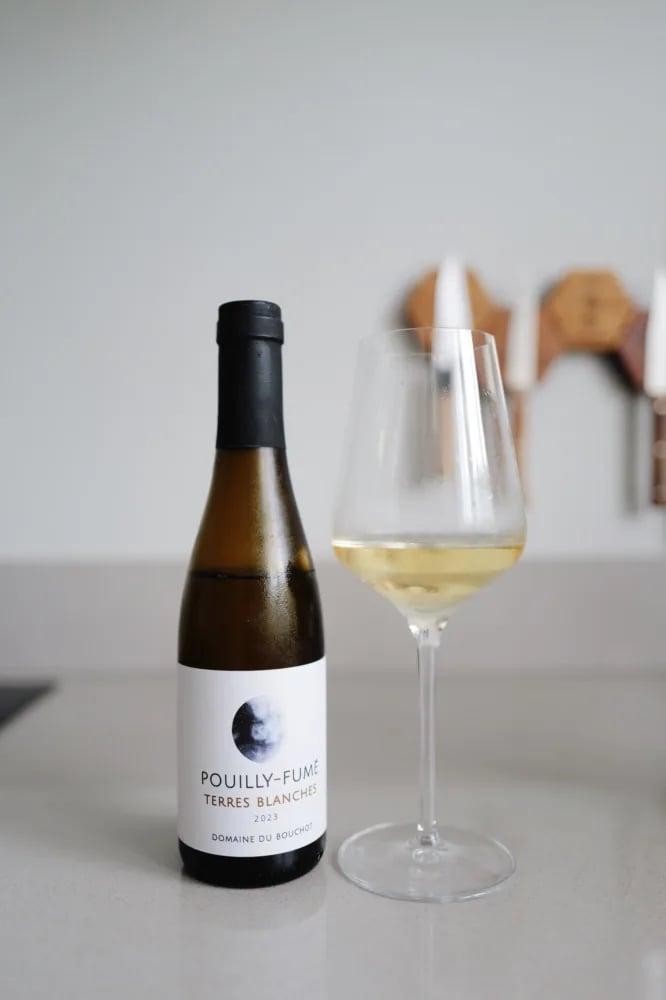
Terres Blanches comes off Kimmeridgian limestone marl with some Portlandian mixed in. Locally that marl is called marnes à petites huîtres, marl carrying small fossilised oyster shells. This ground once lay under the sea, and that sits in the composition.
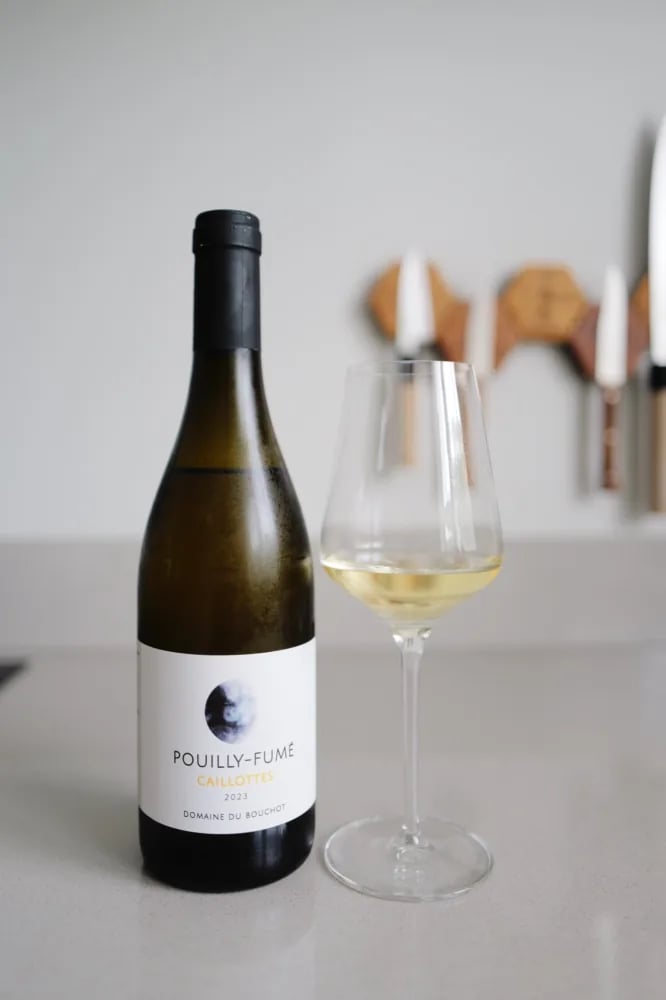
Caillottes comes off three parcels of hard limestone shards. There are roughly ten centimetres of soil there, and below that it stops and the bare rock begins. Roots have nothing to chase but depth.
MCMLV is Roman for 1955, the year the parcel was planted. These are the oldest vines on the property, on southeast-facing Kimmeridgian marl.
The cellar then adds a second layer. Terres Blanches sees mostly steel and a small share of large wood, and is the earliest bottling of the estate. Caillottes spends eighteen months split between barrel and concrete. MCMLV gets forty-eight to seventy-two hours of skin contact and then eighteen months in steel, no wood at all.
Terres Blanches: the wine with nothing in between
Tasting Note
Appearance
Pale straw with a fresh sheen, the lightest of the three.
Nose
Gooseberry and white peach lead, cut through with citrus that separates into peel and zest. Underneath sits something herbal, wet chalk, and a saline hint you could easily call oyster shell. Fennel seed at the back.
Palate
Fresh and direct, carrying the same gooseberry and white peach through from the nose. Chalky and dry, with a small smoky edge, and acidity that stays tight without turning sharp. The fennel seed returns.
Finish
Clean and dry, medium in length, never broadening out.
Quality
The most direct of the three. Little cellar, plenty of soil, which is exactly the point.
The near absence of wood is a decision rather than an economy. Nothing stands between the drinker and that fossil oyster bed.
Caillottes: stone dust and a creamy core
Tasting Note
Appearance
Pale lemon yellow, a touch fuller than the Terres Blanches.
Nose
Ripe pear and white blossom, noticeably smokier than the first wine. And then the stone dust: the smell that hangs in the street when a masonry saw goes through a paving slab. Behind it hazelnut, a suggestion of vanilla, something creamy and even faintly buttery. The citrus of the first wine is all but gone.
Palate
Fresh, with that ripe pear and blossom again, the stone dust and the hazelnut. Creamier in texture than the Terres Blanches, and salt arrives on the finish, as though it were scattered across the palate, alongside a lot of fruit.
Finish
Long and saline, with the fruit holding its ground.
Quality
Nothing like the first wine, and more interesting. It sits in the middle on price, not on quality.
MCMLV: vines from 1955 and three days on the skins
Tasting Note
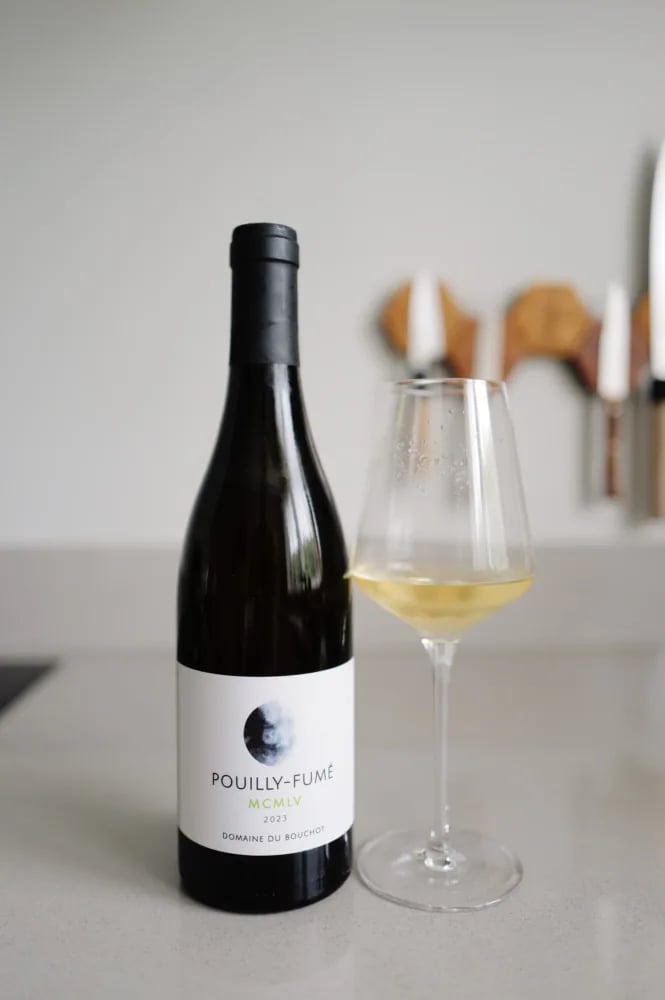
Appearance
Clearly darker than the other two, with a deeper yellow core. That is the skin contact you are looking at.
Nose
Orange peel first, a little lemon peel beside it. Dried chamomile and dried tea, pear leaning towards quince, and a gooseberry that joins in without shouting. Rich and round, and the longer you sit with it the more smokiness comes forward.
Palate
More concentrated and richer than the other two. Orange peel and citrus, apple, ripe pear and quince, with that dried chamomile character running underneath, which puts me in mind of Manzanilla. Grippy on the tongue, with a light bitterness at the close.
Finish
Long, saline and gently bitter, the chamomile lingering.
Quality
The most singular of the three. You taste the old vines.
What the money buys
The importer calls Caillottes the best value at the estate. That holds up. It has the finest balance of fruit, texture and a measure of complexity, and it sits right in the middle of the price ladder.
MCMLV is the one I find most interesting, and it happens to be the dearest. Do you get that extra quarter back? Yes. You get a more complex wine with more room to develop, and it is a bottle worth buying in multiples so a few can be put away. Those acids will only round out over the next few years. For an occasion, this is the one I reach for.
And the high yields of 2023, do they show up as thinness or a short finish? No. All three carry a long finish and an energetic, pure structure. You get exactly what a good Pouilly-Fumé should give you.
At the table: oysters, fish, good vegetables. With the Terres Blanches that is almost a joke, given the fossil oysters sitting in the ground it grew on.
Two reservations
This is not a style for everyone. Anyone used to a full, round vanilla bomb from a substantial Chardonnay will feel short-changed. These three are lean, high in acid, saline and complex. I would still try them, because a palate only grows when you hand it something unfamiliar, but do not buy them hoping they will soften into something else.
More practically, if you are about to order: the scores circulating in the trade for this estate, somewhere around 92 and 93 points, belong to the 2022 vintage. Not to these bottles. And at the importer the 75cl Terres Blanches is already listed as 2024, while the magnum and the half bottle are still 2023. Check the label before you assume you are holding what is described above.
Where to buy
Prices as of 30 July 2026: Terres Blanches €31.95, Caillottes €36.95, MCMLV €39.95, all in 75cl. All three are available in magnum, up to €89.95, and the Terres Blanches also comes in a half bottle at €16.95.
Large format is not vanity in a vintage like this. Wine ages more slowly in magnum, and in a year that has to live on finesse rather than concentration, that is a defensible choice.
Sources
- Primary source: Domaine du Bouchot, estate presentation supplied through importer Qualivin, covering parcels, soils, winemaking and certification
- Additional: Vins du Centre-Loire, Millésime 2023, vintage report on the growing season, mildew pressure, yields and style
- Additional: qualivin.nl, prices and available formats, accessed 30 July 2026
More on Wine Review
Barbadillo Jopo de Lobo: Organic Pedro Ximénez
Jopo de Lobo from Barbadillo: organic Pedro Ximénez from sun-dried grapes. Coffee, dark fruit, blossom. €15.95 for a half bottle of 0.375 litres.
Read on →
Barbadillo Salicornia: Organic Manzanilla en Rama
Salicornia, Barbadillo's organic manzanilla en rama: flor, baked apple, salt and a brand-new solera. €25.95 at Granada Wijnen, with discount code.
Read on →
C. Kloss Sparkling Tea Weiss: Fermented Celery
Non-alcoholic sparkling tea Weiss from C. Kloss: linden blossom, nettle and fermented celery. Dry, 2.7 g sugar per 100 ml, €14.99 at Amavine.
Read on →