

What does lees aging do to champagne? A blind test
Same cuvée, four versus seven years on the lees, a two euro price gap. Blind tasted with B. Girardin's Appoggiature, plus La Roie as the counterpoint.

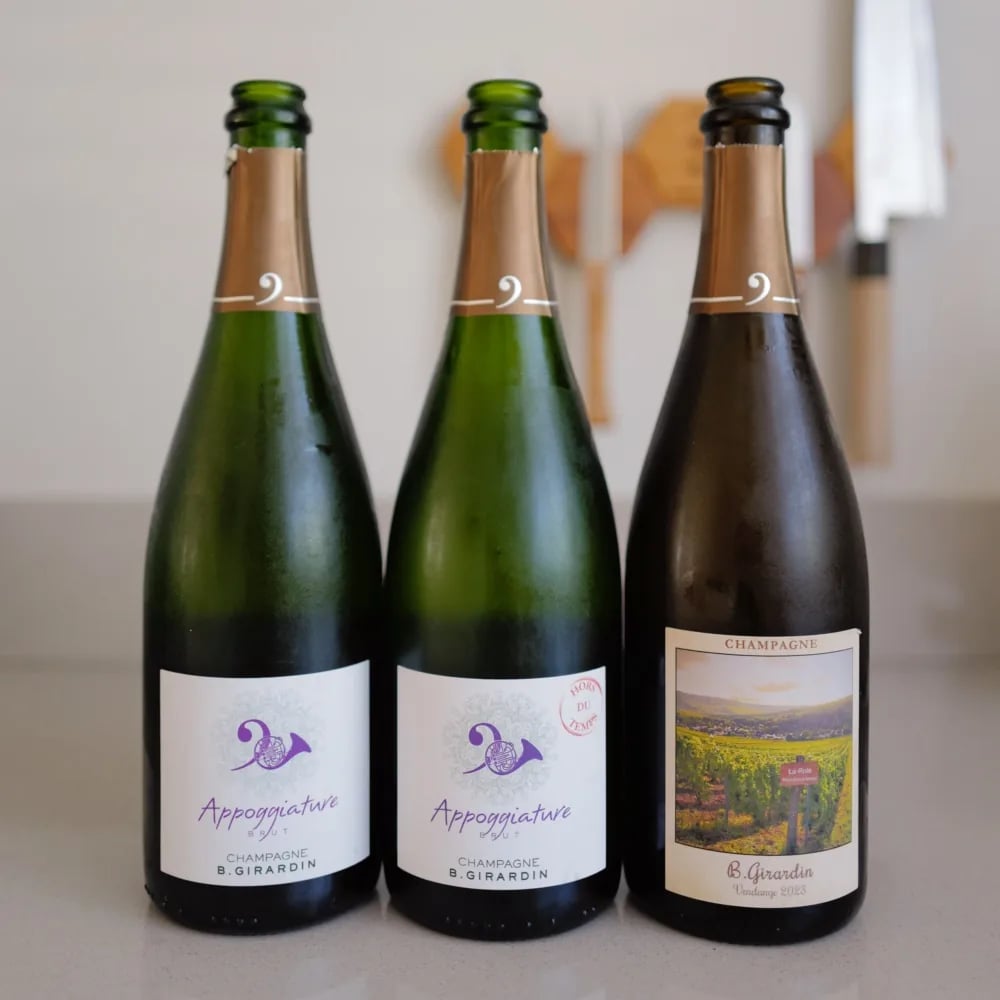
Two glasses, same house, same assemblage. The only thing separating them is lees aging: one champagne rested four years on its lees, the other seven. The price difference between the bottles is two euros. I tasted them blind, poured by my wife in another room, to answer one question: can you taste those three extra years, and are they worth the money?
The setup: one variable
Champagne houses love telling you how long their wine aged on the lees. What that actually does to the taste rarely amounts to more than a vague promise of complexity. These two bottles from Domaine B. Girardin make it measurable. The Appoggiature Brut is built around the 2021 harvest with a quarter of reserve wine, and spent four years on the lees. Dosage is 6 grams per litre. The Appoggiature Hors du Temps is built around 2018 with a fifth of reserve wine, spent seven years on the lees, and carries 5 grams.
The experiment is not perfectly clean, and I want that on record. The base year differs, the share of reserve wine differs, and that single gram of dosage can be just enough to shift the balance in a wine with longer aging. This is not a laboratory. But you will rarely get closer to a controlled comparison in a champagne glass.
Who Girardin is
Domaine B. Girardin farms 6 hectares across two terroirs: Mancy on the chalk-rich Coteaux Sud d’Épernay, and Vitry-en-Perthois in the Vitryat, a distinct zone in the southeast of the appellation with shallow chalk and south-facing slopes. Three generations run through the house: Bernard left the cooperative at the end of the sixties, Sandrine took over in 1991 and gave the cuvées musical names, and since 2023 son Augustin has joined, working with barrels, amphora and as few additions as possible. The bass clef on the label comes from that musical thread.
What lees aging actually does
After the second fermentation in the bottle, the yeast cells die and slowly break down. That process is called autolysis. The cells release compounds into the wine: mannoproteins, amino acids, peptides. Difficult words for a simple effect: the texture turns creamier, the aromatics shift from fresh fruit towards brioche and toast, and the wine gains protection against oxidation. Time is the only dial a producer can turn here.
The blind tasting
The first glass: pale lemon-yellow, plenty of citrus on the nose, apple, green apple, something floral. A little brioche, a hint of toast, nothing loud. On the palate a refined mousse, a touch of sweetness leaning towards peach, and again that apple and citrus. An aperitif style, fresh and approachable.
The second glass: lemon-yellow too, the same floral notes, the same citrus. But on tasting, there was more depth to it. The mousse was finer and stayed longer, the wine felt creamier, with more toast. What struck me most: the flavour palettes were nearly identical. The difference was not in what you taste but in how long and how deep it goes.
My guess: the second glass was the seven-year wine. It was. Not because the older wine was better, but because the texture gave it away. Creaminess and length are what autolysis adds; the fruit belongs to the assemblage.
Taste along
This is how it played out at the table: two unlabelled glasses and a call I had to make.
Two euros for three years
Here it gets interesting. You would expect a champagne with nearly double the aging time to cost considerably more. The Brut is 34.95 euros, the Hors du Temps 36.95. Two euros for three extra years in the cellar, and that Hors du Temps took silver at the 2025 International Wine Challenge with 92 points, plus bronze at the Decanter World Wine Awards. I do not hang my judgement on medals, but it says something about the company this bottle keeps.
So is the pricier bottle the better buy? For anyone who likes a richer, deeper style: yes. But if you drink champagne mainly for freshness and fruit, the Brut serves you just as well and saves you two euros. The most honest advice I can give: buy both, wrap them up or have someone else pour, and run this test yourself. Few things teach you more about wine in a single evening.
La Roie: remove the time, add something else
Next to the two Appoggiatures stood a third bottle, and it flips the question. La Roie, Pinot Noir de Mancy, vendange 2023, from Augustin’s Anima Vinea line. One hundred percent Pinot Noir from a single plot, fermented in barrel with wild yeasts, unfiltered and unfined, nine months on the lees, Extra-Brut at 1 gram of dosage. At disgorgement it received 1 gram of sulphur per hectolitre, nothing more.
What you see first: a lightly cloudy wine, and that is by design. The nose is wild and energetic, with a yeasty note that recalls cake batter: vanilla, butter, almond, even some cherry. The cherry makes sense for pure Pinot Noir. The palate shows firm acidity in layered waves, and a mousse far better integrated than nine months of aging would suggest. The finish carries a trace of cinnamon.
Two reservations, because this bottle has earned an honest review. First, the price: 59.95 euros. Spend that without knowing you are buying an unfiltered, naturally made champagne and you will feel shortchanged. This is not a crowd-pleaser. Second, it demands work: air, a larger glass, opening it earlier than you are used to. That is part of the story rather than a flaw, but it makes this the wrong bottle for a first encounter with grower champagne.
Where it does belong: with a good oyster, or grilled vegetables without much sauce. And with drinkers who find a wine more interesting the less polished it is.
Verdict
Three glasses, three roles. The Appoggiature Brut is the fresh introduction and shows what the house stands for. The Hors du Temps is the same wine with more depth and is worth its modest premium without question. La Roie is the bottle for those who have tasted everything and want something that costs energy and gives it back.
And the answer to the opening question: yes, you can taste those three years. Not as different fruit, but as texture, length and calm. At two euros, it is the cheapest wine lesson I know.
Where to buy
Appoggiature Brut
€34.95- Lees aging: 4 years
- Dosage: Brut, 6 g/L
- Base: 2021, quarter reserve wine
Fresh, aperitif style. Shows what the house stands for.
Appoggiature Hors du Temps
€36.95- Lees aging: 7 years
- Dosage: Brut, 5 g/L
- Base: 2018, fifth reserve wine
The same wine with more texture and length. Worth the two euros.
La Roie, Pinot Noir de Mancy 2023
€59.95- Lees aging: 9 months
- Dosage: Extra-Brut, 1 g/L
- Style: unfiltered, barrel-fermented, wild yeast
Not for everyone, exactly right for those who value work in a bottle.
All three at Qualivin, the Dutch importer. The two Appoggiatures together cost 71.90 euros, which buys you the complete at-home blind test.
Frequently asked questions
What is lees aging in champagne?
After the second fermentation in the bottle, champagne rests on its spent yeast cells. As they slowly break down, a process called autolysis, they release compounds into the wine. This changes texture and aromatics and protects the wine against oxidation. The legal minimum is 15 months; quality-minded producers often age for years longer.
Can you taste the difference between 4 and 7 years on the lees?
In this blind tasting, yes, though it is a difference of degree rather than character. The longer aging brought more depth, a finer mousse and more creaminess, while the flavour palette of apple and citrus stayed nearly identical.
How much does extra lees aging cost?
At this producer, two euros: the Appoggiature Brut with four years on the lees costs 34.95 euros, the Hors du Temps with seven years costs 36.95 euros at Dutch importer Qualivin.
All three bottles were sent by importer Qualivin. I did not pay for them and am not being paid; no agreements were made about what I write.
Sources
- Primary source: my own blind tasting and recordings, 7 August 2026, transcripts on file
- Additional: Qualivin product pages for B. Girardin, prices checked 30 July 2026
- Additional: Champagne B. Girardin 2026 brochure (estate, terroir and vinification data, awards)
More on Wine Review
Barbadillo Salicornia: Organic Manzanilla en Rama
Salicornia, Barbadillo's organic manzanilla en rama: flor, baked apple, salt and a brand-new solera. €25.95 at Granada Wijnen, with discount code.
Read on →
C. Kloss Sparkling Tea Weiss: Fermented Celery
Non-alcoholic sparkling tea Weiss from C. Kloss: linden blossom, nettle and fermented celery. Dry, 2.7 g sugar per 100 ml, €14.99 at Amavine.
Read on →
Barbadillo Sábalo: Organic Palomino Without Flor
Organic Palomino Sábalo from Barbadillo: no flor, salt from albariza soil. Chamomile, apple, sea. €17.95 at Granada Wijnen, with discount code.
Read on →