

Champagne Monmarthe: a grower portrait from Ludes
Champagne Monmarthe in Ludes: a family estate on the north face, a father and son with a range each, and a Meunier on chalk with no dosage at all.

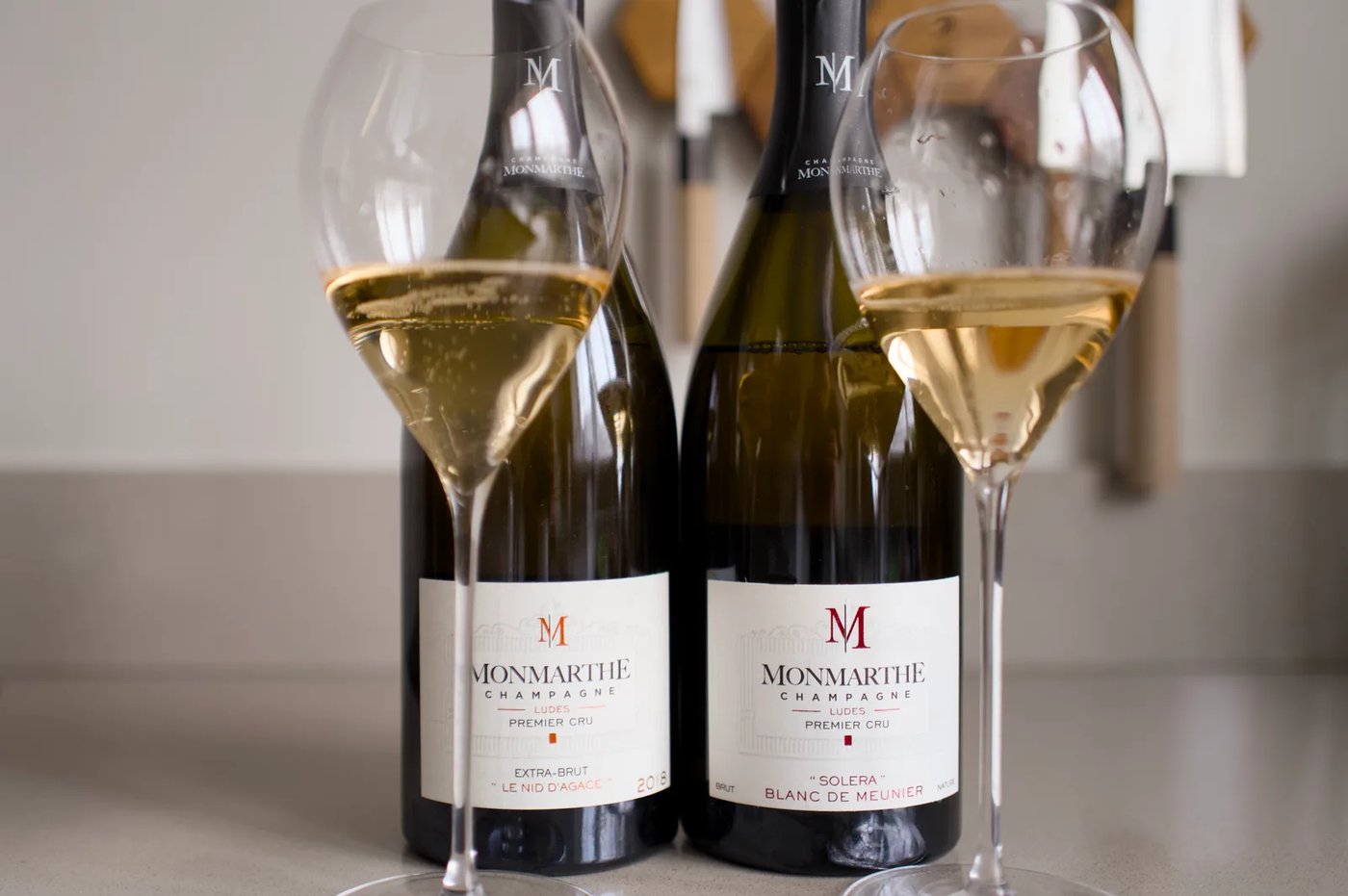
Champagne Monmarthe in Ludes buys no grapes and sells none, says Gauthier Monmarthe. Everything that goes into the bottle comes from the family’s own vines on the north face of the Montagne de Reims. Gauthier is the seventh generation on the estate, where he works alongside his father and mother. “It’s the main characteristic of a family: to be independent,” he says.
I came across the Solera Blanc de Meunier on Instagram and got in touch. Gauthier sent two bottles for an episode of Sparks, that Solera and the single-plot Le Nid d’Agace 2018. We also talked about his family, and about Meunier, which he says was the poor grape of Champagne ten or twenty years ago.
A family since 1737
According to the estate, the Monmarthes have been in Ludes since 1737. Ernest Monmarthe started making his own Champagne in 1930, and by 1960 the house was producing 60,000 bottles. In our recording Gauthier put it slightly differently: his great-grandfather launched the brand at the start of the twentieth century, and the generations before him only owned vines. His father, Jean-Guy, joined his own father Guy in 1990 and is, by the estate’s count, the sixth generation.
Gauthier works with his father, his mother and a team of six who are as happy on a tractor as in the cellar. His father has been there for forty years, Gauthier says, and has “the experience of many years and a lot of vintages”. Running a business as a family takes good communication, in his view. They have different ideas, and he reckons both sets are good ones.
- Estate
- Champagne Monmarthe
- Location
- Ludes, north face of the Montagne de Reims
- Family since
- 1737, Champagne since 1930 (according to the estate)
- Generation
- Seventh (Gauthier), with his father Jean-Guy (sixth)
- Vineyard
- 17 hectares in 22 plots, 15 in Ludes and 2 in Taissy, Premier Cru
- Grapes
- Pinot Noir, Pinot Meunier, Chardonnay
- Production
- 140,000 bottles a year
- Farming
- HVE (Haute Valeur Environnementale), since 2014
Seventeen hectares on the cool north face
The estate has 17 hectares in 22 plots. According to the estate, 15 hectares are in Ludes and 2 in neighbouring Taissy, both Premier Cru villages, so every bottle carries the designation. That is a lot of land for a grower, Gauthier says, and he knows he is lucky. Having nearly all of it around the home village is rare in Champagne, he adds, and it makes the harvest simpler.
Ludes sits on the north face, on the far side of the hill from Ambonnay and Bouzy. It is cooler ground, and the villages on the southern side always ripened better. Climate change is shifting that. “With the north face we now get better ripeness while keeping the freshness,” Gauthier says.
All three classic grapes are planted: Pinot Noir, Pinot Meunier and a little Chardonnay. Meunier accounts for 30 to 40 per cent of the vineyard. The estate has held HVE certification, the French scheme for environmentally responsible farming, since 2014. It is not organic; they only spray when the vines are under threat, Gauthier says.
Back from Bordeaux and South Africa
Gauthier joined the estate five years ago, after studying both oenology and the wine business in Bordeaux and spending a year making wine in South Africa. “It’s very important for me to see other vineyards around the world and to gain more experience.” In South Africa he was struck by estates working with ten to twenty grape varieties. In Champagne, the village and the terroir come first.
What he changed at home, he changed with his father. “The major change we made together is this new range of single plots,” he says. Blocking the malolactic fermentation, the foudres and the Brut Nature all belong to that range. Neither of them wanted small barrels, because father and son both dislike a woody taste in Champagne.
Two ranges: blending and single plots
The estate makes two ranges. The first is built on blending different harvests, grapes and plots. “Blending represents Champagne,” Gauthier says. “We like to say the first one is more my father’s range and the second one is more mine.”
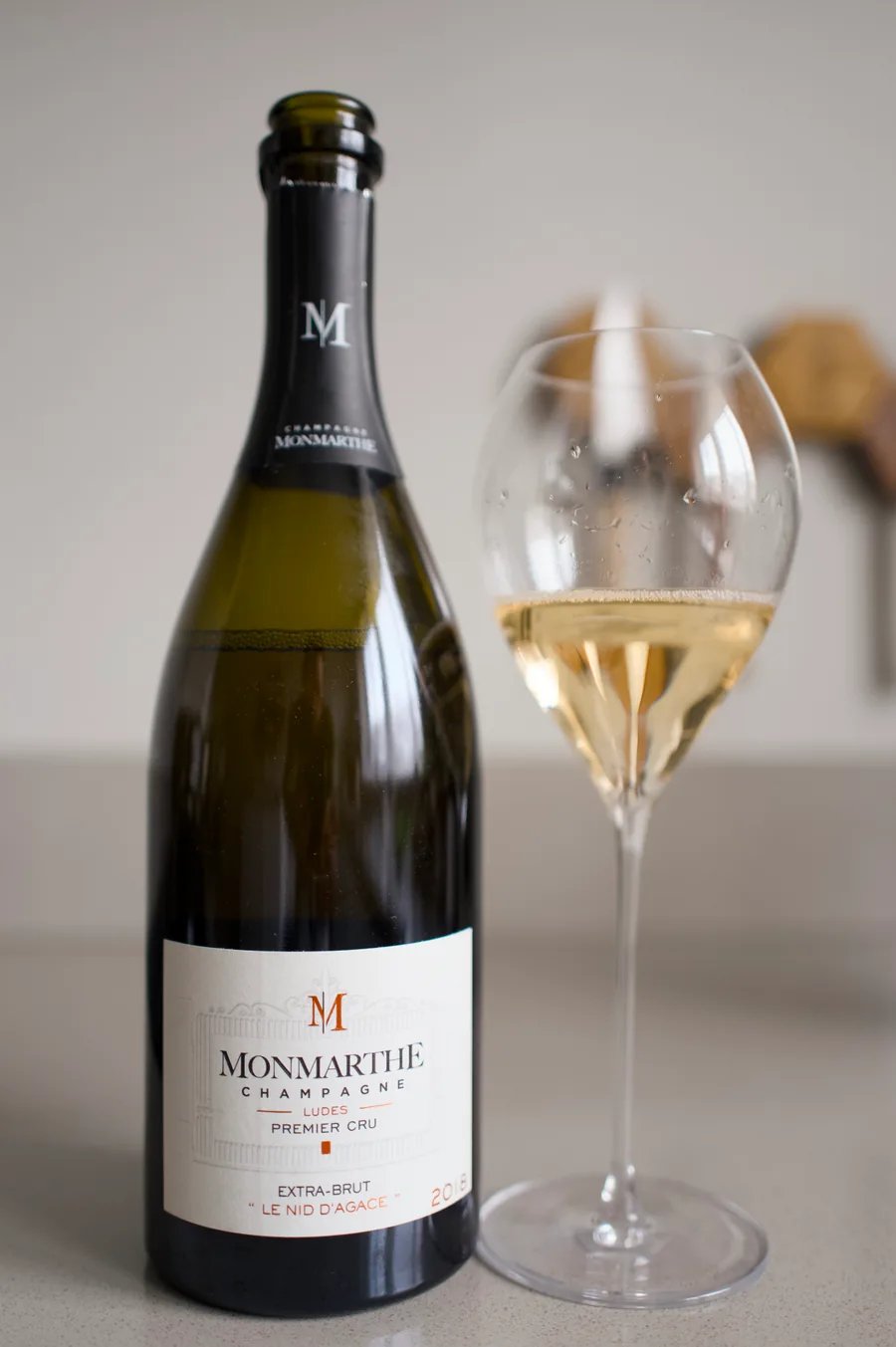
The second range is single-plot cuvées, each from one terroir, one plot and one type of vinification. Le Nid d’Agace 2018 belongs here, a co-planted hectare with sixty-year-old Chardonnay at the top and young Pinot Noir further down on clay. The Solera Blanc de Meunier is 100% Meunier on chalk, aged in a perpetual reserve started in 2015.
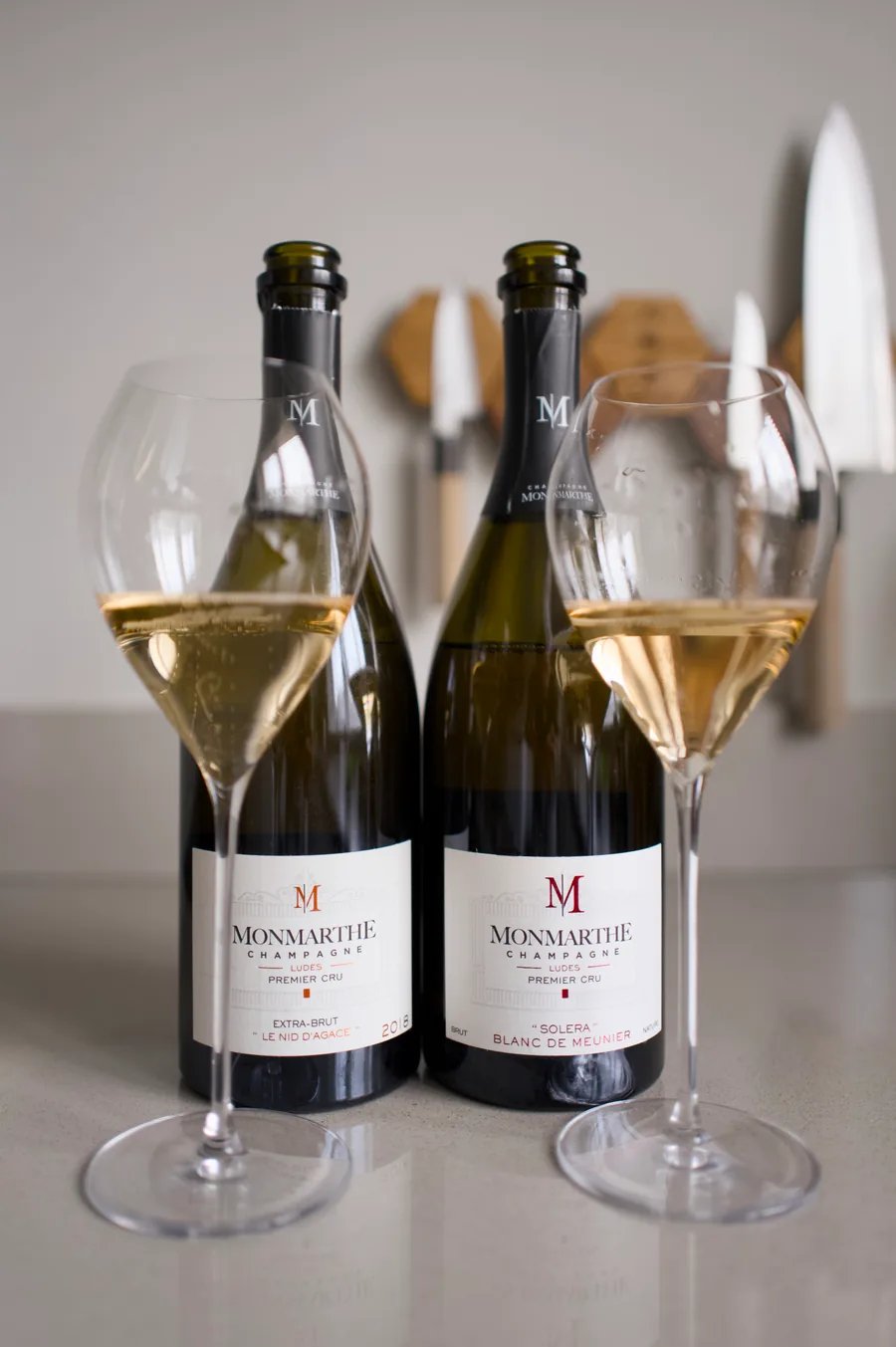
A solera made me think of sherry from Jerez straight away, and I said as much in the recording. Gauthier uses his only for Meunier. Each year around 30 per cent new wine goes in, which in his view keeps the grape’s fruit and freshness intact.
There is more on the way. A new Blanc de Blancs has been waiting since 2021, a new Blanc de Noirs since 2022. “In this job you need to be patient. Sometimes it’s difficult for me, because you make a wine and then you leave it for four, five, six years before tasting it.”
What his father made of it
We got on to family. According to Gauthier, two things were new to his father and his father’s generation: vinifying Meunier on its own and finishing it with no dosage. Ten or twenty years ago, Extra Brut and Brut Nature barely existed, he says. That the Solera needed no sugar at all came as a surprise to Gauthier too.
His father’s verdict was: okay, very good, very fruity. “It was a good surprise for all the family,” Gauthier says. That is his account; I did not speak to his father.
Staying independent
Gauthier has no illusions about the market. Wine consumption is falling, in France and worldwide, he says. Even so, the estate still does everything in-house, from the vineyard to disgorgement.
At 140,000 bottles a year, Monmarthe is big for a grower, as Gauthier himself points out, though it is nothing next to the large houses. Independence has a downside too. How many grapes he may use depends on the yield the CIVC sets each year, based on the previous year’s sales. Anything above that stays in the vineyard or goes for distillation.
There is a caveat on my side as well. I tasted two bottles from the second range and none of the blends from his father’s range. And the solera is, in Gauthier’s own words, still young, with seven harvests in the glass.
At harvest, seventy pickers from northern France live on the estate for ten days, in rooms behind the cellar. In the Netherlands and Belgium, Vinétiq has been the estate’s partner for the restaurant trade for two years, according to Gauthier. It specialises in grower Champagne.
More about the estate: champagne-monmarthe.com
Frequently asked questions
Where exactly is Champagne Monmarthe?
In Ludes, on the north face of the Montagne de Reims, on the far side of the hill from Ambonnay and Bouzy. According to the estate, it has 15 hectares in Ludes and 2 in neighbouring Taissy, 22 plots in all, every one Premier Cru.
What makes Monmarthe a grower Champagne?
Champagne Monmarthe buys no grapes and sells none, Gauthier says. The Champagne comes solely from the estate’s own vines, from planting to harvest. That is how an independent grower works, whereas the large houses buy grapes in.
Where can you buy Champagne Monmarthe?
According to Gauthier, the wines have been available in the Netherlands and Belgium for two years through Vinétiq, which focuses on grower Champagne and restaurants. For contact, go through champagne-monmarthe.com.
Sources
- Primary source: Sparks by VinoVonk, episode 38 with Gauthier Monmarthe (recording and show notes)
- Producer, history and vineyard: champagne-monmarthe.com/estate
- Comité Champagne (CIVC): champagne.fr
This portrait is based on press samples and a conversation with Champagne Monmarthe. No payment, independent assessment.
More on Winemaker
Vignamaggio Wine Estate: Wine as One Crop of Many
The Vignamaggio wine estate in Chianti Classico puts wine back among olives, grain, pigs and sheep. What the plan is, what a visit costs and where I doubt.
Read on →
Biodynamic tasting calendar: does the fruit day hold?
A reel from Ploder-Rosenberg says wine shows best on fruit and flower days. The biodynamic tasting calendar sounds logical. The blind tasting says otherwise.
Read on →
Champagne Gallimard: Six Generations in Les Riceys
Two Gallimard bottles from a July subscription box. A solera running 2009 to 2022, hand disgorgement, and a label code that says something the story doesn't.
Read on →