

Vignamaggio Wine Estate: Wine as One Crop of Many
The Vignamaggio wine estate in Chianti Classico puts wine back among olives, grain, pigs and sheep. What the plan is, what a visit costs and where I doubt.
Seventy hectares of vines on an estate of more than four hundred. That ratio is the picture behind the latest press release from the Vignamaggio wine estate, though the release never states it. The idea is called “beyond wine tourism”: a Chianti Classico farm where wine is one crop among olives, grain, vegetable gardens, pigs and sheep.
I know the house from three bottles it has sent me over the years. I have not been there. So this piece rests on what Vignamaggio says, and on what I can check from a desk in the Netherlands.
What Vignamaggio says it is doing
The estate lies between Greve and Panzano in Chianti. The press release puts it at more than 400 hectares and more than six centuries of winemaking, with the first record dated 1404.
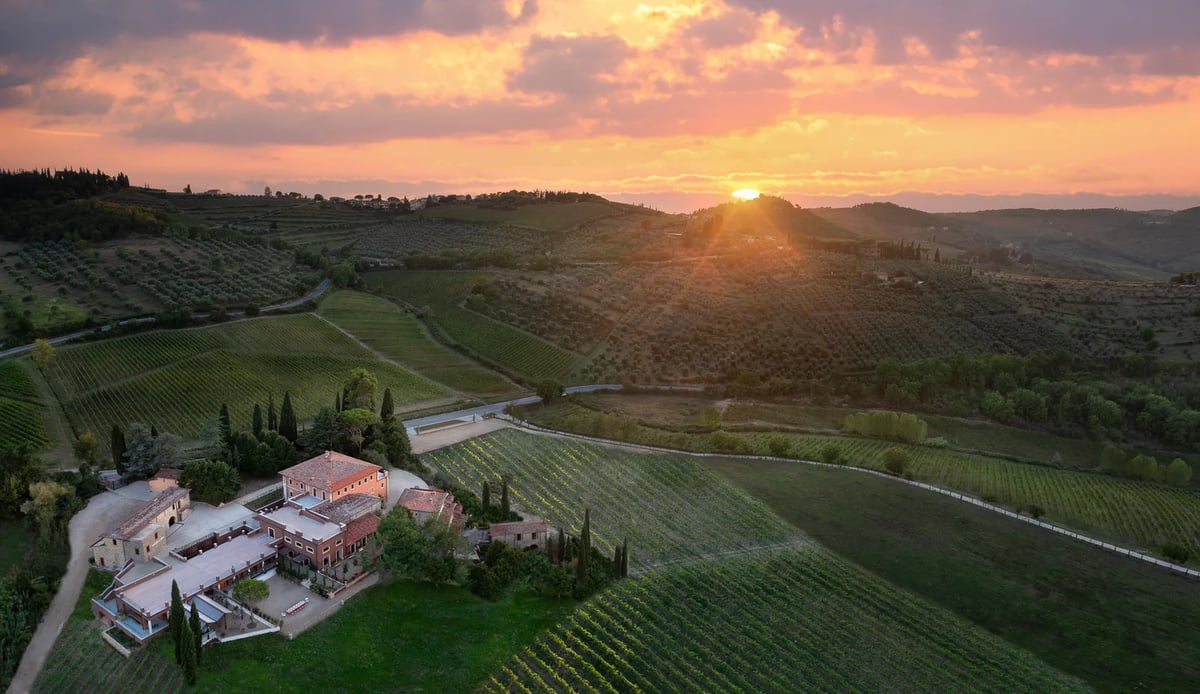
Press photo supplied by Vignamaggio, not taken by me.
On a Tuscan farm before industrialisation, vines covered a small share of the land. Wine was precious and the rest of the soil grew food. Vignamaggio wants that balance back: vineyards next to olive groves, cereals, orchards, woodland and livestock.
It has a word for it, promiscuo: different crops sharing one plot instead of each getting its own block. The estate says it is bringing that back, along with sheep and Cinta Senese, the Tuscan pig breed.
Patrice Taravella bought the estate in 2014. In 2017 he told Gambero Rosso that when sharecropping ended and industry arrived in the 1960s, the small plots of wheat and barley, the orchards and the pigs disappeared from Chianti. Vineyards took over.
The Vignamaggio wine estate in numbers
The estate’s own website says the vineyards cover more than 70 hectares. On more than 400, that is about a sixth. It sounds like the old farm in the press release.
Except that the same Gambero Rosso piece from 2017 gives 200 hectares in total and 62 under vine. Close to a third. Since then the vineyard has grown a little and the stated area has doubled.
As far as I can tell the ratio changed because land was added, or because it is counted differently. The vineyard did not shrink. The Terre di Prenzano alone runs to 130,000 bottles, as I noted in my review of that Chianti Classico. Wine still drives this place.
I don’t hold that against them, but it is a different story from “wine as a small part of the land”.
La Fattoria: what a visit looks like
Visitors go to La Fattoria di Vignamaggio, on the Chiantigiana, the old road between Florence and Siena. There is a restaurant, a shop, and a reception where tours and tastings start.
Prices on the website at the time of writing:
- Vignamaggio Colours: 4 wines with 4 bites, about 45 minutes, €30 per person
- Farm Tour & Tasting: a tour of the farm with a tasting, €60 per person
- Tour & Lunch: about an hour and a quarter, €75 per person
The wines poured are Terre di Prenzano, the Riserva Gherardino, the Gran Selezione Monna Lisa and the Cabernet Franc. There are also tastings built around olive oil and around balsamic vinegar aged in small casks.
The restaurant, Il Ristoro, cooks with what the farm produces that season, according to the estate. Lunch is served daily from 12 to 3, dinner Tuesday to Sunday. The shop carries the farm’s own products and more than a thousand bottles of wine.
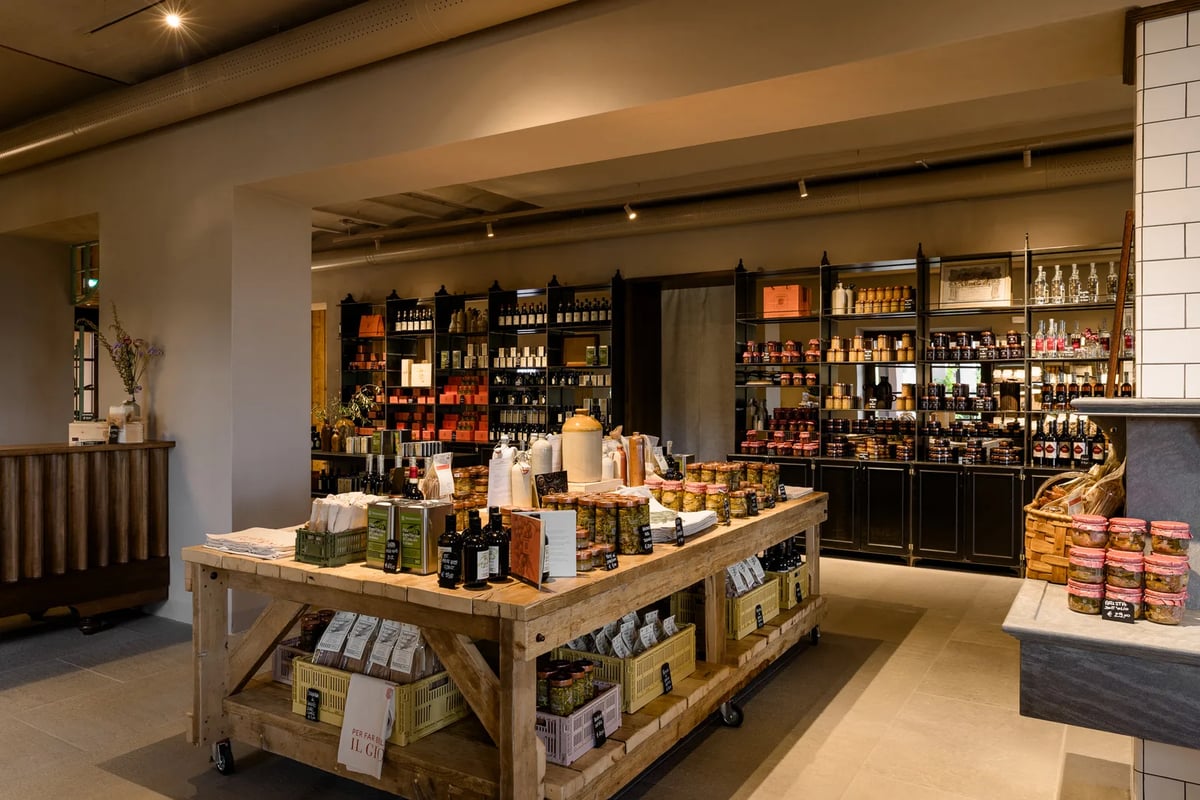
Press photo supplied by Vignamaggio, not taken by me.
Where I have doubts
The press release does not contain a single figure about the farm itself. How many pigs, how many sheep, how many hectares of grain, how many plots of promiscuo? What share of the menu comes off the estate’s own land? Without those numbers I can’t tell whether the polyculture carries the business or dresses the set.
Then the history. The mixed farm Vignamaggio points to ran on sharecropping, mezzadria in Italian: the sharecropper traditionally handed over about half the harvest to the owner. What returns here is the shape of that farm, paid for by hospitality.
Take the shop. The estate’s brochure says it also sells design objects and delicacies from its sister estates, The Newt in Somerset and Babylonstoren. Lunch with a tour is €75. “Beyond wine tourism” is still tourism, and with lunch included it is not the cheap kind.
Who should go
I think the direction is right. A hillside of nothing but vines is fragile, and an estate that keeps woodland, grain and livestock next to its vineyard spreads its risk. The conversion to organic began in 2014, according to Gambero Rosso. The wines hold up without the story: the Monna Lisa 2018 had structure and years ahead of it, and the Vignamante is a dry, taut sparkling rosé.
If you are in Tuscany, book the Farm Tour over the Colours tasting. €30 buys four wines and four bites. €60 lets you test the plan yourself: ask to see a plot of promiscuo, ask where the pigs roam and what on today’s plate came from the estate.
If you are not travelling, the estate’s EU webshop lists the Terre di Prenzano 2022 at €18 and the Monna Lisa 2020 at €38, at the time of writing and before shipping.
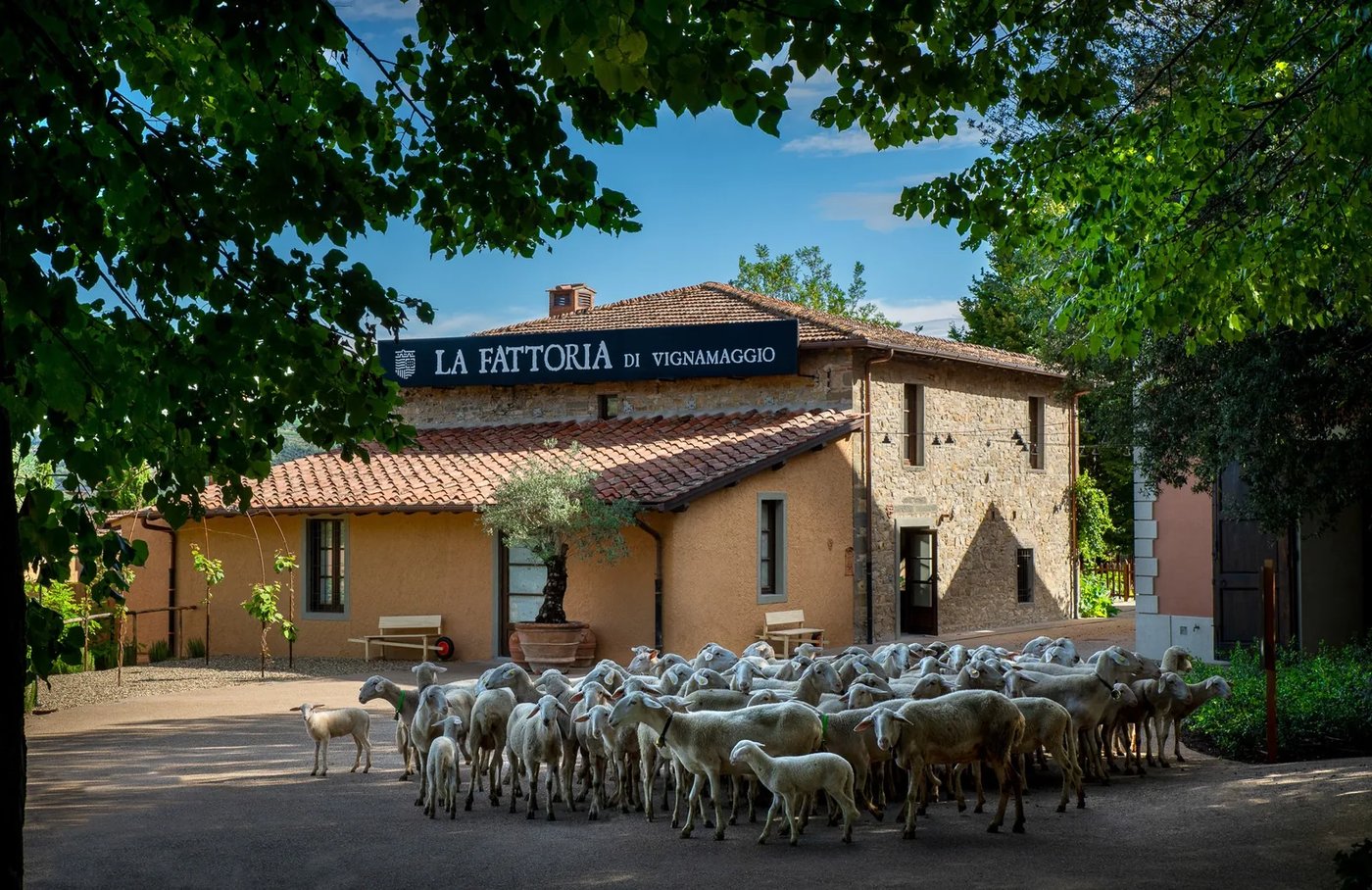
And ask about the sheep. The press photo shows a flock at the farmhouse door. If they graze there all year, the photo is honest.
Sources
- Press release “Vignamaggio beyond wine tourism”, Well Com on behalf of Vignamaggio, 7 October 2026
- Brochure “La Fattoria Overview”, Vignamaggio, 2026
- Vignamaggio (official), vineyards, tours and restaurant: vignamaggio.com
- Vignamaggio webshop, prices checked on 7 October 2026: shop.vignamaggio.com
- Gambero Rosso International, “Villa Vignamaggio: history and biodiversity in Tuscany”, 1 January 2017: gamberorossointernational.com
This article is based on a press release and images from Vignamaggio. I have not visited the estate. Vignamaggio previously sent me three bottles as press samples; nothing was paid for this piece. All photos with this article are press images from Vignamaggio; I did not take them.
More on Winemaker
Biodynamic tasting calendar: does the fruit day hold?
A reel from Ploder-Rosenberg says wine shows best on fruit and flower days. The biodynamic tasting calendar sounds logical. The blind tasting says otherwise.
Read on →
Champagne Gallimard: Six Generations in Les Riceys
Two Gallimard bottles from a July subscription box. A solera running 2009 to 2022, hand disgorgement, and a label code that says something the story doesn't.
Read on →
Podere Sapaio: Bordeaux on the Bolgheri coast
Podere Sapaio makes Bordeaux blends in Bolgheri, with time as its guiding principle and concrete beside wood in the cellar. A portrait after La Grande Bellezza.
Read on →