

Biodynamic tasting calendar: does the fruit day hold?
A reel from Ploder-Rosenberg says wine shows best on fruit and flower days. The biodynamic tasting calendar sounds logical. The blind tasting says otherwise.
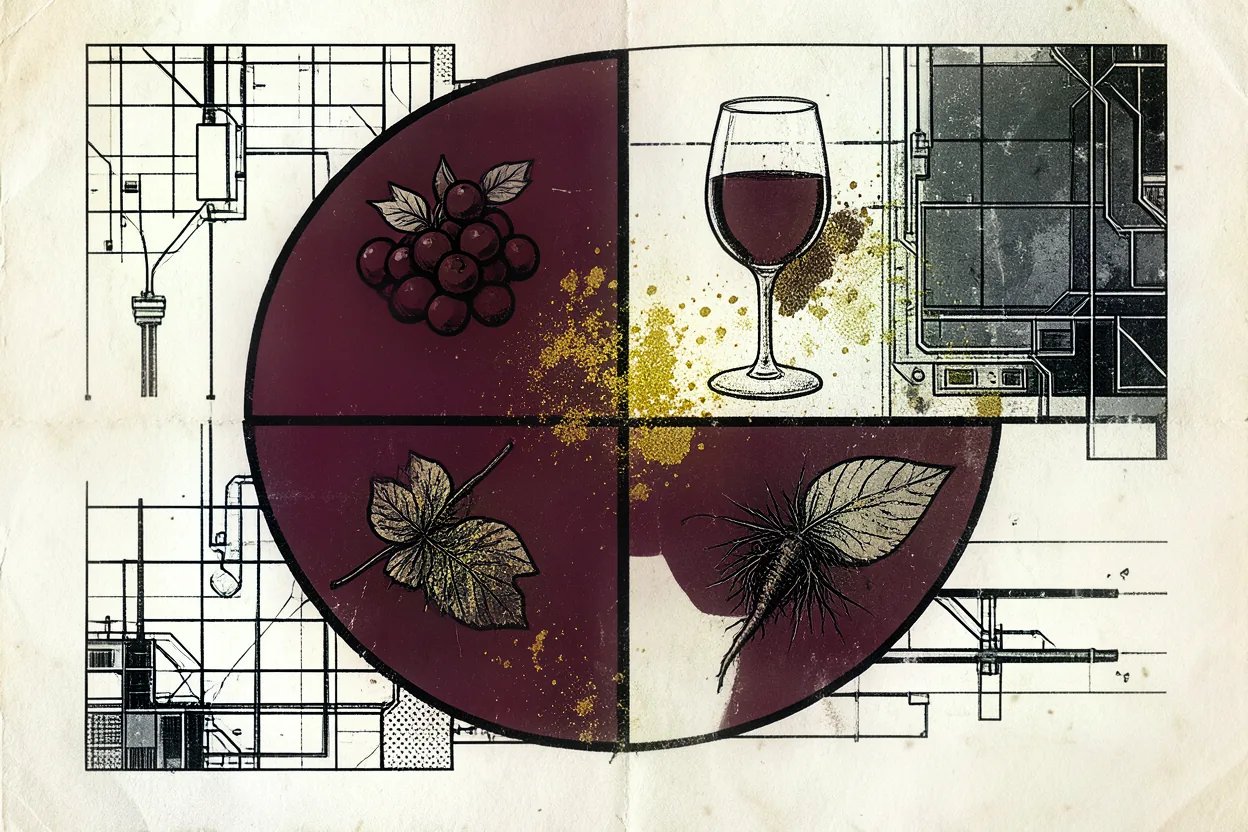
Selina of Weingut Ploder-Rosenberg explains in a reel by @unpinnedwine why her wine tastes better today than it will tomorrow. The biodynamic tasting calendar splits the year into four kinds of day, and on two of them wine is supposed to show its best face. Fruit days and flower days, because what sits in the bottle is fruit, not root and not leaf.
It is one of the most elegant pieces of reasoning in wine. It has also never survived a blind tasting.
What the calendar actually claims
The lunar calendar comes from Maria Thun, a German farmer who spent decades from the 1950s running sowing trials and matching the results to the moon’s position against the zodiac. She landed on four day types: root, leaf, flower and fruit. Each type maps to an element and to a part of the plant. In the vineyard that translates into a schedule for pruning, picking and bottling.
Thun then carried the same grid across to the glass. Taste on a fruit day and you should find more fruit, more lift. Taste the same wine on a root day and it should sit closed and earthy. That step from the field to the table is the heart of what we now call the biodynamic tasting calendar, and it is the step with the thinnest support underneath it.
Keeping those two claims apart matters. Whether lunar rhythm influences a growing plant is an agronomy question. Whether a bottled wine tastes different on Tuesday than on Wednesday is a question about liquid in glass, and about the person smelling it.
Who Ploder-Rosenberg are
The estate sits in St. Peter am Ottersbach, in Vulkanland Steiermark in the southeast of Austria. Just over eleven hectares. The family moved to biodynamics in 2006, has been certified organic since 2010 and has carried Demeter certification since 2015. The third generation, Manuel Ploder and Selina Weratschnig, now sets the direction.
What makes the estate more interesting than the average biodynamic producer: seventy to seventy-five percent of the plantings are PiWi varieties, fungus-resistant crossings, with Souvignier Gris leading the way. That choice has consequences. Biodynamic growers cannot use synthetic sprays and fall back on copper and sulphur, and copper accumulates in the soil. Varieties that need less spraying solve that problem at the root rather than managing it.
For me that is where the real value of this estate lies, and it has nothing to do with the moon.
What the blind tasting found
In 2017 an international team led by Wendy Parr published the first serious test of the tasting calendar in PLOS ONE. Nineteen New Zealand wine professionals tasted twelve Pinot Noirs blind, four times each: twice on a fruit day, twice on a root day. Twenty predetermined descriptors, same wines, same tasters.
The result: the panel separated the wines cleanly on every attribute measured. Day type did nothing. No systematic difference in fruit, in structure, in anything.
That is a clean finding, and it deserves an honest caveat. The study used one grape variety, in one country, with nineteen tasters. It tests the calendar as a tasting tool, not as a farming tool. Anyone claiming this proves lunar rhythm does nothing in the vineyard is leaning on it harder than it can bear. But for the specific claim in the reel, that a bottled wine shows better on a fruit day, this is the best evidence available, and it points the other way.
Why the calendar survives anyway
The trade reaction at the time was mostly a shrug, which makes more sense than it first appears. A winemaker who avoids scheduling an important tasting on a root day loses nothing. Believing costs nothing, and so does being wrong.
There is also something underneath it that does work. Consulting a calendar before you pull a cork builds in a moment where you think about what you are drinking. Attention measurably changes how tasting goes. But then the gain comes from the ritual pause rather than from the moon, and that distinction is worth saying out loud.
Then there is the uncomfortable possibility that the calendar works as a self-fulfilling prophecy. Knowing it is a root day, you taste something closed. Which is exactly why that blind tasting matters: it removes the knowing.
What I do with it
The tasting page on this site runs the biodynamic calendar, today’s day type included. I put it there because it is beautiful and because it starts a conversation, not because I think it changes your glass. That stays, but the label under it is now more accurate than the label the reel offers.
What I take from Ploder-Rosenberg is not the calendar. It is an estate that has worked without synthetic inputs since 2006 and that answers the copper problem with variety choice instead of good intentions. That is a harder story to tell in thirty seconds. It is also the one that makes the bottle better.
About this winemaker: the statements in this article come from the caption of the reel by @unpinnedwine, not from its spoken audio. The details on Ploder-Rosenberg (eleven hectares, biodynamic since 2006, Demeter since 2015, PiWi share) come from public sources and have not been verified with the estate. The study was read in the original PLOS ONE publication.
Sources
- Instagram reel by @unpinnedwine with @ploderrosenberg: reel DcUGMD7ikKl
- Weingut Ploder-Rosenberg: ploder-rosenberg.at
- Parr WV, Valentin D, Reedman P, Grose C, Green JA, “Expectation or Sensorial Reality? An Empirical Investigation of the Biodynamic Calendar for Wine Drinkers”, PLOS ONE (2017)
- Jamie Goode, Time to leave the biodynamic calendar behind? (wineanorak)
- Meininger’s International, Wine industry reacts to the biodynamic tasting calendar study
- VinNatur, member profile Ploder-Rosenberg
More on Winemaker
Champagne Gallimard: Six Generations in Les Riceys
Two Gallimard bottles from a July subscription box. A solera running 2009 to 2022, hand disgorgement, and a label code that says something the story doesn't.
Read on →
Podere Sapaio: Bordeaux on the Bolgheri coast
Podere Sapaio makes Bordeaux blends in Bolgheri, with time as its guiding principle and concrete beside wood in the cellar. A portrait after La Grande Bellezza.
Read on →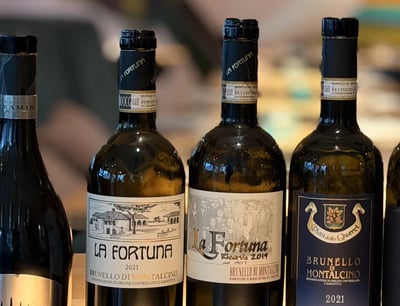
La Fortuna: Brunello from the Zannoni Family
La Fortuna makes Brunello from two vineyard blocks in Montalcino. A family estate since 1907, built on structure and ageing potential.
Read on →