

ViniBio 2026: Organic Wine Tasting Report
ViniBio 2026 in Amsterdam showed six developments reshaping the organic wine sector. Report on 26 importers, a masterclass, and the Ruby Beet.
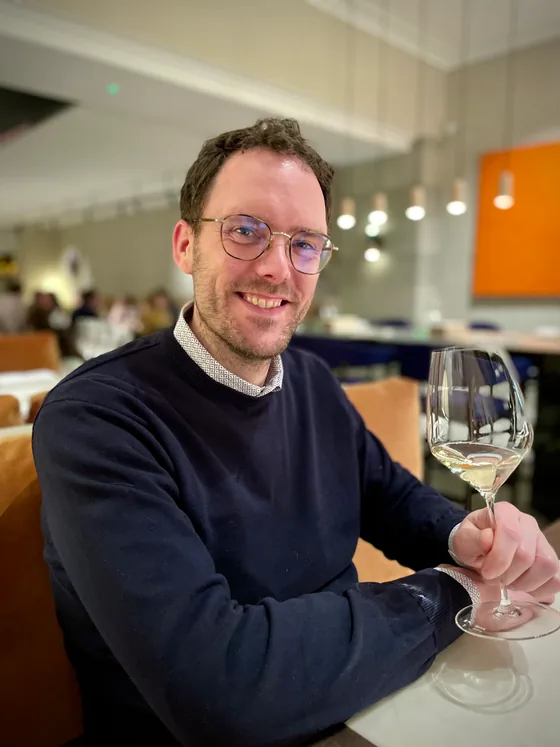
The bottle was already open. “Taste this,” said Damien Delecheneau, “then tell me what you think of sauvignon blanc.” Noon, March 2nd, Hotel van der Valk Amsterdam Amstel. ViniBio 2026 had just begun.
The event
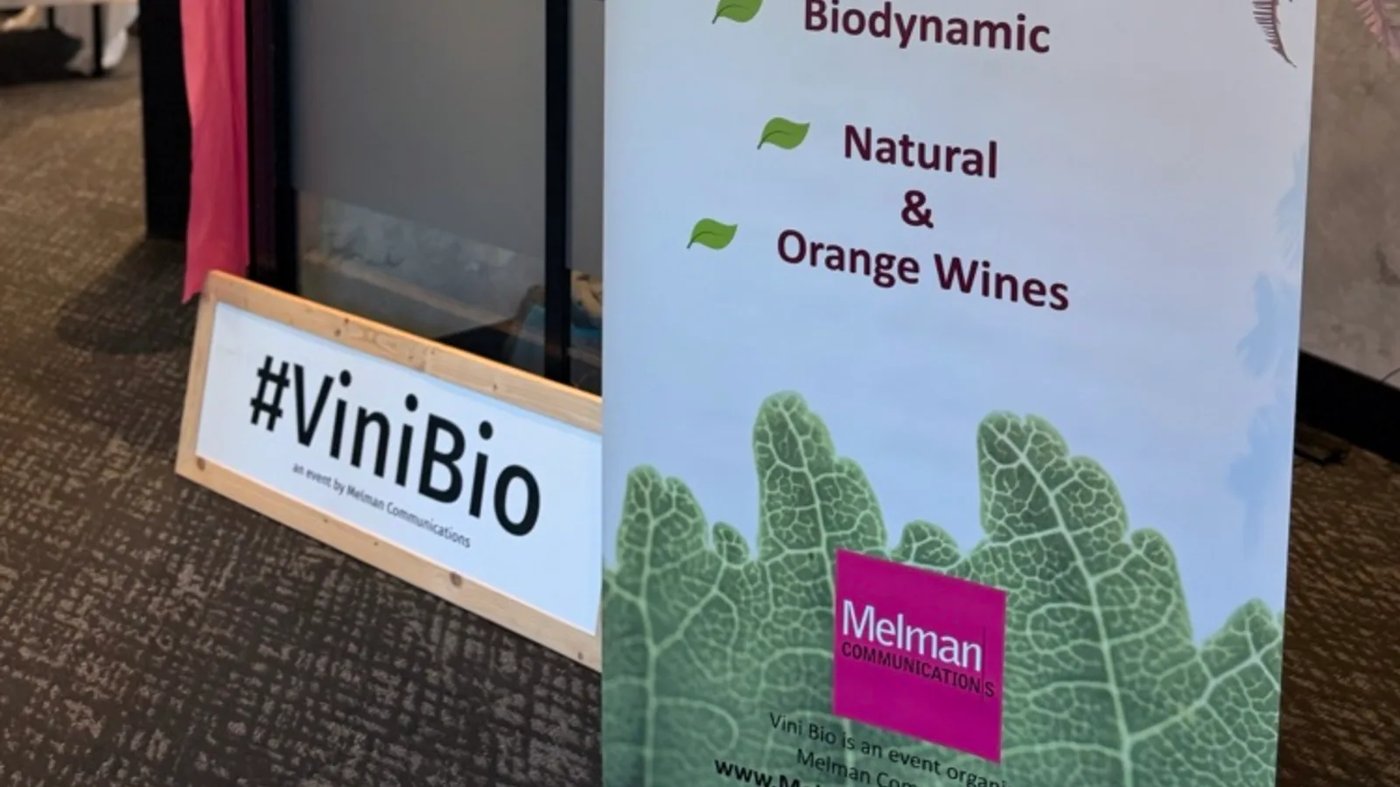
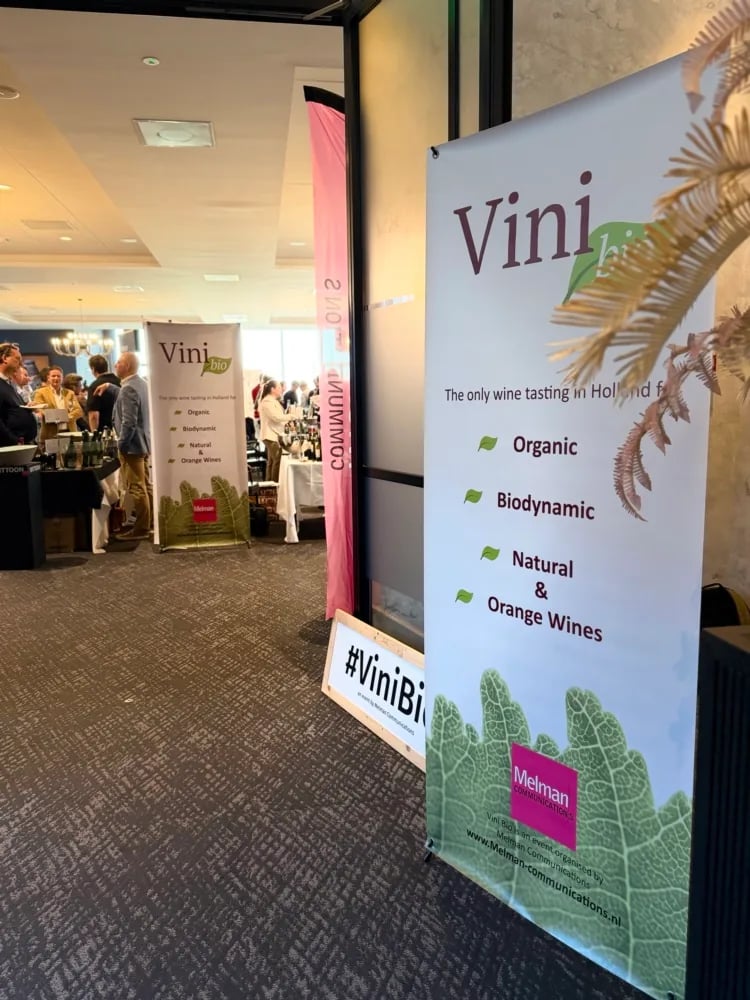
ViniBio is the Netherlands’ largest organic wine tasting. Thirteenth edition this year. Twenty-six importers, hundreds of wines, three hours of tasting for buyers, sommeliers and serious enthusiasts. Not a consumer fair.
Organiser Ghislaine Melman keeps it tight. Space between tables, time to taste properly, no rush. Importers present their portfolios, sometimes with the winemaker beside them. Organic is the baseline. Many wines are biodynamic, some Demeter-certified, others working without certification but with conviction. The tables hold small Loire châteaux, German weingüter, Greek island wines, and Dutch innovation from Valencia.
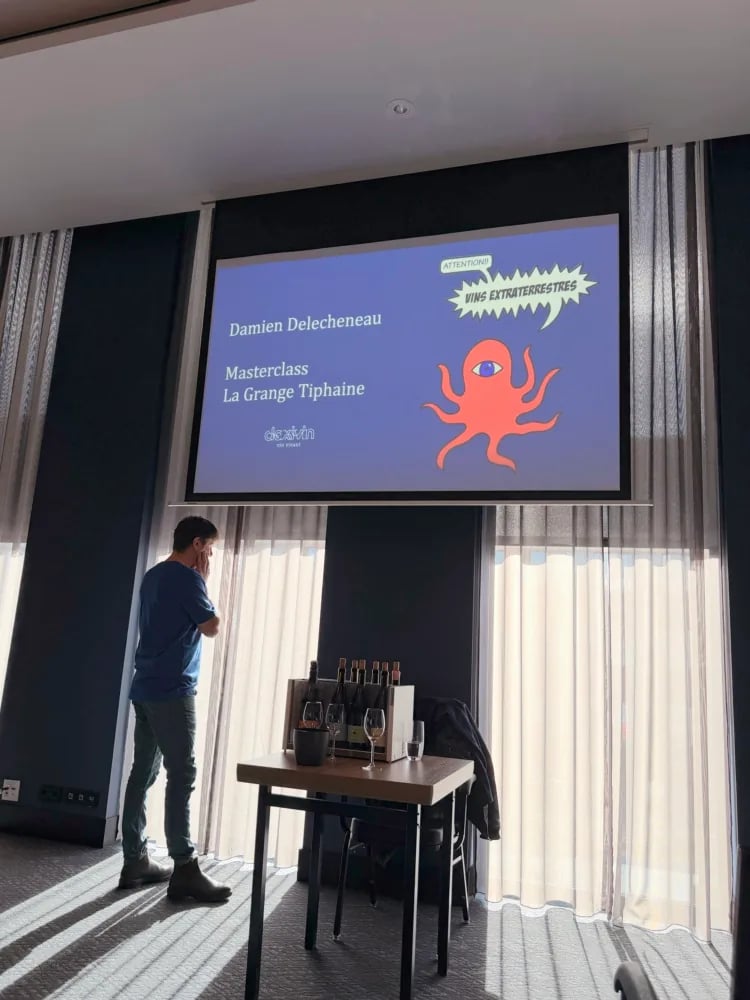
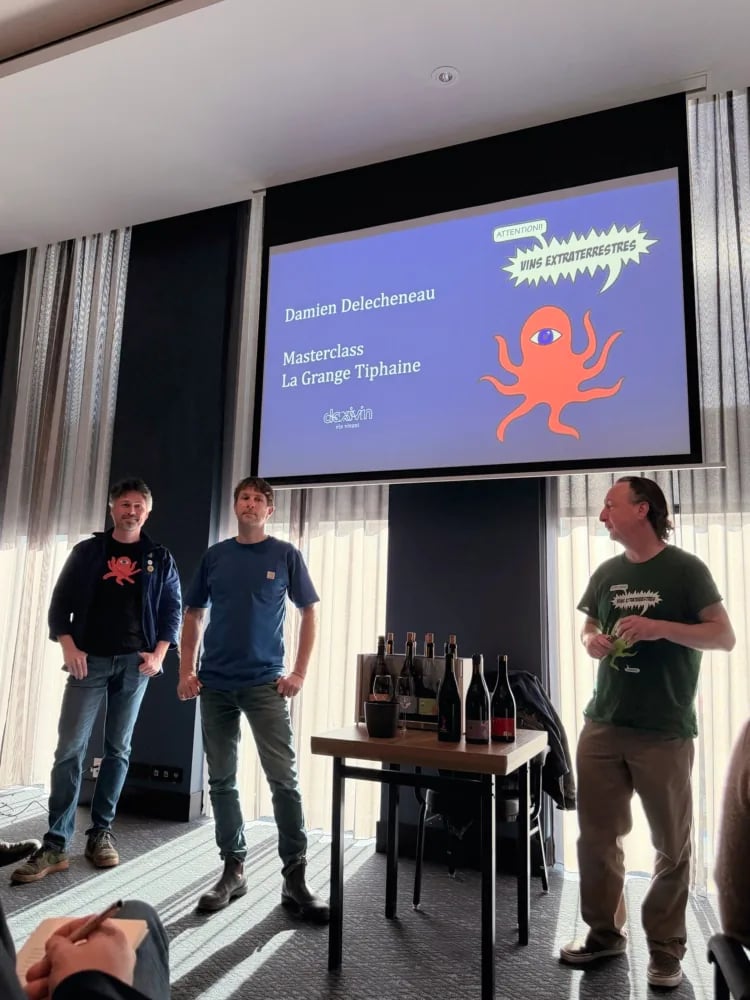
I attended one masterclass this year, time did not allow for more. La Grange Tiphaine, hosted by Daxivin. AOC president Damien Delecheneau brought twelve wines from Montlouis-sur-Loire and Touraine.
Six developments reshaping the organic wine sector
Three hours of walking through the room delivers more than tasting notes. What ViniBio 2026 mostly showed: six patterns shaping the organic wine world right now. None of them is new. All of them are broader than last year.
1. Organic has become the majority
Damien Delecheneau dropped the Montlouis numbers in passing. Independent sources put organic certification across the appellation at around 35 percent, exceptionally high for France. Under his presidency, the herbicide ban went through for the entire appellation in 2018. One of the first in France.
That is no longer a fringe movement. It has become mainstream within a French AOC. And it is not an isolated development. In Rheinhessen, Weingut Götz works with organic certification on twelve hectares and seventy thousand bottles. In Costières de Nîmes, Christian Gourjon at Château Font Barrièle does the same. In Valencia, Derrick Neleman makes two million organic bottles a year.
For Dutch buyers and consumers, this means: organic wine is no longer a niche category to seek out. It is the base layer of a serious portfolio.
2. Non-alcoholic earns a serious place next to wine
The Champagnist table held grower champagne. And a bottle of Ruby Beet Ferment from Sven Leiner in Ilbesheim. Non-alcoholic, fermented from beetroot, grape and bay leaf by the kombucha method. Certified organic. Lively in the glass, with serious structure rather than sugar-mocktail sweetness.
That a grower champagne importer brought this bottle is no accident. Mark Haasdijk and Rick van den Broek of Champagnist read the market. More people are moderating. More people are looking for complex non-alcoholic options that are not sugar mocktails or flat grape juice. This is a product that earns a place at the dinner table.
3. Scale does not exclude organic
The assumption that organic wine can only be small no longer holds. Neleman in Valencia makes two million organic bottles a year. Not “sustainable” as a marketing claim. Certified organic, at commercial scale, with wines that stay clean and balanced even in the entry tier.
This is harder than small-and-organic. Mechanisation, harvest timing and logistics become bottlenecks. Most large producers therefore choose “sustainable” without certification. Neleman does it differently. For the Dutch market, that opens a price point where organic wine is currently missing.
4. Loire chenin remains underrated
Twelve wines in the masterclass, all from La Grange Tiphaine. Four chenin blancs in ascending intensity. Clef de Sol blanc 2024 gave me chills: fresh, refined, full of energy. Les Épinays 2023 showed strength and elegance. Buisson Viau 2020 went a different direction: late harvest by passerillage, forty-five grams of residual sugar per litre, and the wine tastes concentrated rather than sweet.
Nobody complains about the chenin of Vouvray. But the international wine market keeps undervaluing the Loire. Bordeaux owns the red conversation. Burgundy holds white wine prestige. Champagne claims sparkling. The Loire sits in the shadow, underpriced. For buyers, that is an opening. For Daxivin, a daily mission.
A separate surprise: Quatre Mains 2022, a sauvignon blanc aged for a year in old large oak. Aromatic, full, with honey and a whisper of smoke. Damien took over the family domaine in 2007. Coraline joined as a full partner in 2009. “It was the first wine we made together.” Four hands. Two people, one vineyard.
5. Greek wine moves beyond Santorini
Yiannis Mylothridis pushed a glass of orange wine into my hands. Mylonas Naked Truth 2024. Savatiano, fifteen days on skins, six months on lees. Flowers, peach, citrus, honey. Freshness without oxidative weight.
Greece has more than three hundred indigenous grape varieties. The international wine market knows three. Assyrtiko from Santorini, agiorgitiko from Nemea, xinomavro from Naoussa. The rest stays home. Not from lack of quality, but from lack of importers willing to take the time to explain. Oenopolis does exactly that. Savatiano from Attica, debina from Epirus, robola from Kefalonia. Three regions, three indigenous grapes, one table rewriting the Greek story in the Netherlands.
6. Pétillant originel as institutional change
The masterclass closed with two pét-nats. Damien calls them “probably the hardest thing I’m doing in the winery”. He does not make cloudy, funky pét-nat. He makes clear, precise, terroir-driven sparkling wine via the méthode ancestrale.
Recognition as an official category within Montlouis was a collective fight by the appellation’s vignerons, codified in a quality charter that received legal status in 2007. Damien was deeply involved. “We struggled for 13 years, but we did it.” Montlouis was the first appellation in France to give pétillant originel a formal home, others have followed cautiously since.
This is institutional change, not stylistic change. Pét-nat is leaving the natural wine niche and becoming a formal wine category. For the broader wine market, that means more regulation, more quality standards, and eventually a serious place on the wine list instead of an asterisk.
Per importer: the highlights
Six tables that mattered for my work as a content creator and educator. Deeper profiles sit in the individual articles.
Champagnist combines grower champagne with the Ruby Beet Ferment. Mark Haasdijk and Rick van den Broek work with récoltant-manipulants, organic and biodynamic, watching where the drinks category is moving. champagnist.nl.
Dis Donc brings nine organic and biodynamic champagne families, sixty-four cuvées. Jaqueline Smit specialises without compromise. No entry-level champagne as filler volume, no anonymous blends. Every bottle traceable to the parcel. disdonc.nl.
Daxivin imports La Grange Tiphaine. Marnix Rombaut works with his cousin Niels Huijbregts and biodynamic Loire producers, and knows the portfolio from parcel to vinification. Anyone wanting to explore chenin, cabernet franc and pétillant originel starts here. daxivin.nl.
Château Font Barrièle makes grenache-syrah blends and white wines in Costières de Nîmes. Christian Gourjon works organic and biodynamic, with labels referencing Saint-Exupéry. Accessible and serious in the same breath, and still looking for a Dutch importer. chateaufontbarriele.fr.
Weingut Götz brings Rheinhessen precision to Amsterdam. Holger Götz makes organic riesling and pinot noir on twelve hectares. Tight vinification, single-vineyard work, and no pretension. Götz is also still looking for a Dutch importer. weingut-goetz.de.
Oenopolis sells Greek wines beyond Santorini. Yiannis Mylothridis knows his producers personally and can trace every bottle to parcel and vinification. Anyone taking Greece seriously starts here. oenopolis.vin.
Neleman does organic wine at scale in Valencia. Two million bottles a year, certified organic, clean and balanced. For buyers and consumers wanting to open their organic line at an accessible price point. neleman.org.
What stays
Three hours later I walked out of Hotel van der Valk with one conclusion. Organic is no longer a niche. It is infrastructure. The producers are serious, the scale varies from twelve hectares to eighty, the innovation sits in non-alcoholic ferment as much as in official AOC recognition for pét-nat.
Next year I will be back. With more time, more questions, and probably more Ruby Beet.
ViniBio is organised annually by Melman Communications. The 2026 edition took place on March 2nd at Hotel van der Valk Amsterdam Amstel. All wines presented were certified organic or biodynamic.
Sources
- Melman Communications: ViniBio 2026 event page
- Jancis Robinson: La Grange Tiphaine, Montlouis (35% organic in appellation, 2018 herbicide ban)
- Vins de Montlouis: Le Pétillant Originel (quality charter 2007)
- The Wine Doctor: Montlouis Pétillant Originel
- La Grange Tiphaine: Official site (Damien & Coraline Delecheneau)
- Greek Wine Routes: Indigenous Greek grape varieties (>300)
- Neleman: Official site Derrick Neleman, Valencia
- Champagnist: About (Mark Haasdijk + Rick van den Broek)
- Dis Donc: About Jaqueline Smit (9 champagne families)
- Oenopolis: About Yiannis Mylothridis
- Château Font Barrièle: Official site Famille Gourjon
- Bosfood: Leiner Field Blends Ruby Beet Kombucha (BIO, Sven Leiner Ilbesheim)
Tasted at ViniBio 2026, the Dutch trade fair for organic wine, on 2 March in Amsterdam. No partnership with the imported producers.
ViniBio 2026 deep-dives
Other articles from the ViniBio 2026 cluster:
More on Events
Dutch Vineyard Open Days 2026: 36 Vineyards Open
36 Dutch vineyards open their gates this September. Every participant, date and opening time, plus what the official calendar leaves out.
Read on →
A sherry course in the Netherlands, four nights
A dedicated sherry course in the Netherlands, taught by certified Sherry Educator Nadien de Visser. Four sessions, 28 wines, 290 euros. What it covers.
Read on →
La Grande Bellezza 2026: Italian Wines in Amsterdam
La Grande Bellezza 2026 brought eight top Italian wines to Amsterdam. My day across Alto Adige and Tuscany, with two Brunello 2021s side by side.
Read on →