

AR Lenoble Champagne: Masterclass Notes
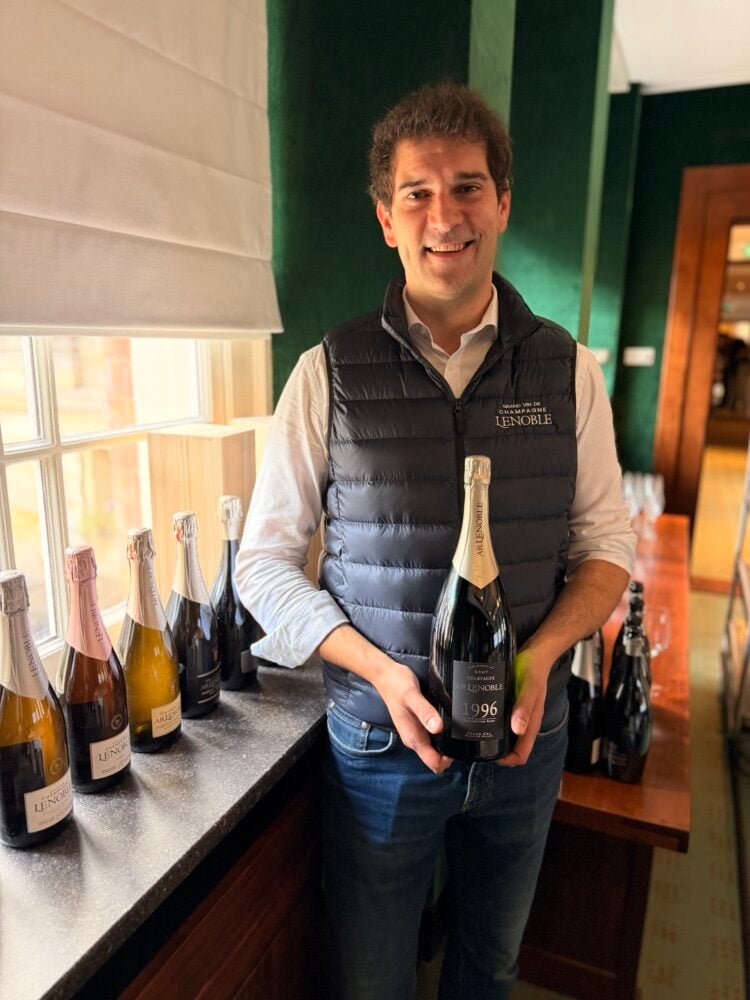
Axel Gillery opened a magnum of 1996 AR Lenoble at the Perswijn seminar. The room fell silent. A masterclass in terroir-driven Champagne.
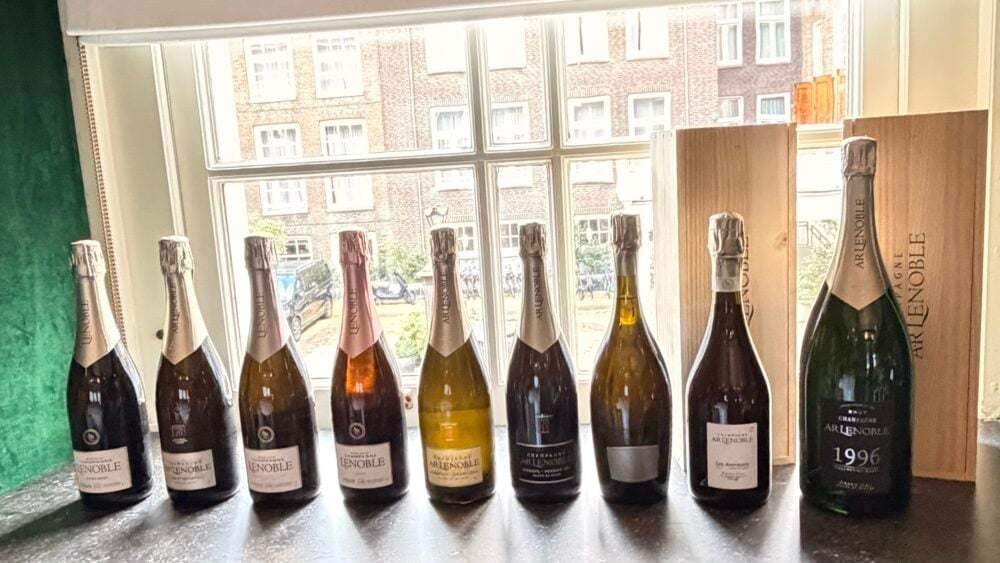
The 1996 magnum opened with a whisper, not a pop. Always a good sign in aged Champagne. Axel Gillery, export manager at AR Lenoble, poured and the room went quiet. Perswijn and Vinetiq hadn’t put together just another tasting. This was a masterclass in AR Lenoble Champagne that showed why grower Champagne keeps rewarding serious attention.
Gillery walked us through the family house from Damery. Founded in 1920, run by the Malassagne family since 1993. Organic farming on prime sites, deliberately limited production.
The Philosophy: Innovation Meets Tradition
What sets AR Lenoble apart from the big houses? Their MAG system and uncompromising commitment to freshness. Reserve wines age in magnums under sealed cork instead of tanks or barrels. Unique in Champagne. Wines develop complexity without losing tension.
With at least 40% reserve wines in the blends, you get depth that ordinary tank reserves never reach.
Equally distinctive is their malolactic fermentation strategy. Most houses put 100% of their wines through MLF. AR Lenoble blocks MLF in 75 to 85% of production. Only wines vinified in their limited oak undergo secondary fermentation. The result: crystalline acidity, electric freshness, serious aging potential.
The Core Range: Precision and Character
Gillery opened with Dosage Zéro V.19, a zero-dosage blend of 20% Chardonnay, 40% Pinot Noir, 40% Meunier. 52% from 2019, 48% reserve wines aged in magnum. Piercing green apple, chalky minerality. Austere and uncompromising.
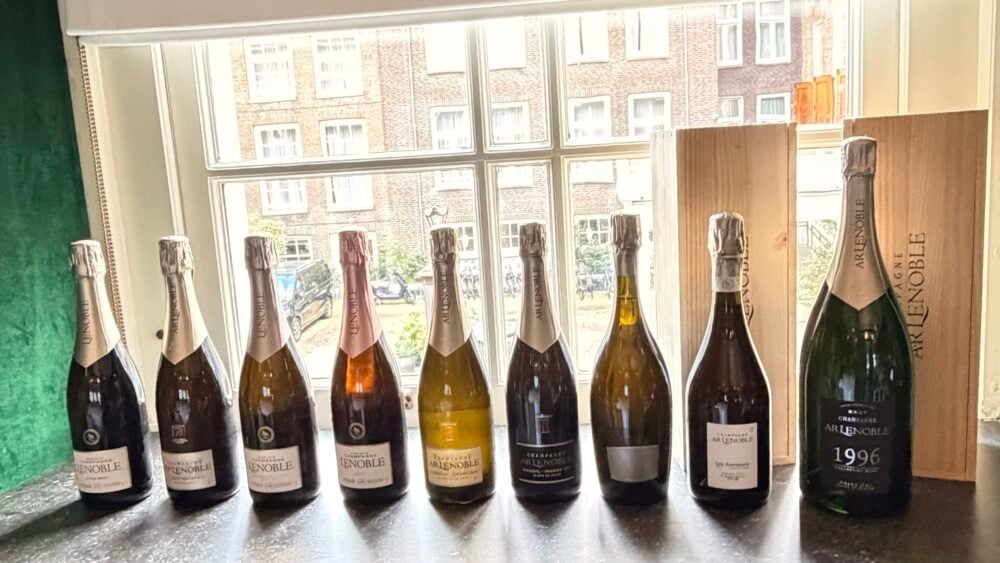
The Extra Brut V.20 was more accessible. 30% Chardonnay, 35% Pinot Noir, 35% Meunier. 60% from 2020 with 40% reserves. Toasted brioche, white flowers, that signature AR Lenoble tension underneath.
The Rosé V.19 surprised: an unconventional 80% Chardonnay with 20% Pinot Noir. Spring fruit, delicate red berries. The Blanc de Blancs V.19 came entirely from Grand Cru sites in the Côte des Blancs and aged 48 months in magnum. Precise, layered, recognisably top-tier Chardonnay Champagne.
Vintages and Special Cuvées
The 2013 Blanc de Noirs Premier Cru from Bisseuil; 100% Pinot Noir with sensual depth, baked pear, honeyed richness after a decade of maturation. The 2012 Blanc de Blancs Grand Cru from Chouilly showed what extended aging does to top-tier Chardonnay.
Then two extras: Gentilhomme 2012, bold and refined, 100% Chardonnay from Chouilly, more than ten years in cellar. And Les Aventures, a multi-vintage blend that ignores convention.
Finally that 1996 magnum. Almost thirty years old, still full of energy. Proof that the non-MLF approach and magnum aging produce Champagnes built for the long haul. One caveat: these vintage cuvées sit in premium pricing territory.
Why AR Lenoble Matters
In a market of consolidation and rising prices, AR Lenoble offers rare authenticity. Honest, site-driven Champagne. No trend chasing. Just an unwavering commitment to freshness, precision, and terroir.
Thanks to Perswijn for organising the seminar, to Vinetiq for importing these wines, and to Axel Gillery for sharing his knowledge and that spectacular 1996.
Ready to discover AR Lenoble yourself? Visit Vinetiq for the complete range.
Disclosure: This article was written following an invitation to the AR Lenoble masterclass, co-organised by Vinetiq. My tasting notes and conclusions are independent. No fee was paid for coverage.
Sources
- AR Lenoble (official, Damery, Côte des Blancs, Bisseuil): champagne-arlenoble.com
- Comité Champagne (CIVC): champagne.fr
- Perswijn: masterclass archive: perswijn.nl
More on Events
Dutch Vineyard Open Days 2026: 36 Vineyards Open
36 Dutch vineyards open their gates this September. Every participant, date and opening time, plus what the official calendar leaves out.
Read on →
A sherry course in the Netherlands, four nights
A dedicated sherry course in the Netherlands, taught by certified Sherry Educator Nadien de Visser. Four sessions, 28 wines, 290 euros. What it covers.
Read on →
La Grande Bellezza 2026: Italian Wines in Amsterdam
La Grande Bellezza 2026 brought eight top Italian wines to Amsterdam. My day across Alto Adige and Tuscany, with two Brunello 2021s side by side.
Read on →