

Patis Pluriel: Meunier Champagne, Unfiltered
Valentin Patis crafts Meunier-led champagnes in La Neuville-aux-Larris. Brut nature, unfiltered, no added sulfites. Fifth generation, own course.
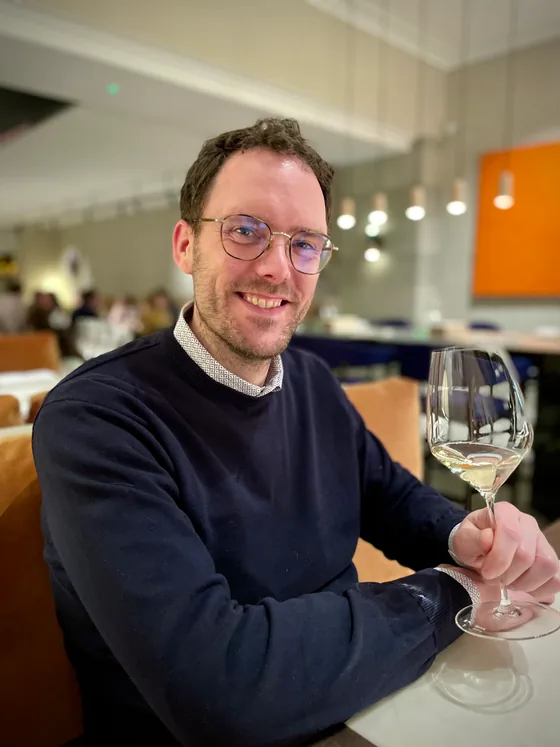
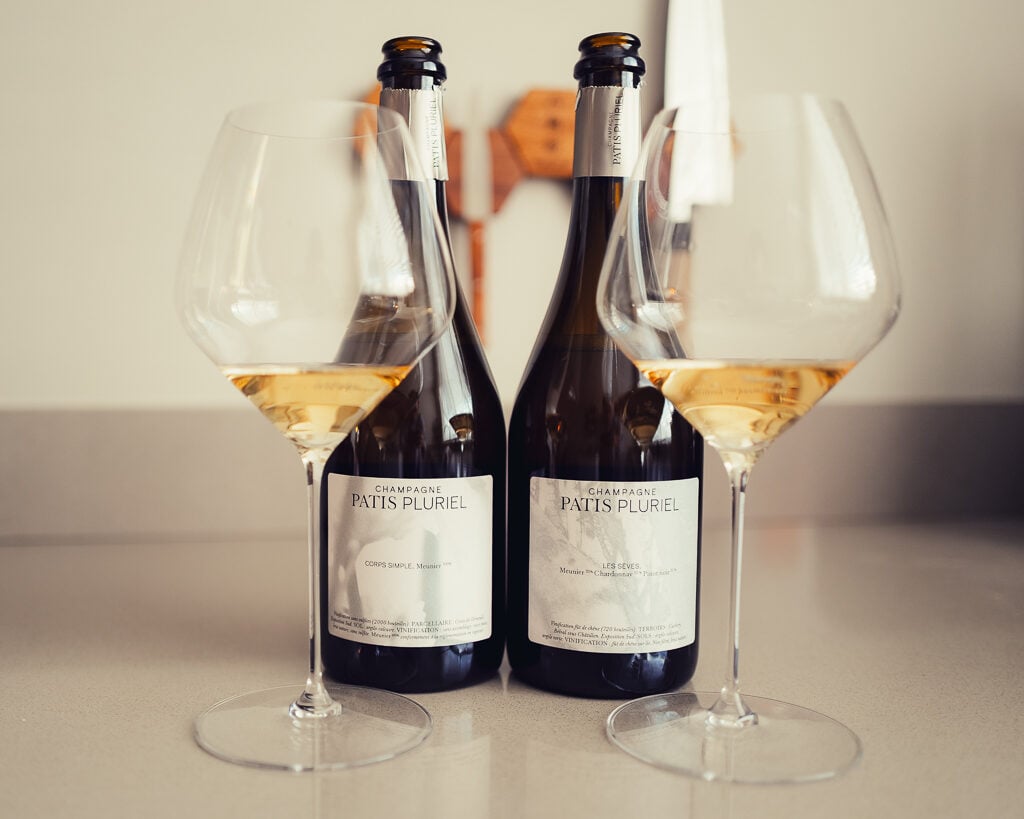
In La Neuville-aux-Larris, deep in the Marne Valley, Valentin Patis pours a glass of Patis Pluriel champagne, his Corps Simple. No added sulfites, no dosage, unfiltered. Fifth generation, mid-thirties, and he refuses to follow the Champagne playbook his family once followed. The artisanal champagnes of Patis Pluriel start here, with someone who came out of design school and ended up in the vines.
A Family That Pivots
Five generations of the Patis family worked Meunier in this corner of the valley. Valentin took over and moved things sideways. He studied design, came back, and reshaped the estate together with his parents. The name Pluriel points to the layers they want to capture: color, reflection, aroma, texture.
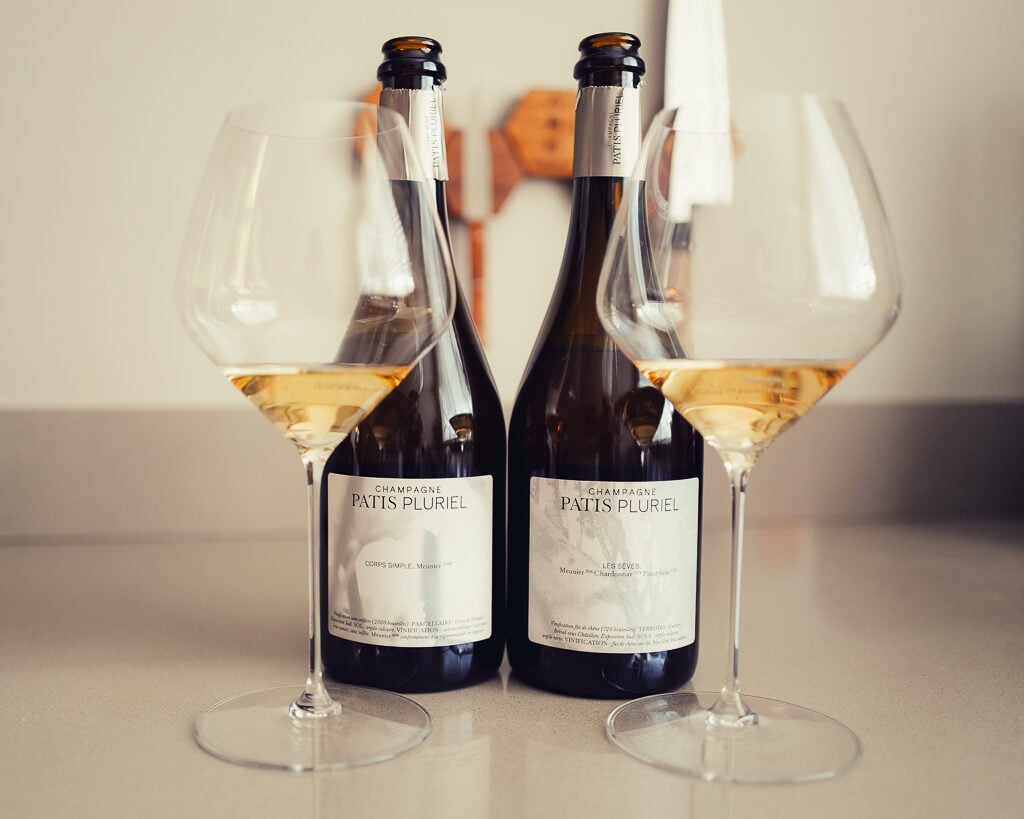
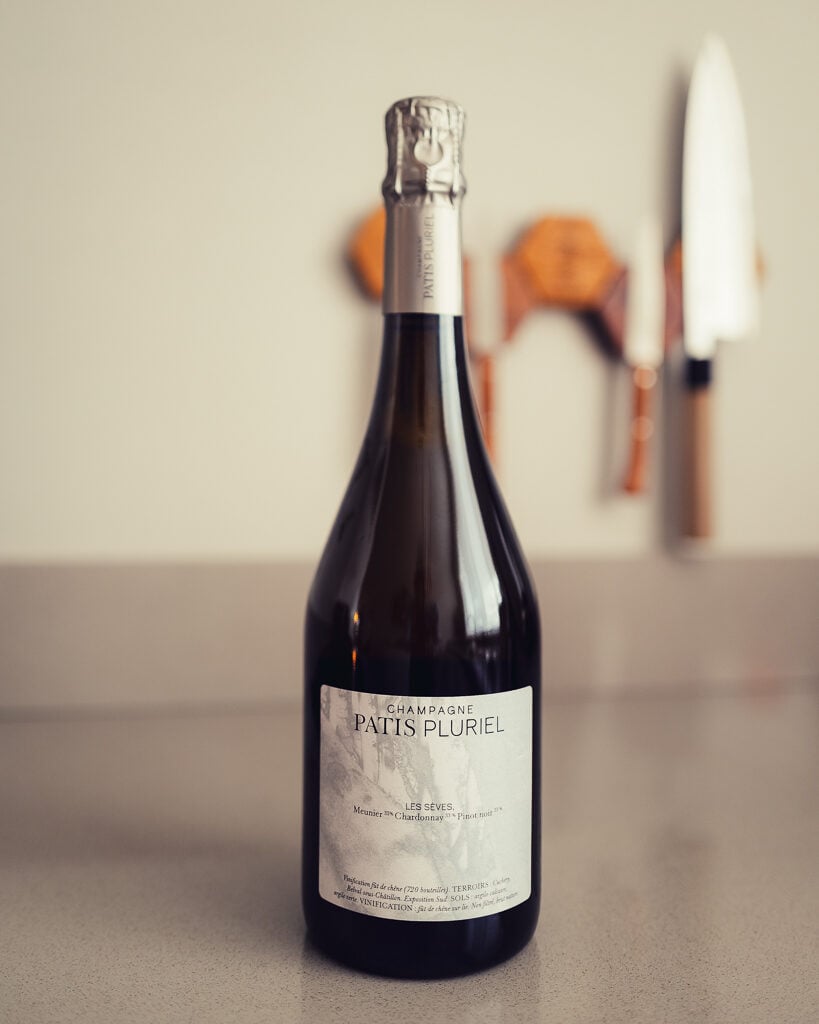
The label is quiet. The wine is too.
Meunier in the Lead
Most Champagne houses use Meunier as a blending afterthought. Patis flips that. On their eleven hectares of clay and chalk around La Neuville-aux-Larris, Meunier runs the show. The grape finally gets the attention Pinot Noir and Chardonnay have been hogging for decades.
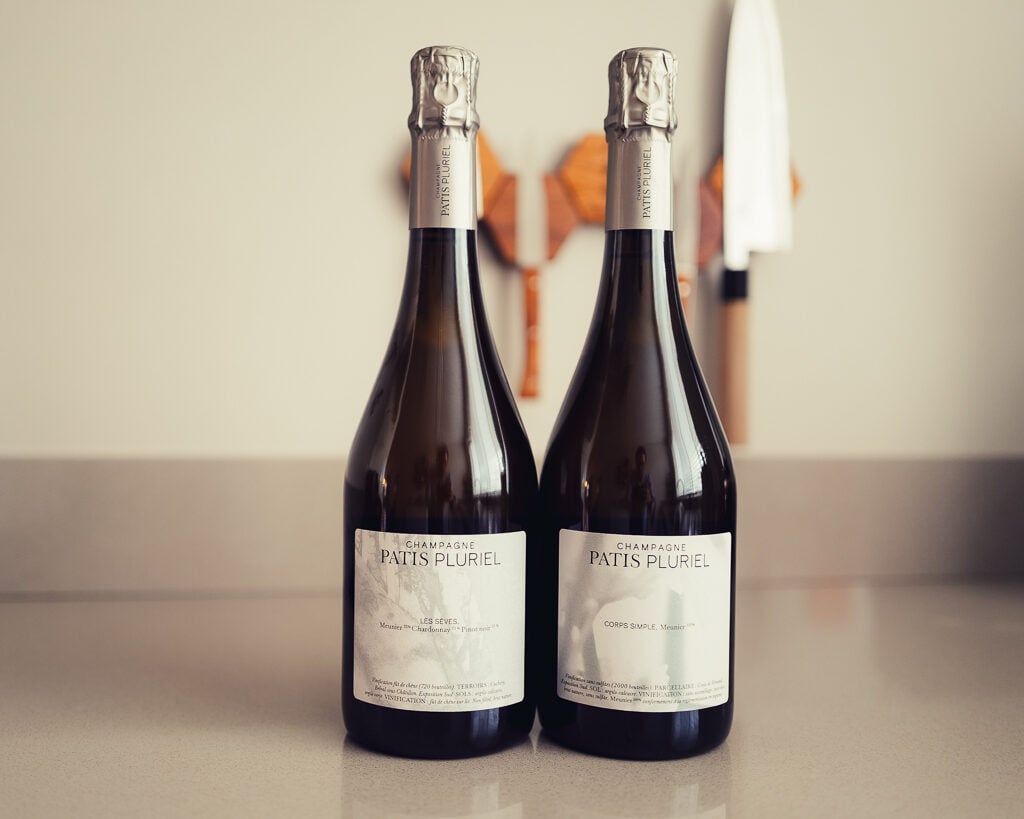
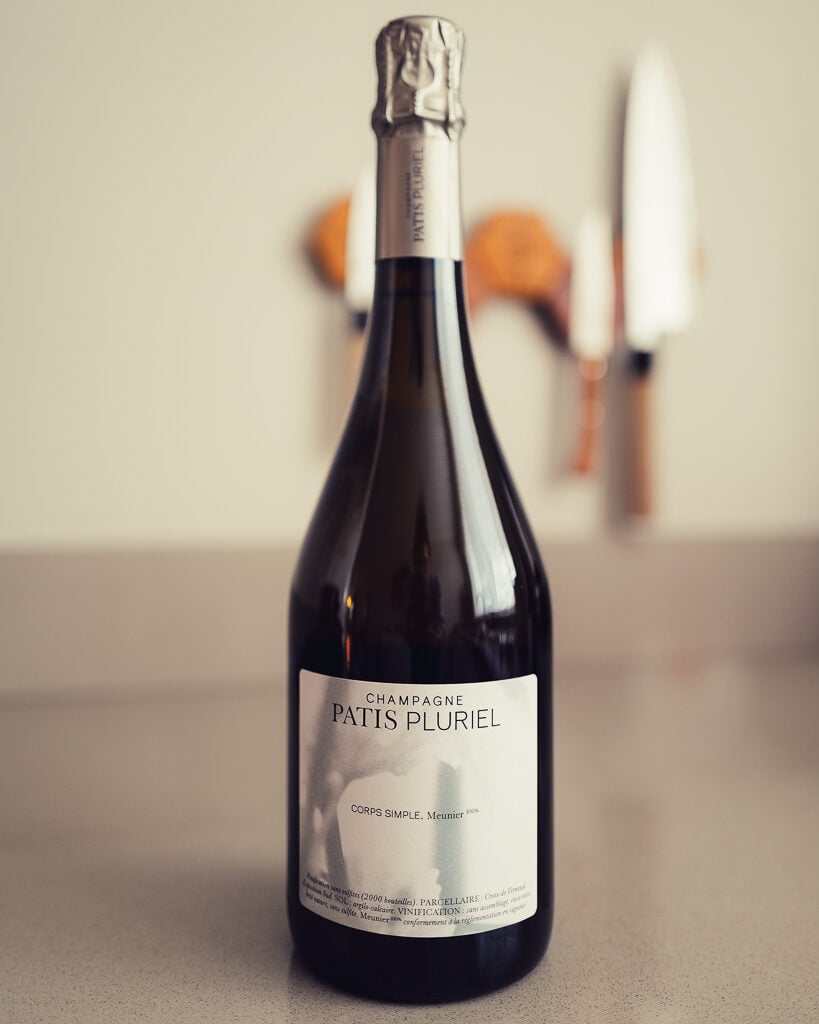
“The clay-limestone soils and microclimate of our valley let Meunier express itself fully,” is how Valentin sums up the philosophy.
Winemaking Without Cover
The estate carries High Environmental Value certification. More telling is what they leave out in the cellar:
- No added sulfites
- Brut nature, zero dosage
- Unfiltered
- Parcel-by-parcel vinification
Sounds incremental until you remember how atypical it is in Champagne. Filtration and dosage are close to gospel here. Patis drops both and works with what is left.
Corps Simple: 100% Meunier
The flagship. Pure Meunier from fifty-year-old vines in the La Croix de Verneuil parcel.
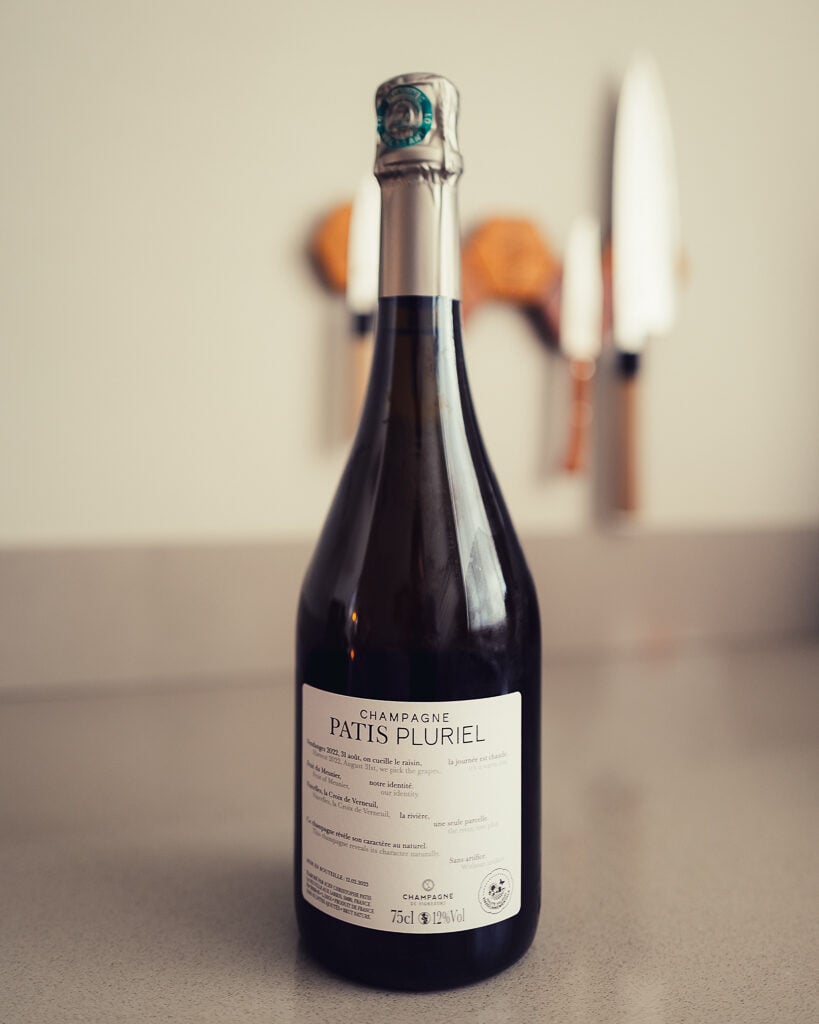
In the glass: acacia, white blossom, a hint of magnolia and jasmine. Then ripe pear, apple, orange peel, almond. On the palate it is rich but tense, with acidity that cuts through everything and a light peppery edge that nods to green chili. The mousse is fine and integrated. CO₂ from native fermentation, not from sulfite manipulation, keeps the wine pristine.
Les Sèves: The Blend
For drinkers who want more roundness. Equal parts Chardonnay, Meunier and Pinot Noir, each fermented separately in seven-year-old French oak.
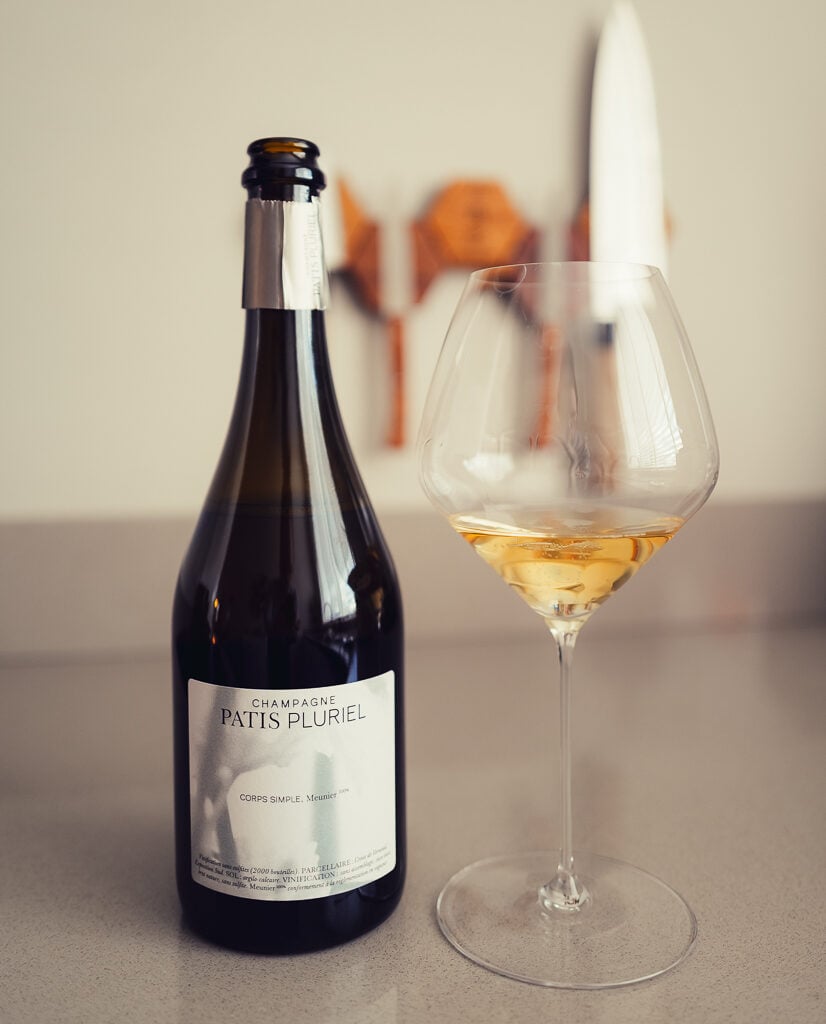
After vinification they blind-select the three best barrels. No filtration, so structure and texture reach the bottle intact. The nose carries vanilla, coconut, light toast, then acacia, white blossom, citrus, peach, hazelnut and almond. The palate is silky, with honey, beeswax, and high acidity that cleans the mouth.
Two Characters
Corps Simple leans into acidity and florals, with fruit underneath. Les Sèves trades on roundness, vanilla and oak, padded with citrus and stone fruit.
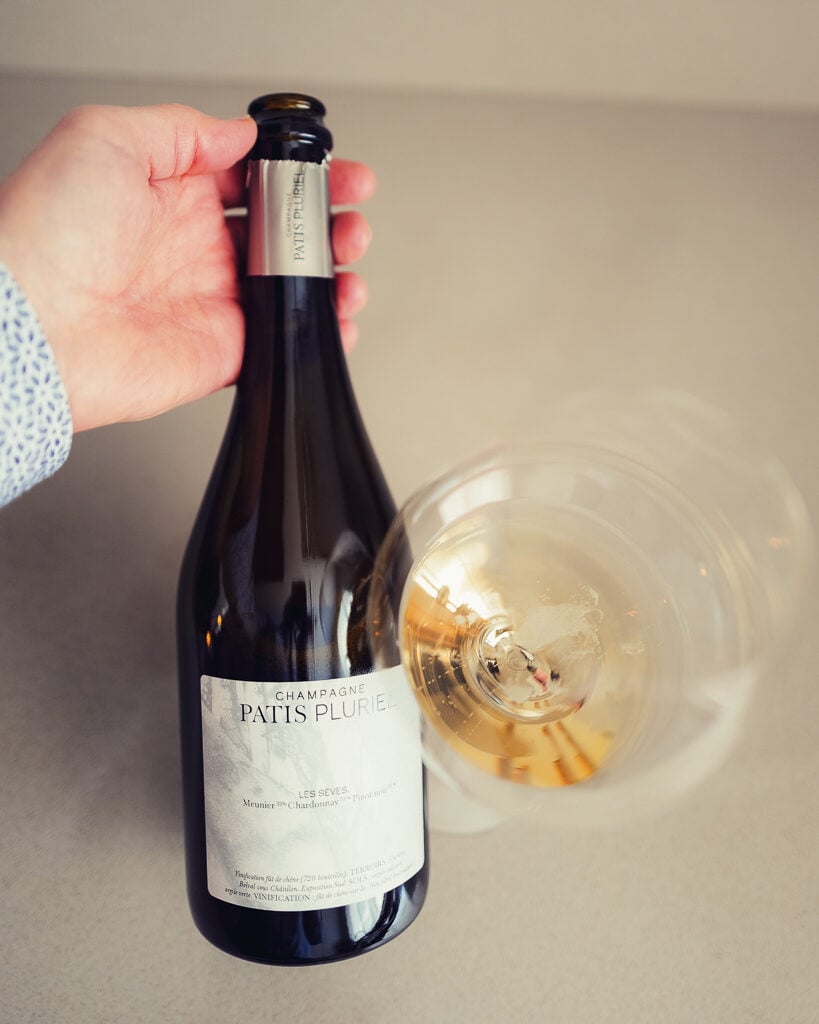
Pour Corps Simple as an aperitif or with oysters and fish. Pull out Les Sèves for lightly grilled tuna with pickled cucumber or a small dish of mild kimchi. Two different evenings, both convincing.
A Clear Line
Patis Pluriel does what many small houses in Champagne are doing now: less intervention, more parcel, less makeup. The difference is how consistently they follow that choice through.
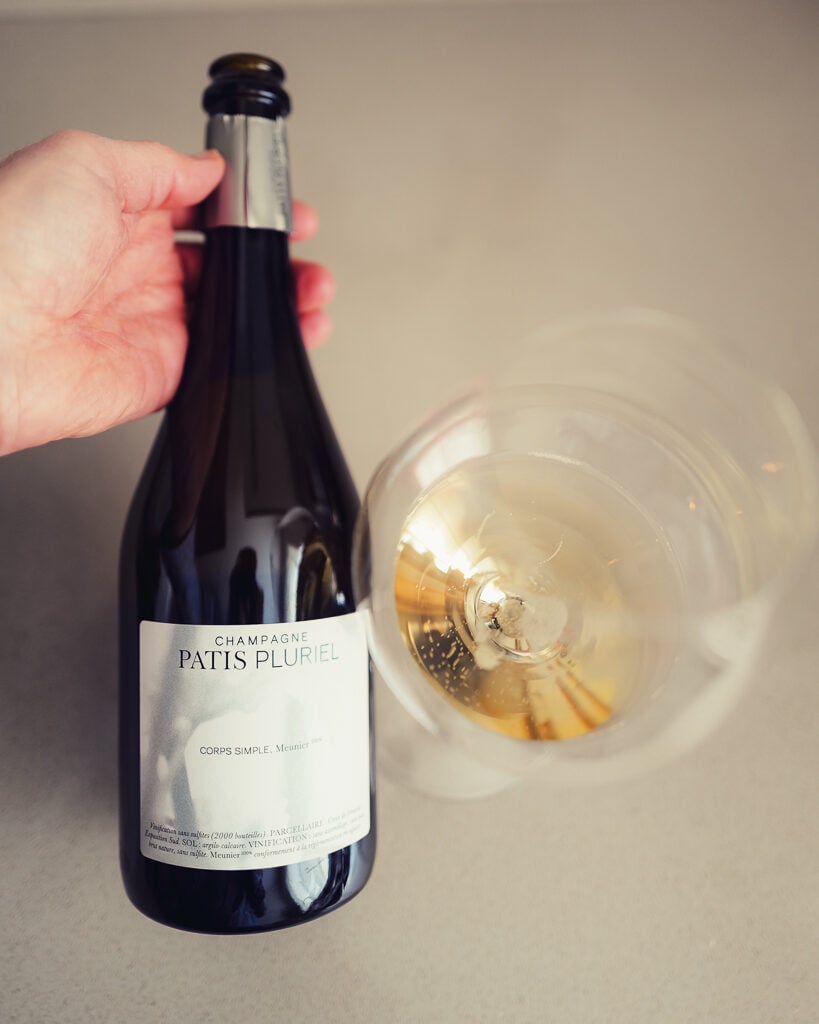
If you want to look past the famous names, this is a house taking Champagne’s future seriously without throwing away the tradition.
Santé!
More information: https://www.patispluriel.com
Sources
- Patis Pluriel (official, cuvées and philosophy): patispluriel.com
- Comité Champagne (CIVC): grower champagne and Vallée de la Marne: champagne.fr
More on Winemaker
Biodynamic tasting calendar: does the fruit day hold?
A reel from Ploder-Rosenberg says wine shows best on fruit and flower days. The biodynamic tasting calendar sounds logical. The blind tasting says otherwise.
Read on →
Champagne Gallimard: Six Generations in Les Riceys
Two Gallimard bottles from a July subscription box. A solera running 2009 to 2022, hand disgorgement, and a label code that says something the story doesn't.
Read on →
Podere Sapaio: Bordeaux on the Bolgheri coast
Podere Sapaio makes Bordeaux blends in Bolgheri, with time as its guiding principle and concrete beside wood in the cellar. A portrait after La Grande Bellezza.
Read on →