

Fattoria Fibbiano: Tuscany's Indigenous Grapes
While many Tuscan wineries chase Super Tuscan acclaim, Fattoria Fibbiano takes a traditional approach focused on indigenous grape varieties.
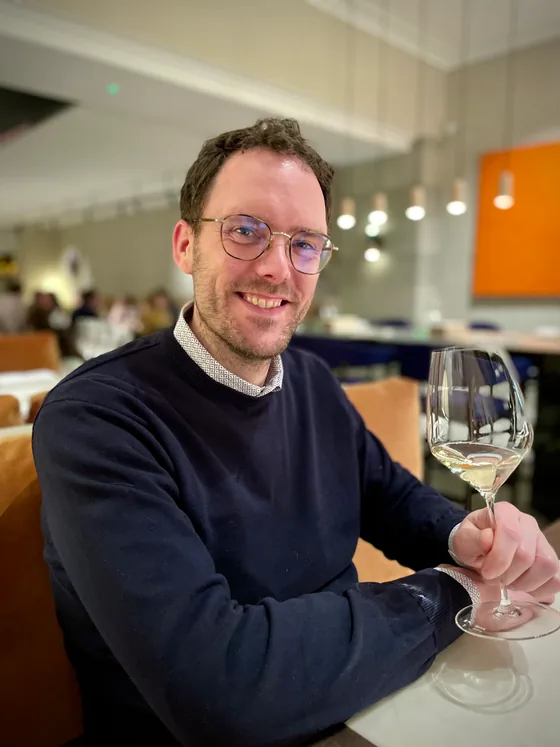
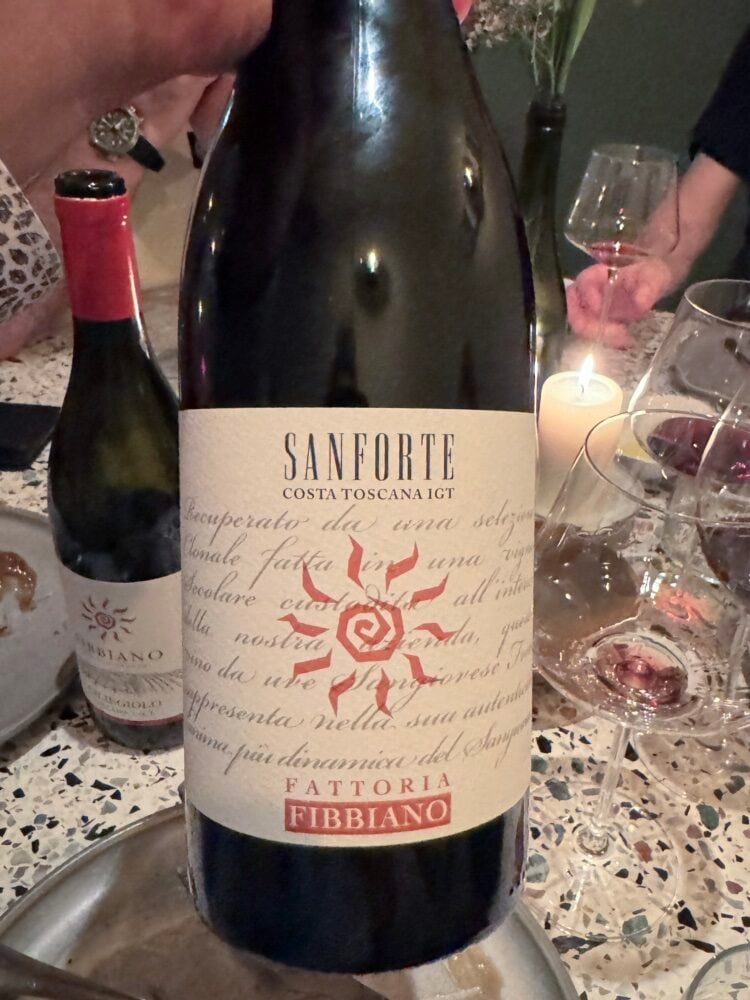
In Terricciola, an hour south of Pisa, sits a Tuscan estate that watched the Super Tuscan wave roll past without joining in. No Cabernet, no Merlot, no international ambition dressed up as terroir. Fattoria Fibbiano works with Sangiovese, Canaiolo, Ciliegiolo, Colorino and a handful of white grapes that almost no one else still bottles varietally. Not every wine hits its mark; some are rustier than polish-seeking palates expect. But the project itself is unusually serious.
A Family Legacy Built on Ancient Foundations
In Tuscany’s Era Valley, a carved stone on the house reads 1707. The modern chapter only began in 1997, when Giuseppe Cantoni bought the farm. Today his sons run it; Matteo handles international markets, Nicola is the winemaker and oenologist.
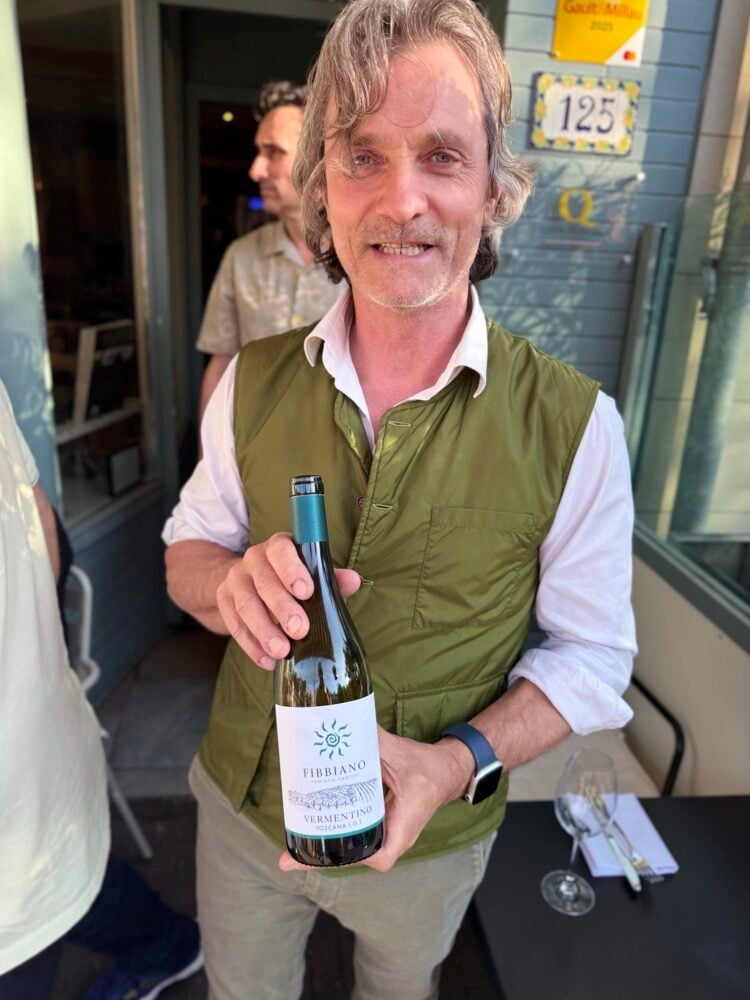
The Cantoni family comes from southern Milan, with farming roots that go back generations. They moved into this corner of the Pisa Hills to build a winery, not to ride a trend. While Tuscany was planting Cabernet and Merlot wholesale through the 1960s and 70s, the Cantonis did the opposite: they pulled out international clones and replanted native varieties. The vineyard had to go back to what it once was.
That decision didn’t come from market analysis. It was a philosophical call to keep Tuscan plant material alive in a region that was actively walking away from it.
The Terroir: Ancient Seas, Limestone and Shells
The soil is full of fossils and medium-textured corals from the Pliocene epoch. This area sat under the sea, and you taste it back in the wines as a salty finish. The 20-hectare vineyard is farmed organically, without synthetic inputs.
The hilltop is mostly south-facing, but 2.5 hectares are deliberately oriented north to stay cooler now that dry summers are routine. That kind of decision doesn’t show up in a marketing brochure; it tells you something about how Nicola thinks about climate pressure.
The soil is a mix of clay and limestone, threaded with seashells from the nearby Mediterranean and Ligurian coasts. Warm sea breezes by day, cool nights at night; classic conditions for retaining acidity and building aroma.
Formal organic certification has not landed yet. Not because Fibbiano isn’t farming organically, but because the region requires a collective designation in which all neighbouring plots must also be certified. A paperwork problem, not a practice problem.
The Indigenous Grape Renaissance
Sangiovese, Sangiovese Forte, Sangiovese Polveroso, Canaiolo, Ciliegiolo and Colorino on the red side; Vermentino and Colombana on the white. Roughly 2.5 hectares of vines are over 100 years old; another 14.5 hectares sit between ten and twenty.
The Colombana
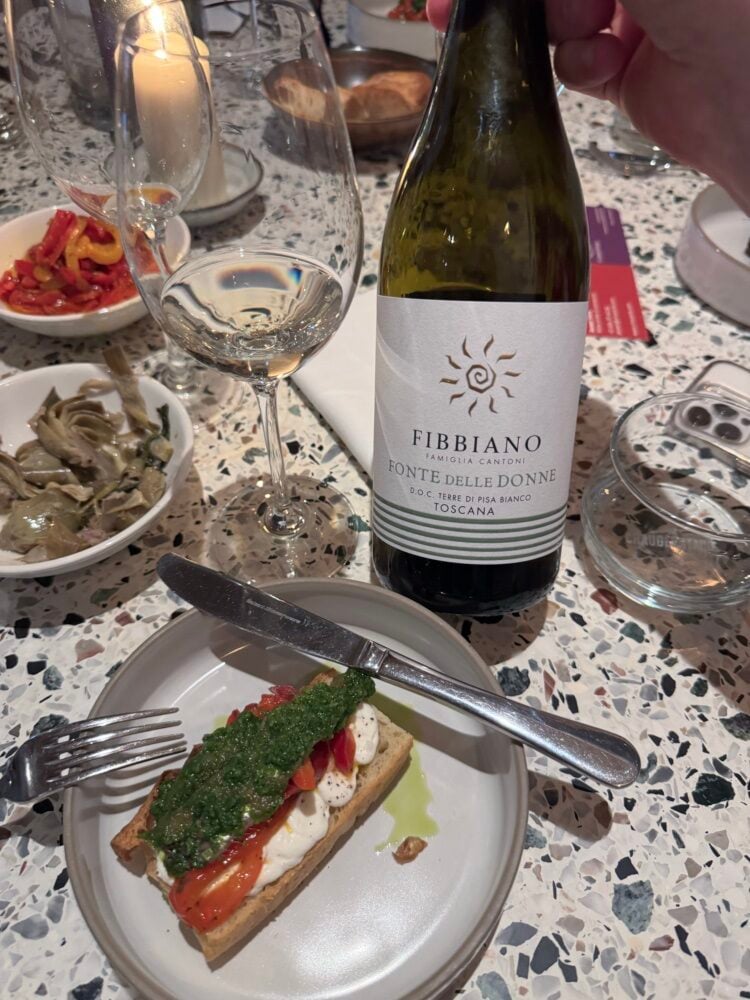
Colombana may be the only grape variety currently bottled varietally by a single producer worldwide: Fibbiano. The story starts with an Irish missionary monk named Columban, whose followers carried vine cuttings to the Valdera zone in the Province of Pisa. The variety found its habitat here and once carried a reputation for therapeutic properties.
The Cantonis invited a viticulturist from the University of Florence to identify the old vines, and that’s how the variety re-emerged. The 2019 Colombana is citrusy with white peach, sharp acidity and the salty finish you’d expect from this fossil-rich soil.
Ciliegiolo
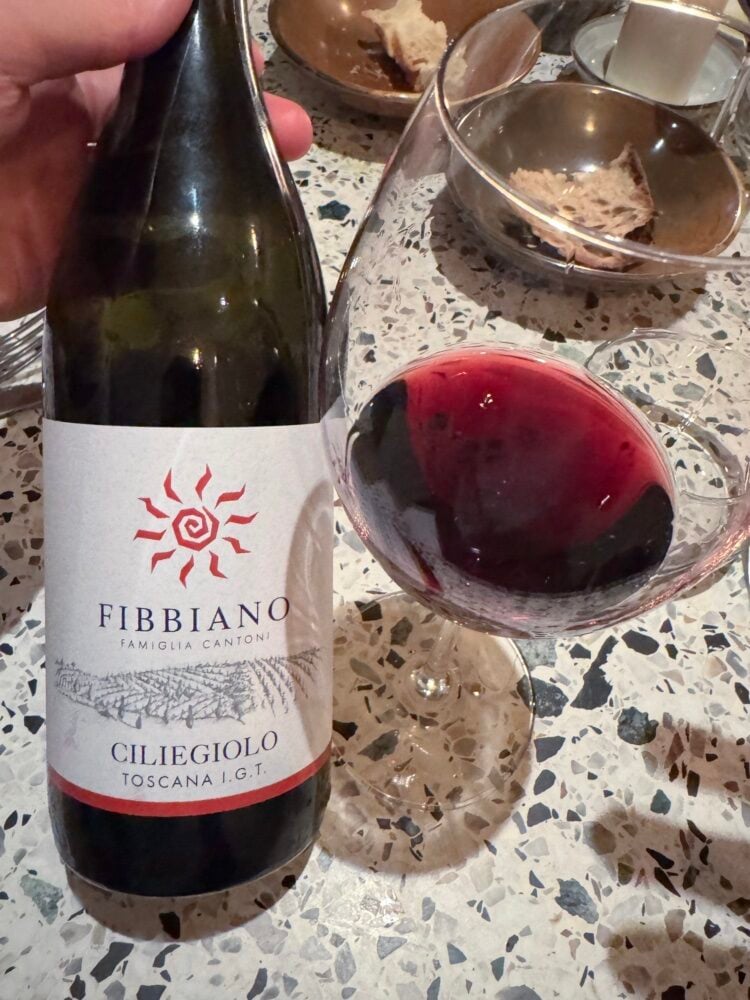
Cold fermentation makes 100% varietal Ciliegiolo possible; in most Tuscan houses this grape disappears as a blending component. Here it stands on its own. Bright cherry and strawberry, lively acidity, soft silky tannins. Cellar temperature with meat and structured vegetables, or lightly chilled (12-15°C) with fish and tuna. A faint forest-floor note, easy to drink.
The Wines: Authentic Expression with Mixed Results
The Bottle Lineup
Casalini Chianti Superiore DOCG (2021). 90% Sangiovese, 10% Ciliegiolo. Ruby red, intense aromas of cherry, raspberry and blackberry. Tannins smooth, body whole and persistent. Historically authentic, but lacks the concentration of the most acclaimed Chianti names; that’s a choice, not a flaw.
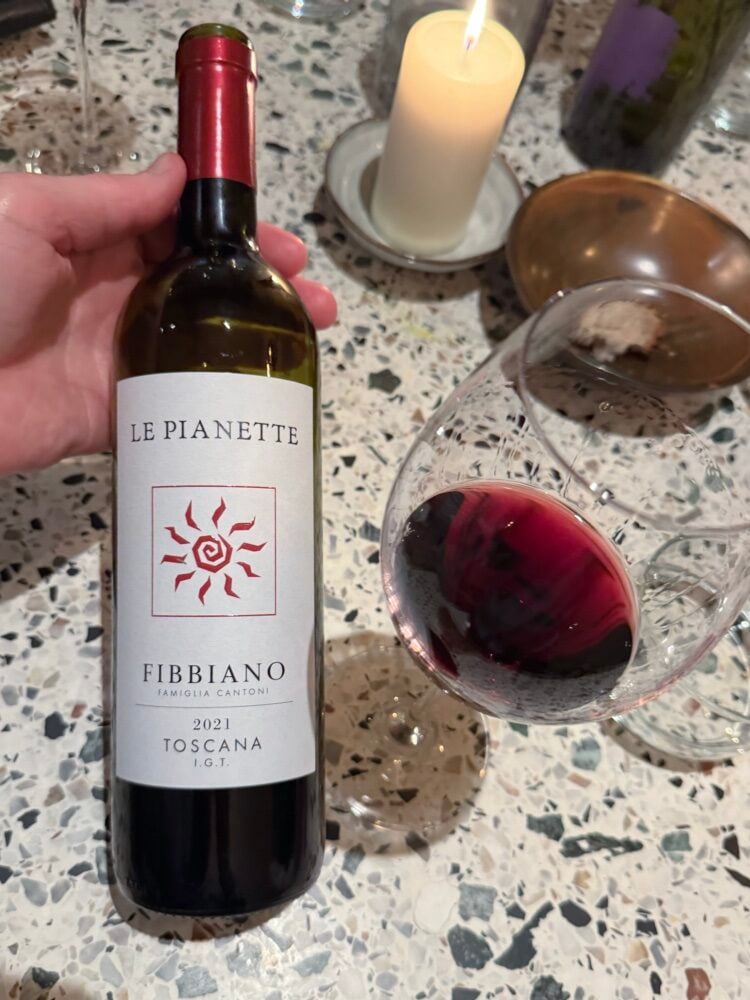
Le Pianette IGT Toscana (2020). 70% Sangiovese, 30% Colorino. Classic ruby color, baking spices on the nose, cherry on the palate, smooth tannins. My notes say “spicy” and “comfort wine”; rougher than a polished international style, and that’s the point.
Sanforte IGT Toscana. 100% Sangiovese, longer aging, production capped at 7,000 bottles a year. Their premium expression, and the wine to judge the project on.
Technical Weak Spot
The combination of indigenous yeasts living on grape skins and long aging (4 months in cement, 12-30 months in Slavonian oak, plus bottle aging) produces vintage variation. Drinkers chasing the consistency of large brands won’t always find it here. That’s not a fault, that’s the system.
Beyond the Vineyard: Agriturismo
Fibbiano is more than a winery: 90 hectares including vineyards, olive groves and woodland. The main building is 1,200 m² and offers five apartments, a one-bedroom suite and a tasting room where the old casks still stand.
Visitors keep coming back to one name: Silvia, the guide. Her tours and the intimate tasting room get consistent praise. The olive oil is exceptional, and tastings usually pair it with traditional Tuscan accompaniments.
Some find the pricing on the steep side for the region, and the location sits off the busy wine routes around Montalcino or Chianti Classico. If you want quiet, that’s a plus.
International
Fibbiano exports about 90% of its production. The US is the largest market at 45-50%, with Europe, Asia, Canada and North Africa filling out the rest. A traditional, terroir-driven wine selling internationally without a modern marketing engine is no small feat for a house of this size.
Critical Take: Authenticity vs. Accessibility
Production volumes are small, which makes international distribution harder. The lighter reds may feel raw to drinkers used to heavier international styles.
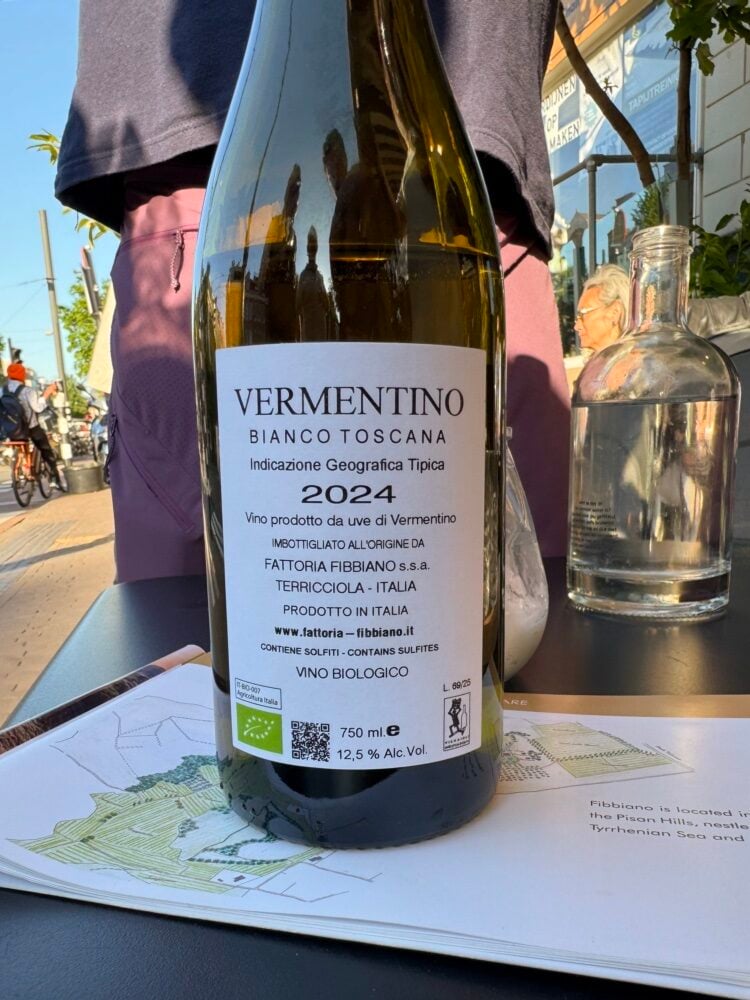
The Vermentino is technically clean, with pale gold, lavender, lemon balm and thyme on the nose, but lacks the muscle of the best Sardinian or Ligurian examples. The Rosé is delicate with raspberry fruit, dry with good acidity, but doesn’t reach the complexity of leading Provence or Loire producers. That’s a fair comparison, not a verdict.
Bottom Line
Fattoria Fibbiano stands for a kind of Tuscan winemaking you rarely see anymore: a family that deliberately doesn’t make Super Tuscan and keeps working with native varieties that have been pulled out elsewhere. Not every bottle hits the top tier, but the unique Colombana and the pre-phylloxera plots make this estate essential for anyone who wants more than a commercially polished Tuscan.
Disclosure: this article was written following an invitation by Fibbiano to a winemaker dinner. My tasting notes and conclusions are entirely independent. No fee was paid for coverage.
Sources
- Fattoria Fibbiano (official, history, grapes, cuvées): fattoriafibbiano.com
- Consorzio Vino Chianti (DOCG): consorziovinochianti.it
- Registro Nazionale delle Varietà di Vite (Italian grape registry): politicheagricole.it
More on Winemaker
Biodynamic tasting calendar: does the fruit day hold?
A reel from Ploder-Rosenberg says wine shows best on fruit and flower days. The biodynamic tasting calendar sounds logical. The blind tasting says otherwise.
Read on →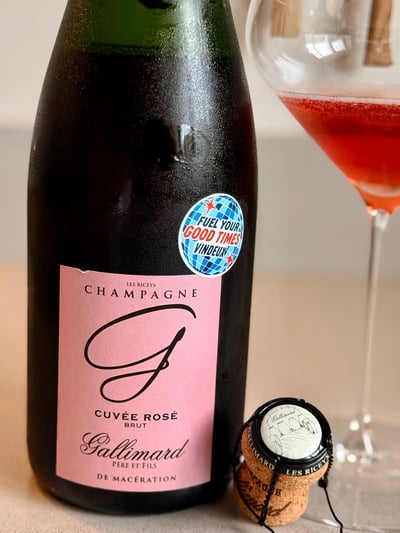
Champagne Gallimard: Six Generations in Les Riceys
Two Gallimard bottles from a July subscription box. A solera running 2009 to 2022, hand disgorgement, and a label code that says something the story doesn't.
Read on →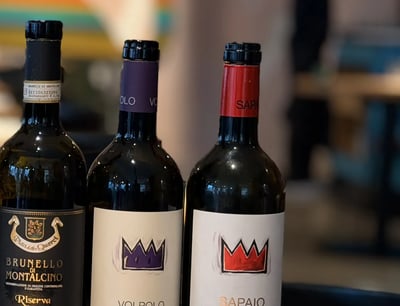
Podere Sapaio: Bordeaux on the Bolgheri coast
Podere Sapaio makes Bordeaux blends in Bolgheri, with time as its guiding principle and concrete beside wood in the cellar. A portrait after La Grande Bellezza.
Read on →