

Weingut Meurer Riesling: Tradition on the Mosel
The first sip stopped me cold. Not because it was shocking, quite the opposite. It was the kind of quiet perfection that makes you pause mid-conversation and.
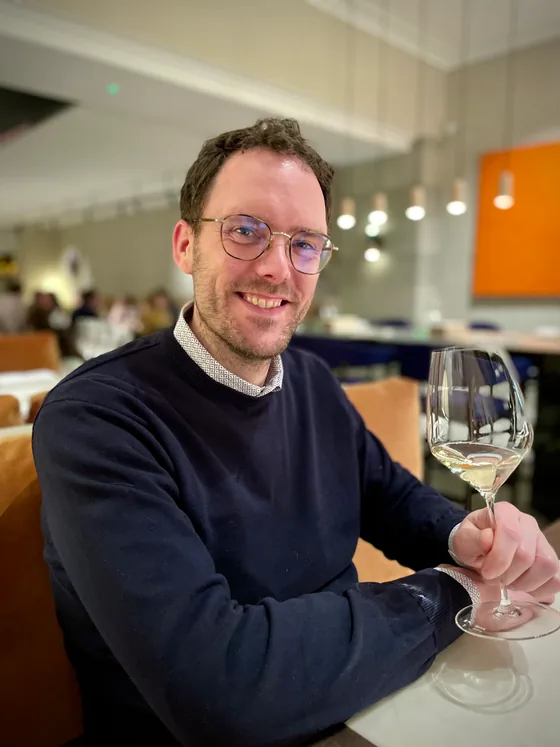
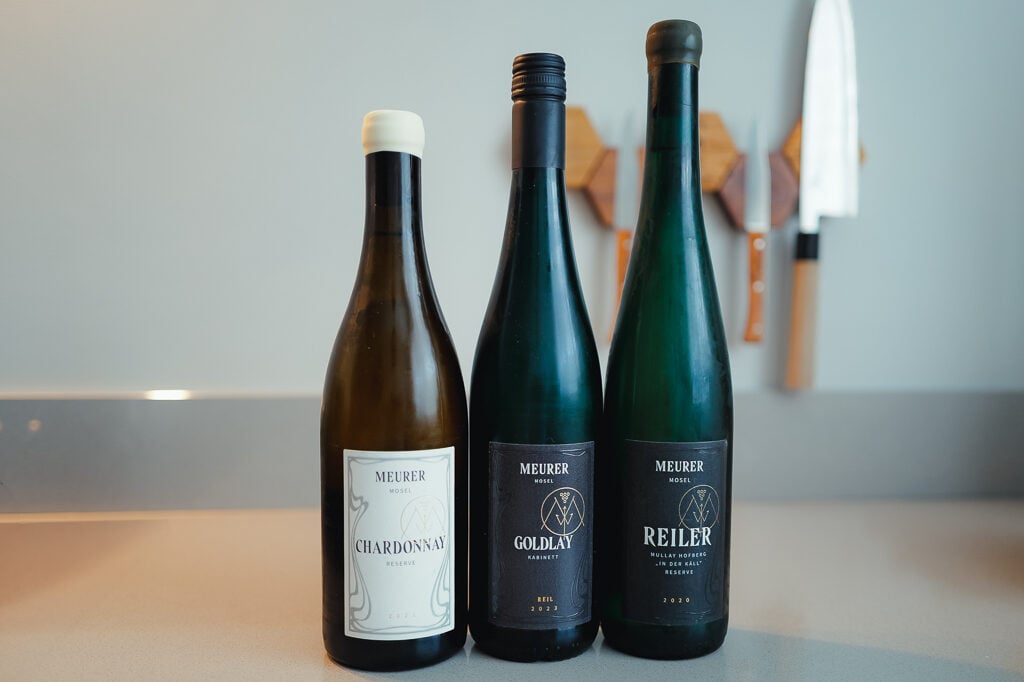
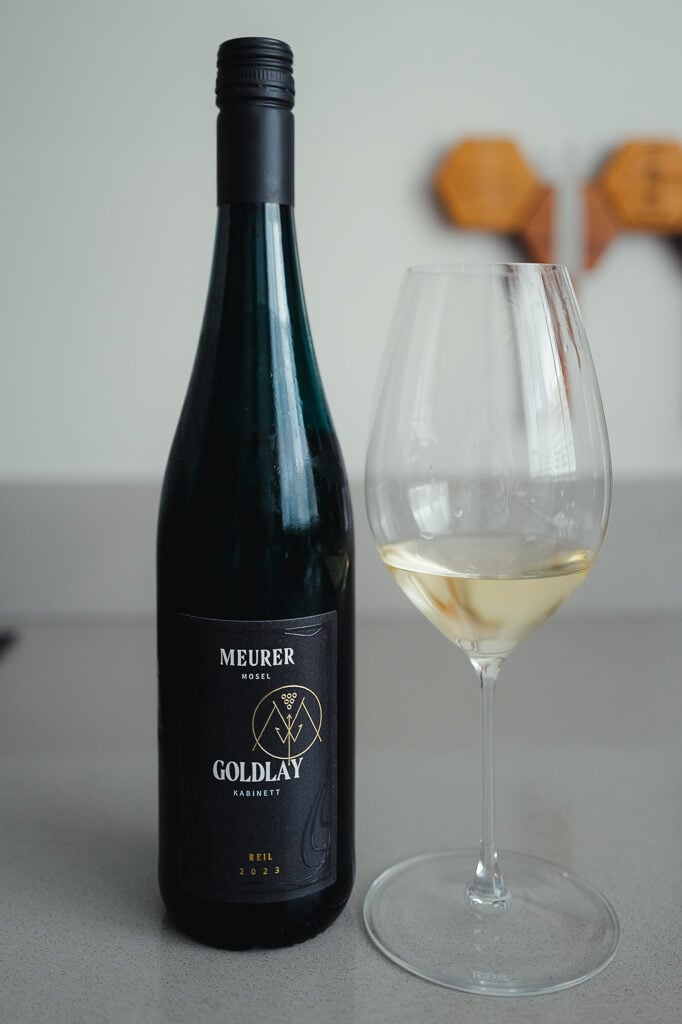
First sip of the Reiler Goldlay Kabinett 2023, and my glass stopped halfway up. No pyrotechnics, no fruit shouting for attention; just a wine so precisely balanced that the rest of the conversation had to wait. Thanks to Amelie Meurer for these bottles of Weingut Meurer Riesling, which reminded me why German wine pulled me in to begin with.
What’s in the glass comes from a family in Kröv that still does everything the old way, not out of nostalgia but because haste makes bad wine here. The vineyards sit so steep that harvesting without a rope sounds like a poor idea. The slate under those rows has been here since the Romans first planted vines along the Mosel, around year zero.
Where Monks Once Walked
Benedictine monks terraced these slopes in the Middle Ages. What they figured out still sits beneath every good Mosel bottle: blue-gray slate that absorbs daytime heat and releases it at night, paired with a river surface that bounces sunlight back up into the canopy. Germans call the combined effect Reflexionswärme; the extra degrees that get Riesling ripe this far north.
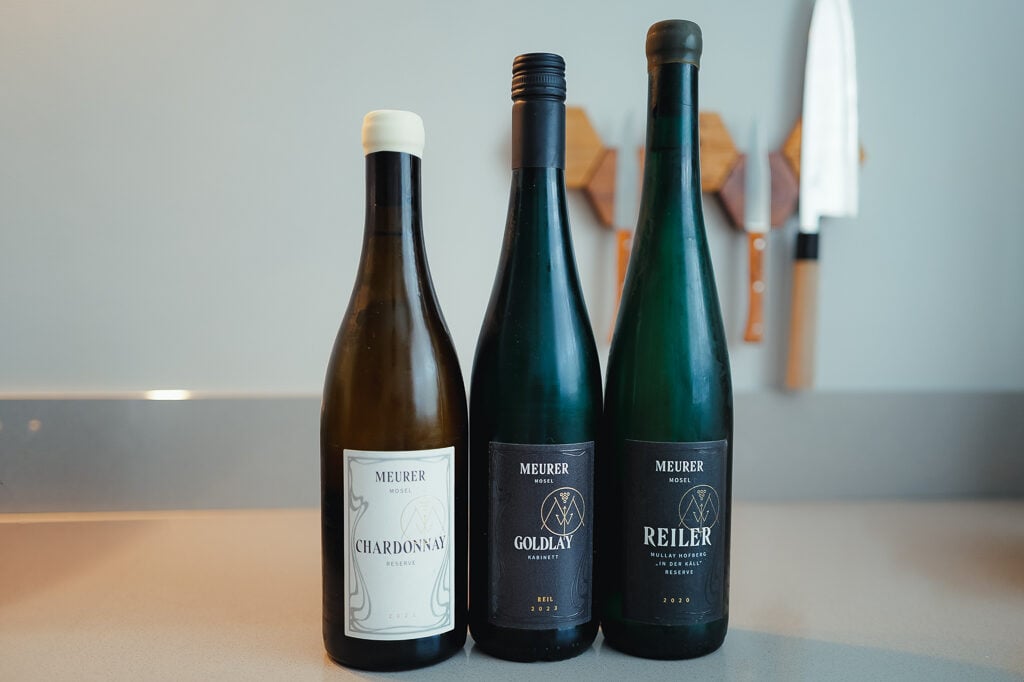
Meurer’s Reiler Goldlay parcel faces west, which means the grapes catch the late evening light until the sun drops behind the hill. Those hours produce Riesling with knife-edge contours. The Mullay-Hofberg site is more dramatic; south-facing terraces with the rock wall of an old quarry as backdrop, and vines that in places exceed 120 years and yield fruit on a different scale.
That slate isn’t decoration for visitors. By day it loads up like a battery; at night it slowly returns the heat to the vines. Beneath it sits deep red clay, which is where the mineral spine that any Mosel drinker recognises comes from. Geology you can taste, no mysticism required.
The Art of Doing Nothing (Almost)
What stayed with me reading the technical notes was what Amelie’s family doesn’t do. No machine harvesters thundering through at midnight. No industrial yeasts hijacking fermentation. No filtration stripping out character. No bâtonnage because patience apparently went out of fashion.
What they do instead: hand-harvest into 30-liter boxes and carry them up slopes I wouldn’t want to walk. Spontaneous fermentation with the yeasts that have lived in this cellar for generations. Fifteen months on full lees without a single stir. The choices look passive; in practice every one of them costs time, and time costs money.
Yields tell the rest of the story: 30 to 40 hectoliters per hectare, where industrial vineyards push toward 100. Ten good apples per tree instead of fifty mediocre ones. With century-old vines planted at 9,000 per hectare (versus the typical 4,000), every grape counts double.
The Kabinett: Grace Under Pressure
The Reiler Goldlay Kabinett 2023 comes off 60-year-old vines on those western slopes, with evening light right up to the last possible hour. Three separate parcels, together yielding 30 hectoliters per hectare; thirty bathtubs of must from a football field’s worth of vines. You smell the concentration before you taste it.
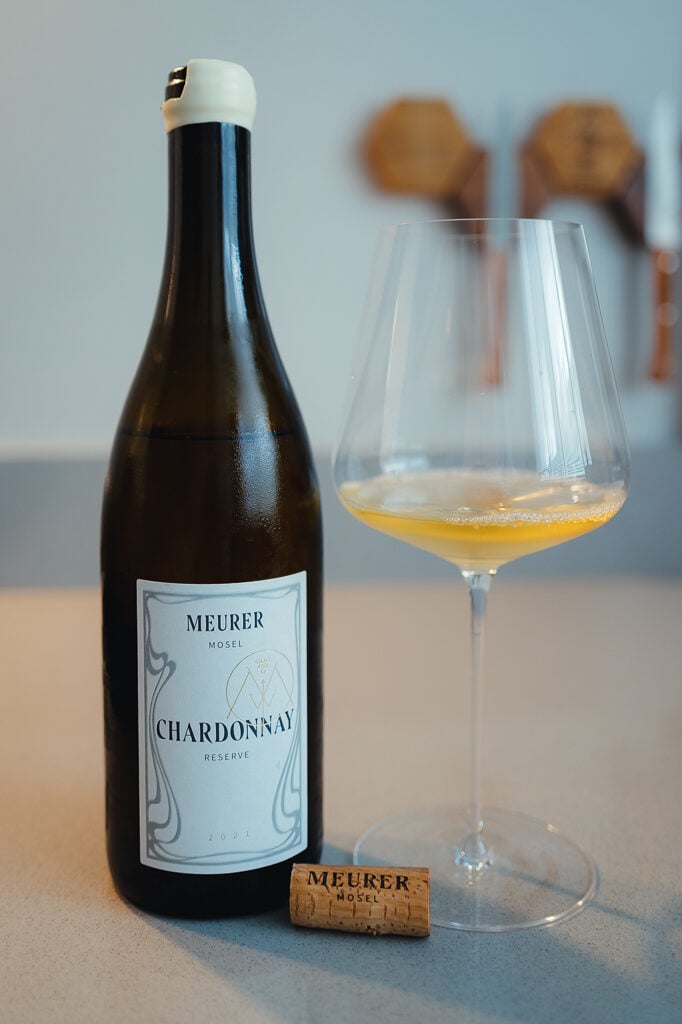
The vinification reads like a patience exercise: slow pneumatic pressing, six months of spontaneous fermentation in stainless, then four more months on fine lees in wooden vats. The cloudy must that other producers filter out stayed put here and built into the mineral line. Bottled February 2024, unfiltered, and you can hear it in every glass.
Pour it into a proper Riesling glass and the cool slate hits first, then the fruit. Knife-edge acidity, crystalline structure, and enough spine to carry it ten years. Drinkable now, better in five.
The Chardonnay: Germanic Precision Meets Burgundian Soul
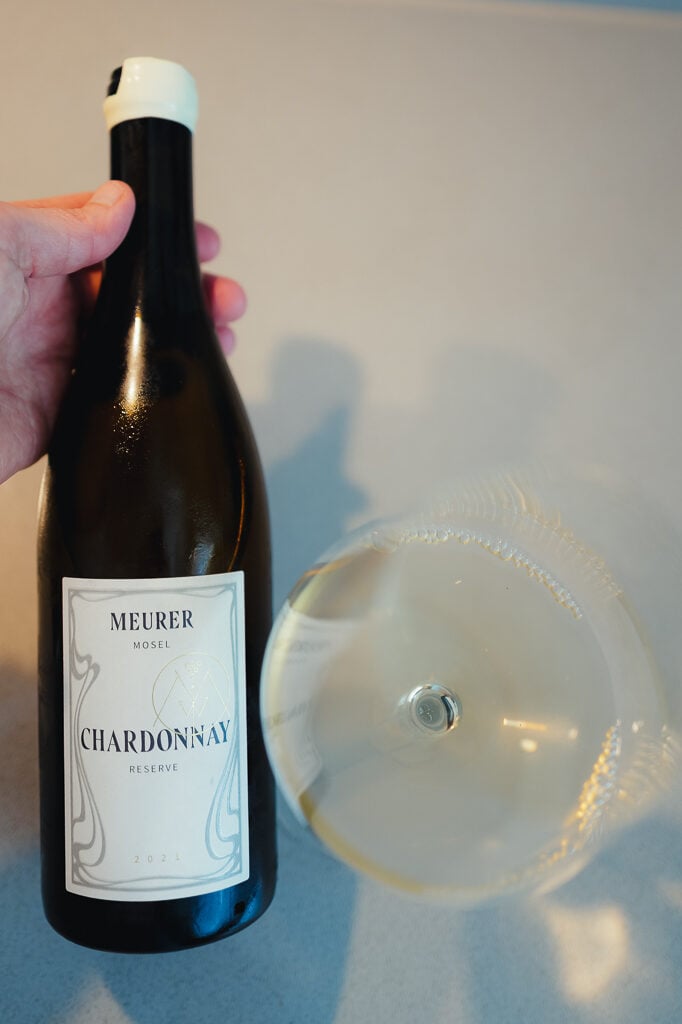
The Chardonnay Reserve 2021 is the kind of wine that makes Burgundians check the mirror. Picked October 9th from 40-year-old vines on south-facing slopes, with direct sun plus reflection from the Mosel below. Four hours of skin contact where most whites get none; that’s where the complexity comes from.
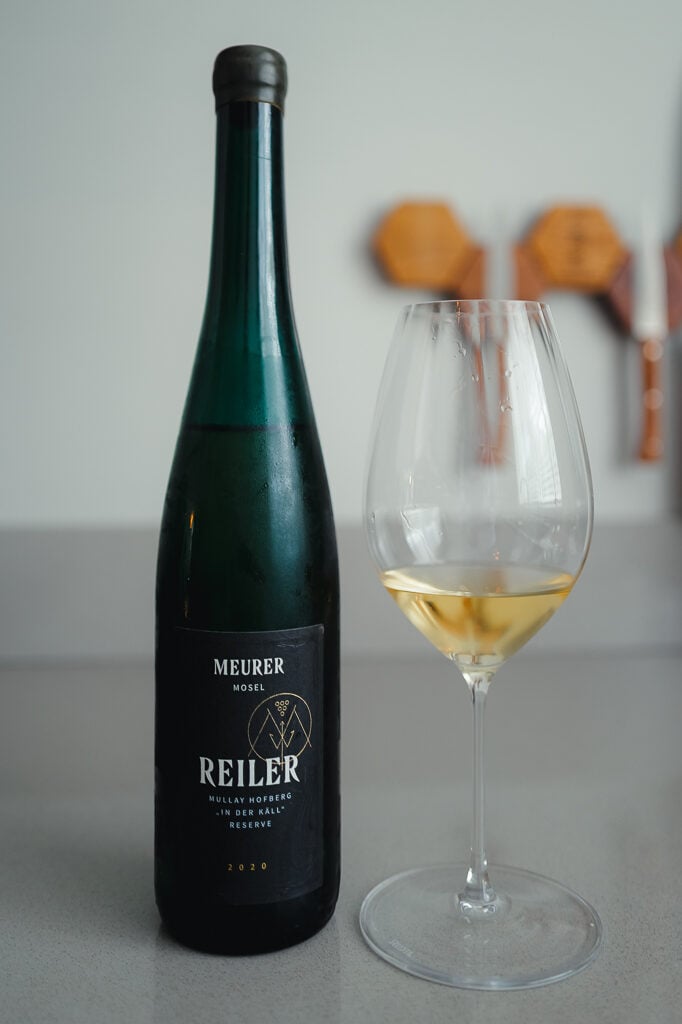
After pressing and 15 hours of settling, the cloudy must went into 225-liter used barriques for spontaneous fermentation. No topping up during evaporation; that concentrates flavor and builds texture, at a price. Fifteen months on full lees without stirring, then a month with fine lees back in stainless, light sulfur, unfiltered bottling in March 2023.
The glass shows deep gold. First impression is the ripeness from that warm south-facing slope, but the slate takes over within two seconds. Lees aging gives a creamy texture without weight; depth without fat. Chardonnay as it tastes when Germanic precision ignores the Burgundian template.
The Reserve: Liquid Archaeology
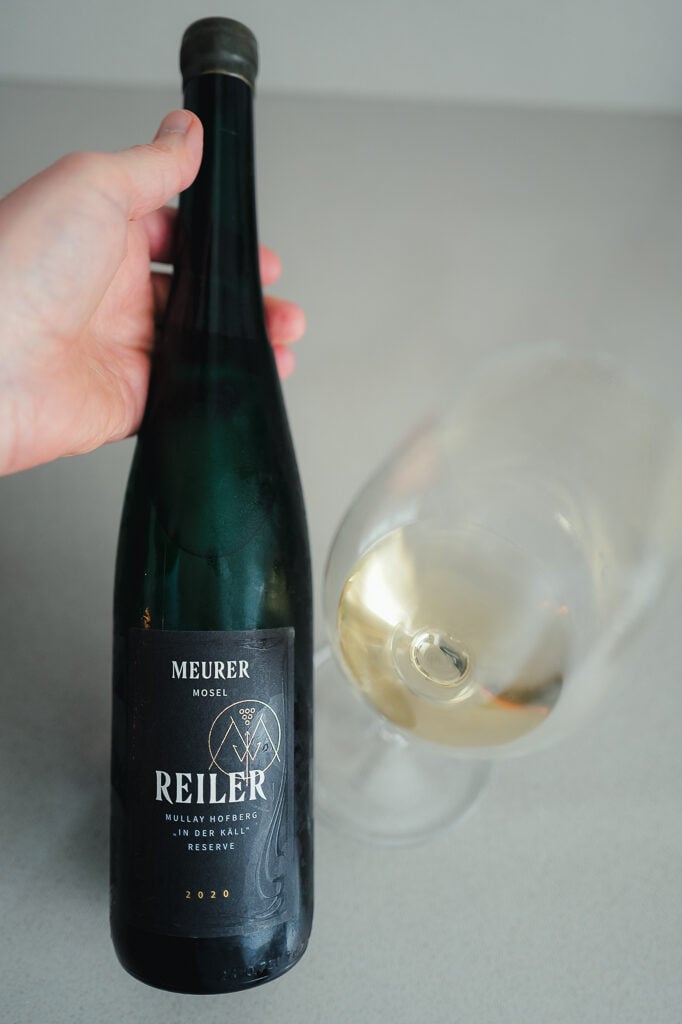
The Reiler Mullay-Hofberg “In der Käll” Reserve 2020 is the kind of wine you want to think about. The name means “in the cool place”; a reference to the microclimate created by the old quarry walls and the cooling effect of the nearby Burger Bach. Vines between 50 and 120 years old, planted 9,000 per hectare, deliver fruit at a concentration you can’t force.
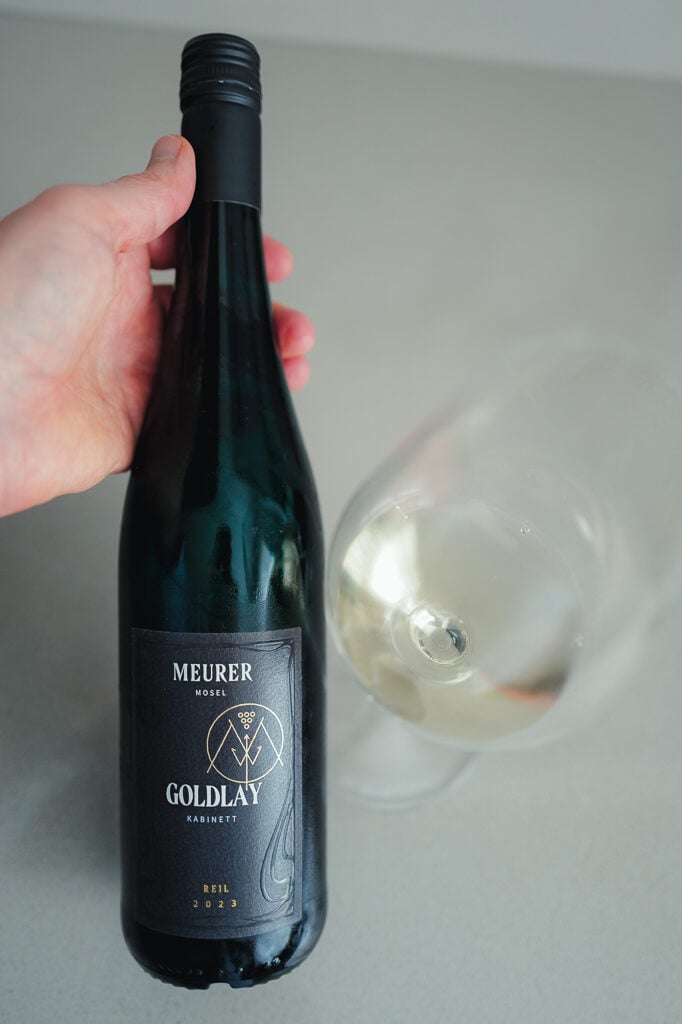
Picked October 19th into the 30-liter boxes. Four hours of maceration, slow pneumatic pressing, 15 hours of gravity settling, then 1,000-liter stainless tanks. Nine months of spontaneous fermentation on full lees with no stirring. Then nine more months in traditional German fuder of 1,000 liters on fine lees; casks that whisper their influence rather than shout.
Bottled June 2022, unfiltered. In the glass you notice how the layers follow one another instead of fighting for attention at once. Each sip gives up something new; the combination of old vines, that cool microclimate and eighteen months of patient lees work does what no technique can replicate. This is the bottle that explains why some traditions keep working.
Why This Matters Now
In an age where everything has to happen within fifteen seconds, these wines argue for a different pace. Industrial wineries chase efficiency and marketing departments invent new categories; the Meurer family makes wine the way the Romans did, and that’s not a pose but a choice with real economic consequences.
Every bottle is a bet that traditional methods still produce the most expressive wines, that patience pays itself back, and that somewhere someone still cares more about craft than about a clean marketing wrapper. That’s not sentiment; that’s what you taste.
These bottles are time capsules from an era when families passed down not just vineyards but a way of working. They aren’t cheap. The question isn’t whether you can afford them, but whether you can afford not to taste what tradition plus unwavering commitment to place delivers.
Ready to taste what 2,000 years of Mosel winemaking produces? Pour a proper glass for it.
Special thanks to Amelie Meurer at Weingut Meurer for sending these bottles.
More information: https://weingutmeurer.de
Sources
- Weingut Meurer (official, Mosel): weingutmeurer.de
- VDP Mosel-Saar-Ruwer: vdp.de
- Mosel Wein e.V.: appellations and classification: weinland-mosel.de
More on Winemaker
Biodynamic tasting calendar: does the fruit day hold?
A reel from Ploder-Rosenberg says wine shows best on fruit and flower days. The biodynamic tasting calendar sounds logical. The blind tasting says otherwise.
Read on →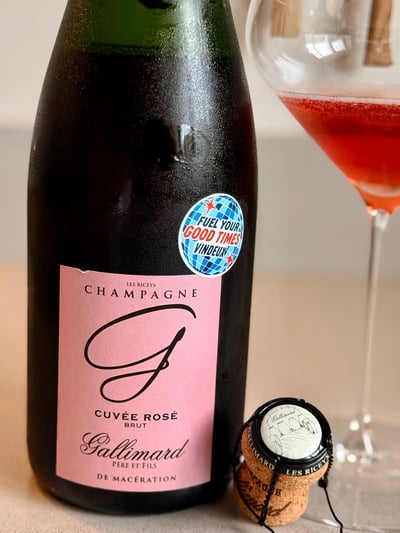
Champagne Gallimard: Six Generations in Les Riceys
Two Gallimard bottles from a July subscription box. A solera running 2009 to 2022, hand disgorgement, and a label code that says something the story doesn't.
Read on →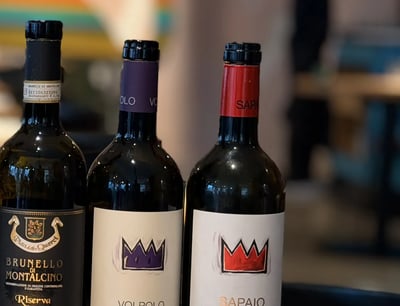
Podere Sapaio: Bordeaux on the Bolgheri coast
Podere Sapaio makes Bordeaux blends in Bolgheri, with time as its guiding principle and concrete beside wood in the cellar. A portrait after La Grande Bellezza.
Read on →