

Oenopolis: Greek wine importer Netherlands
Yiannis Mylothridis brings Greek wine beyond Santorini. Savatiano, debina and robola from organic and natural producers across the mainland.
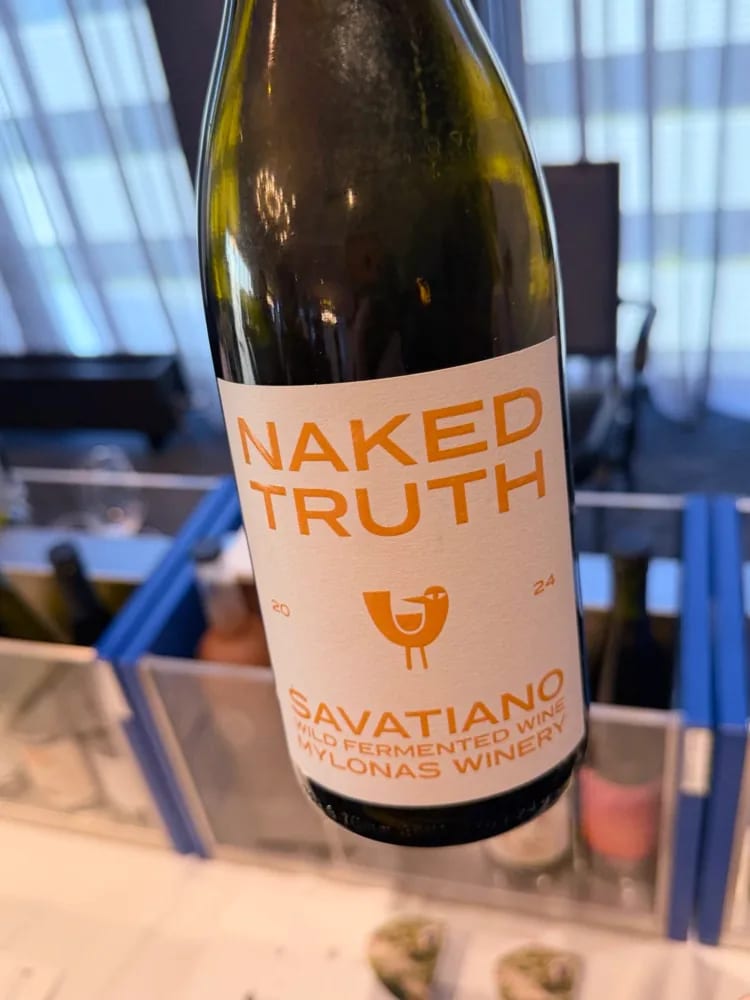
“Drink this with your eyes closed.” Yiannis Mylothridis pushed a glass of orange wine into my hands. Mylonas Naked Truth 2024. Savatiano, fifteen days on skins, six months on lees. “Then tell me what you taste.” What I tasted was not what I expected.
Yiannis runs Oenopolis. Greek wine importer to the Netherlands. Not the Santorini assyrtiko every restaurant knows. The wines from the mainland, the islands off the tourist track, and the grapes whose names do not fit on a Dutch wine list.
Beyond Santorini
Greece has more than three hundred indigenous grape varieties. The international wine market knows three at most. Assyrtiko from Santorini, agiorgitiko from Nemea, xinomavro from Naoussa. The rest stays home. Not from lack of quality. From lack of importers who take the time to explain why savatiano is no longer the table wine it was in the eighties.
Oenopolis is exactly that kind of importer. Yiannis knows the producers personally, visits the vineyards, and can trace every bottle in his portfolio back to parcel and vinification. That is not a luxury. That is the precondition. Anyone wanting to sell Greek wine to a Dutch sommelier or buyer needs to deliver the context with which the wine defends itself.
Three wines that stayed with me
Mylonas Naked Truth 2024. Savatiano, fifteen days on skins, six months on lees. Flowers, peach, citrus, honey. Freshness without oxidative weight. This is how to make orange wine for people who think they do not like orange wine. Winemaker Stamatis Mylonas works organically in Attica, just outside Athens. He was a Sparks guest earlier, on Attica’s ancient terroir and how Savatiano ages ten years or longer. The kind of estate that gives the entire savatiano category new life.
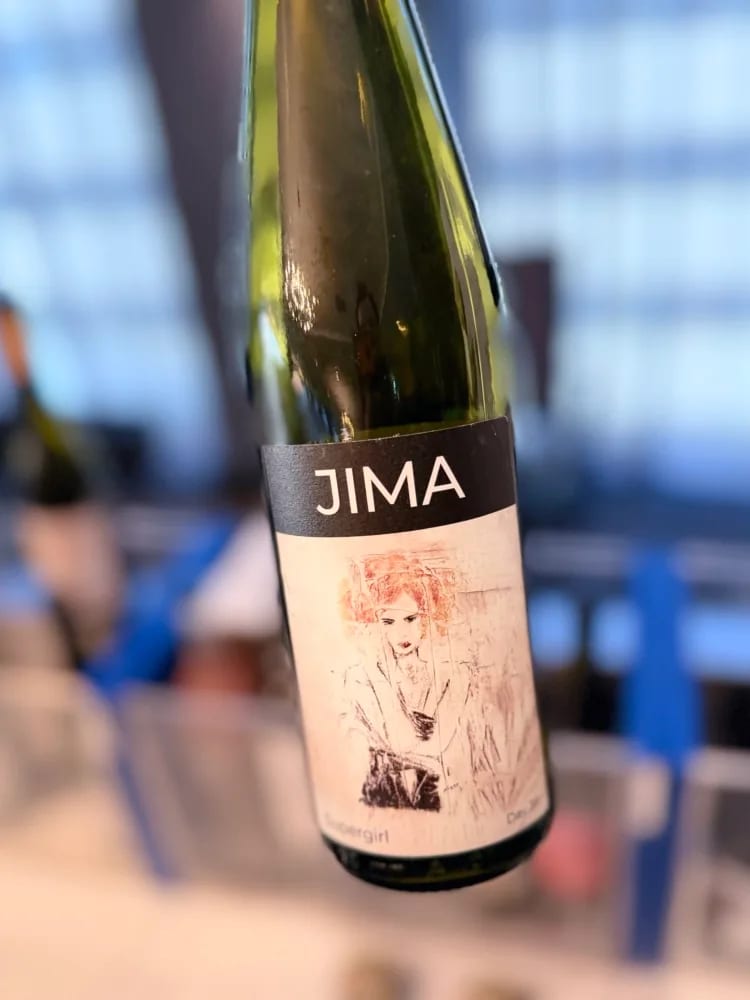
Jima Supergirl Day 36 2025. Debina grape from Epirus, the northwest of Greece. Five months on lees, seventy percent stainless and thirty percent oak. Bright, energetic, nothing like the heavy whites some still associate with Greece. Panos Jimas, the winemaker, has been on the podcast. It was the wine he brought that convinced me Epirus needs to be followed seriously.
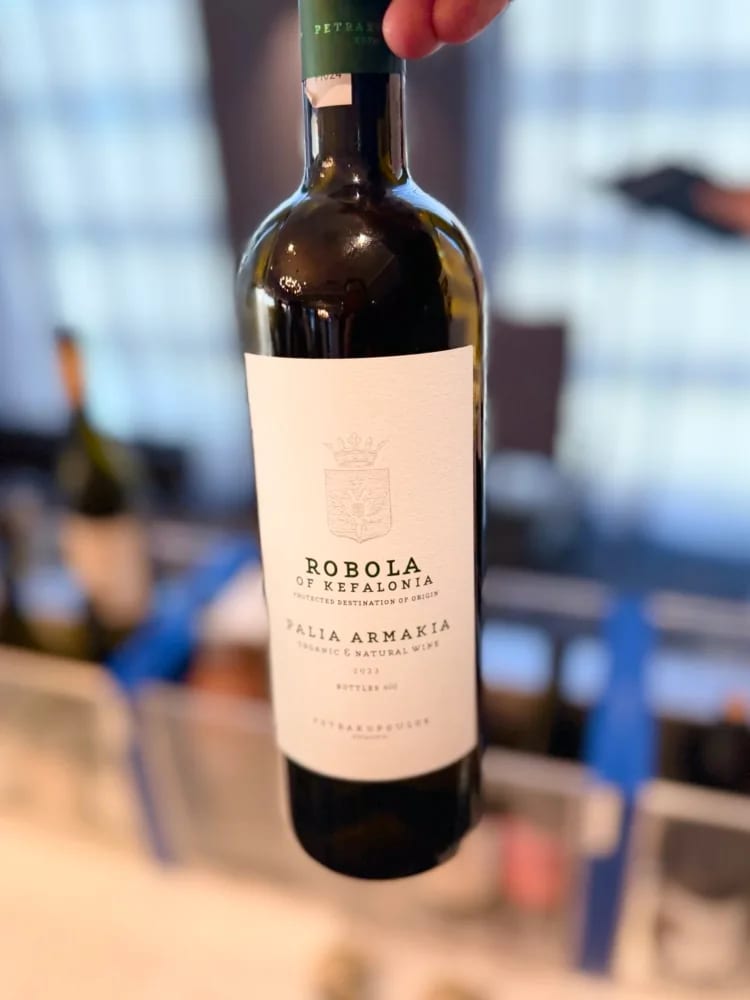
Petrakopoulos Palia Armakia. Robola from Kefalonia, organic and natural. Minerals, salt, purity. Island wine with precision. The Petrakopoulos family works at a scale that would be impossible in the Netherlands. Small vineyard, small production, focus on a grape that grows almost nowhere else.
Three wines, three regions, three indigenous grapes. That is Oenopolis in a nutshell.
Why this matters now
Greek wine is moving fast. A new generation of winemakers is working organically and biodynamically, focused on indigenous grapes, and ignoring the international varieties planted ten years ago to chase export. For buyers, that means a market that is developing and that most consumers in the Netherlands do not yet know.
A Greek wine importer like Oenopolis is exactly who makes that development translatable. For wine shops looking to broaden their Mediterranean section beyond Italy and Spain. For sommeliers wanting a wine list with more character than the usual choices. For enthusiasts curious where the natural scene goes outside France.
For anyone wanting to compare the Greek offer to German precision, this profile sits well next to Weingut Götz in Rheinhessen.
The verdict
Yiannis Mylothridis does not sell wines. He sells stories that fit in a bottle. That sounds sentimental, but it is exactly what the Greek wine world needs to position itself in the Netherlands beyond the Santorini cliché.
For importers refining their catalogue, for restaurants breaking open their Mediterranean wine list, and for enthusiasts wanting to learn the second generation of indigenous grapes, Oenopolis is where to start.
Contact: Yiannis Mylothridis Website: oenopolis.vin
Sources
- Oenopolis, About Yiannis Mylothridis
- Mylonas Winery, Naked Truth Savatiano 2024
- Greek Wine Routes, Indigenous Greek grape varieties
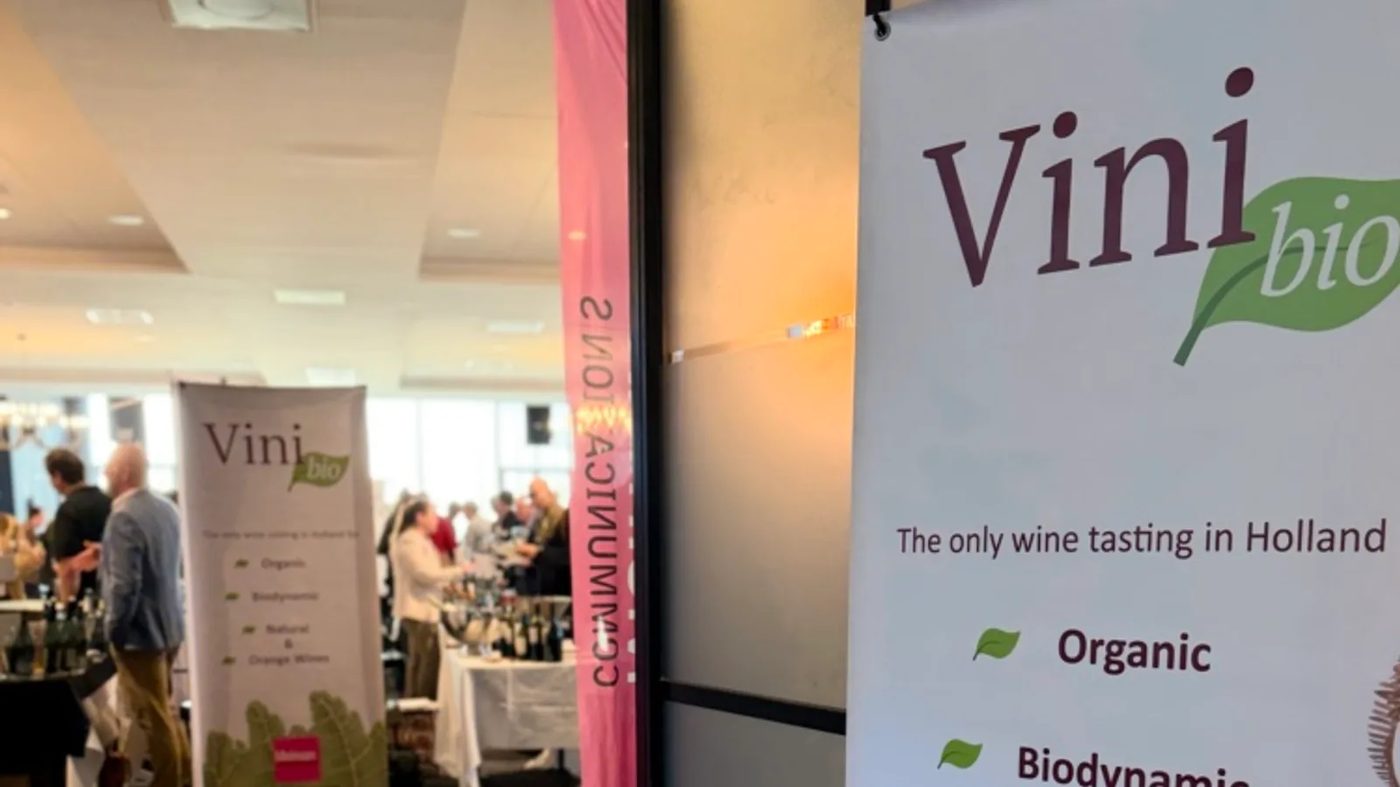
Tasted at ViniBio 2026, the Dutch trade fair for organic wine, on 2 March in Amsterdam. No partnership with the imported producers.
ViniBio 2026 deep-dives
Other articles from the ViniBio 2026 cluster:
More on Wine Review
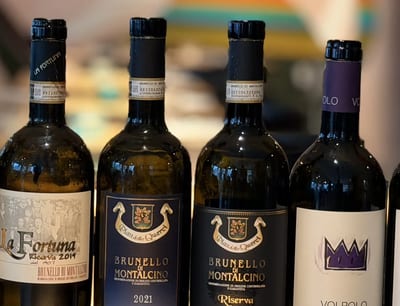
Pian delle Querci Brunello 2021: cheerful but young
Pian delle Querci Brunello di Montalcino 2021: ripe red fruit and raspberries, classic Brunello, but the earthy layer is still missing. My tasting note.
Read on →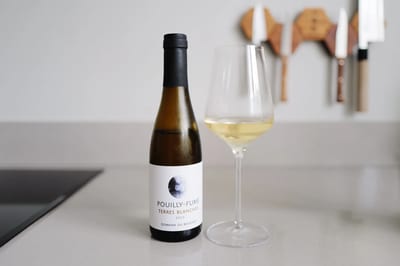
Terres Blanches 2023: wine grown on an oyster bed
The soil under this Pouilly-Fumé is full of fossilised oyster shells. Not a pun, and it explains why the bottle works so well with oysters.
Read on →
De Boe Rosé Brut 2024: Eleven Months Change It
The second Zeeland sparkler from Wijndomein De Boe spent eleven months on the lees instead of nine. What that changes, and what the label still overstates.
Read on →