

Sherry exports to the Netherlands fall 38 percent
Sherry exports to the Netherlands dropped from 2.55 to under 1.6 million litres in a year. Jerez blames private label. What the figures do and don't show.

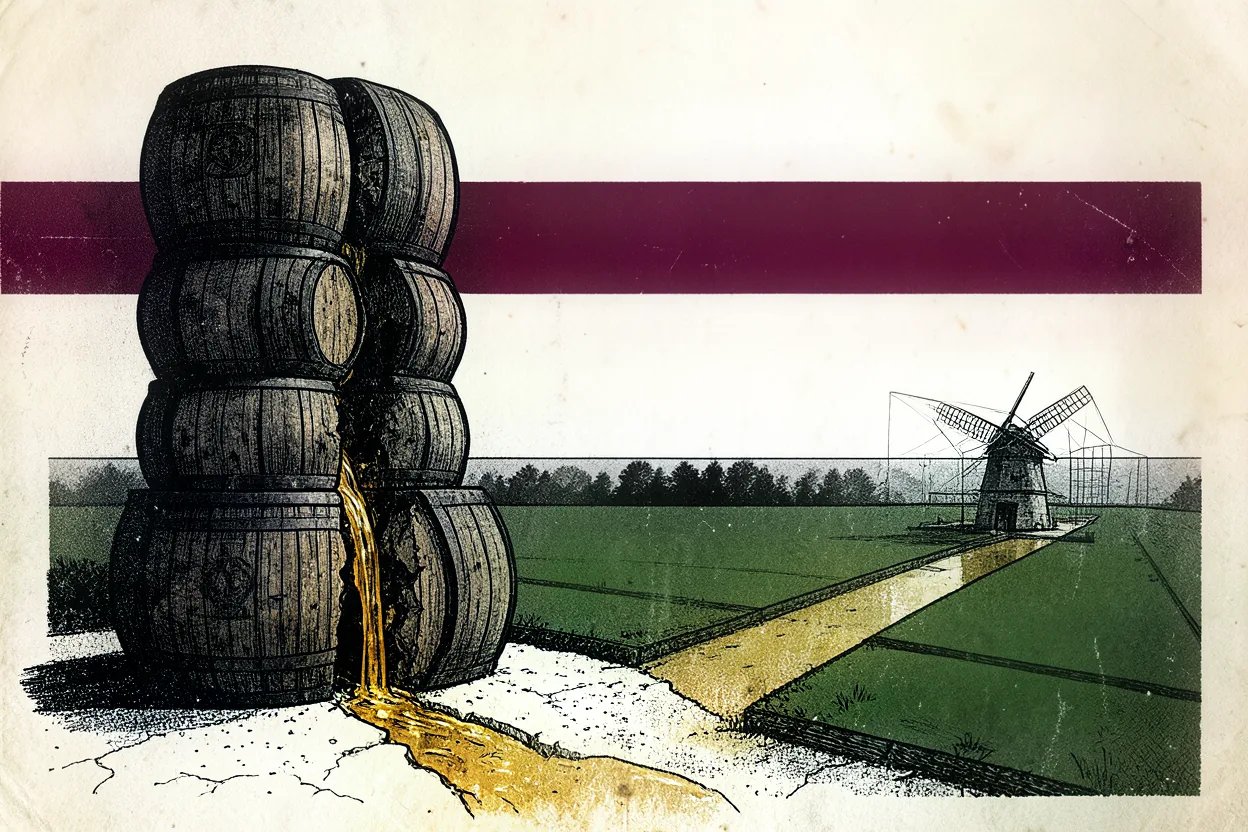
The Netherlands bought almost a million litres less sherry from Jerez in a single year. No other market came close.
Sherry exports to the Netherlands fell from 2.55 million litres to under 1.6 million in the twelve months to August, a drop of more than 38 percent. The figures come from the Consejo Regulador, the body that governs Jerez-Xérès-Sherry and Manzanilla-Sanlúcar de Barrameda, and were reported on 12 October.
The wider picture: down 6.4 percent
From September 2025 to August 2026, Jerez sold 22.3 million litres in total, 6.4 percent less than the year before. That is roughly 1.5 million litres, and nearly all of it went missing abroad.
Exports fell 10.7 percent, from 12.8 to 11.4 million litres. The Spanish market barely moved, slipping 1.4 percent to 10.9 million.
Europe takes about 85 percent of exports and fell 11.3 percent. The UK is still the biggest foreign buyer by a distance, at nearly half of all exported volume, yet it lost 2.6 percent to 5.55 million litres. Germany dropped 10 percent and slid below a million.
The United States was a rare bright spot: up nearly 8 percent to just over 700,000 litres.
Why the Netherlands
Ana Rosa García Márquez, secretary general of the Consejo Regulador, points partly to private label. Own-label bottles have long held a large share of the Dutch market at low prices, while many Jerez bodegas are pushing their higher-value wines. Her summary of the trend: less wine sold, at better prices.
The figures can’t confirm that. They count litres per country. They don’t say which bottles those litres were. Whether the Dutch loss was mostly bottom-shelf own-label cream, or whether bodega-labelled fino and manzanilla fell too, isn’t in the numbers. Nor is whether every one of those litres was actually drunk in the Netherlands.
Fino and manzanilla down, amontillado up
Styles split sharply. Manzanilla fell 5.6 percent to 5.4 million litres, fino 4.9 percent to 4.7 million. For fino the loss was all export, down 12.1 percent, while Spain bought 3.2 percent more.
Sweetened sherry fared worse. Medium dropped 15.7 percent to under 3 million litres, cream 6.4 percent to 5 million, pale cream 7.3 percent.
The dry oxidative styles held up. Amontillado rose 11.3 percent to 450,000 litres, on the back of an 18.3 percent jump in exports. Oloroso was up 5 percent at 810,000 litres.
I wouldn’t call that a revival. Together, amontillado and oloroso come to 1.26 million litres out of 22.3 million. By my own sums they added just over 80,000 litres between them, less than a tenth of what the Netherlands lost on its own.
Fewer litres, pricier bottles
Higher prices helped soften the blow, according to the sector. The average export price for Jerez wines stood at 4.81 euros a litre at the end of the first half. Fino and manzanilla averaged 4.24 euros a litre, up 6.3 percent, and have risen 67 percent since 2017. In Spain, a 75cl bottle cost an average of 6.93 euros in July, against 6.38 euros a year earlier.
There are no value figures, and the prices cover the first half of the year rather than the same twelve months as the litres. Whether higher prices make up for the lost volume can’t be read from this.
An export price per litre is what an importer pays in Jerez, not the price on a shelf in Rotterdam or London. I’d still expect the direction to show up on shelves sooner or later.
If those litres were mostly cheap own-label sherry, I won’t mourn them. The bigger risk is the drinker who never gets started. A cheap bottle was how plenty of people first met sherry, and if that disappears while good bottles get dearer, the first step in costs more. Some won’t take it.
My advice: buy a bottle with a bodega’s name on the label, keep fino and manzanilla cold, and finish them within a few weeks.
What I could and couldn’t verify
The figures here are the Consejo Regulador’s, as reported by Vinetur on 12 and 13 October 2026 in English and Spanish. Both versions give the same numbers.
I couldn’t find a press release or statistics from the Consejo Regulador itself with the per-country breakdown. García Márquez’s comments appear only in the Spanish version. Vinetur calls her director general there; the Consejo’s own annual report for 2025 lists her as secretary general. I’ve gone with the annual report. None of the sources splits the Dutch litres by style or by own-label versus bodega label. Once the Consejo publishes the data itself, I’ll check them against this piece.
Sources
- Vinetur, 12 October 2026, “Jerez sherry sales fell 6.4% after Dutch purchases plunged more than 38%”: vinetur.com
- Vinetur, 12 October 2026, Spanish version with the comments from Ana Rosa García Márquez: vinetur.com
- Vinetur, 13 October 2026, “Las ventas de los vinos de Jerez caen un 6,4% por el retroceso exterior”: vinetur.com
- Consejo Regulador, Memoria de Actividades 2025, listing Ana Rosa García Márquez’s role: sherry.wine
- Consejo Regulador Jerez-Xérès-Sherry, documentation and annual reports: sherry.wine
More on News
Arctic Barolo: Rivetto Ages Barolo Under the Sea
Arctic Barolo spent a year 34 metres down off northern Norway. What Rivetto and Hurtigruten did, what the taster found, and why I am not convinced yet.
Read on →
Champagne 2026: the same picking plan as 1959
Roederer put its 2026 picking plan beside 1959 and found only the date had moved. What the first vins clairs suggest, and what they cannot prove.
Read on →
Champagne Can Now Buy In 15 Percent. Or Can It?
The champagne purchase derogation of 7 August triples the buying ceiling. It governs excise law, though, not what the label is allowed to say.
Read on →