

Champagne 2026: the same picking plan as 1959
Roederer put its 2026 picking plan beside 1959 and found only the date had moved. What the first vins clairs suggest, and what they cannot prove.

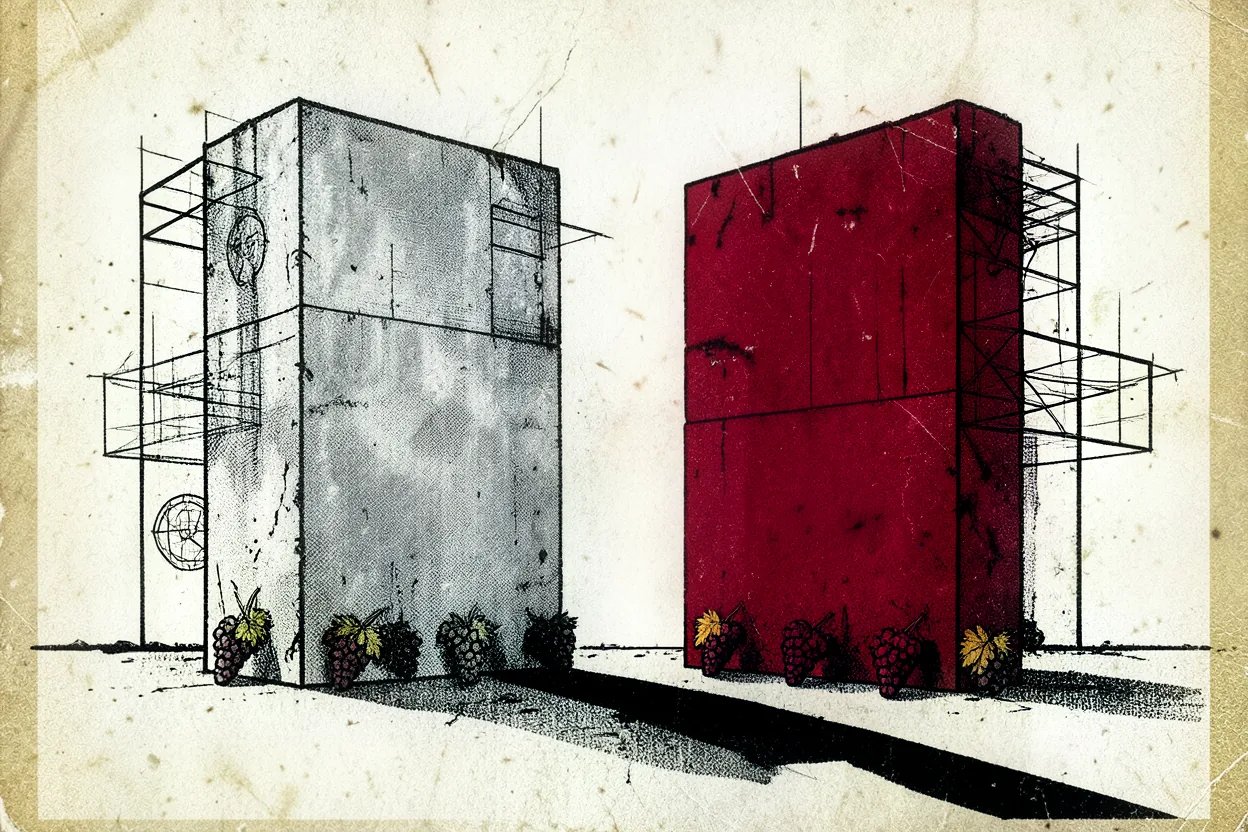
Louis Roederer started picking on 15 September in 1959. This year it started on 15 August. When the team put the 2026 picking plan beside the 1959 one, the two matched: same plots, same order. Only the calendar had slid a month.
Caroline Henry, who visited growers during the harvest for her Substack Terroir Champagne, reports it after a visit to Roederer’s cellar. On 18 September she tasted eleven vins clairs there, this year’s unfinished base wines. Cellar master Jean-Baptiste Lécaillon called 2026 a once-in-a-lifetime vintage. Sébastien Debuisson of the Comité Champagne had told France 3 something close: a harvest you see once in a career.
That is the first tasting report I have read on the champagne 2026 vintage since the headlines about heat and frost. I take it seriously. Four caveats come with it, because the two people who carry the most weight here have a stake in a good vintage.
What was in those eleven glasses
Density, first. According to Henry the wines carried a lot of dry extract, and Roederer rearranged its methods to keep it. Only the first two pressings go into the cuvée, which raises the share of tailles, the later and heavier juice. The musts see almost no settling and ferment cool. For the black grapes fermentation took ten days to two weeks, for Chardonnay often three.
The numbers look like 1959. At Roederer the average potential alcohol came in at 12.1 percent, with 12.6 for Chardonnay and 11.5 for Pinot Noir, and a pH below 3.2. For the whole appellation Debuisson gave Wine-Searcher about 12 percent, with 11.8 for Pinot Noir. In my harvest piece the appellation still stood at 10.2 percent shortly after the first measurements.
The Comité’s own newsletter of 28 September held the same line: healthy grapes, freshness kept, acidity well preserved. That is the official reading, and it matches what the cellar master says.
Four reasons to hold off
Debuisson works for the Comité, which represents the appellation. Lécaillon runs the cellar of the house behind Cristal. Henry writes independently of the Comité, but she tasted in that house, with that cellar master. She says herself that the still wines only show something in spring, and the champagne only after years.
Eleven wines from one house, including Pinot Noir from Verzy and Verzenay, villages the frost spared. She barely tasted any Chardonnay, because it was still fermenting. A Cristal plot is not the appellation.
Roederer expects 5,500 kilos per hectare across its 250 hectares of own vineyard, with those untouched Cristal plots included. The Comité expects an average of 7,000 for the whole region, against a commercial ceiling of 8,800. So a big house sits well below the average. That could point to a wide spread within one house, or to frost losses on the other plots; Henry only says Verzy and Verzenay were spared. It fits what I wrote before: averages are not wine.
The 1959 comparison rests on numbers at picking and on a picking plan. Neither says how the wine looks in years; the blend, the tirage and the time on lees decide that.
The clay
Lécaillon thinks 2026 may be the exception where clay beats chalk. Cédric Moussé, who sources his Meunier from green clay soils, harvested more than he feared and calls the quality exceptional, as last year. That fits Lécaillon’s idea but does not prove it: it is one source, and two different statements. It is a reason to watch where Meunier from clay turns up in a few years.
What to do with this now
There is nothing to buy yet. A 2026 vintage champagne can only leave the cellar after at least 36 months on lees, so 2030 at the earliest. A non-vintage may well contain 2026, but the label will not say so.
Friday 23 October is Champagne Day, and that you can act on. The Comité suggests roast pumpkin with burrata and pesto, with a blanc de noirs. I wrote a pairing page for it, with two alternatives if you cannot find a blanc de noirs.
Sources
- Primary source: Champagne Harvest: eyewitness account, part 3, Caroline Henry (Terroir Champagne) — 22 September 2026 (Roederer tasting 18 September, 1959 comparison, 5,500 kg/ha, clay)
- Supporting: “Jusqu’à 15°” : une dérogation historique, France 3 Grand Est — 9 September 2026 (Debuisson, 7,000 kg/ha against 8,800, “une fois dans une carrière”)
- Supporting: Champagne Vintage an Early Classic, Wine-Searcher — 10 September 2026 (about 12 percent average potential alcohol, Pinot Noir 11.8)
- Supporting: Champagne Education newsletter, Bureau du Champagne Benelux (Comité Champagne) — 28 September 2026 (harvest, Champagne Day 23 October, pumpkin and burrata pairing)
More on News
Arctic Barolo: Rivetto Ages Barolo Under the Sea
Arctic Barolo spent a year 34 metres down off northern Norway. What Rivetto and Hurtigruten did, what the taster found, and why I am not convinced yet.
Read on →
Champagne Can Now Buy In 15 Percent. Or Can It?
The champagne purchase derogation of 7 August triples the buying ceiling. It governs excise law, though, not what the label is allowed to say.
Read on →
Fino can now go to 14 percent: what changed in Jerez
The new sherry rules drop the minimum for Fino and Pale Cream to 14 percent, tighten the yield threshold and add three pagos to the register.
Read on →