

Arctic Barolo: Rivetto Ages Barolo Under the Sea
Arctic Barolo spent a year 34 metres down off northern Norway. What Rivetto and Hurtigruten did, what the taster found, and why I am not convinced yet.

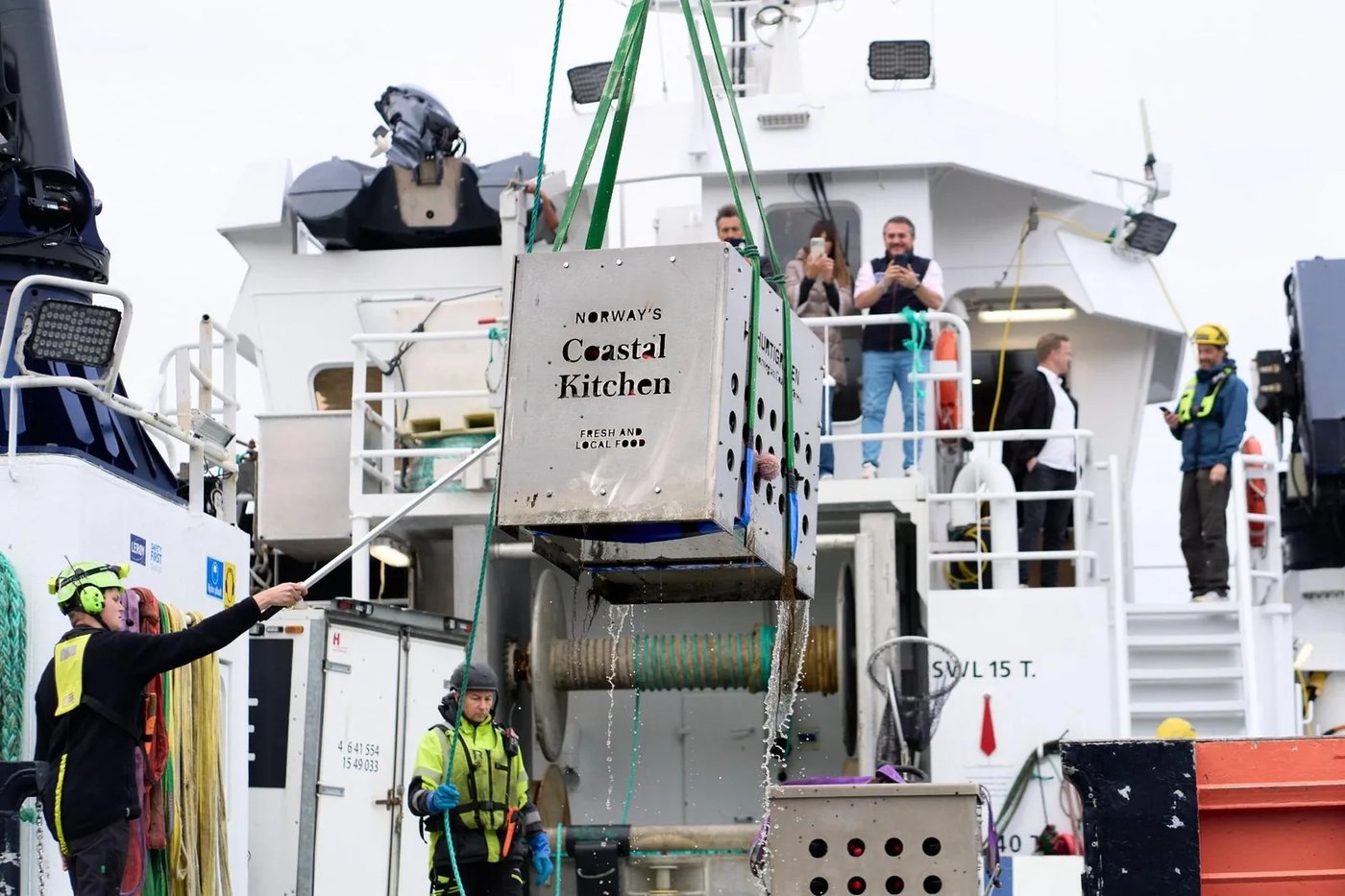
A fridge might have done most of this. That was my first thought when the press release for Arctic Barolo landed: 1,002 bottles of Rivetto’s 2021 Barolo, sunk for twelve months at 34 metres off Kirkenes in northern Norway, at 70 degrees north.
The project is a collaboration with Hurtigruten, the Norwegian coastal shipping line. Enrico Rivetto was a guest on my podcast Sparks earlier this year, so I read it twice. My question stayed: is the difference the sea, or the cold?
What went under water
The wine was finished before it went in. It is the 2021 Barolo from the commune of Serralunga d’Alba, after its normal 24 months in large oak casks. The estate is certified organic and biodynamic, which I covered in my profile of Enrico Rivetto.
Down there it was dark and around 5 to 6°C, at a pressure of roughly 4 bar. After a year every bottle and all the equipment came back up, the release says. It says nothing about getting a thousand bottles from Piedmont to the Norwegian Arctic.
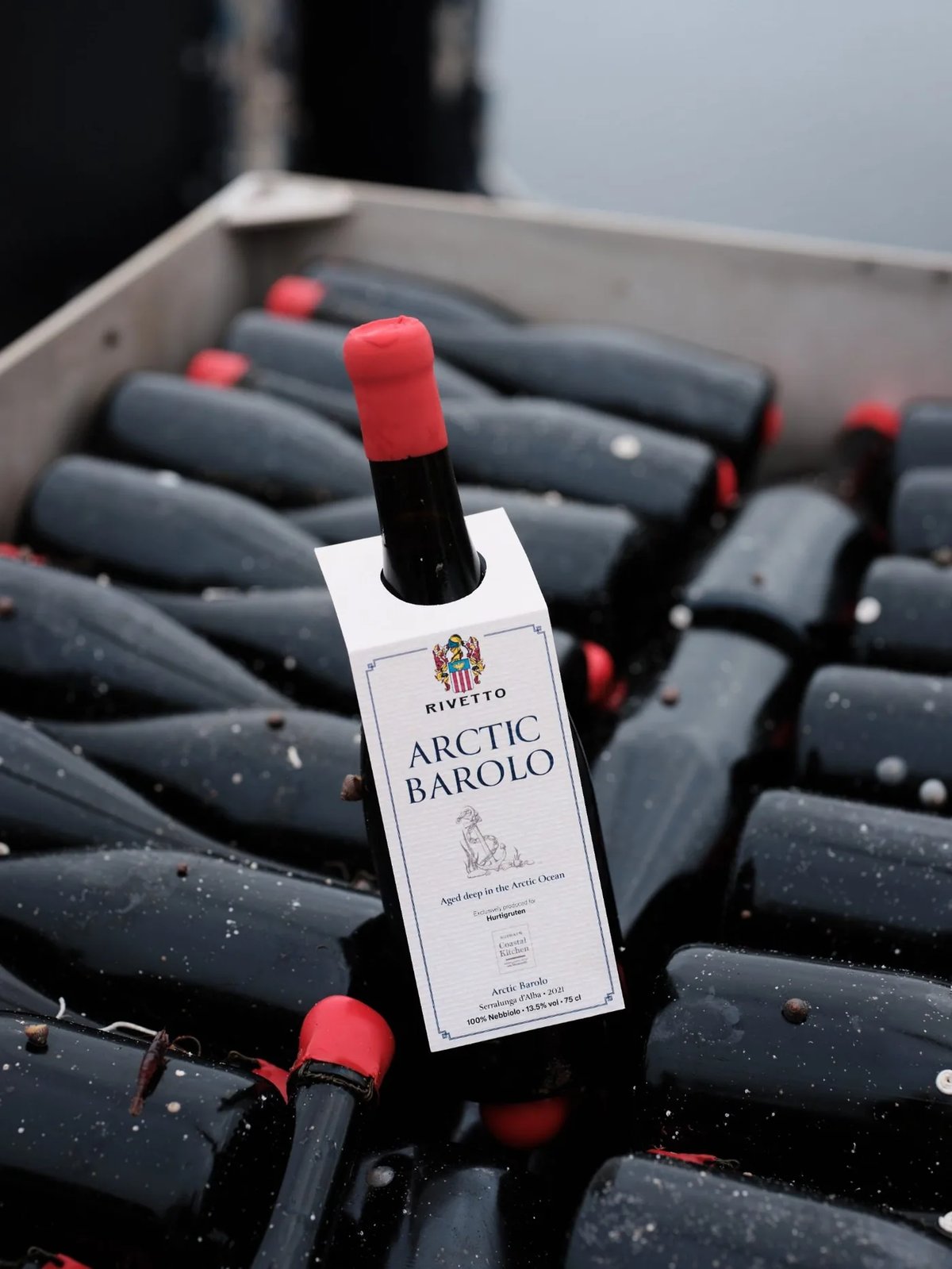
Press photo supplied by Rivetto and Hurtigruten, photo Kristian Dale. Not taken by me.
What the taster found
Once recovered, the bottles were opened next to the same wine that had stayed in Rivetto’s cellar for those twelve months. Henrik Dahl Jahnsen, president of the Norwegian Sommelier Association, led the tasting.
“Arctic Barolo showed a brighter, more youthful ruby colour, with a fresher and more precise aromatic profile characterised by notes of wild fruits and flowers,” he says in the release. He found the tannins fresher and crunchier too, and was surprised by how clear the difference was.
Rivetto says the appeal was not knowing. “The most interesting part for me was precisely not knowing what would happen.”
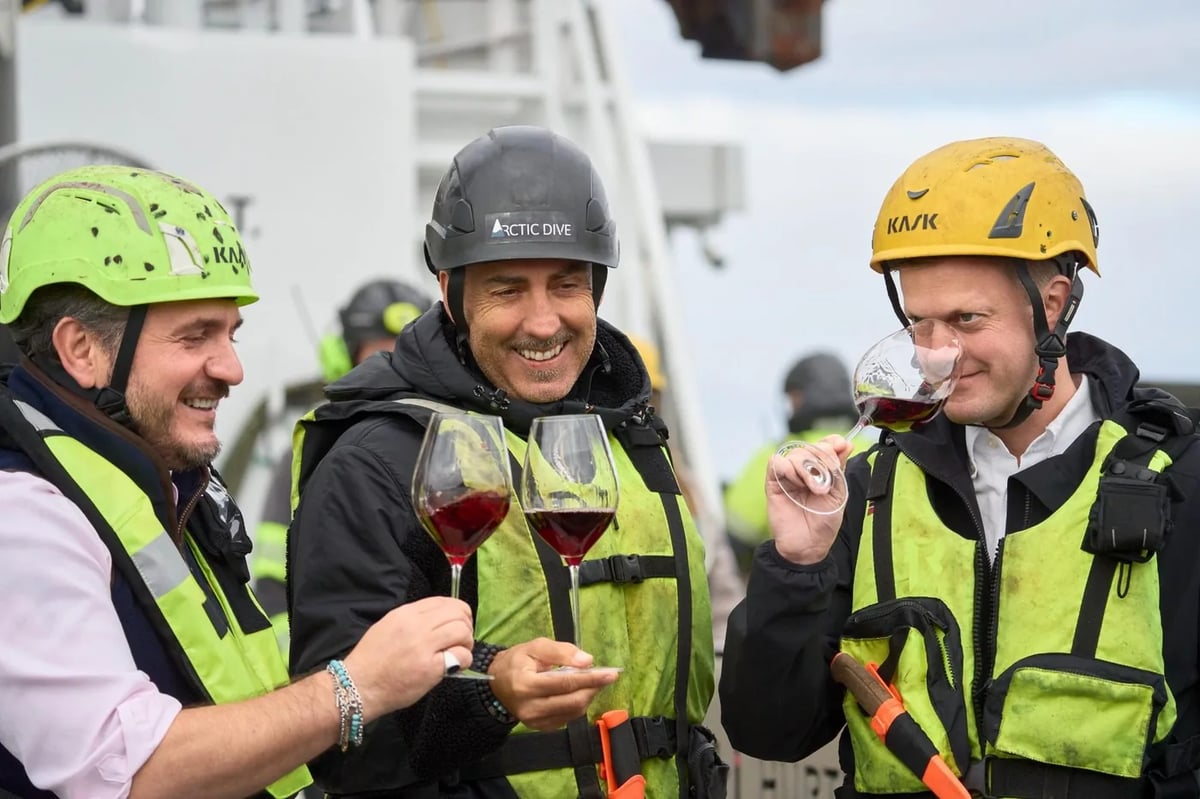
Press photo supplied by Rivetto and Hurtigruten, photo Max Emanuelson. Not taken by me.
Where the Arctic Barolo claim runs thin
A younger, fresher wine with more colour is what a year of cold gives you. Ageing slows as temperature drops, and 5 to 6°C is fridge temperature.
The cellar bottle sat warmer. The release does not say by how much. As long as the comparison changes two things at once, the temperature and the sea, nobody can say which one made the difference.
There is research. A 2024 study aged Merlot and Sangiovese both under the sea and in a cellar, and analysed bottles at fixed intervals. The basic composition stayed the same; the sea bottles held on to their pigments and phenols better, most clearly in the Merlot.
A review published in April 2026 calls systematic scientific evidence for underwater ageing “scarce” and the practice “experimental or niche”. It does point to slower oxidation under water. That fits what the sommelier tasted.
The release does not say the tasting was blind, and it gives no measurements. On deck the tasters were the sommelier, Tani Gurra of Hurtigruten and the producer himself.
The release also says the result offers no definitive answers, and I agree. And “the first Barolo aged in Arctic waters” says nothing about Barolo in other seas.
Can you buy Arctic Barolo?
No. The bottles will be poured only on board Hurtigruten ships along the Norwegian coast. The release gives no price.
Hurtigruten has done this before. It ages a sparkling wine from Rathfinny in Sussex at more than 30 metres in the Norwegian Sea, under the name Havets Bobler. Arctic Barolo is, among other things, a story to tell at the table on board.
The regular bottling is on sale. In the Netherlands, Heeren van de Wijn lists Rivetto’s Barolo del Comune di Serralunga d’Alba at €56.50, the 2020 vintage at the time of writing.
If you want to test the cheap explanation yourself, buy two. Put one in the fridge for a year and one in a cupboard, then open them side by side. You lose the salt water and the 4 bar. You keep the cold.
A fridge is dry for a cork, so treat this as a test and not as storage advice. My guide to storing wine at home covers where the second bottle should go.
Through the press office I have asked Enrico to come back on Sparks and taste the wine together. No reply yet. Until then I do not know what the sea did to Arctic Barolo, and what the cold did.
Sources
- Press release “From the Langhe to the Arctic”, Well Com on behalf of Rivetto, 21 September 2026
- Hurtigruten, Arctic Barolo: hurtigruten.com
- Hurtigruten, Havets Bobler: hurtigruten.com
- Foods (2024), “Exploring Red Wine Aging: Comparative Analysis of Cellar and Sea Underwater Aging on Chemical Composition and Quality”: pmc.ncbi.nlm.nih.gov
- Foods (2026), “Wine Bottle Refinement: A Review of Emerging Aging Strategies”: pmc.ncbi.nlm.nih.gov
- Heeren van de Wijn, price checked on 8 October 2026: heerenvandewijn.nl
- Rivetto (official): rivetto.it
This article is based on a press release and images from Rivetto and Hurtigruten. I have not tasted Arctic Barolo and was not present when it was raised. Enrico Rivetto previously sent me two bottles as press samples for an episode of Sparks; nothing was paid for this piece. All photos with this article are press images; I did not take them.
More on News
Champagne 2026: the same picking plan as 1959
Roederer put its 2026 picking plan beside 1959 and found only the date had moved. What the first vins clairs suggest, and what they cannot prove.
Read on →
Champagne Can Now Buy In 15 Percent. Or Can It?
The champagne purchase derogation of 7 August triples the buying ceiling. It governs excise law, though, not what the label is allowed to say.
Read on →
Fino can now go to 14 percent: what changed in Jerez
The new sherry rules drop the minimum for Fino and Pale Cream to 14 percent, tighten the yield threshold and add three pagos to the register.
Read on →