

Fuligni Brunello Riserva 2019
Fuligni Brunello di Montalcino Riserva 2019: tight and restrained at first, the standout after decanting. Tasted at La Grande Bellezza 2025, with advice.


On the first sip, the Fuligni Brunello Riserva 2019 gave little away. An elegant, restrained nose, fruit and spice far in the background. After the formal tasting it came back to the table, decanted this time, and a different wine was in the glass. Of everything we revisited that day, this was the one that stood out.
I already knew it: I had tasted it in late 2024, and back then it was open.
The estate
Fuligni sits on the northeast side of Montalcino. Since the death of her father Giovanni Maria in 1971, Maria Flora Fuligni has run the estate; she co-owns it with her nephew Roberto Guerrini Fuligni. Of its hundred or so hectares, fourteen are vineyard, mostly in Cottimelli, at 380 to 450 metres, on rocky marl. There’s more on the estate in my piece on the Brunello 2020.
What a Riserva must do, and what Fuligni does
A Brunello di Montalcino Riserva can’t go on sale before 1 January of the sixth year after harvest, a year later than a regular Brunello. The Consorzio requires at least two years in wood and six months in bottle. So the 2019 could reach the market from January 2025.
Fuligni only makes a Riserva in the best years, from the grapes of its oldest vines. The wine gets five years of ageing, three and a half of them in wood. That’s eighteen months more in wood than the minimum. In spring 2025, shortly after release, it was still closed.
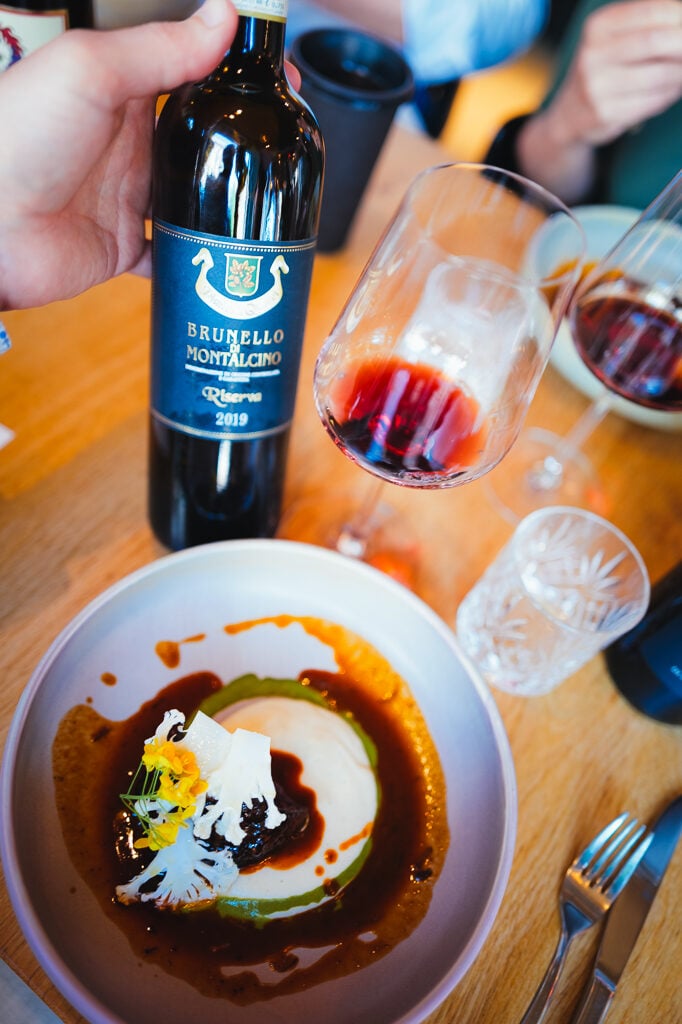
Late 2024
I made my first note in late 2024 at the same venue in Amsterdam, before the official release. It describes a wine that showed itself straight away.
Tasting Note
Appearance
Luminous ruby, strikingly bright.
Nose
Floral from the first moment, then bergamot, wild thyme and liquorice.
Palate
Full-bodied, with silky tannins of great finesse.
Spring 2025
I tasted it again in spring 2025 at La Grande Bellezza in Amsterdam, as the last of three Fuligni wines.
Tasting Note
Nose
Elegant and restrained.
Palate
Closed on the first sip. Fruit and spice stay too far in the background.
Quality
After decanting, the fruit came forward and the structure softened just enough to show its potential.
What the decanter did
After the formal tasting we went back to the closed wines, especially the two 2019 Riservas: this one and Pian delle Querci’s. The shift was striking. What had been tight and reticent now showed layers that had stayed hidden the first time round.
With the main course, the decanted Riservas were at their best. Nazka served braised beef in Anticuchera sauce, and its earthiness drew extra complexity from the wine.
What to watch for
First, don’t open it and pour straight away. Give it sixty minutes in a decanter. Without that time you taste the tight, restrained version, and you sell the wine short.
Second, you’re buying potential. My 2025 note describes a Riserva that only showed itself with air. If you want a Brunello that’s open straight away, the house’s Brunello 2020 is the better bet.
Third, my two notes diverge. In late 2024 it was open; a few months later it had closed up. A closed phase isn’t unusual in young Brunello, but it means you don’t know what you’ll get when you open a bottle. How it has developed since, I don’t know.
- Producer
- Fuligni, Montalcino
- Wine
- Brunello di Montalcino Riserva DOCG
- Vintage
- 2019
- Region
- Montalcino (northeast side), Tuscany, Italy
- Grape
- Sangiovese (100%)
- Vineyards
- Oldest vines, Cottimelli, 380-450 m, rocky marl
- Ageing
- Five years, 3.5 of them in wood
- Advice
- Decant for sixty minutes, or cellar it
Sources
- My own tasting notes, La Grande Bellezza, Amsterdam, late 2024 and spring 2025
- Fuligni (official): fuligni.it
- Consorzio del Vino Brunello di Montalcino: consorziobrunellodimontalcino.it, for the Brunello and Riserva rules
More on Wine Review
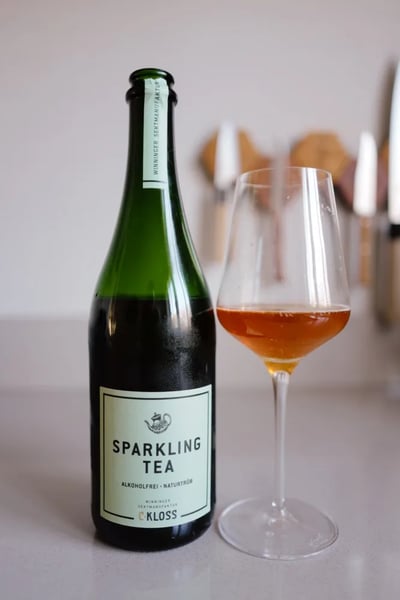
C. Kloss Sparkling Tea Weiss: Fermented Celery
Non-alcoholic sparkling tea Weiss from C. Kloss: linden blossom, nettle and fermented celery. Dry, 2.7 g sugar per 100 ml, €14.99 at Amavine.
Read on →
Barbadillo Sábalo: Organic Palomino Without Flor
Organic Palomino Sábalo from Barbadillo: no flor, salt from albariza soil. Chamomile, apple, sea. €17.95 at Granada Wijnen, with discount code.
Read on →
Tua Rita Lodano Rosso 2024: Petit Verdot Leads
A €50.95 Super Tuscan built on 60 percent Petit Verdot and 18 months of barrique. Why I chill it, decant it and never drink it without food.
Read on →