

Fuligni Rosso di Montalcino Ginestreto 2023
Fuligni Rosso di Montalcino Ginestreto 2023: a fresh nose of fruit and herbs, but still too young on the palate. Tasted at La Grande Bellezza 2025.

A pleasant nose of fresh fruit and herbs, still a little closed. Then, on the palate, not enough character. That was my impression of the Fuligni Rosso di Montalcino Ginestreto 2023, Fuligni’s opening glass at La Grande Bellezza in Amsterdam, spring 2025. I noted that I wanted to taste it again in six to twelve months.
What a Rosso di Montalcino is
The same grape as Brunello, the same commune, a shorter road. A Rosso di Montalcino can go on sale from 1 September of the year after harvest, with no required time in wood. Where a Brunello waits at least four years, a Rosso is meant to be drunk young. At many estates it’s the introduction to the house style, and the way into a name like Fuligni.
The estate
Fuligni is a family estate on the northeast side of Montalcino, run since 1971 by Maria Flora Fuligni, who co-owns it with her nephew Roberto Guerrini Fuligni. Of its hundred or so hectares, fourteen are vineyard, mostly in Cottimelli at 380 to 450 metres, on rocky marl. There’s more in my piece on the Brunello 2020.
How it’s made
One hundred percent Sangiovese. Part of the wine ages for about six months in five-hectolitre tonneaux of French Allier oak. That’s short and light next to the Brunello, which is as it should be: a Rosso is about fruit.
Tasting Note
Nose
Pleasant and still a little closed. Fresh fruit alongside herbs.
Palate
Still lacks character, most likely down to its youth.
Quality
A glass to revisit in six to twelve months.
A second note
In another tasting note, the Ginestreto showed a very different side: crunchy, elegant and harmonious.
Tasting Note
Appearance
Vibrant ruby.
Nose
Cherry, red flowers, red plum and hibiscus.
Palate
Medium-bodied, elegant structure, crunchy. Persuasive character.
Finish
Soft and harmonious.
Next to Pian delle Querci
The same day I tasted the Pian delle Querci Rosso di Montalcino 2021. It tasted riper than I expected, with more fruit concentration and a trace of orange. Next to that wine, the Ginestreto had less to say. To be fair, the Pian delle Querci was two years older, and that explains part of the gap.
What to watch for
First, you buy a Rosso to drink young, and young is exactly where this one disappointed me at La Grande Bellezza. Open it soon after release for instant charm and you mostly get a promise.
Second, my two notes contradict each other. In one it’s crunchy and harmonious, in the other it still lacks character. With a young Rosso, the moment and the bottle make a big difference.
Third, the La Grande Bellezza note is one glass at a tasting, as the opener of three Fuligni wines. My other note is undated, so I can’t say which came first.
At the table
At La Grande Bellezza, Nazka paired the Rossos with a sea bass crudo with cherry tomatoes, cancha and coriander oil. It worked well with the acidity of a young Rosso. Beyond that, think light pasta, charcuterie or grilled vegetables.
- Producer
- Fuligni, Montalcino
- Wine
- Rosso di Montalcino DOC Ginestreto
- Vintage
- 2023
- Region
- Montalcino (northeast side), Tuscany, Italy
- Grape
- Sangiovese (100%)
- Ageing
- Partly about six months in 5 hl Allier tonneaux
- Advice
- Give it time, even as a Rosso
Sources
- My own tasting notes, including La Grande Bellezza, Amsterdam, spring 2025
- Fuligni (official): fuligni.it
- Consorzio del Vino Brunello di Montalcino: consorziobrunellodimontalcino.it, for the Rosso di Montalcino rules
More on Wine Review
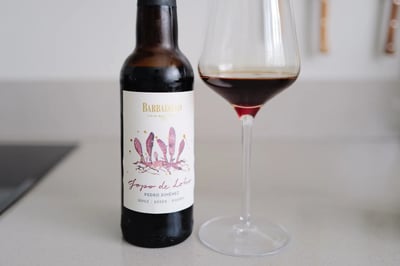
Barbadillo Jopo de Lobo: Organic Pedro Ximénez
Jopo de Lobo from Barbadillo: organic Pedro Ximénez from sun-dried grapes. Coffee, dark fruit, blossom. €15.95 for a half bottle of 0.375 litres.
Read on →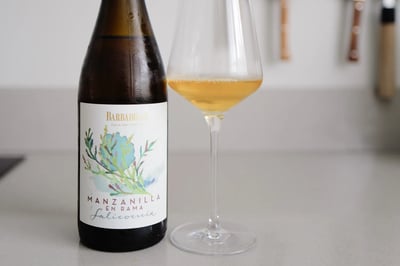
Barbadillo Salicornia: Organic Manzanilla en Rama
Salicornia, Barbadillo's organic manzanilla en rama: flor, baked apple, salt and a brand-new solera. €25.95 at Granada Wijnen, with discount code.
Read on →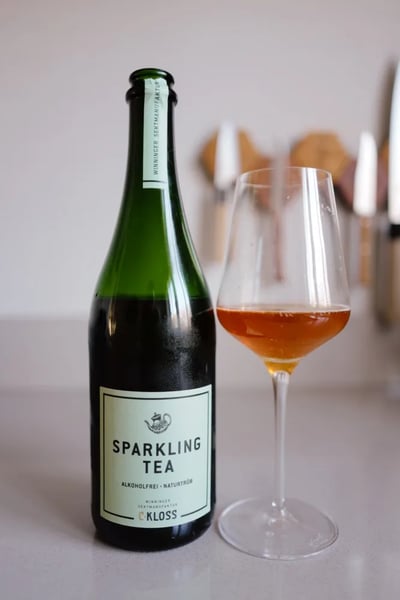
C. Kloss Sparkling Tea Weiss: Fermented Celery
Non-alcoholic sparkling tea Weiss from C. Kloss: linden blossom, nettle and fermented celery. Dry, 2.7 g sugar per 100 ml, €14.99 at Amavine.
Read on →