

Gallimard Cuvée Rosé: Tasting Notes from Les Riceys
Four days of skin contact on pinot noir, topped with chardonnay. Tasting notes on the Gallimard Cuvée Rosé, and the two places this bottle runs into trouble.

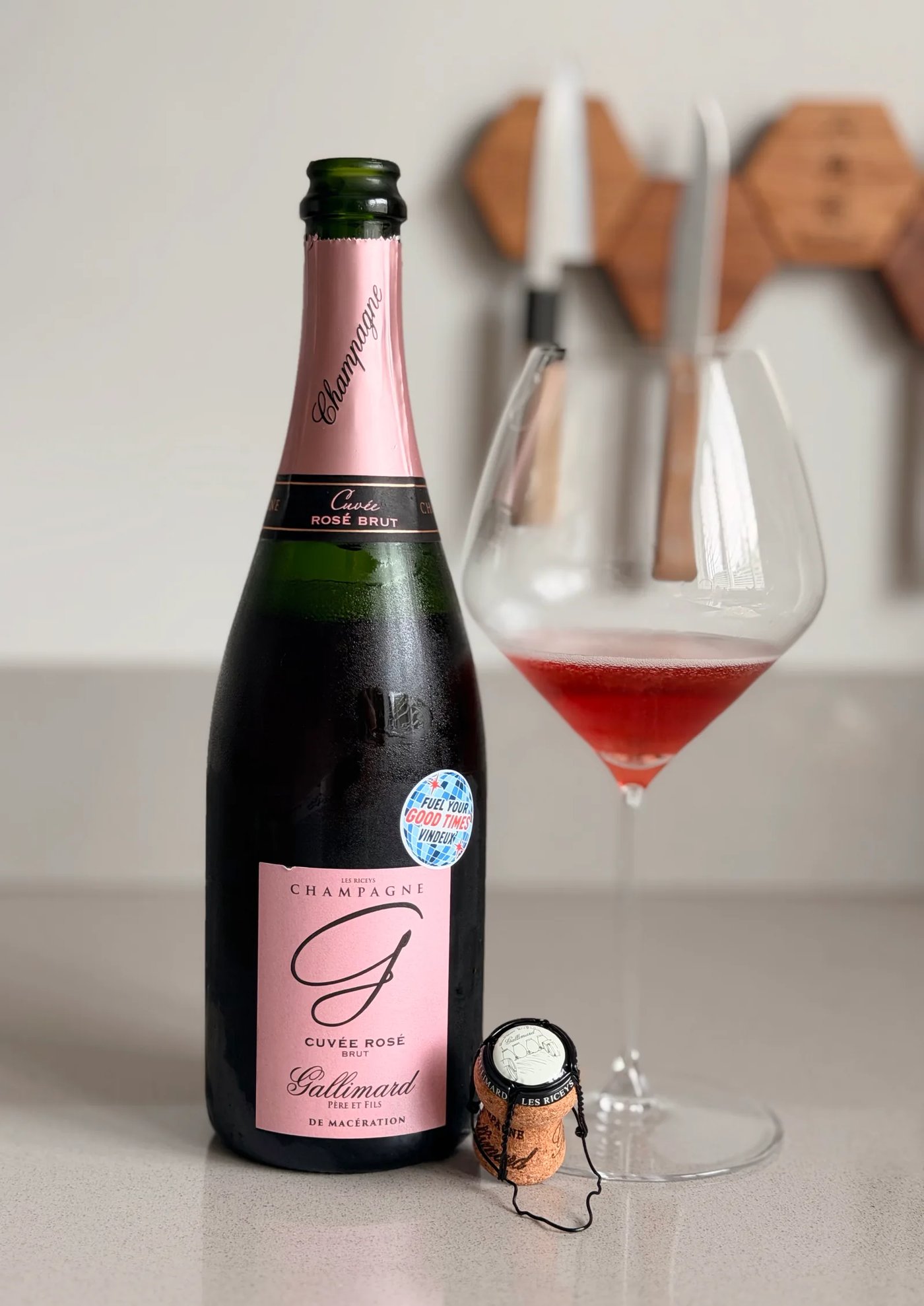
I expected cherries. I got raspberry lemonade with a herb garden running through it.
The colour warns you before you smell anything. No pale salmon, no onion skin, but clear raspberry red, the shade of a light gamay that somehow picked up bubbles. This is the Cuvée Rosé from Champagne Gallimard, the second bottle in edition 34 of my Vindeux subscription. There is a sticker on the neck: “Fuel your good times.”
In the glass
Tasting Note
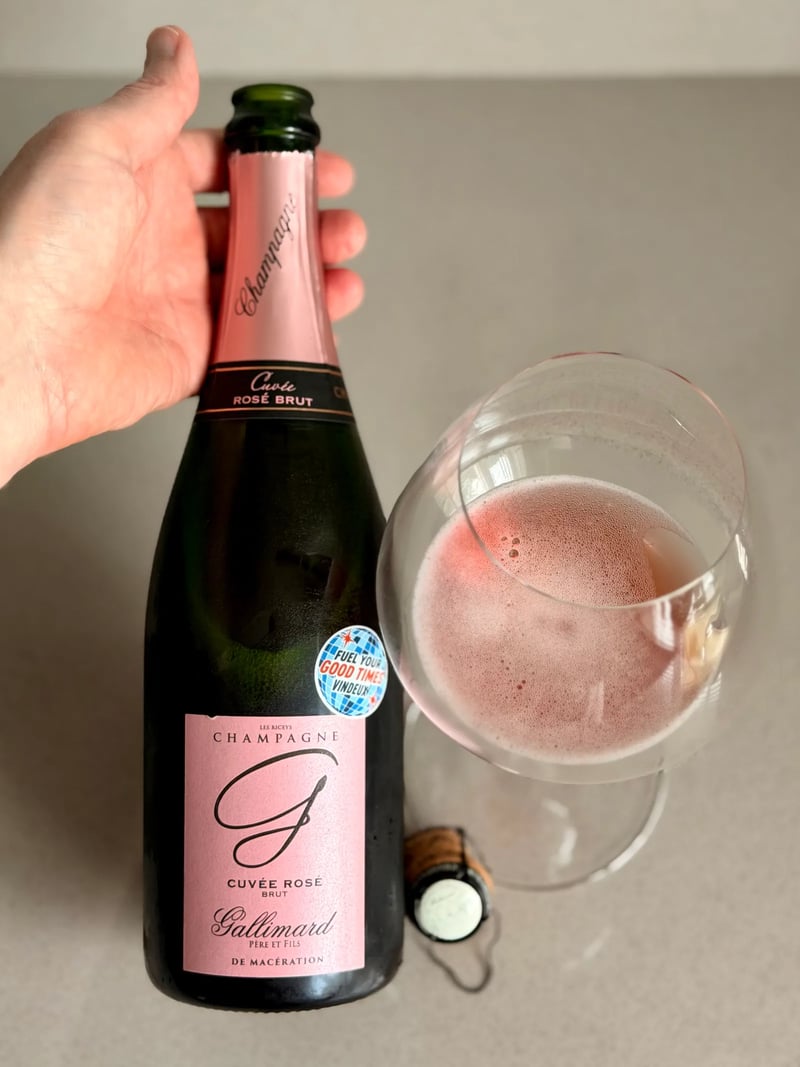
Appearance
Clear raspberry red, deeper than almost any rosé champagne on a shop shelf. The mousse comes up pink rather than white and settles into a fine collar.
Nose
Raspberry lemonade, wrapped in a herbal bouquet I did not see coming from a pinot noir rosé. Creamy and buttery underneath, with fresh red fruit that separates into raspberry, strawberry, blackberry and redcurrant.
Palate
The palate repeats the nose almost one to one. Fine, creamy mousse, and then the menthol lift from the chardonnay, which refuses to wait for the finish and instead sits lightly over everything, a cool film across the red fruit.
Finish
Fresh and clean, menthol as the closing impression. Short enough that you reach for a second glass, which is precisely this bottle’s hazard.
Quality
A rosé that behaves like a wine rather than an aperitif. Anyone after pale and discreet is in the wrong place; anyone after red fruit with tension is not.
Pour it in a burgundy bowl or a generous universal glass, never a flute. This bottle needs width to release that herbal note. Around 10°C, cold enough to hold the freshness, not so cold that the fruit shuts down.
How it is made
There are two routes to rosé champagne. Assemblage, by far the most common, blends a small share of still red wine into a white base until the colour lands. Saignée works from the other direction: leave the juice of black grapes on the skins for a few days, then run it off once colour and fruit have transferred.
Gallimard takes the second route and prints it on the label: élaboré par macération. Four days of skin contact on pinot noir, then topped up with chardonnay to 80/20. The chardonnay supplies that menthol and keeps the wine upright, because four days on skins delivers real weight.
From the back label:
- Producer
- Champagne Gallimard Père et Fils
- Wine
- Cuvée Rosé Brut, élaboré par macération
- Region
- Les Riceys, Côte des Bar
- Grapes
- 80% pinot noir, 20% chardonnay
- Dosage
- Brut, 6 g/L per the Vindeux flyer
- Disgorgement
- À la volée, by hand, no freezing
- Soil
- Argilo-calcaire
- Ageing
- 2.5 years
- Alcohol
- 12%
- Code
- NM, négociant-manipulant
Hand disgorgement carries a consequence the romance rarely mentions: bottle variation is wider than at a house running an automated line. These notes describe this bottle. The next one may sit slightly differently.
Where this bottle runs into trouble
The style divides opinion, and that is worth flagging rather than hiding. If your reference for rosé champagne is the pale Provence-adjacent aperitif, this is not that: deeper in colour, broader in fruit, with tannin you can feel on the tongue. At a table where someone asked for something light, this is the wrong bottle.
The second caveat is food. The Vindeux flyer says they drank it “like lemonade”, and it does empty fast at 6 grams of dosage with fruit this generous. But the window at the table is narrower than that drinkability suggests. Soft cheese and charcuterie work. A salad with mint or basil works. Put something heavy beside it, a braise or glazed meat, and the mousse disappears while the fruit stands there alone.
The third point is timing. At release Vindeux sold it separately in their shop for 40 euros, and the fête-deux subscription runs 63 euros for two bottles, so 31.50 each. Sharp for a saignée rosé from the Aube, which lands closer to 45 or 55 euros in a Dutch specialist shop. But a new drop arrives every month and stock runs out. This one is no longer listed in the shop.
Who should buy it
This is the bottle for the moment someone claims rosé champagne is mostly about colour. Pour it blind next to a big-house rosé and see how long it takes before someone asks whether it is champagne at all. For the estate and the village behind it, read my portrait of Champagne Gallimard. The other bottle from the same box, the blanc de noirs, is here.
This bottle came from my own paid Vindeux subscription. No press sample, no commercial relationship.
Sources
- Primary: back label of Champagne Gallimard Cuvée Rosé Brut; Vindeux information flyer, edition 34, July 2026; own tasting notes, July 2026
- Additional: Champagne Gallimard Père et Fils
More on Wine Review
Barbadillo Jopo de Lobo: Organic Pedro Ximénez
Jopo de Lobo from Barbadillo: organic Pedro Ximénez from sun-dried grapes. Coffee, dark fruit, blossom. €15.95 for a half bottle of 0.375 litres.
Read on →
Barbadillo Salicornia: Organic Manzanilla en Rama
Salicornia, Barbadillo's organic manzanilla en rama: flor, baked apple, salt and a brand-new solera. €25.95 at Granada Wijnen, with discount code.
Read on →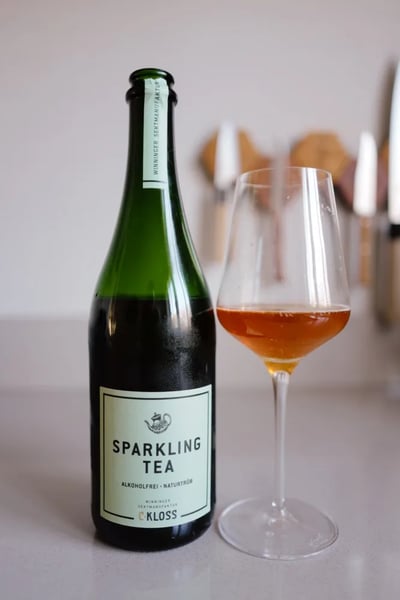
C. Kloss Sparkling Tea Weiss: Fermented Celery
Non-alcoholic sparkling tea Weiss from C. Kloss: linden blossom, nettle and fermented celery. Dry, 2.7 g sugar per 100 ml, €14.99 at Amavine.
Read on →