

PDO Mergelland for Domein Holset: what the seal proves
Classic Brut 2022 and Dame Brut Nature 2022 can now carry PDO Mergelland. What this Dutch appellation guarantees, and what it quietly leaves out.

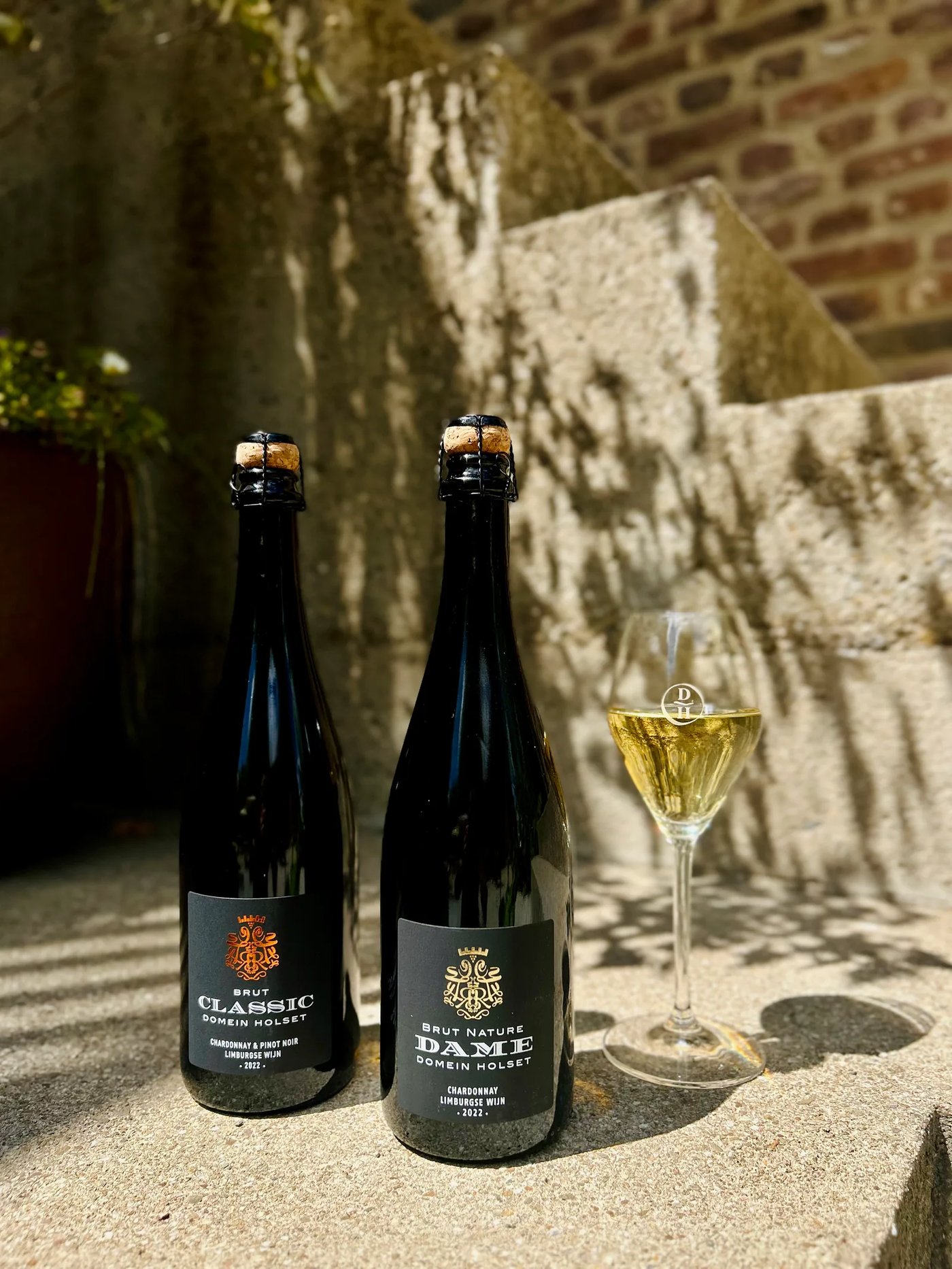
A kestrel in a brown circle, printed on a black label. That is the visible change to Domein Holset’s Classic Brut 2022 and Dame Brut Nature 2022, both now approved under PDO Mergelland. Behind that small mark sits a set of legal obligations most buyers never read, along with a few blind spots that say something about how young appellations get written.
What a Dutch PDO actually demands
The Dutch term is BOB, Beschermde Oorsprongsbenaming. It is the same instrument as the French AOP or the Italian DOC, written into European law rather than invented by a producer.
The obligations bite. Every grape must be grown inside the demarcated zone, and the wine must be made there too, from press to bottle. The specification fixes which varieties may be used, caps yields per hectare per variety, and sets a minimum natural alcohol level. Then comes the part that separates a PDO from a plain geographical stamp: every wine is assessed organoleptically, meaning an independent panel tastes it and can refuse it. The NVWA oversees the administrative, analytical and sensory controls.
Set that against a PGI, the geographical indication under which most Dutch wine is sold. There, 85 percent of the fruit needs to come from the area and the variety list runs to more than a hundred names. The real distance between the two labels is how much freedom a grower agrees to give up.
Why this corner of Limburg has its own name
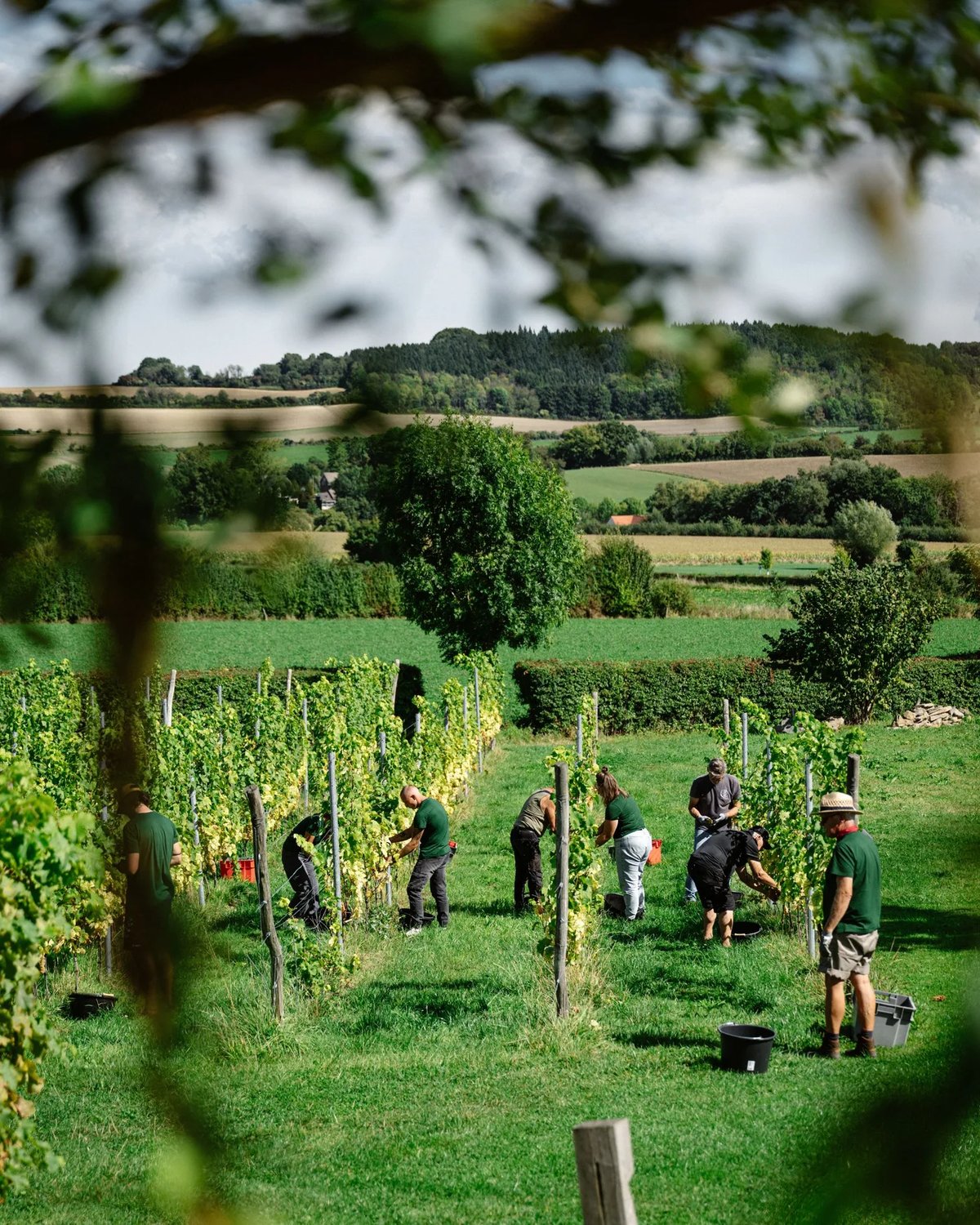
Mergelland runs from Maastricht to Vaals across nine municipalities, and the boundary follows geology rather than politics: only plots with loess topsoil over a marl subsoil are included. Marl is soft limestone, the same Late Cretaceous formation that continues south into northern France. It drains well and holds moisture, and the hills of the Heuvelland shelter the vines against late frost.
The specification even states the style it expects, a combination of fruit, minerality and fresh elegance. For sparkling wine it goes further and describes the brioche and toast that come from yeast autolysis during bottle ageing. Sparkling was written in from the start.
What Holset has had approved
Both approved cuvées are classically composed. Classic Brut 2022 blends chardonnay with pinot noir; Dame Brut Nature 2022 is chardonnay bottled without dosage. Both follow the traditional method, with secondary fermentation in bottle and ageing sur lattes.
Since this year the estate also disgorges on site, in its own cellar in Lemiers. That puts the entire chain in one place: harvest, vinification, second fermentation, lees ageing, riddling, disgorgement. In Dutch sparkling wine that remains rare. Plenty of Dutch growers ship their base wine to a Sektmanufaktur across the German border, because riddling and disgorging equipment only pays for itself at volume. Doing it yourself buys control over the disgorgement date, and with it over how fresh a bottle reaches the table.
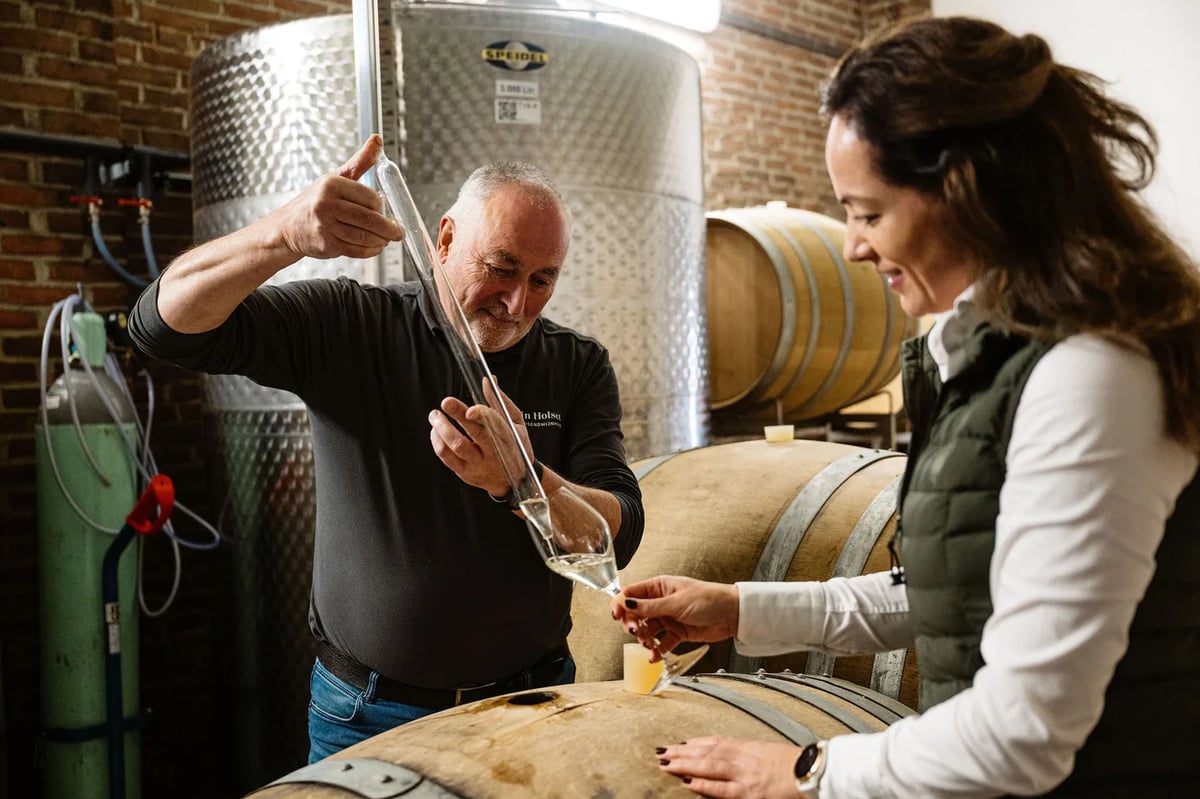
Kirsten Abels, director and winemaker, puts it plainly: “From grape to disgorgement we run the entire production process in house. Being allowed to state that origin officially makes this recognition extra special.”
The varieties left outside
Novo Extra Brut and Dot Brut cannot carry the seal, and the reason sits in the variety list rather than in the glass. Novo is 85 percent souvignier gris with 15 percent johanniter, both PIWI crossings bred to resist fungal pressure and therefore to need far less spraying in a wet climate.
Mergelland admits only the classics: auxerrois, chardonnay, dornfelder, gewürztraminer, rivaner, pinot blanc, pinot gris, pinot noir, pinot noir précoce, riesling. The varieties that demand the most work in a rainy Limburg summer are on the list. The varieties bred for exactly these conditions are not.
That is a flaw in how young northern appellations were drafted, not a flaw at Holset. A seal that protects origin while excluding climate adaptation nudges growers toward northern French grapes instead of the ones that suit the site. For a buyer the practical reading is short. A bottle without the kestrel is not a lesser bottle, it is a bottle from a grape the paperwork has not caught up with.
What the seal does not promise
Two things to keep next to the applause.
The floor written into the specification sits low. Chardonnay may yield up to 80 hectolitres per hectare, and the minimum natural alcohol works out at 9 percent. Any serious traditional-method producer holds itself to tighter numbers than that, and Holset, at 12 hectares and around 25,000 bottles, sits well under the ceiling. The appellation does not require that discipline; it certifies origin and a passed tasting, not ambition.
The word “first” also needs care. Sparkling wine has been inside the specification since 2018, and earlier Holset cuvées already appeared as Mergelland BOB in trade listings. What is new is the approval of these two 2022 vintages, not the arrival of Dutch sparkling wine in the appellation system. That is a smaller claim, and a truer one.
Worth the label
Dutch sparkling wine sells at grower champagne money, roughly 35 to 38 euros at the estate. Nobody buys these bottles to save money. You buy them to taste what loess over marl does at 50 degrees north, in a place where the growing season is short enough to keep acidity taut without any help from the cellar.
The kestrel tells you three things: all from here, made here, tasted and passed. That is more than a Dutch bottle usually tells you. Set your own bar above the one the specification sets.
Photos: Domein Holset. I have not tasted the Classic Brut 2022 or the Dame Brut Nature 2022 myself; this piece is about the recognition, not the wine in the glass.
Frequently asked questions
What is PDO Mergelland?
Mergelland is a Dutch protected designation of origin for wine and sparkling wine in the south of Limburg, known locally as BOB Mergelland. Every grape must come from the demarcated area, the wine must be made there, permitted varieties and maximum yields are fixed, and each wine is tasted and approved individually by an independent panel. The Dutch food safety authority NVWA supervises the checks.
Which Domein Holset wines carry the appellation?
Classic Brut 2022, a blend of chardonnay and pinot noir, and Dame Brut Nature 2022, pure chardonnay with no dosage. Novo Extra Brut and Dot Brut fall outside it because they use varieties that the product specification does not list, among them souvignier gris and johanniter.
Which grapes are allowed in Mergelland?
Auxerrois, chardonnay, dornfelder, gewürztraminer, rivaner (müller-thurgau), pinot blanc, pinot gris, pinot noir, pinot noir précoce and riesling. Disease-resistant PIWI crossings are not on the list.
How old is the appellation?
The European Commission protected the name in February 2018, and it applies from the 2018 harvest onwards. The zone covers nine municipalities between Maastricht and Vaals, and only plots with a topsoil of loess over marl qualify.
Sources
- Primary source: Domein Holset press release, PDO Mergelland status for Classic Brut 2022 and Dame Brut Nature 2022 (25 July 2026)
- Additional: Mergelland product specification (RVO); Wine quality designations (RVO); BOB Mergelland; Dutch wine quality labels, Nederlandse Wijninfo; Domein Holset webshop
More on News
Sherry exports to the Netherlands fall 38 percent
Sherry exports to the Netherlands dropped from 2.55 to under 1.6 million litres in a year. Jerez blames private label. What the figures do and don't show.
Read on →
Arctic Barolo: Rivetto Ages Barolo Under the Sea
Arctic Barolo spent a year 34 metres down off northern Norway. What Rivetto and Hurtigruten did, what the taster found, and why I am not convinced yet.
Read on →
Champagne 2026: the same picking plan as 1959
Roederer put its 2026 picking plan beside 1959 and found only the date had moved. What the first vins clairs suggest, and what they cannot prove.
Read on →