

Domein Holset Novo 2022 Review: Dutch Limburg Bubbles
Domein Holset Novo 2022: 85% Souvignier Gris, 15% Johanniter, traditional method, 24 months on the lees, Extra Brut. Tasting note and caveats.

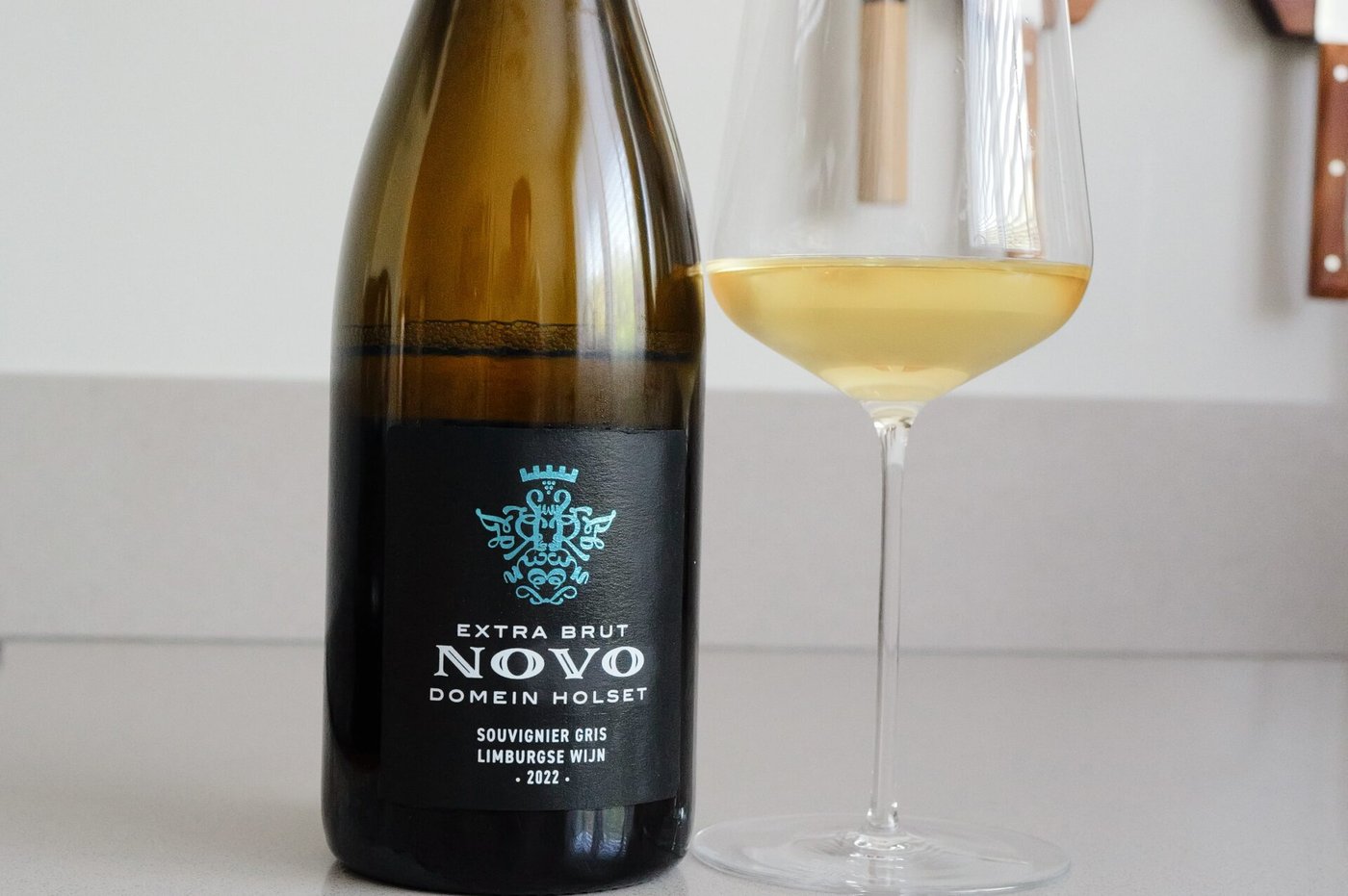
A visitor from Borgloon, who made wine there himself for years, recently told Meta van den Boomen that Domein Holset can now hold its own against Champagne. This Domein Holset Novo review is based on Sparks episode 21, in which I tasted the 2022 with Meta. The estate sits at the very tip of the Netherlands, at the foot of the Vaalserberg, and made this Extra Brut by the traditional method from 85% Souvignier Gris and 15% Johanniter.
Why Souvignier Gris and Johanniter
Alongside Chardonnay and Pinot Noir, Holset grows PIWI varieties. They are less prone to fungal diseases such as mildew and, as Meta puts it, lend themselves well to a cooler climate and a sustainable way of working. Souvignier Gris, she says, grows fairly easily in the vineyard. The berries turn grey, purple and pinkish as they ripen, but the flesh stays white, so it makes white wine.
Johanniter was among the first varieties Holset planted, in 2009. It is related to Riesling and shares its fresh acidity, citrus fruit and apple on the nose.
The 85-15 split depends on the year. Meta calls blending a jigsaw: how much wine do you have from each variety, and how do you bring it together in the bottle most attractively? In 2022 this is how it came out. Usually it leans towards Souvignier Gris, topped up with Johanniter.
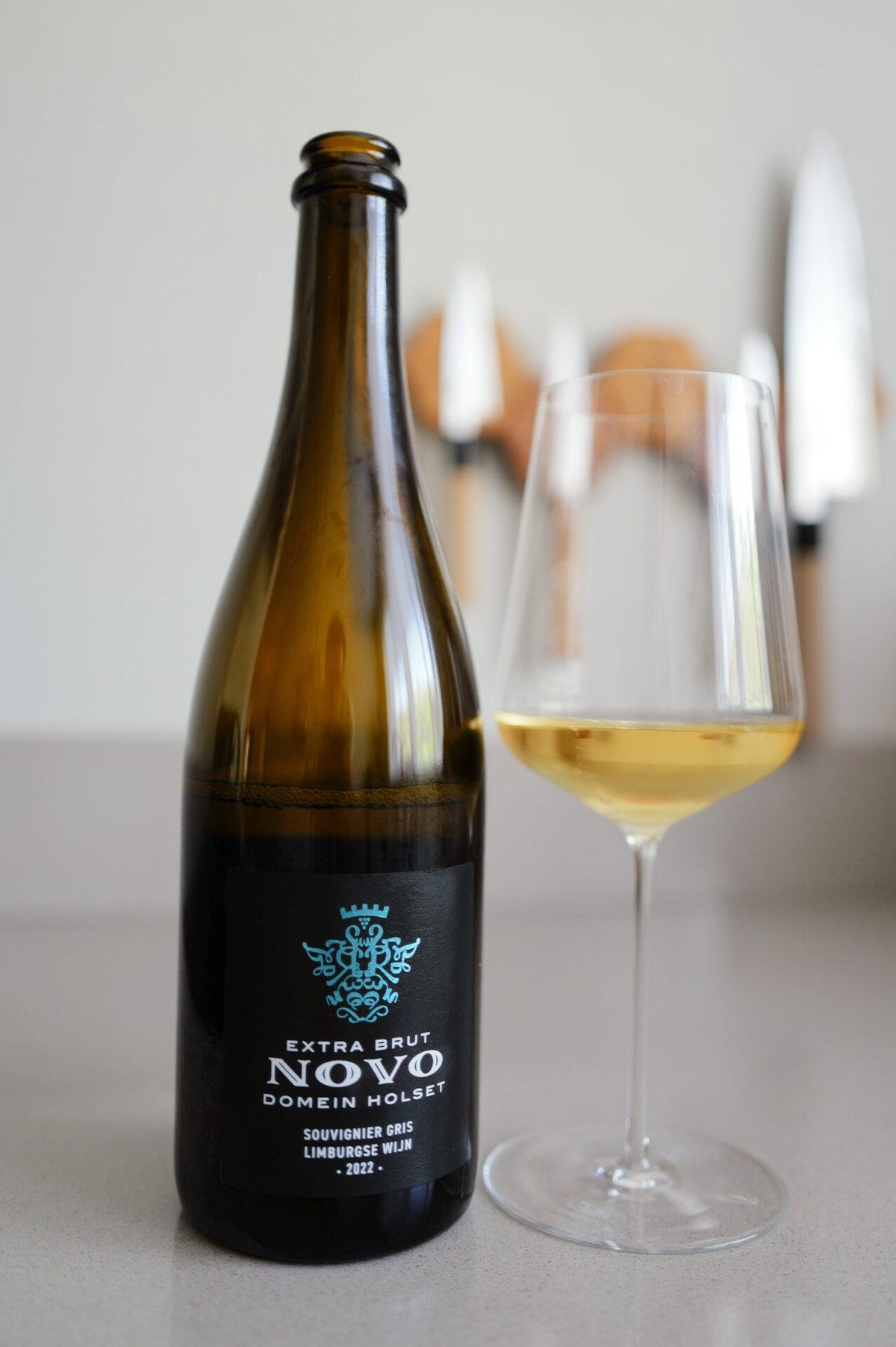
Limburg terroir
The soil is sandstone and marl over limestone, layer upon layer, and the hill country gets plenty of sun. A German Sekt producer who advises the estate called the base wines technically well suited to sparkling wine, Meta says; going by the pH values, a textbook case. Holset farms as organically as it can, without chemical weedkillers, and wants to move to biodynamic production. Demeter certification is something the estate hopes to reach one day.
In the cellar
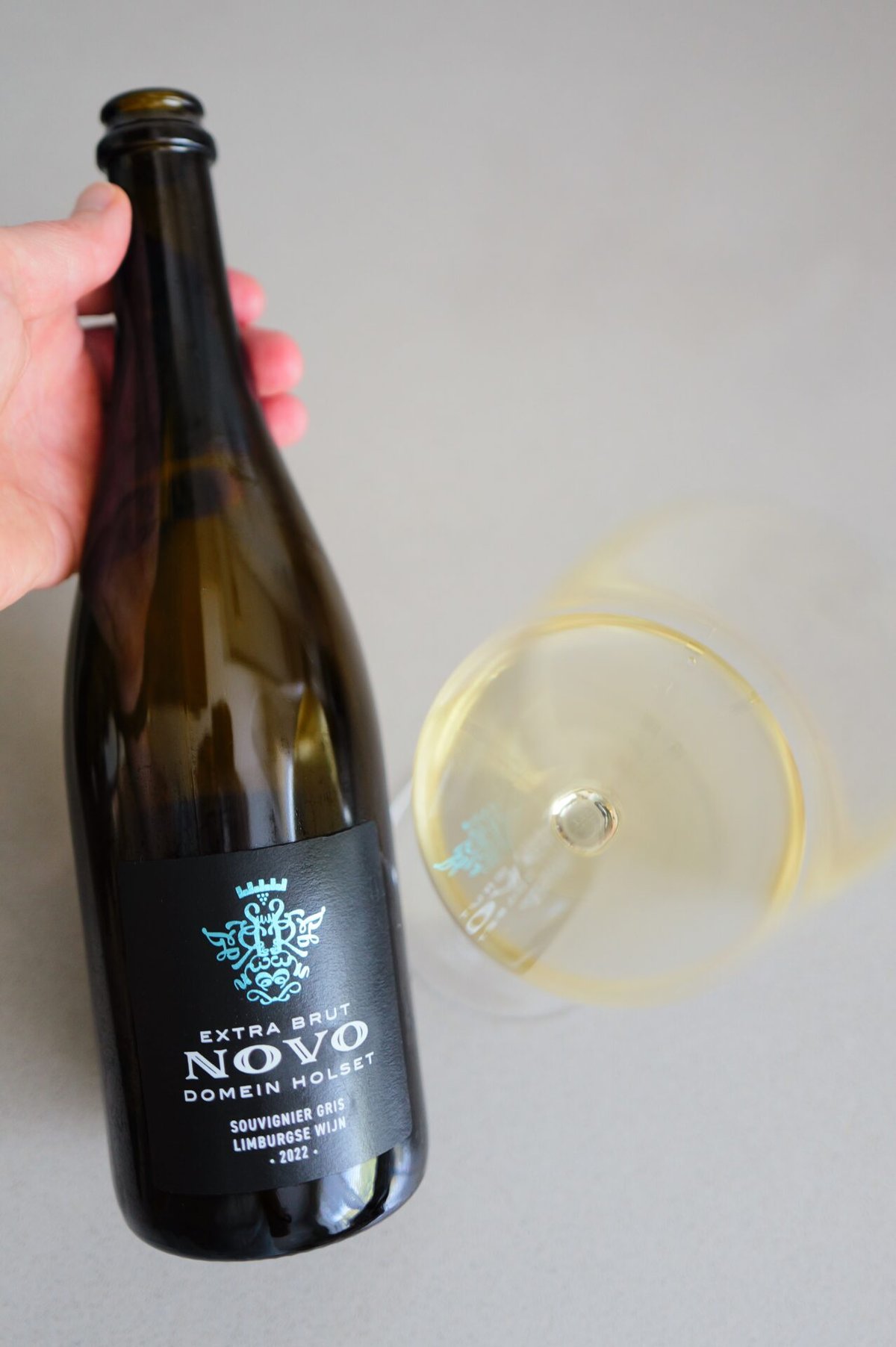
The Novo’s base wine was fermented partly in stainless steel and partly in oak and ceramic. According to Meta, the Souvignier Gris went into wood and ceramic and the Johanniter probably only into steel. All of Holset’s base wines spend ten months in barrel, where they go through malolactic conversion. The Novo then spent 24 months on the lees.
Nine months is the minimum for sparkling wine. Holset regards 24 months as the minimum for the flavour it is after, and leaves some wines for 36. Dosage is 3 grams, which makes the Novo an Extra Brut. Meta first tasted the wine with Kirsten Abels, the estate’s director and winemaker. Before a new wine is released, they disgorge a few bottles by hand to decide on its dosage.
Holset handles the lees ageing itself; disgorgement still happens in Germany. The estate is investing in its own disgorging line and hopes to bottle under PDO Mergelland, the protected designation of origin for South Limburg, from 2026. That requires the wine to be made in Limburg from start to finish.
Tasting note
The bottle had not long been disgorged and foamed eagerly in the glass. On the nose I found it very fresh and aromatic, with plenty of fresh apple and a hint of bread dough, brioche and toast. Meta says visitors are surprised by how fragrant it is, since sparkling wines are usually more reserved. She picks up fruit, perhaps even something floral, a certain spiciness and a touch of stone fruit, nectarine and peach.
On the palate it is taut and tart, yet balanced. Dosage is often what gives a sparkling wine its balance, and at 3 grams this one has it by nature. Meta puts that down to the malolactic conversion, which turns sharper malic acid into softer lactic acid. In her view the oak and ceramic portion adds a little ripeness and shape, while the steel portion keeps the wine fresh. I found it a serious wine and, above all, very good to drink.
Visitors ask what to drink it with: as an apéritif, perhaps with a meal too. Meta finds it a good match for the lighter, Scandinavian- and Japanese-inspired cooking in good restaurants.
Caveats
- As long as disgorgement happens in Germany, the Novo cannot be bottled as PDO Mergelland. Whether the in-house line will be running in 2026 is still an expectation.
- 2024 was a poor year for Holset. Spring frost left almost nothing to pick apart from a little Johanniter, not enough for a vintage wine, so part of the 2023 stayed in tank for blending.
- Meta was not sure how the Johanniter was vinified.
- Price did not come up in the conversation.
- I tasted a single bottle, sent by the estate, and I was already a fan of their other wines. I did not taste it side by side with a Champagne.
Local wine in restaurants
Meta sees interest in local wine growing, in restaurants too, which want to surprise their guests with a sparkling wine from their own country. Most visitors are Dutch, but Belgians and Germans are finding their way to the estate more and more. The climate argument is Meta’s own. Champagne is getting warmer while fine acidity is essential for this style, and in her view that leaves Limburg well placed.
- Producer
- Domein Holset
- Wine
- Novo 2022
- Vintage
- 2022
- Region
- South Limburg
- Country
- Netherlands
- Grape
- 85% Souvignier Gris, 15% Johanniter
- Dosage
- 3 g, Extra Brut
Sources
- Sparks by VinoVonk ep. 21, conversation with Meta van den Boomen: transcript
- Domein Holset: domeinholset.nl
- PIWI International: piwi-international.org (background on fungus-resistant varieties)
More on Wine Review
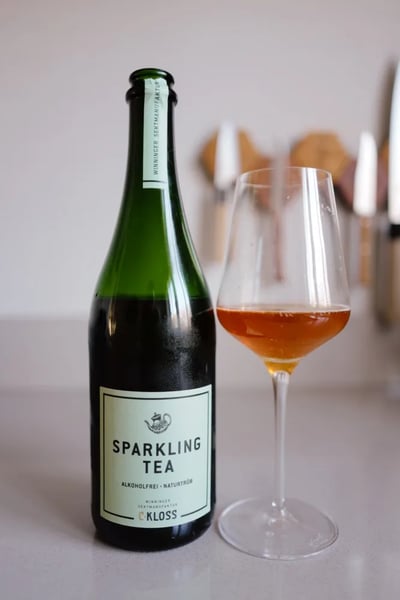
C. Kloss Sparkling Tea Weiss: Fermented Celery
Non-alcoholic sparkling tea Weiss from C. Kloss: linden blossom, nettle and fermented celery. Dry, 2.7 g sugar per 100 ml, €14.99 at Amavine.
Read on →
Barbadillo Sábalo: Organic Palomino Without Flor
Organic Palomino Sábalo from Barbadillo: no flor, salt from albariza soil. Chamomile, apple, sea. €17.95 at Granada Wijnen, with discount code.
Read on →
Tua Rita Lodano Rosso 2024: Petit Verdot Leads
A €50.95 Super Tuscan built on 60 percent Petit Verdot and 18 months of barrique. Why I chill it, decant it and never drink it without food.
Read on →