

La Grande Bellezza 2026: Italian Wines in Amsterdam
La Grande Bellezza 2026 brought eight top Italian wines to Amsterdam. My day across Alto Adige and Tuscany, with two Brunello 2021s side by side.
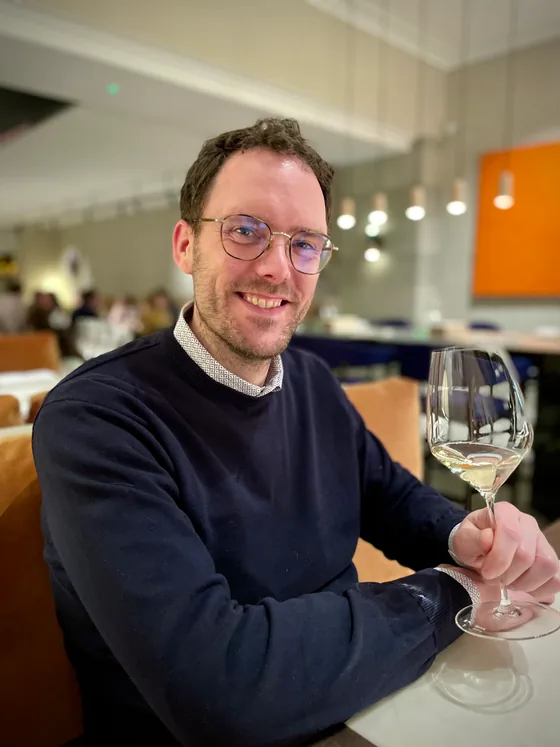
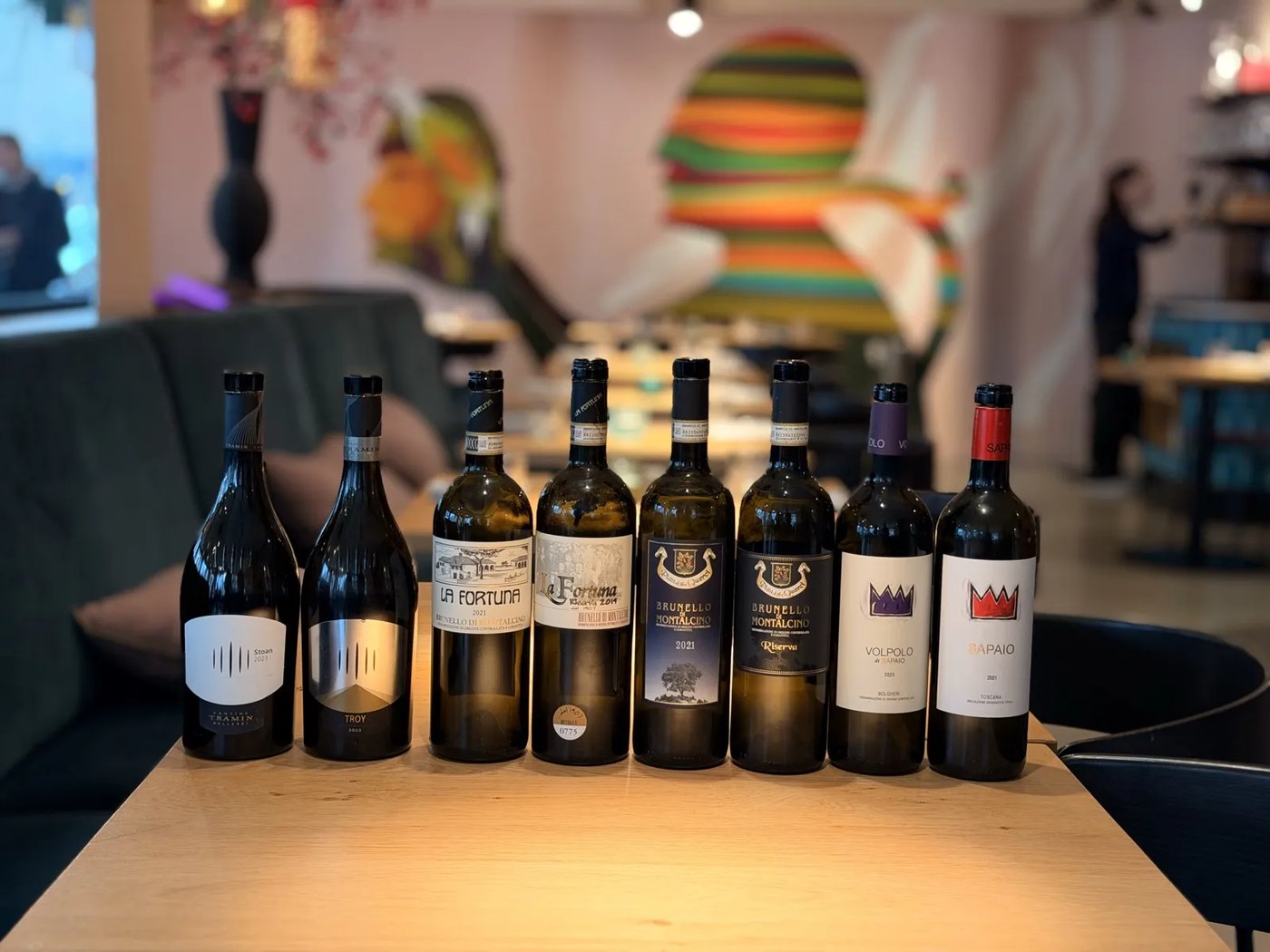
Two glasses next to each other. On the left a white from Alto Adige, cool and taut, still carrying the nights of the Dolomites. On the right a dark Sangiovese from Montalcino, warm and broad. That contrast was the throughline of La Grande Bellezza 2026, the ninth edition of the Italian wine tour Raffaele Vecchione launched in 2019. Amsterdam, March 24, again at the Peruvian-Italian Nazka. Four houses, eight wines, and the promise to show the “true essence of Italian wine.” I walked in curious and left with a full notebook.
The format of La Grande Bellezza 2026
Vecchione, an oenologist before he became a critic, picks a handful of producers per edition and puts their recent vintages on the table. This year the selection ran from north to centre: Cantina Tramin from Alto Adige, then three Tuscan houses, Pian delle Querci and La Fortuna in Montalcino and Podere Sapaio in Bolgheri. White against red, mountain against coast. That tension is exactly what makes a day like this instructive.
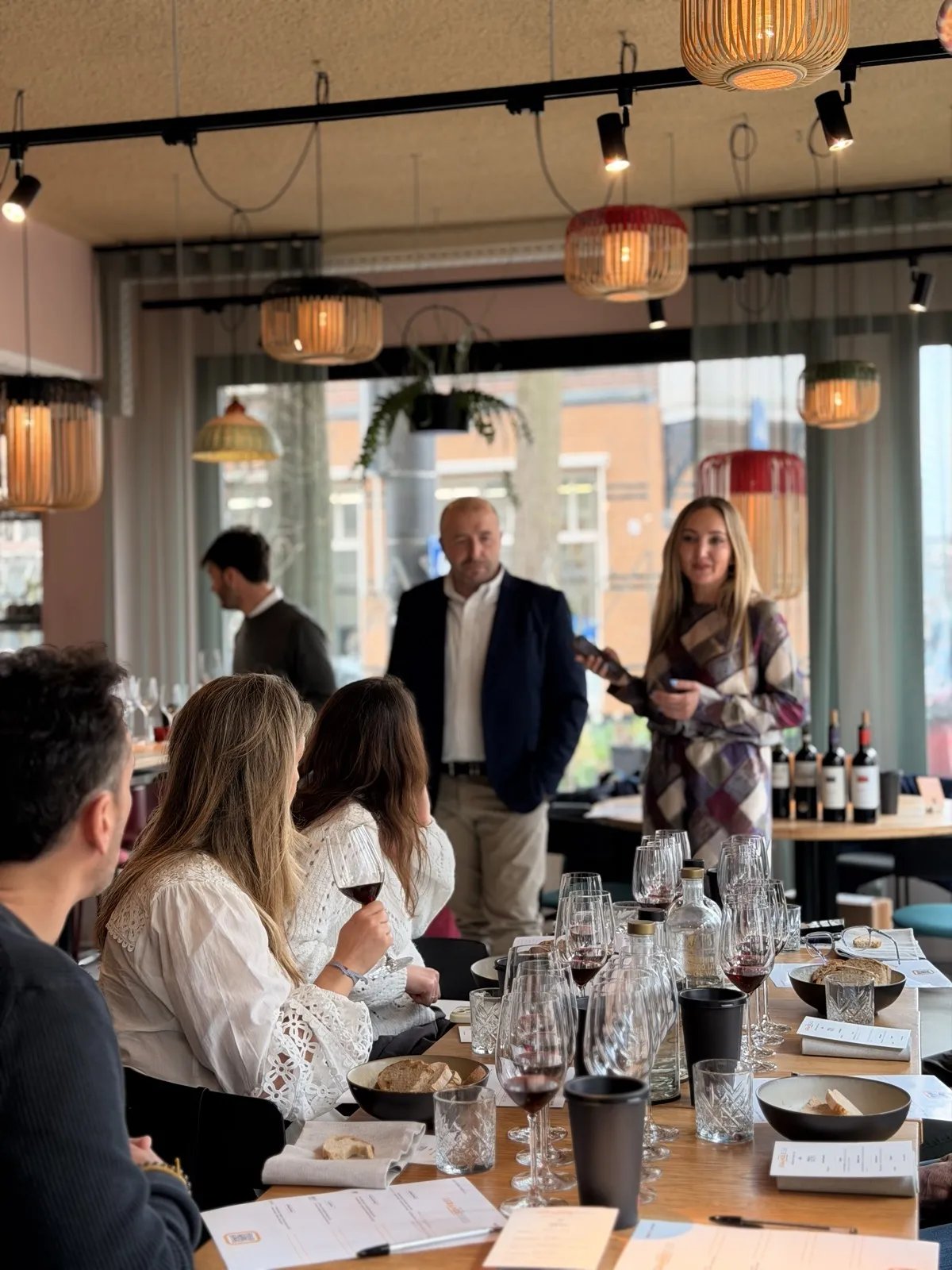
Alto Adige: the coolness of Cantina Tramin
Cantina Tramin is a cooperative founded in 1889 by a village priest, today 160 families and 270 hectares. Thirty different wines, seventy percent white. The winemaker has been there more than thirty years and knows every vineyard and every grower by name. You taste that precision.
The Stoan 2023 is a many-voiced blend. Chardonnay gives the fruit, Sauvignon Blanc the grassy edge, Gewürztraminer the backbone. “Stoan” is dialect for stone, a nod to the mineral style. Fresh and fruity, apple and pear with a spicy edge, a touch creamy and saline, and a peppery acidic finish that tingles. The finish stays average, no more than that. Eleven months on large oak, then three months in bottle before release. One detail stuck: they keep studying the role of Gewürztraminer, which tends to dominate, because they want every grape to speak.
The Troy Riserva 2022 plays in another league. A Chardonnay that leans toward Burgundy rather than the New World. An exciting nose, creamy, a hint of vanilla and butterscotch, energetic and spicy. On the palate a creamy structure cut through by tight saline acids, and that punch is precisely what breaks the creaminess open. Coolness you can taste, oak you barely notice, a medium-plus finish. The Troy is the only wine to see barrique, forty percent new, eleven months of oak alongside twenty-two months of steel. Medium gold in the glass. A cracking wine.
When I asked how the altitude difference shapes the blend, the winemaker was clear: Gewürztraminer for the backbone, Sauvignon Blanc for the grassy notes, Chardonnay for fruit and character. And the warm 2022? Harvest a little earlier, but the altitude meant ripeness was never a big problem. Careful work keeps the heavy alcohol feeling away.
Montalcino, twice
This is where it got interesting. Two houses, the same appellation, the same red vintage: Brunello di Montalcino 2021. Tasting them side by side is why you come to a day like this.
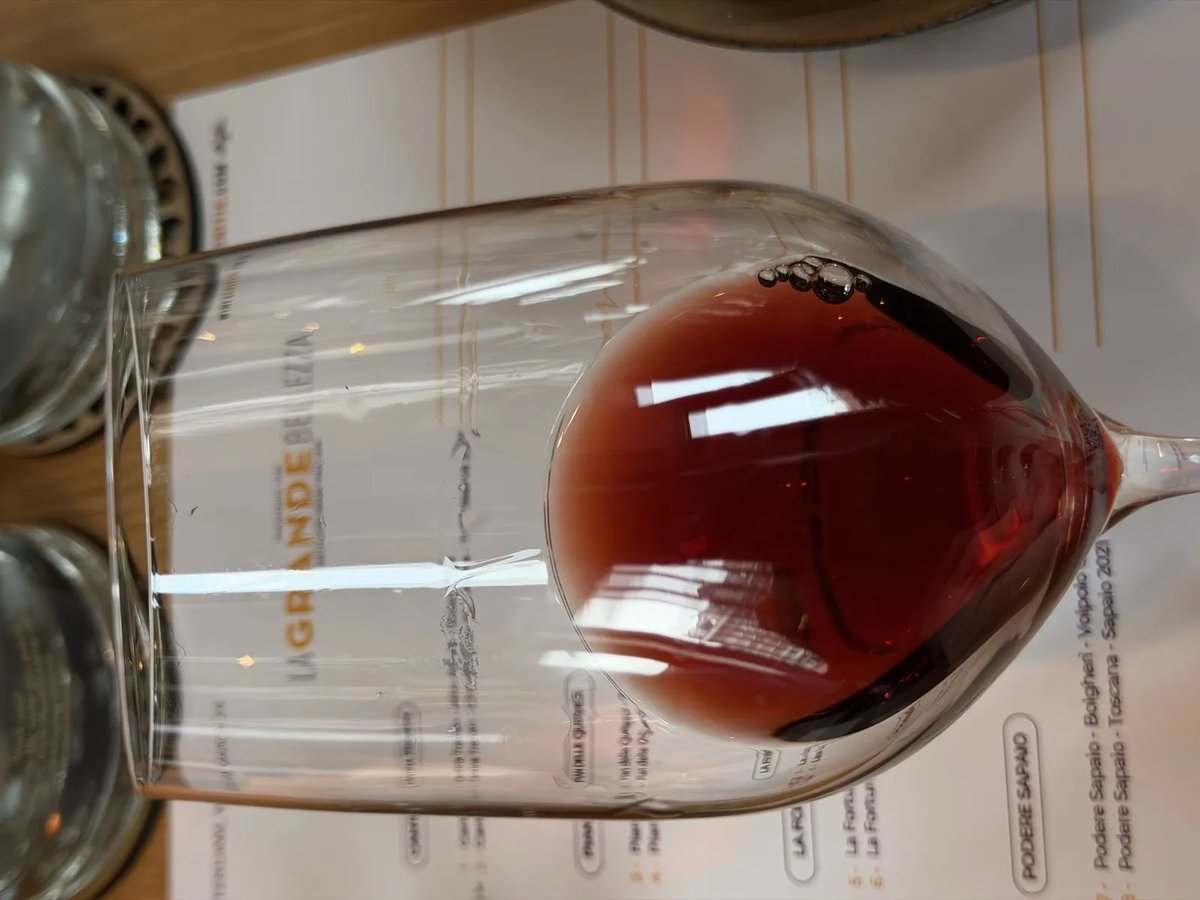
Pian delle Querci is a four-generation family estate that adds no yeast in the cellar. Their Brunello 2021 gave plenty of ripe red fruit, cheerful raspberries, spicy leather, classic Brunello. For now it still feels a touch young. What I missed was the damp earth and mushroom, which could have been more present for my taste. The Riserva 2020 has sat locked in bottle for a long time, and you notice it on the first nose. Light helps: give it room and the bouquet opens, all registers joining in. A power Brunello with tart black cherry, blackberry, cassis and strawberry, and an oak note that lends body. A wild, earthy vibe.
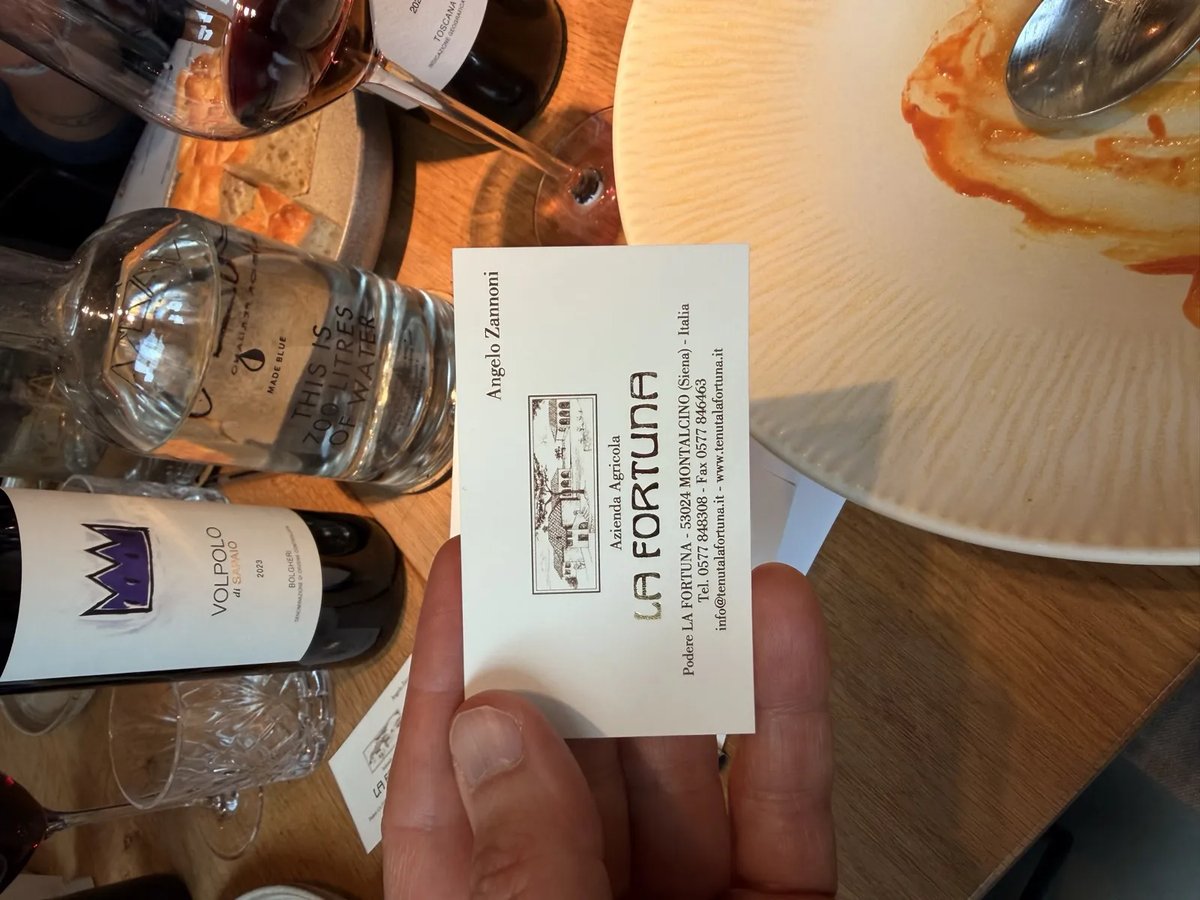
La Fortuna sits on the northwest side of Montalcino, cooler, with slower ripening. Their Brunello 2021 is directly comparable to the Pian delle Querci, which is what makes the difference so visible. More restrained, spicier, chili next to strawberry, tobacco and cacao. On the palate stern and peppery, still very closed. The red fruit is there, but you have to search harder than with the previous house. The colour is a shade darker, to me the classic Brunello tint: light ruby with a hint of brick. The Riserva 2019 comes from a hot, powerful year and it shows: a warm blanket of ripe red fruit with cherries up front, lovely citrus, orange and a touch of mandarin, plenty of herbs and spice, tobacco and cacao. High acids and high tannins, in balance but clearly present. That promises long ageing potential. I am curious where this stands in ten to twenty years.
The 2021 harvest date turned out to be the detail that explained more than any marketing line. La Fortuna started on September 25. Same vintage, different site, different picking day, and a noticeably different glass.
Bolgheri: the coast of Podere Sapaio
From the hills to the sea. Podere Sapaio makes Bordeaux blends on clay and loam near the coast, with time as its guiding principle: concrete and wood side by side in the cellar.
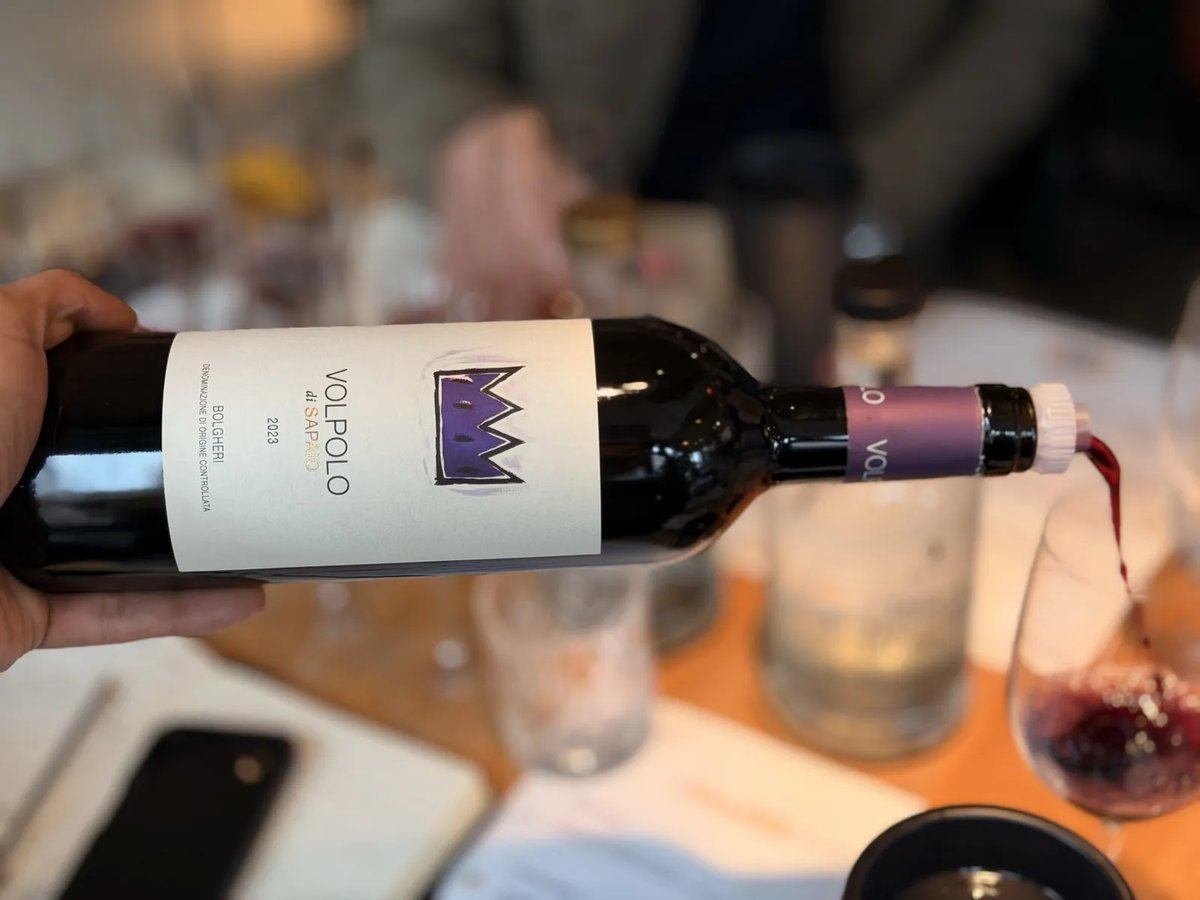
The Volpolo 2023 is the entry wine, Cabernet Sauvignon with Merlot and Petit Verdot. A purple rim over ruby red, black fruit, orange and a whisper of Earl Grey. There is a Bordeaux vibe from the Merlot, but warmer, Mediterranean. Tight acids, lively tannins, crisp, with structures that run from smooth to grippy. Clove, rosemary and sage add light spice. A full young wine that asks for food and behaves gastronomically.
The Sapaio 2021 is the flagship, mostly Cabernet Sauvignon. An energetic nose, even for a root day: cigar box, mushroom, cherries, clove, vanilla, a little scorched wood and coconut, then balsamic and tomato leaf. Pure and clean, on the nose and in the mouth. Beautiful acids, high but elegant, and tannins that are complex and taut. Black pepper and juniper. Gastronomic, crisp, and it makes you happy. I suspect organic or biodynamic work behind this glass.
What I took home
Two things. First, that comparison of the two Brunello 2021s: site within one appellation, one vintage, and yet two different wines. Pian delle Querci warmer and fruitier, La Fortuna cooler and more closed. Ask each house for the picking date and you learn more than a brochure will tell you.
Second, that Pian delle Querci Riserva 2020 that only opened once I gave it air and light. Young Brunello, and Riserva especially, asks for patience. Decanting is not a luxury but service. What first seems closed often unfolds after all.
The ninth edition confirmed why these classics stay central to a serious wine education. I will be at the front of the line when the tenth is announced.
Sources
- La Grande Bellezza (official tasting): lagrandebellezza.com
- Cantina Tramin: cantinatramin.it
- Consorzio Vino Brunello di Montalcino: consorziobrunellodimontalcino.it
More on Events
Dutch Vineyard Open Days 2026: 36 Vineyards Open
36 Dutch vineyards open their gates this September. Every participant, date and opening time, plus what the official calendar leaves out.
Read on →
A sherry course in the Netherlands, four nights
A dedicated sherry course in the Netherlands, taught by certified Sherry Educator Nadien de Visser. Four sessions, 28 wines, 290 euros. What it covers.
Read on →
Great Greek Wines 2025: 65 Winners Reviewed
Great Greek Wines 2025 picked 65 bottles from 660 entries. What the results say about the Greek wine scene, and which producers stand out.
Read on →