

Champagne Monmarthe: a grower portrait from Ludes
Champagne Monmarthe in Ludes: seven generations, 17 hectares on the cool north face, father and son, and a young winemaker who takes Meunier on chalk seriously.
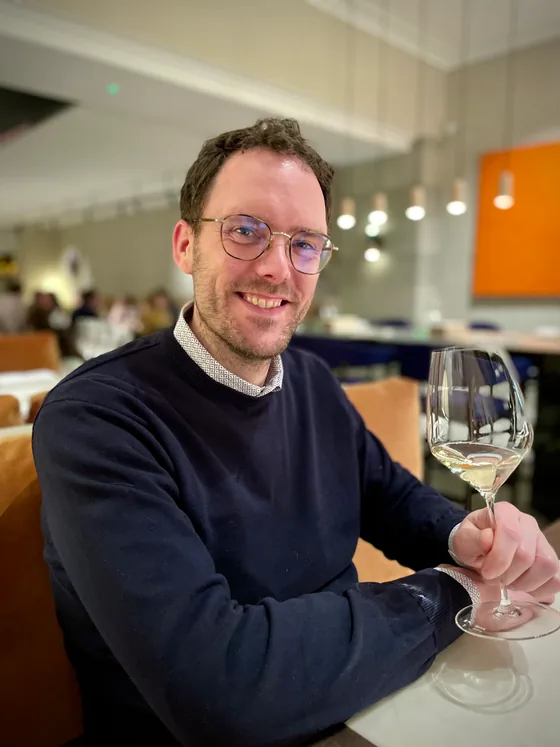
Champagne Monmarthe in Ludes is not a house that buys grapes. That sounds like a detail, but it is the heart of everything Gauthier Monmarthe makes. He is the seventh generation on the family estate on the north face of the Montagne de Reims, and he plants, prunes and harvests his own grapes from start to finish. “It’s the main characteristic of a family estate,” he says. That independence is exactly why he can take risks a large house rarely would.
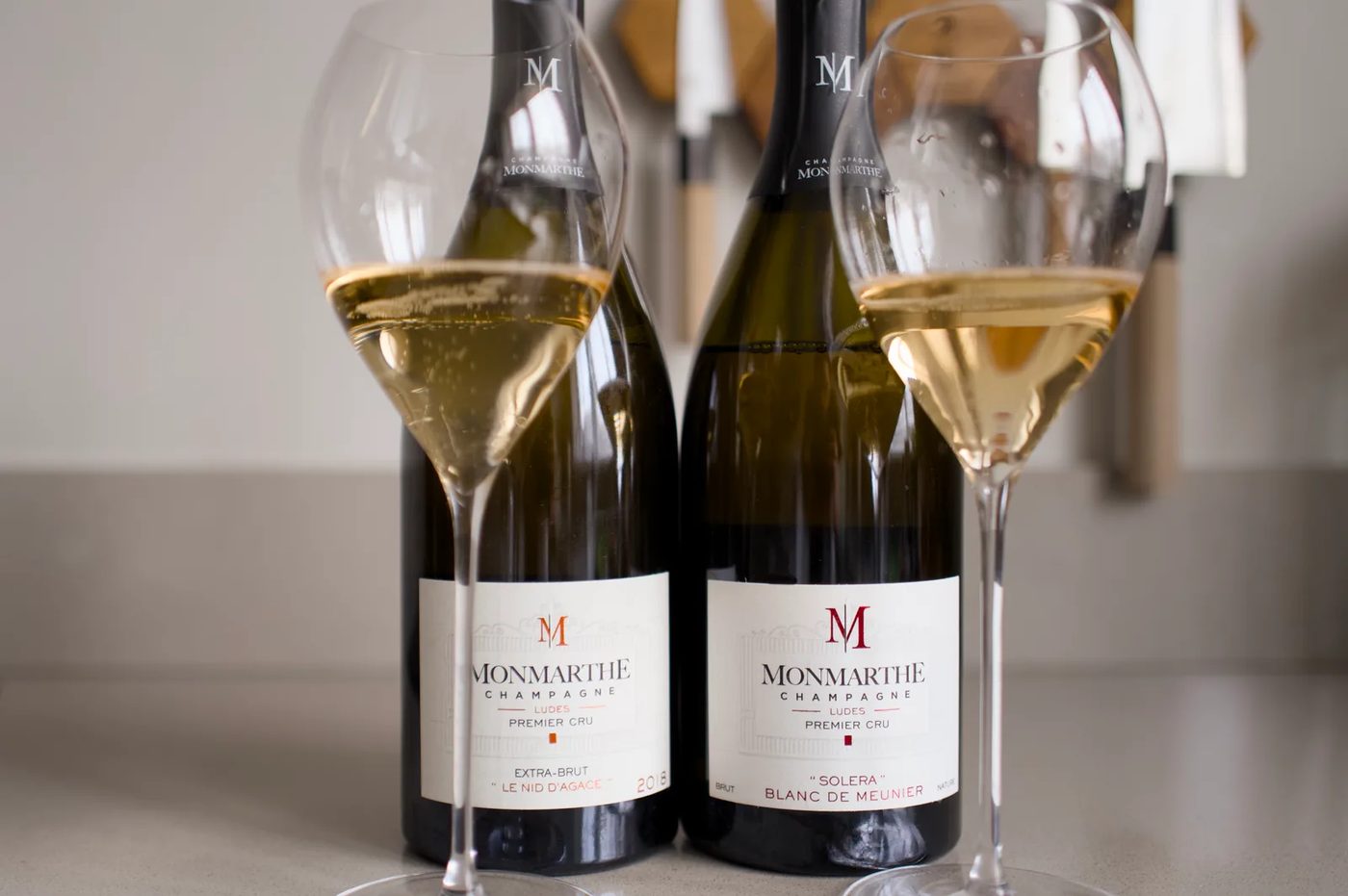
I got to know Gauthier when he sent me two bottles for an episode of Sparks: a Solera Blanc de Meunier and the single-plot Le Nid d’Agace 2018. What started as a tasting turned into a conversation about family, patience and a grape nobody took seriously. This is the portrait of the grower behind it.
A family since 1737
The Monmarthes have been in Ludes since 1737. First as farmers, because making Champagne came much later. The family has made its own Champagne since 1930, and the estate has passed from generation to generation ever since.
Gauthier works today with his father, Jean-Guy, and a team of six in the vineyard and the cellar. The division of labour between father and son is no formality. Jean-Guy has decades of harvests in his legs and a memory full of vintages. Gauthier brings a new eye. The fact that they do not always agree is, in Gauthier’s view, the real gain.
- Estate
- Champagne Monmarthe
- Location
- Ludes, north face of the Montagne de Reims
- Family since
- 1737, Champagne since 1930
- Generation
- Seventh (Gauthier), with father Jean-Guy
- Vineyard
- 17 hectares across 22 plots, Premier Cru
- Grapes
- Pinot Noir, Pinot Meunier, Chardonnay
- Farming
- HVE (Haute Valeur Environnementale)
Seventeen hectares on the cool north face
The estate counts 17 hectares across 22 plots. For a grower that is a large stretch of land, and Gauthier knows he is lucky. The bulk lies around Ludes, the rest in neighbouring villages, all classified Premier Cru. That is why every bottle carries the Premier Cru designation.
Ludes sits on the north face, behind the mountain from Ambonnay and Bouzy. That is historically cooler terroir. It used to mean less ripeness than the south side, but climate change is shifting that balance. “With the north face we now get better ripeness while keeping the freshness,” Gauthier says. What was once a drawback is slowly becoming an asset.
The three classic grapes all grow here: Pinot Noir, Pinot Meunier and a little Chardonnay. And the vineyard is worked under HVE, the French label for environmentally responsible farming.
A young winemaker with foreign miles
Gauthier joined the estate five years ago, after studying in Bordeaux where he covered both oenology and the wine business. Then a year of vinification in South Africa. For him that was not a detour but a requirement. “It’s very important for me to see other vineyards around the world and to gain more experience.”
Those foreign miles explain a lot. He borrowed the solera from sherry in Jerez. Blocking the malolactic fermentation, working in foudres, choosing Brut Nature: these are all decisions of someone who looked beyond his own village and then came back on purpose.
Two ranges: blending and single-plot
The estate works with two lines. The first revolves around blending, the mixing of plots, grapes and harvests. “Blending represents Champagne,” Gauthier says. That is the classic side, the wines that carry the house style.
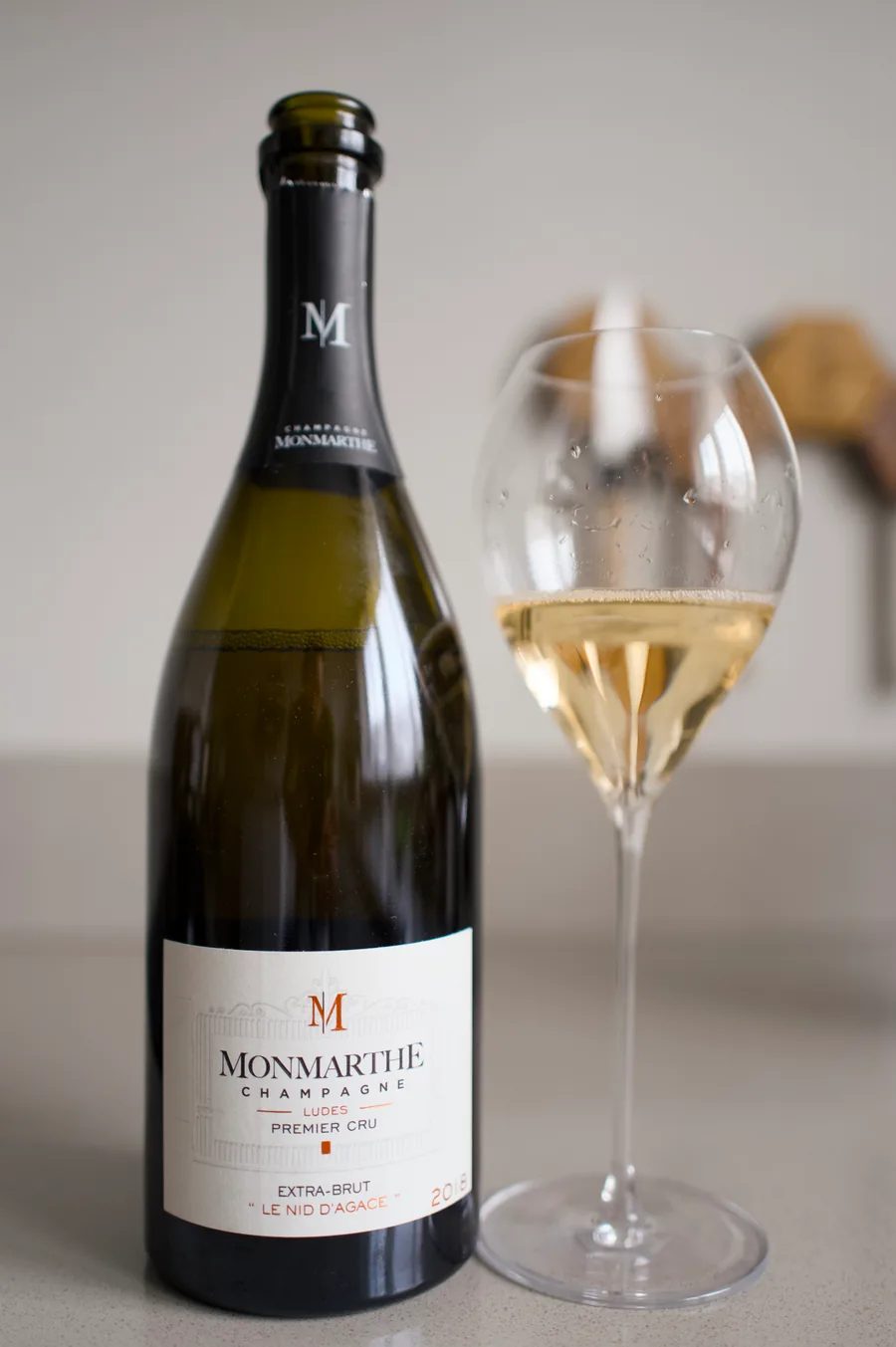
The second line is where it gets personal: single-plot cuvées. One terroir, one plot, one type of vinification. Le Nid d’Agace 2018 belongs here, a co-planted plot of old Chardonnay and young Pinot Noir. And the Solera Blanc de Meunier, 100% Meunier on chalk, aged in a perpetual reserve since 2015.
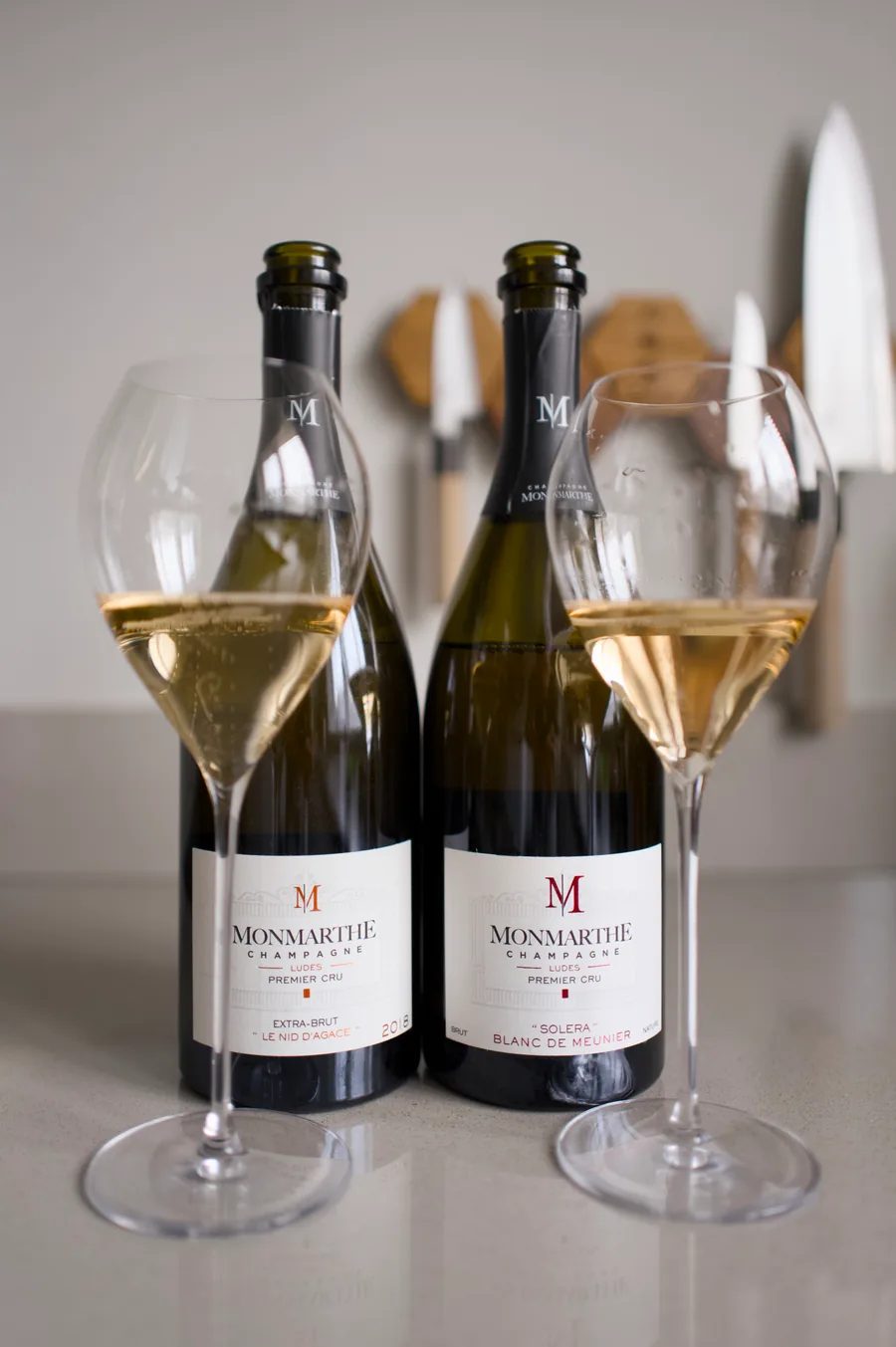
More is in the pipeline. A new Blanc de Blancs has been waiting since 2021, a new Blanc de Noirs since 2022. But Gauthier is in no hurry. “In this job you need to be patient. Sometimes it’s difficult, because you make a wine and then you leave it for four, five, six years before tasting it.”
Why his father had to be convinced
The best part of our conversation was about family. Two things were new for his father and for that generation of winemakers: vinifying a Meunier on its own, and finishing it with no dosage. For someone who has run the estate for forty years, that cuts against everything you are used to.
It turned out well. Gauthier let his father taste that it works without sugar, and that a 100% Meunier holds up. That is the whole story in one scene: a seventh generation taking Champagne’s least loved grape, ageing it the way they make sherry in Jerez, and letting the older generation taste that it can be done.
Staying independent
Gauthier has no illusions about the market. Wine consumption is falling, in France and worldwide, and you feel it right into the vineyard. Still, he chooses to stay independent: buy no grapes, sell no grapes, keep everything in his own hands. That gives him the freedom to make a Brut Nature of pure Meunier that a large house would not attempt.
At harvest, seventy pickers live on the estate for ten days. That is not romance, that is logistics, but it does mark the scale: large enough to be serious, small enough to stay personal. In the Netherlands and Belgium the wines have been available for two years through Vinetiq, a specialist in grower Champagne aimed at the restaurant trade.
More about the estate: champagne-monmarthe.com
Frequently asked questions
Where exactly is Champagne Monmarthe?
In Ludes, on the north face of the Montagne de Reims, behind the mountain from Ambonnay and Bouzy. The estate has 17 hectares across 22 plots, all Premier Cru.
What makes Monmarthe a grower Champagne?
Gauthier Monmarthe buys no grapes and sells none. He makes Champagne solely from his own vineyard, from planting the vine to harvest. That is the definition of an independent grower, as opposed to the large houses that buy grapes in.
Where can you buy Champagne Monmarthe?
The wines have been available in the Netherlands and Belgium for around two years through importer Vinetiq, which focuses on grower Champagne and restaurants. Contact through the producer runs via champagne-monmarthe.com.
Sources
- Primary source: Sparks by VinoVonk, episode 38 with Gauthier Monmarthe (recording and show notes)
- Producer: champagne-monmarthe.com
- Comité Champagne (CIVC): champagne.fr
More on Winemaker
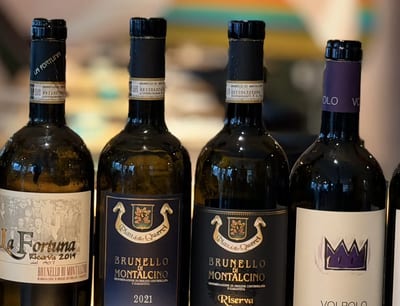
Pian delle Querci: Four Generations of Brunello
Pian delle Querci makes Brunello di Montalcino with no added yeast, across four generations. A family estate built for longevity in Tuscany.
Read on →
Cantina Tramin: Alpine Precision from Alto Adige
Cantina Tramin makes precise white wines in Alto Adige. A cooperative of 160 families and a winemaker who has known every vineyard for thirty years.
Read on →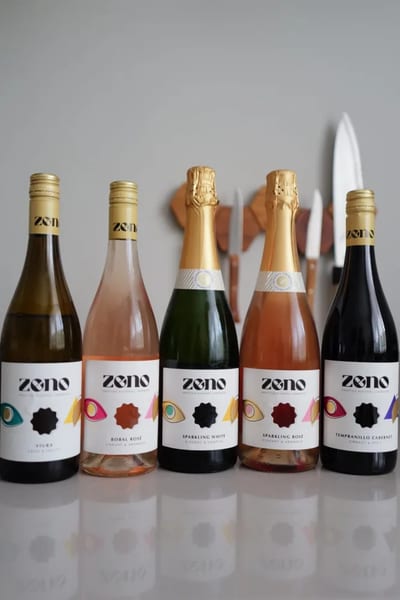
Zeno: the alcohol-free wine brand from Spain
Zeno makes alcohol-free wine from Spain, from Viura to bubbles. A portrait of the brand, where it's strong and where it hits the limit of the genre.
Read on →