

Rioja Vega Maturana Blanca: the forgotten grape
Rioja Vega makes 100% Maturana Blanca, an indigenous grape Rioja nearly lost. Full, creamy, and honestly assessed: what the glass actually does.

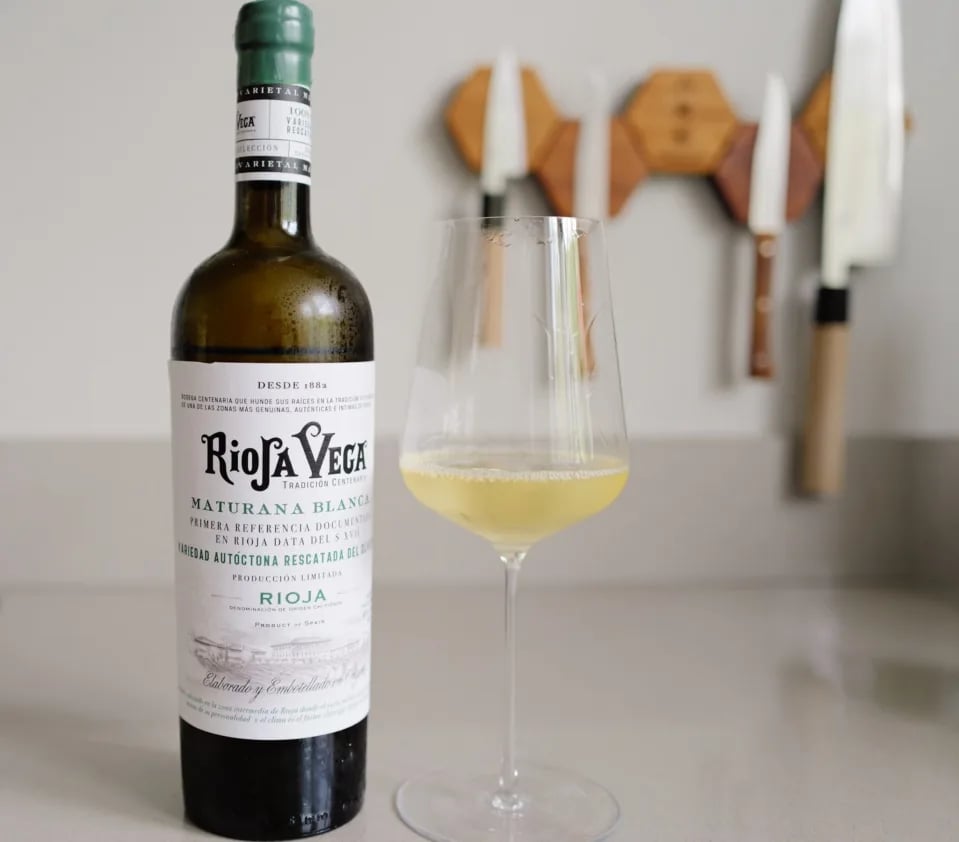
Three years ago I couldn’t have named this grape. Maturana Blanca was nearly gone from Rioja. A few vines, a name in a seventeenth-century record, not much else. Rioja Vega just made a little over 6,000 bottles, a package arrived from Rioja, and I put one in the fridge.
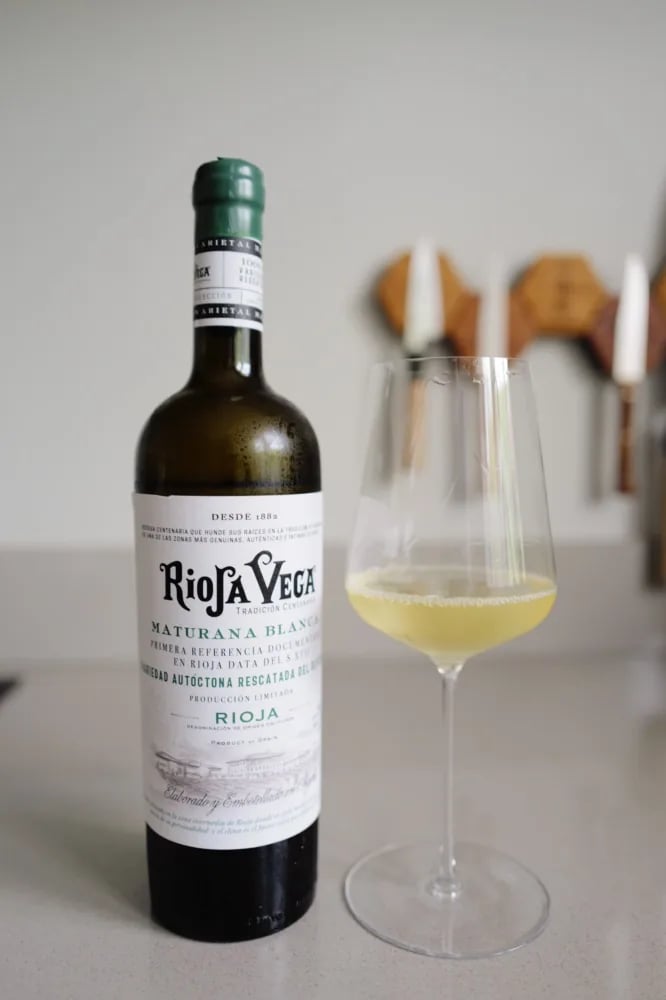
The colour reads right away: pale green-gold, crystal clear, younger-looking than most white Rioja. For most people white Rioja still means Viura sitting in oak until it turns golden and nutty. This looks like the opposite. Fresh, taut, straight from the bottle.
- Producer
- Rioja Vega
- Wine
- Maturana Blanca, 2025 harvest
- Type
- White wine, 100% Maturana Blanca
- Origin
- DOCa Rioja, Finca La Presa (442 m)
- Winemaking
- Fermented in French oak, 4 months on the lees with batonnage
- Release
- Limited edition, just over 6,000 bottles
- Alcohol
- 13%
- Price
- €32
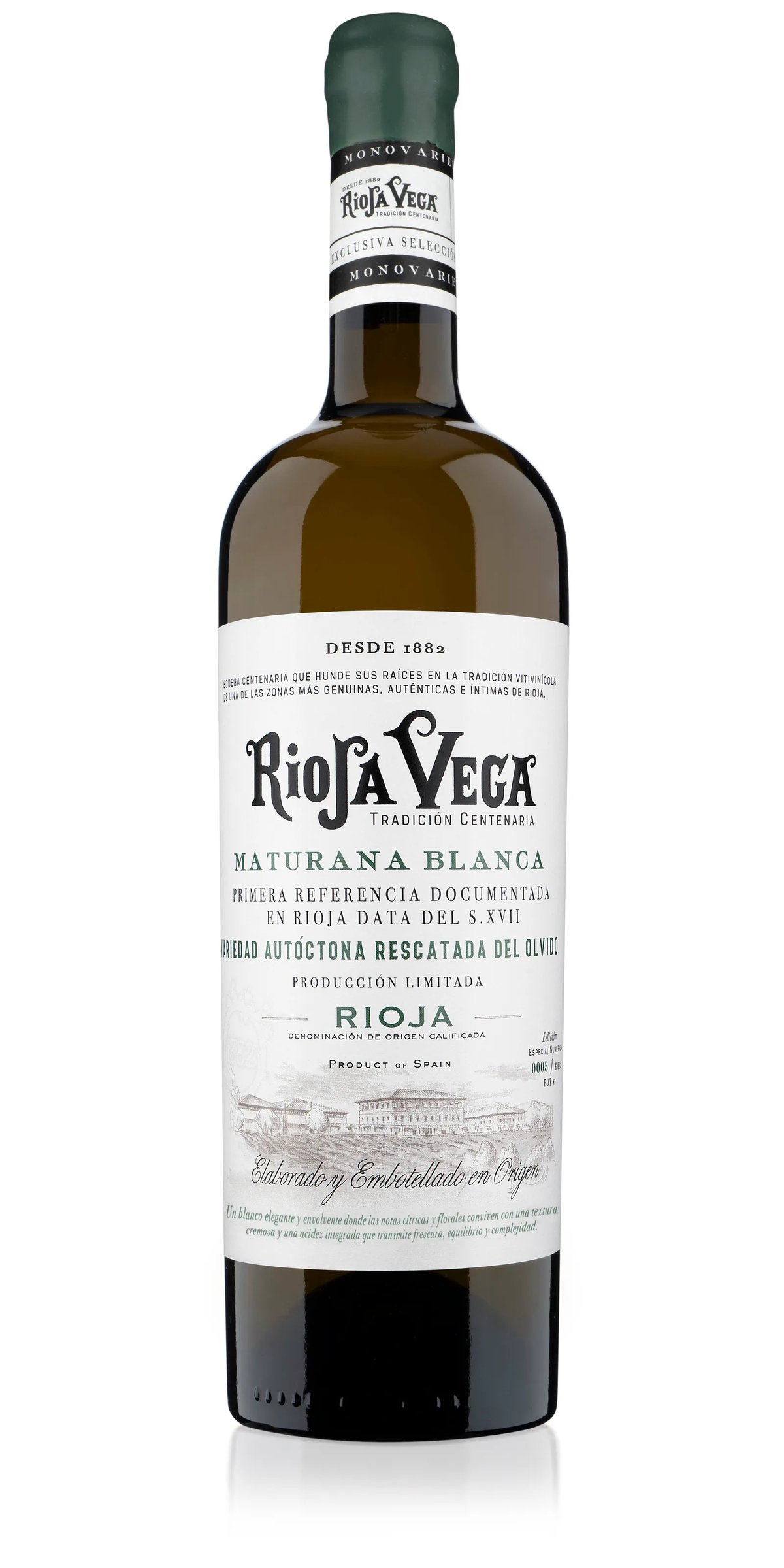
A grape that nearly vanished
Maturana Blanca is one of Rioja’s oldest documented grapes, first recorded in the seventeenth century. After that it almost disappeared, too erratic, too low-yielding, pushed aside by easier varieties. Rioja Vega bringing it back fits a wider movement: reviving old, forgotten varieties rather than keeping them as folklore.
The fruit comes from Finca La Presa, six hectares at 442 metres in a well-ventilated spot where the wind keeps skins thick and acids high. Winemaker Esperanza Elías picked on 3 September, early in the morning, to bring the aromatics in cool. Then no stainless steel but French oak: fermentation in barrel, four months on the lees with batonnage. Stirring those spent yeast cells back through the wine gives texture and weight, without letting the oak grab the lead straight away.
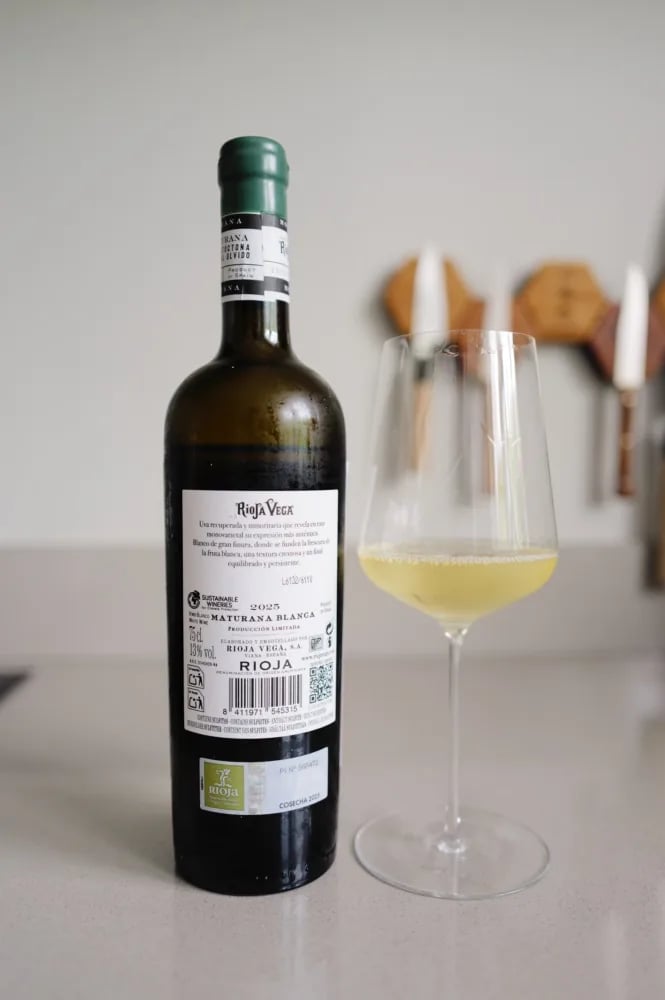
Tasting note
Tasting note
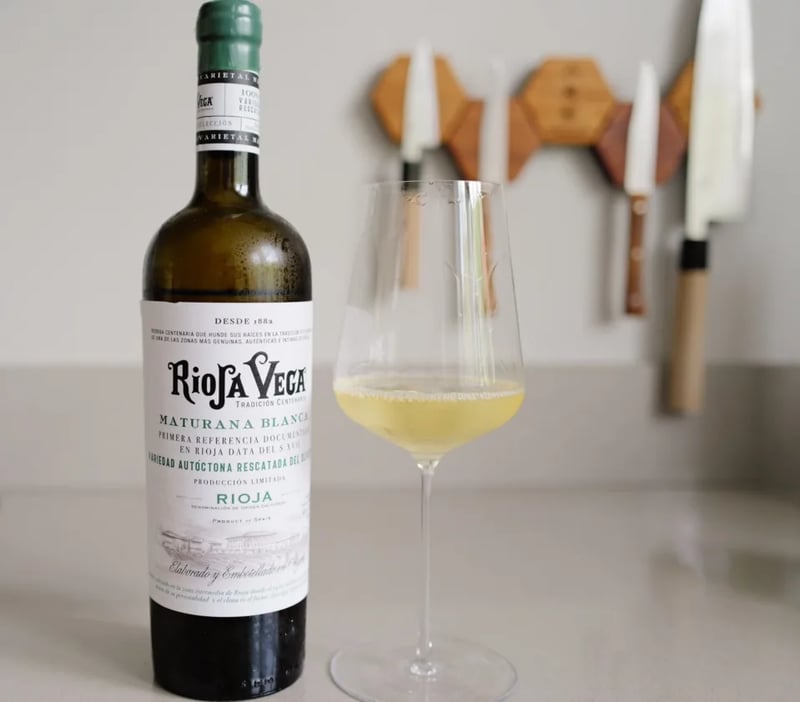
Appearance
Pale green-gold, crystal clear.
Nose
Ripe apple and florals up front, peach and apricot underneath. Even a hint of peach candy, but dry, not sweet. A touch of oak over the top. You could keep your nose in the glass a long time, and you want to.
Palate
Full and creamy, with a little butter and a streak of vanilla. Ripe apple, almond, and the toasted hazelnut the lees and barrel leave behind. The peach comes back. Plenty of layers, and still easy to drink. Thirteen percent alcohol with no heat at all.
Quality
Accessible without being shallow, and that’s where the tension sits. What I taste is mostly the barrel and lees, less the grape on its own. Lovely to drink now, but don’t count on much cellar evolution. At €32 you’re buying the taste and the story of a rescued grape.
Two honest caveats
The pitch and the glass don’t quite match. Rioja Vega sells this as taut, vertical, pure varietal expression. My glass said something else: full, creamy, butter, vanilla, toasted hazelnut. That’s no knock on the taste, because it is seductive. But it’s largely the barrel and lees talking, not Maturana Blanca on its own. What the grape itself does, under that creamy layer, stays a little hidden. For a wine sold on varietal purity, that’s worth saying.
And it’s already wide open. So generous, so much ripe fruit, such a buttery texture, exactly why it drinks so well now. The winery promises it will evolve and gain complexity. I wouldn’t count on it. A wine this giving in its youth rarely needs that promise. Drink it young. At €32, steep for a grape with no track record, you’re buying a bottle for this year, not a cellar bet.
Where it shows best
That full, nutty style wants food. Creamy risotto, fish au gratin, roast chicken, a semi-mature cheese. Grilled white fish works too. The ice-cold-oyster route is less its thing than I expected, it’s too round for that.
What Rioja Vega is doing here is bigger than a single bottle. Reviving a forgotten grape without turning it into folklore, making a wine that fits how we drink now. Worth your attention, even if the glass turns out rounder than the label promises.
Buy it if you love full, creamy whites with layers and you’ll open it this year. If you want the lean, mineral style the label suggests, you’ll meet something else. For me it was one of the most enjoyable bottles I opened this spring, and proof that a forgotten grape doesn’t have to be a museum piece.
Taste along
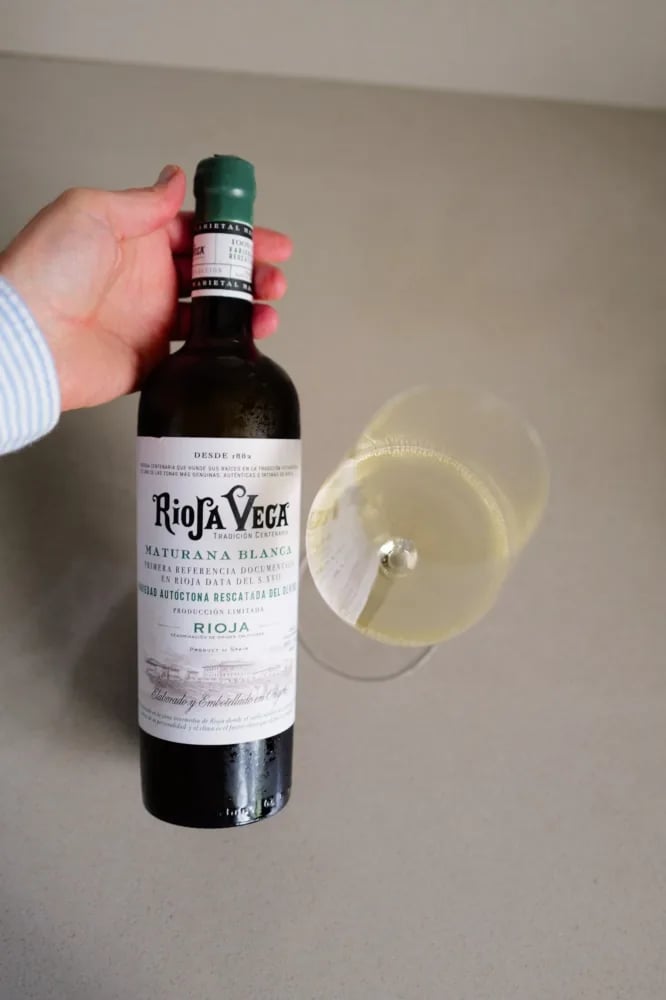
Rioja Vega sent me this Maturana Blanca and I tasted it on camera. Watch the tasting:
Frequently asked questions
What is Maturana Blanca?
One of the oldest documented grapes of Rioja, first recorded in the seventeenth century. It then all but vanished: too temperamental, too low-yielding, pushed aside by easier varieties. This bottle comes from Finca La Presa, six hectares at 442 metres, where wind keeps the skins thick and the acidity high.
What does this wine actually taste like?
Fuller than the winery sells it. Rioja Vega positions it as taut, vertical, pure grape expression; my glass gave full, creamy, butter, vanilla and toasted hazelnut. Seductive, certainly, but those are largely winemaking notes rather than the grape.
Can you cellar it?
I would not count on it. It is already wide open, with ripe fruit and a buttery texture, which is exactly why it drinks so well now. The winery promises it will grow more complex; a wine that gives itself this fully this young rarely keeps much in reserve.
Spotted this on Instagram? Comment Maturana under the reel and I will send you the full story in a DM.
Bottle received as a press sample from Rioja Vega, found via @riojavega. No payment, the verdict stays mine.
More on Wine Review
Barbadillo Jopo de Lobo: Organic Pedro Ximénez
Jopo de Lobo from Barbadillo: organic Pedro Ximénez from sun-dried grapes. Coffee, dark fruit, blossom. €15.95 for a half bottle of 0.375 litres.
Read on →
Barbadillo Salicornia: Organic Manzanilla en Rama
Salicornia, Barbadillo's organic manzanilla en rama: flor, baked apple, salt and a brand-new solera. €25.95 at Granada Wijnen, with discount code.
Read on →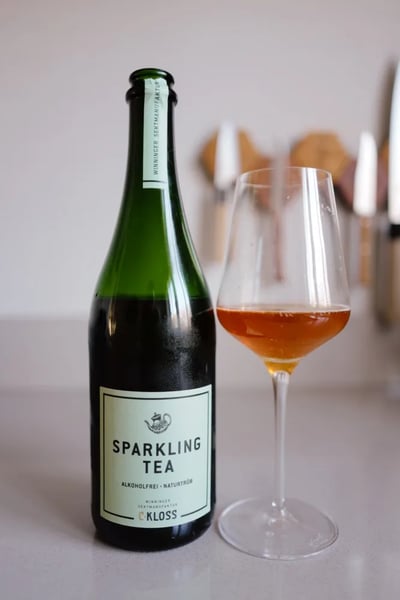
C. Kloss Sparkling Tea Weiss: Fermented Celery
Non-alcoholic sparkling tea Weiss from C. Kloss: linden blossom, nettle and fermented celery. Dry, 2.7 g sugar per 100 ml, €14.99 at Amavine.
Read on →