

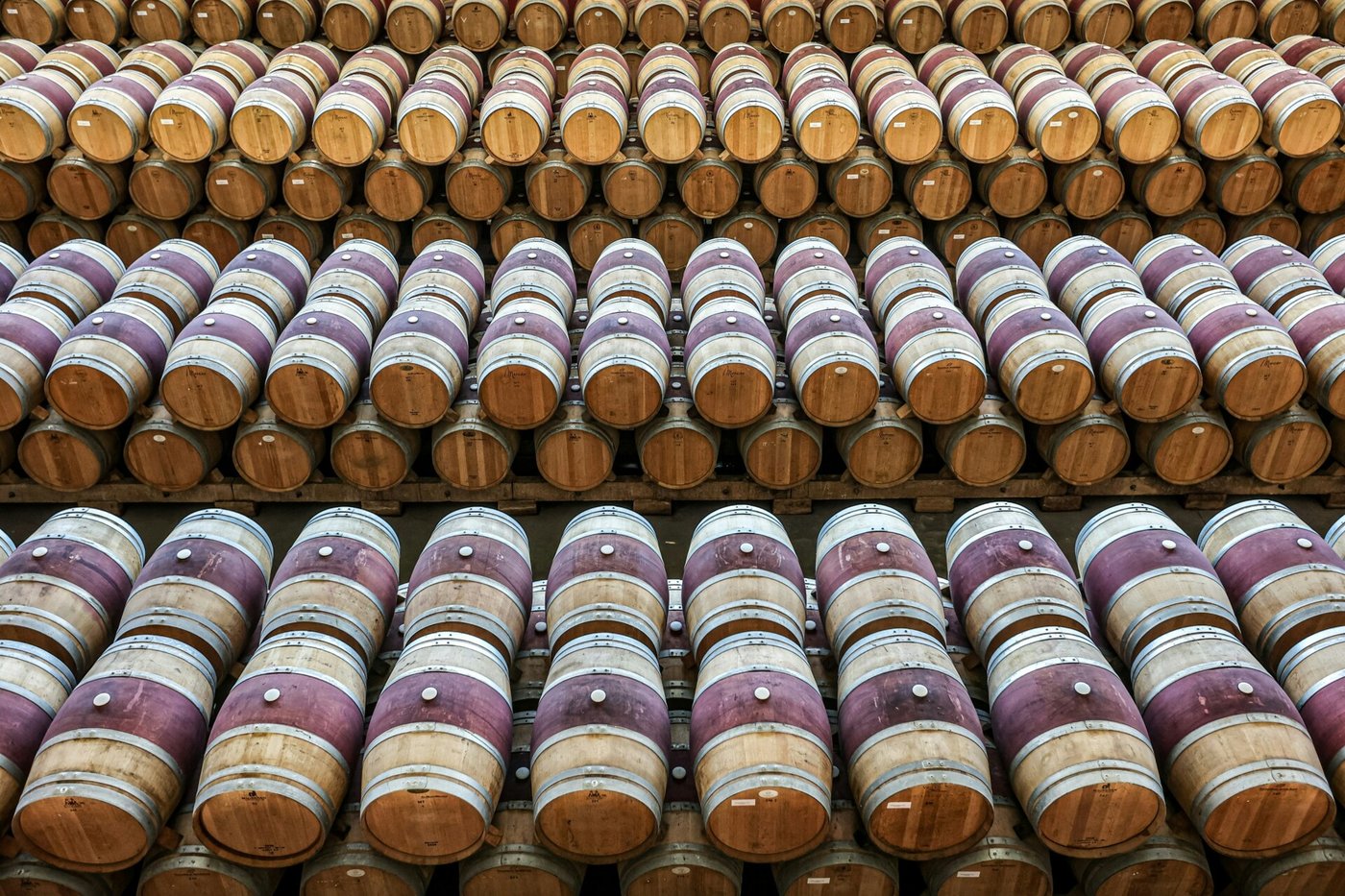
Tempranillo from forty-year-old vines, oak barrels in American and French wood, and a classification system unique to Rioja. That is the foundation. For anyone new, or anyone who wants a quick refresher before the RiojaFriday content lands.
Rioja along two axes
| Sub-zone | Character | What it does in the glass |
|---|---|---|
| Rioja Alta | Higher and cooler | Elegant wines, lighter in body |
| Rioja Alavesa | Similar altitude to Alta, with more chalk in the soil | Full on the palate, with high acidity |
| Rioja Oriental, formerly Rioja Baja | Warmer and drier | Higher alcohol and deeper colour |
| Ageing category | What the rules demand | What it suits |
|---|---|---|
| Joven | Young wines with little to no oak | The entry level, made to drink soon |
| Crianza | Two years in total, of which one in oak | Roast chicken, chorizo, manchego; good bottles come in under ten euros |
| Reserva | Three years in total, of which one in oak and at least six months in bottle | Lamb chops, stews, aged cheeses |
| Gran Reserva | Five years in total, of which two in oak and two in bottle | Suckling pig, game, dark chocolate |
Rioja was the first region to receive DOCa status in 1991, the highest tier in Spanish wine law. The vineyards cover some 65,000 hectares, with Tempranillo on more than 80 percent of them.
Where is Rioja?
Rioja sits in northern Spain along the Ebro, with the Sierra de Cantabria as its northern shelter. The region spans three sub-zones and was the first in 1991 to receive DOCa status, the highest classification in Spanish wine law.
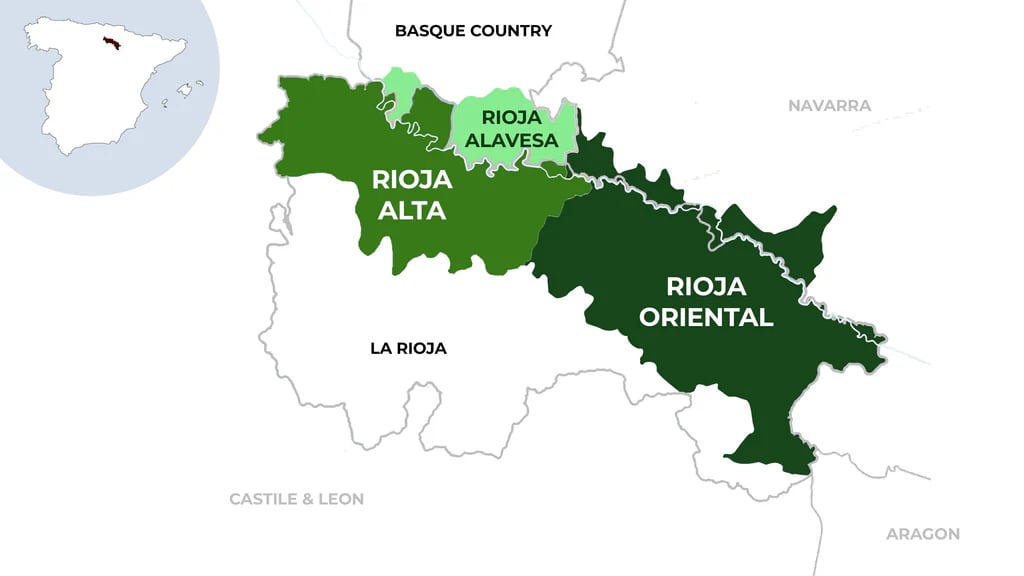
The terroir: three sub-zones
Rioja has three sub-zones, each with its own signature:
Rioja Alta: Higher altitude, cooler climate. Elegant wines, lighter-bodied.
Rioja Alavesa: Altitude similar to Alta, more limestone in the soil. Full on the palate, high acidity.
Rioja Oriental (formerly Rioja Baja): Warmer and drier. Higher alcohol, deeper colour.
Total vineyard area sits at around 65,000 hectares. Enough to fill a wine list from Bilbao to Logroño.
The grapes
Red dominates, but white and rosé hold their own.
Red
Tempranillo: The dominant grape, over 80% of total Rioja plantings (Consejo Regulador). Full wines with cherry, leather and ageing potential.
Garnacha: Brings fruit and alcohol to the blend.
Mazuelo (Carignan): Delivers acidity and ageing potential.
Graciano: Small in volume, big in aroma, freshness and structure.
White
Viura (Macabeo): Main white grape. Crisp and lean.
Malvasía: Adds body and aromatics.
Garnacha Blanca: Contributes structure.
Ageing categories
Rioja runs four official tiers based on ageing time:
Joven: Young wines, little to no oak.
Crianza: Minimum 2 years total, with 1 year in oak barrel.
Reserva: Minimum 3 years total, with 1 year in oak and at least 6 months in bottle.
Gran Reserva: Minimum 5 years total, with 2 years in oak and 2 years in bottle.
The coloured back label reveals the category at a glance.
Oak: American and French
Much of the Rioja signature comes from the barrel:
American oak: Vanilla and coconut, recognisable sweet aroma.
French oak: Subtler spice, tighter structure.
Some estates experiment with Slovenian or Hungarian wood for added nuance.
History at a glance
Winemaking in Rioja goes back to Roman times. International breakthrough came in the late 19th century, when French winemakers fled phylloxera and brought Bordeaux techniques across the border. That know-how stuck and shaped the style we now call Rioja.
In 1991 Rioja became the first Spanish region to receive DOCa status, the top tier in Spanish wine law.
Food pairings
Rioja is known for its flexibility at the table. By tier:
Joven: Tapas, grilled vegetables, paella.
Crianza: Roast chicken, chorizo, manchego.
Reserva: Lamb chops, beef stew, aged cheeses.
Gran Reserva: Suckling pig, game, dark chocolate.
FAQs
Does Rioja only make red wines? No. Red dominates, but Rioja produces solid whites and rosés too.
Do I need to spend a lot? Not necessarily. You can find good Crianzas under 10 euros. A top Gran Reserva can run into the hundreds, but that is a different category.
Closing
Rioja blends tradition and craft. Three sub-zones, four ageing tiers, two kinds of oak. Once you understand the system, a Rioja label reads like a roadmap.
Next time at the shelf: choose deliberately. A Crianza for weeknight pasta, a Reserva for Sunday stew, a Gran Reserva for the moments worth keeping. There is a bottle for every occasion.
Salud.
Sources
- Consejo Regulador DOCa Rioja: official data, grapes, hectarage: riojawine.com
- Ministerio de Agricultura España: DOCa status (1991): mapa.gob.es
- OIV: Spanish ageing categories (Crianza/Reserva/Gran Reserva): oiv.int