

Jable de Tao Blanco 2023: Lanzarote in a Glass
Field blend of four grapes on vines up to 200 years old. Not a statement bottle, an island portrait.

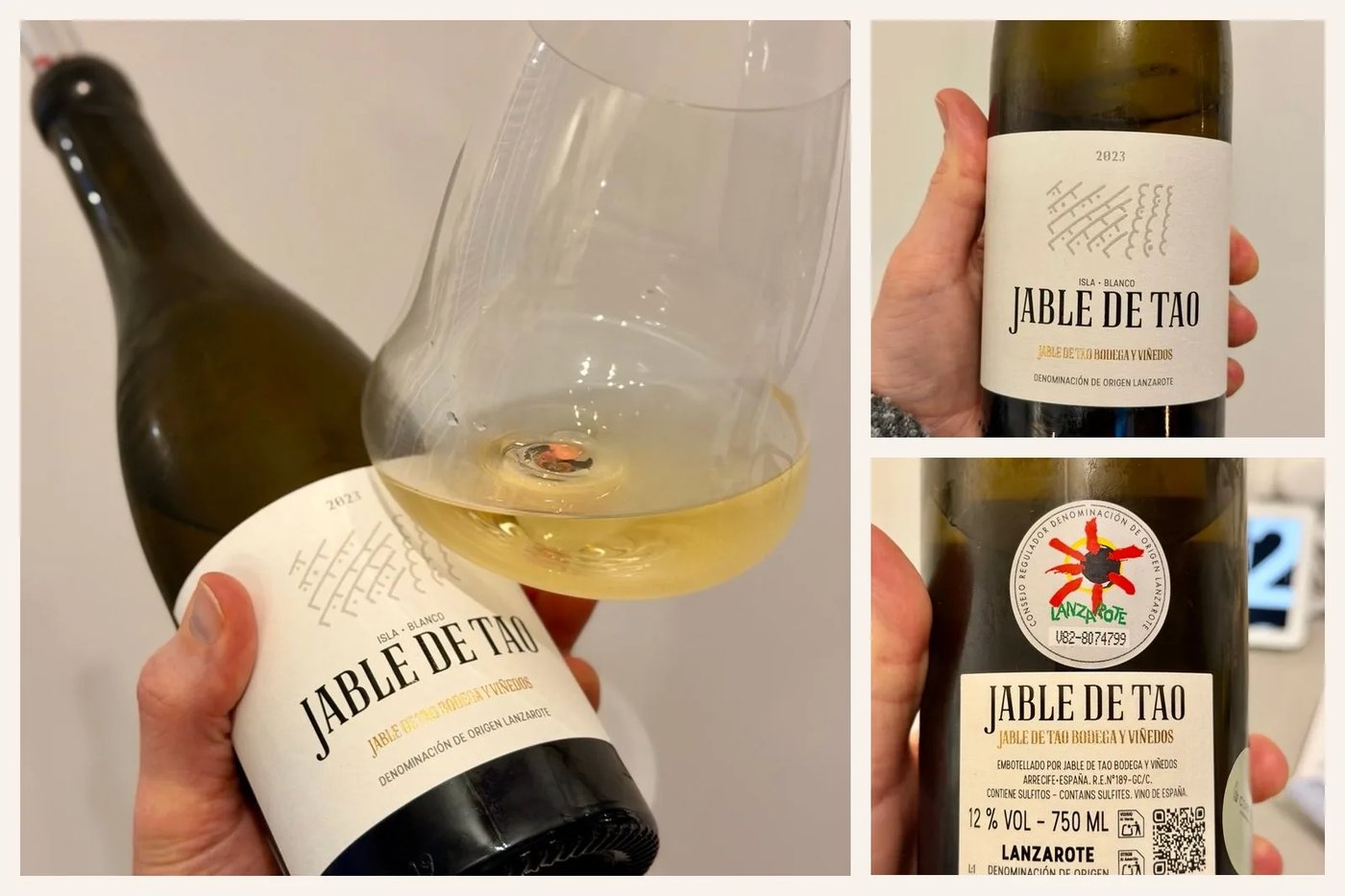
Valentine’s evening, cork pulled, glass on the kitchen counter. The first sip smells like warm ash and cold seawater. Jable de Tao Blanco 2023 does not raise its voice; it makes you lean into the glass.
What this wine is
Lanzarote sits a hundred kilometres off the African coast, on soils that are fifteen million years old, an island that disappeared under lava in 1730. Almost three hundred years later vineyards are still planted on that black ground. Bodega Jable de Tao is based in Tías, founded in 2022 by Alexis Betancor, an industrial engineer who returned to his family’s land in Tao (Teguise), together with his wife Matuli Rodríguez. Coffee trader David Hall runs day-to-day operations. The wines are made by Carmelo Peña Santana, also known for Bien de Altura on Gran Canaria.
The winery owns 16 hectares and buys grapes from around 30 small growers across the island. There’s no single parcel here, but a field blend of plots stretched out from north to south: jable (wind-blown sand), volcanic ash, mixed sedimentary soil, La Geria funnels and enarenado flats. Four grapes go into the press as white: Malvasía Volcánica, Listán Blanco, Diego and Listán Negro. The vines are fifty to two hundred years old and stand on their own roots, because phylloxera never reached the island. Viticulture is organic.
The producer calls it a Vino de Isla: one wine that pulls every Lanzarote soil into the same bottle instead of treating them as separate stories.
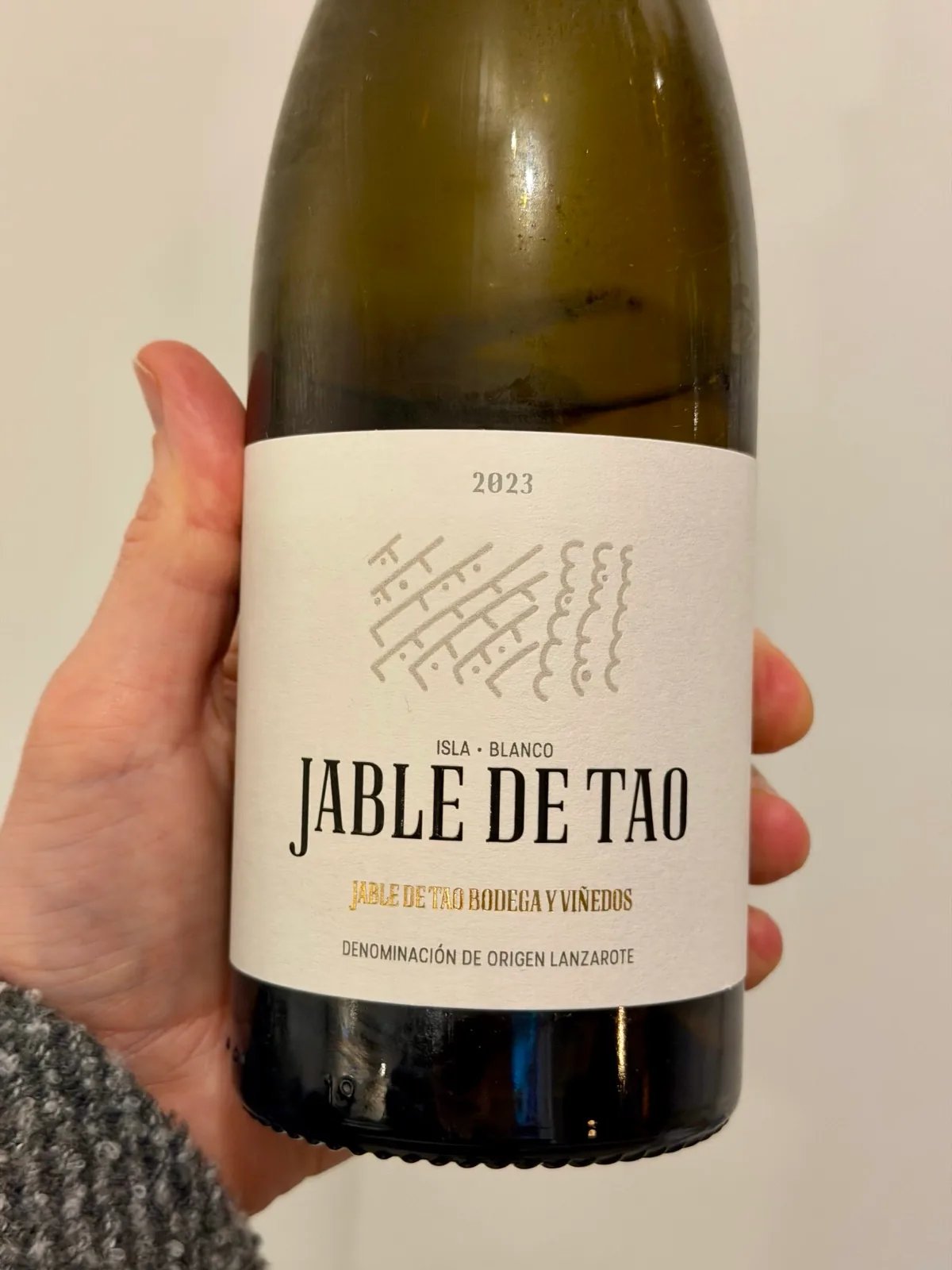
How the 2023 actually came together
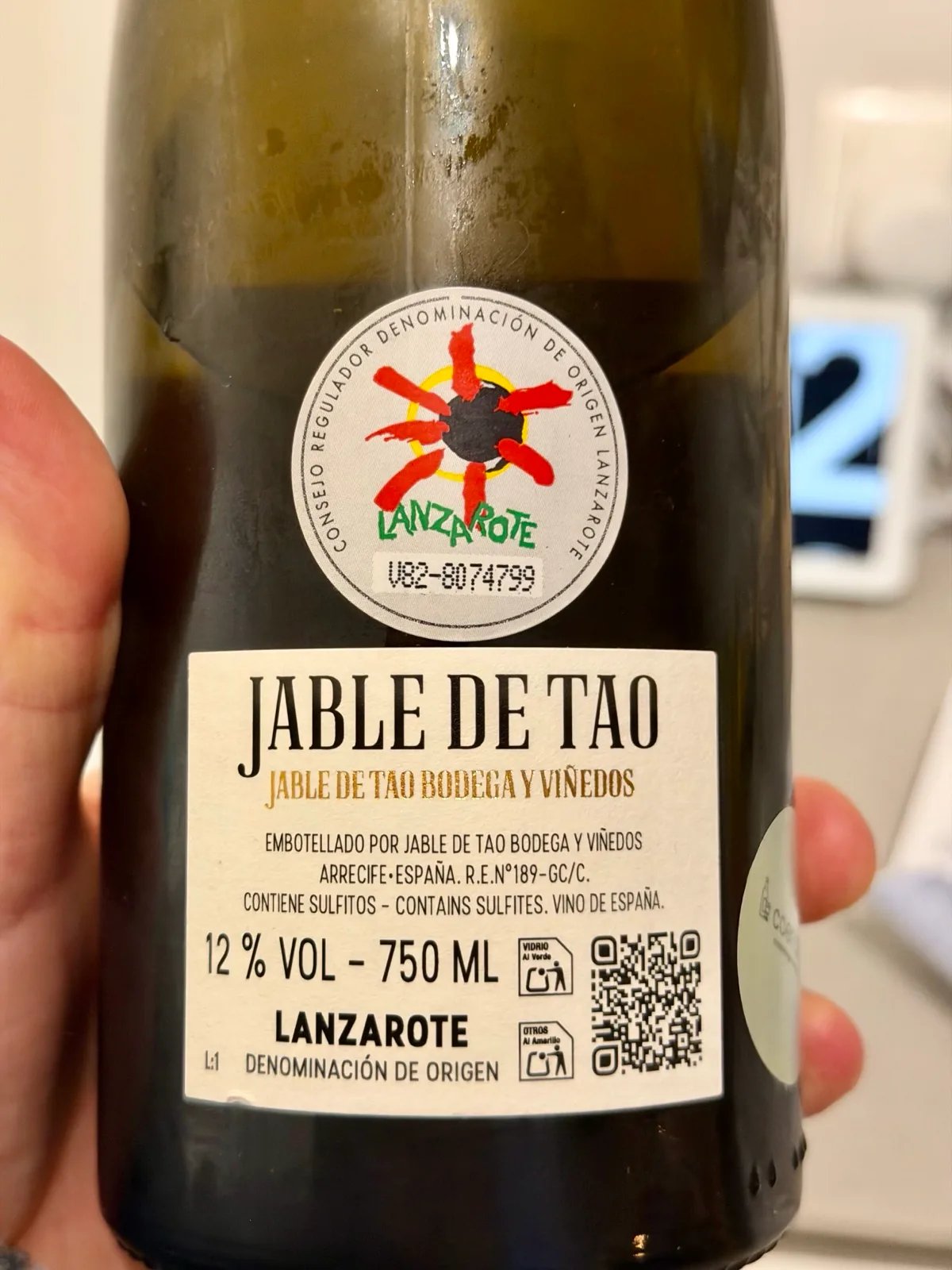
2023 was a cooler year on Lanzarote with unusually large yields. You can hear it in the glass. Carmelo presses whole bunches at low pressure, lets the juice settle for 24 hours, and ferments with indigenous yeasts in a battery of vessels: concrete eggs, ceramic amphorae, Austrian and French foudres, 500-litre oak barrels and some stainless steel. No temperature control. The wine then ages in those same vessels for ten months before everything is blended. In 2022 all the wine went through malolactic fermentation; in 2023 only about thirty percent of the blend did, because the cooler year already left enough malic acid in place. Final pH lands at a sharp 2.91, alcohol at 12%. 16,500 bottles were filled in May 2024.
Tasting note
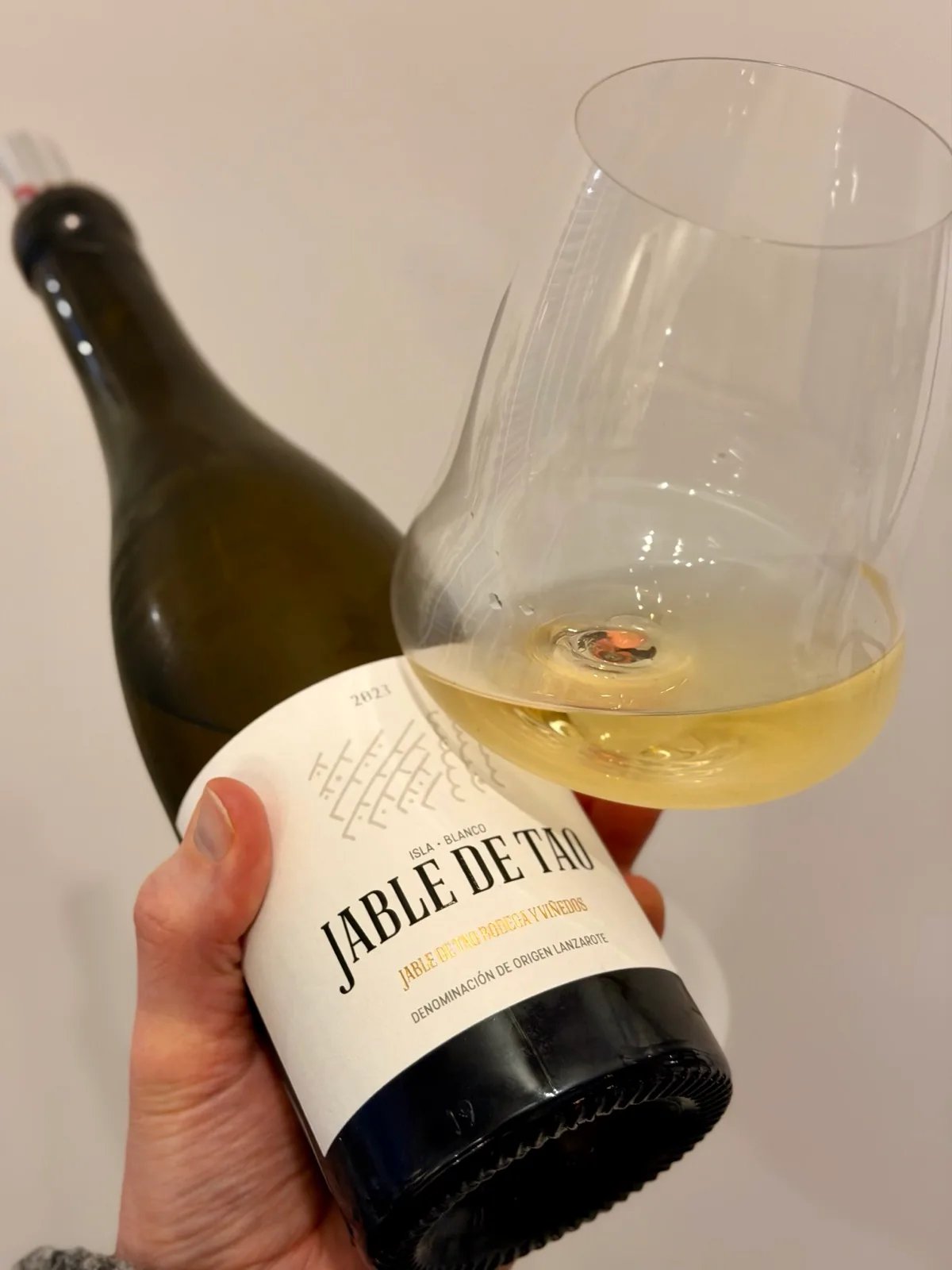
Tasting note Jable de Tao Blanco 2023
Appearance
Pale straw yellow, clear. Slow tears down the glass. Not the near-water look of an industrial Macabeo, and no oxidative sheen either.
Nose
Lime zest and white grapefruit open the glass, with white pepper and a smoky mineral edge sitting underneath, like holding a wet stone in your hand. The kind of melon you can smell on a Spanish market stall at the end of summer before you even pick it up shows up alongside, and a thin layer of cream only arrives a few minutes in. No tropical lift, no Sauvignon-style brambles.
Palate
Medium body, cool penetrating acidity that lines up with the reported 2.91 pH. Lively and creamy at the same time: a thin ribbon of cream from the 30% malo, carried by a coastal, saline grip on the tongue. The mid-palate offers dried herb and white fruit, with a faint bitter-almond pull I’d put on the Listán component. No buttery weight, no residual sweetness.
Finish
Long and salty. No sweet echo, no warm alcohol. The finish stays mineral, never showy, and then slips away rather than dragging on. That’s a decision, not a flaw.
Two things bug me. Anyone who loves fruit-forward Spanish whites with high alcohol and yellow flowers will find this bottle restrained. It steps back on purpose, and that won’t be for everyone. The other thing: at 12%, the wine doesn’t hold up forever in the glass. After twenty or thirty minutes the nose visibly fades and only the salt remains. Pour small, top up often.
For the numbers crowd: Luis Gutiérrez scored this 93/100 for Robert Parker in 2025, with the same observations about a creamy touch, a cooler year and a salty twist. I don’t give scores, but my note sits close to that read.
Who this is for
Love saline, mineral-driven whites like Muscadet sur lie or the cru levels of Vinho Verde? This Vino de Isla is the logical next step. Lanzarote has built a small cult tier of bottlings in recent years: single-parcel Malvasías from La Geria, micro-cuvées from a handful of young winemakers. Jable de Tao Blanco deliberately moves in the opposite direction. It is not a statement bottle, it is an island portrait. If you don’t know Lanzarote yet, this is a better introduction than an expensive single-parcel wine, because one sip already tells you where you are: an Atlantic island white, made across several soils at once, on vines that outlived the Spanish Civil War.
What I actually ate with it
Pan-fried skrei in butter with garlic-rosemary potatoes and a cucumber-feta salad. No theory, no marketing pairing: just a really good dinner. The wine’s salty texture pulls the feta forward, the crisp skin of the skrei grabs the minerality, and the rosemary potatoes ask for that creamy mid-palate. Other directions that work: fresh oysters dressing-free, young chèvre with thyme, or a white fish with chermoula.
I posted about it on Instagram
- Producer
- Jable de Tao Bodega y Viñedos (Tías, Lanzarote)
- Winemaker
- Carmelo Peña Santana
- Wine
- Jable de Tao Blanco (Vino de Isla)
- Vintage
- 2023
- Region
- DO Lanzarote, Canary Islands
- Grapes
- Malvasía Volcánica, Listán Blanco, Diego, Listán Negro
- Soils
- Jable, volcanic, sedimentary, mixed
- Vine age
- 50 to 200 years, own roots
- Farming
- Practicing organic
- Vinification
- Indigenous yeasts, no temp control, concrete eggs, ceramic, Austrian + French foudres, 500L barrels, stainless steel, 10 months
- Malolactic
- around 30% of the blend
- pH
- 2.91
- Production 2023
- 16,500 bottles
- Alcohol
- 12%
How I got this bottle
Bought through the Coenoloog WhatsApp group. Coenoloog is a private Dutch group run by Coen van der Burgt, better known as @coenoloog on Instagram, where he regularly offers wines he comes across at tastings and on the road. You can join by reaching out to him through his Instagram. No sample, no partnership, no kickback. Paid for it, pulled the cork myself.
More on Wine Review
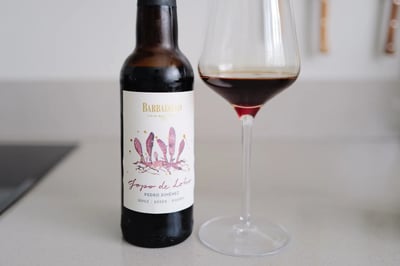
Barbadillo Jopo de Lobo: Organic Pedro Ximénez
Jopo de Lobo from Barbadillo: organic Pedro Ximénez from sun-dried grapes. Coffee, dark fruit, blossom. €15.95 for a half bottle of 0.375 litres.
Read on →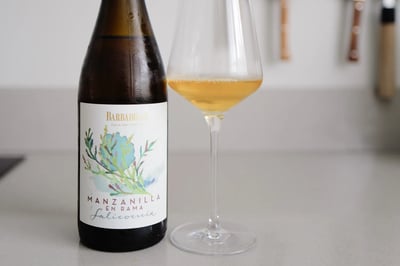
Barbadillo Salicornia: Organic Manzanilla en Rama
Salicornia, Barbadillo's organic manzanilla en rama: flor, baked apple, salt and a brand-new solera. €25.95 at Granada Wijnen, with discount code.
Read on →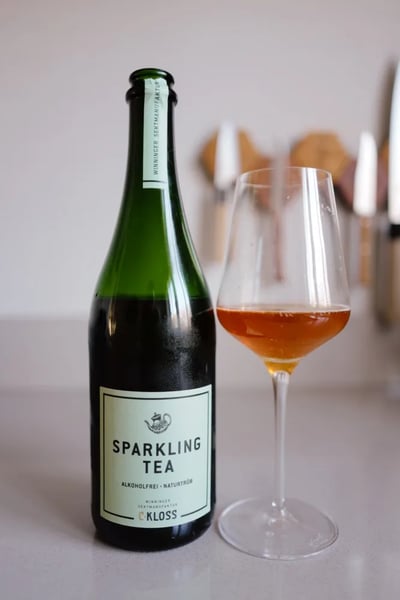
C. Kloss Sparkling Tea Weiss: Fermented Celery
Non-alcoholic sparkling tea Weiss from C. Kloss: linden blossom, nettle and fermented celery. Dry, 2.7 g sugar per 100 ml, €14.99 at Amavine.
Read on →