

Vindeux and Artisanal Champagne: Behind the Scenes
Vindeux's Dutch subscription model brings small grower champagnes to the door each month. Inside the Cuvée Flore from Claude Michez, Boursault.
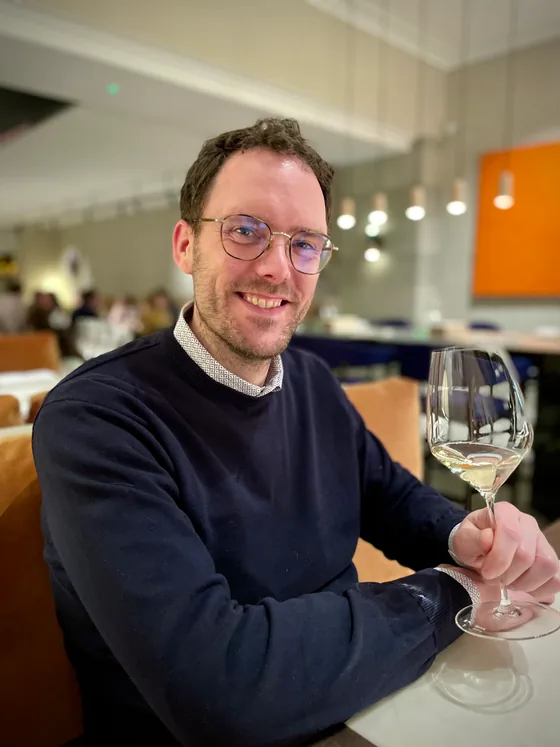
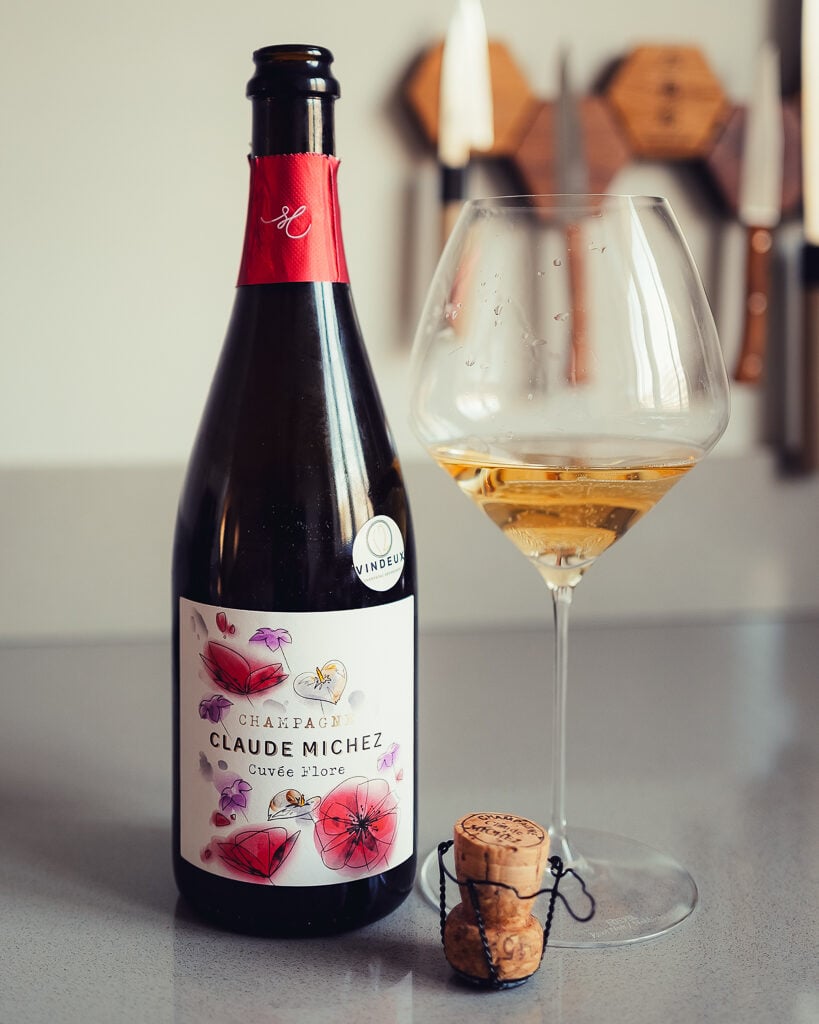
The back label of the Cuvée Flore claims 450 months of ageing. That would be thirty-seven years. Douwe of Vindeux spotted the slip at the producer’s own cellar: the champagne spent four to five years on the lees. That bottle, and the artisanal champagne Vindeux sends its subscribers every month, were the subject of my Sparks conversation with Douwe.
Douwe and his girlfriend Ellen started Vindeux in 2022 as a subscription: one bottle a month from a producer not yet on the Dutch market. They could have sold a handful of established houses, but chose a journey of discovery through the region instead.
Claude Michez from Boursault
The estate sits in Boursault, west of Épernay in the Vallée de la Marne. Claude has made champagne under his own name since the 1970s, 1973 according to Douwe. Since 2010 his daughter Laurence and her husband Cyrille have run it. Both come from wine families, so two sets of vineyards have been merged. According to Douwe it is a Récoltant-Manipulant that does every step in house.
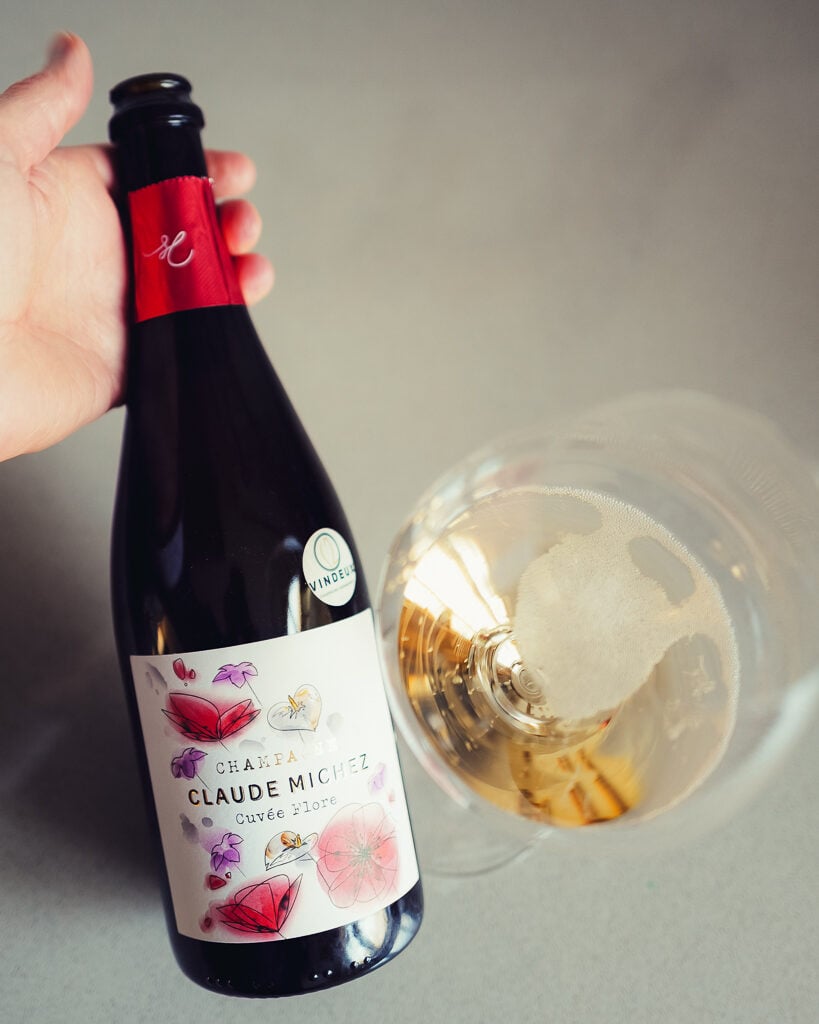
Cuvée Flore blends 45% Pinot Noir, 30% Chardonnay and 25% Pinot Meunier, with 6 to 6.5 grams per litre of dosage. According to Douwe it probably saw no oak. Between us we find white fruit, peach, strawberry, grapefruit, plenty of flowers, toast and bread dough, and later pear and honey. The colour is light gold, the mousse fine. On the palate it is taut and fresh, round, with a finish that lingers.
Remuage and disgorgement by hand
Vindeux looks for producers who still do part of the work by hand. In remuage the yeast sediment slides into the neck as the bottles in a pupitre are tilted further and further; these days gyropalettes handle that. Disgorgement removes the sediment, usually by freezing the neck in an ice bath so the plug shoots out on its own. Douwe has visited producers who do this by hand for 12,000 bottles a year.
Does it change the taste? Douwe thinks not. He tasted a producer who does everything by hand next to the sister’s brand, which uses machines, and noticed no difference. Some producers keep the hand method, Douwe says, because they learnt it at school and want to keep the craft alive.
What the subscription brings
Douwe reckons champagne suits a surprise box better than still wine. A wine box can hand you a heavy Mendoza when you fancied a light Pinot Noir; with champagne the differences are subtler. Every bottle comes with a flyer about the house, and on Instagram Douwe and Ellen share tips for visiting the producers. Vindeux business cards sit on those producers’ counters, and Dutch visitors have already turned up.
The downside is stock. Fall for one bottle and it may be gone; a few bottles sometimes reach the webshop, but not always. And I tasted a single bottle, chosen and sent by Vindeux itself.
More information about Vindeux: https://www.vindeux.nl/
Sources
- Vindeux (NL grower champagne importer): vindeux.nl
- Champagne Claude Michez: champagne-michez.com
- Comité Champagne (CIVC): champagne.fr
More on Winemaker
Biodynamic tasting calendar: does the fruit day hold?
A reel from Ploder-Rosenberg says wine shows best on fruit and flower days. The biodynamic tasting calendar sounds logical. The blind tasting says otherwise.
Read on →
Champagne Gallimard: Six Generations in Les Riceys
Two Gallimard bottles from a July subscription box. A solera running 2009 to 2022, hand disgorgement, and a label code that says something the story doesn't.
Read on →
Podere Sapaio: Bordeaux on the Bolgheri coast
Podere Sapaio makes Bordeaux blends in Bolgheri, with time as its guiding principle and concrete beside wood in the cellar. A portrait after La Grande Bellezza.
Read on →