

The Winepack Bag-in-Box: Jeen Akkerman Interview
Jeen Akkerman of The Winepack on organic wine in bag-in-box: what the CO2 claim rests on, how the filling works and how the Sauvignon Blanc tasted.

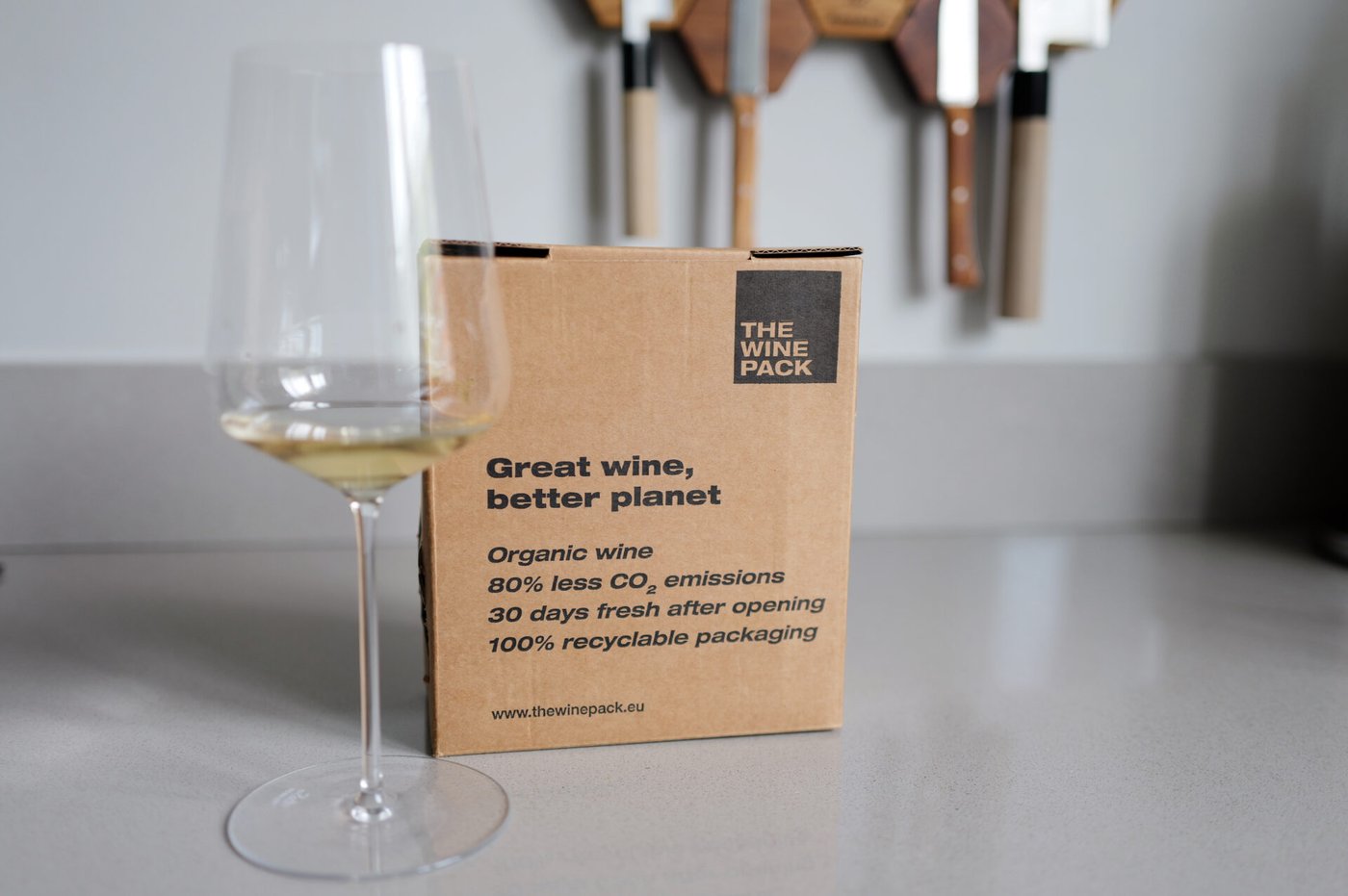
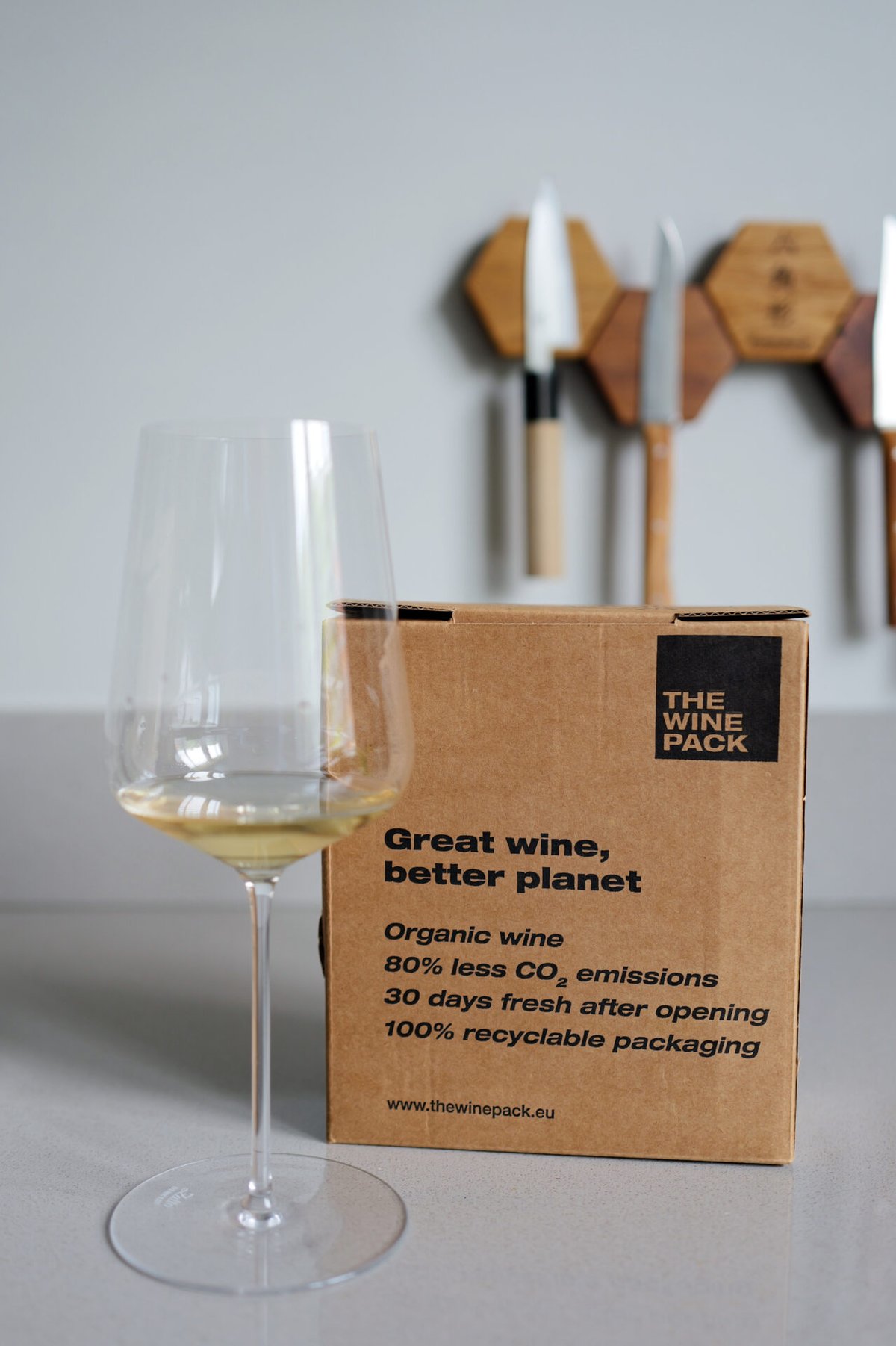
Jeen Akkerman and his son Auke sent me a pack for my Sparks by VinoVonk podcast. The Winepack bag-in-box holds organic European wine, and The Winepack makes four claims: organic wine, 80% less CO2, 30 days fresh after opening and 100% recyclable packaging. In the recording I asked Jeen what those claims rest on.
What the 80% rests on
A lorry carries roughly twice as much wine in The Winepack’s packs as in bottles packed six to a carton. That is the company’s own calculation. The 80% CO2 figure The Winepack uses comes from a Scandinavian study, according to Jeen, though he did not name it during our conversation.
Jeen’s background is in Dutch agriculture: agricultural journalism, a job at the dairy group FrieslandCampina, then a communications agency of his own. He started The Winepack with Auke three years ago, for two reasons. He loves wine, and his two grandchildren have made him think harder about the future. “We know at least one thing: if we don’t take better care of our planet, that future looks less good,” he told me.
The image problem
In the Netherlands, Belgium and Germany, Jeen says, bag-in-box has an image somewhere between mediocre and poor. He blames the supermarkets, which use the format mainly to sell cheap wine more cheaply. As a student he bought the odd box himself and did not enjoy the next morning. He answers the reputation with a joke about his “extensive scientific research”, whose key finding is this: “If you put bad wine in bag-in-box, bad wine comes out. But if you put good wine in bag-in-box, good wine comes out.”
His case for the format is about how wine is drunk. By his reckoning, glass is only needed for the 5 to 10% of wine made to age, while 90% of all wine is drunk within two years.
How the bag works
The Winepack buys its bags from a French supplier and chose plain plastic without an aluminium layer. The metal coating adds protection, but it makes the bag hard or impossible to recycle; without it, Jeen says, the bag is fully recyclable. A biodegradable bag is not an option, Jeen explained, because it does not protect the wine well enough. He readily admits plastic has drawbacks; his position is that it need not do harm as long as it stays out of the environment and is properly recycled.
The winegrower does the filling, either in-house or through Le Camion Potion, a lorry fitted with a filling line that tours French estates. The bag should hold as little oxygen as possible, and a small shot of nitrogen goes in just before the tap is fitted. Nitrogen is inert and drives out the last of the oxygen, so the wine does not oxidise. The boxes are made in the Netherlands.
Buying in Montpellier
Dutch importers of organic wine liked the idea but preferred to wait and see. So every year, usually at the end of January, Jeen goes to Biomillésime in Montpellier, which he describes as the fair for the whole European organic wine sector. He likes that it is “sort of democratic”: every producer gets a table, with no difference in stand size. Before he goes, he uses the fair’s website to pick out growers who already offer bag-in-box, and checks their wines on Vivino.
Jeen says every Winepack wine scores 3.7 or higher on Vivino. That is also why the company only takes wines that exist in bottle as well: the Vivino rating then works as a reference.
The wine
During the recording I poured the Domaine Villemain Sauvignon Blanc from Touraine. Jeen met the producer, Alexandre Villemain, at the fair. On the nose I found a textbook Sauvignon Blanc, very pure and a touch fuller, with apple, citrus, a little peach, some tropical fruit and a floral note. On the palate it was approachable and supple, fresh without sharp acidity, with plenty of fruit and a long finish.
A 3-litre pack holds the equivalent of four bottles and works out at about €10 a bottle. “If you take 10 euros to a wine shop and ask for a Sauvignon Blanc from the Loire, you won’t get this quality,” I said during the tasting.
A few caveats. I tasted one wine, from a 1.5-litre pack that was sent to me, and I did not test the 30-day shelf life after opening. The price is also hard to benchmark: according to Jeen, The Winepack is currently the only importer of this wine in the Netherlands. Jeen himself says The Winepack is not the cheapest, and that the range still needs to grow.
What comes next
The Winepack has been selling to consumers for two years. What it has not yet managed, Jeen says, is to reach people around thirty. He also sees room in hospitality, for house wine and wine by the glass, while expecting that anyone ordering a bottle in a smart restaurant will still want a bottle on the table. He planned trials with restaurants after the summer but kept the details to himself.
He closed with an appeal. He is not doing this to get rich, he said, and in five years he would like someone else to take over, so that he only needs to go to Montpellier now and then. Young people who are interested can email him.
Sources
- The Winepack (official, sustainable wine packaging): thewinepack.com
- VinoVonk Sparks episode with Jeen Akkerman on Spotify: open.spotify.com
More on Wine Shop
Grape 'N' Green: Organic Wine Collection
There's something special about opening a bottle of wine and knowing it's been crafted in harmony with nature.
Read on →
Bourgogne Uncovered: Burgundy's Finest for Less
Beautiful wines from Burgundy are known to many people. What is also known is that the price tag is almost always high, higher than wines from other areas.
Read on →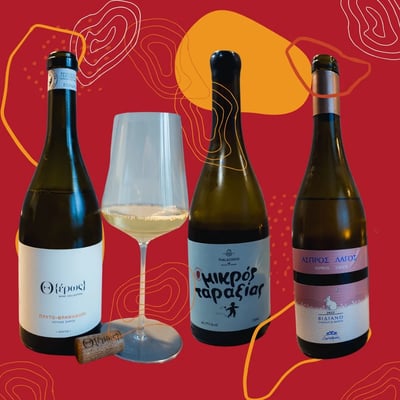
DeliKreta: Greek Wines from Crete
Cretan wine through DeliKreta: indigenous grapes like Vidiano and Liatiko, the producers behind them, and which bottles reward the detour.
Read on →