

Jura Wine Region: France's Most Idiosyncratic Wines
Wedged between Burgundy and Switzerland, Jura quietly produces France's most idiosyncratic wines. Vin Jaune, Savagnin, oxidative styles explained.
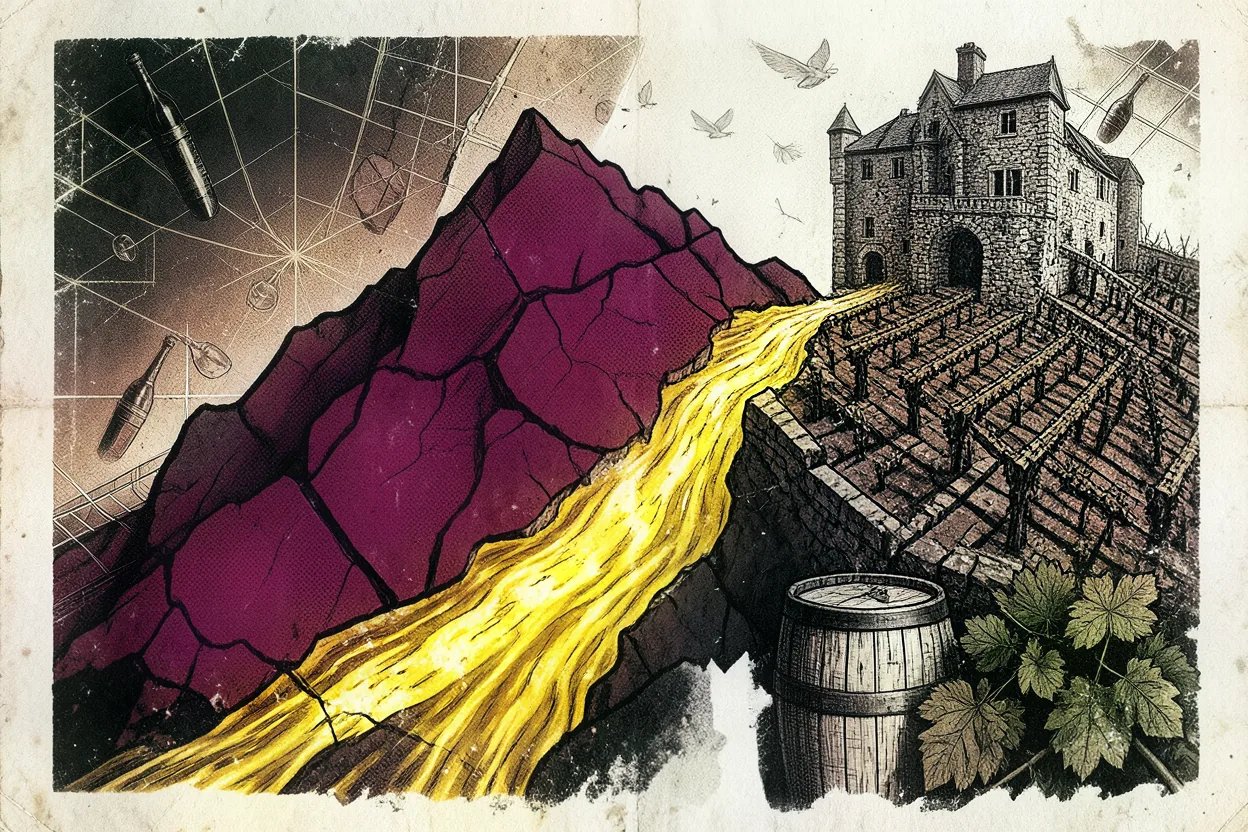
Wedged between Burgundy and Switzerland, a small region in eastern France has spent centuries making some of the world’s strangest wines. The Jura wine region doesn’t shout. No name like Bordeaux or Burgundy, no tourist infrastructure like Alsace, no volume like the Rhône. What it has: grapes you won’t find anywhere else, a winemaking tradition older than modern enology, and a following that treats these wines like Burgundy grand cru.
Drink wine past the mainstream and you’ll end up here sooner or later. This guide covers what you need to know.
Where Is the Jura?
The Jura is a département in the Franche-Comté region of eastern France, directly east of Burgundy and bordering Switzerland. The wine region stretches roughly 80 kilometres north to south, a narrow band of vineyards on west-facing slopes between the plains and the Jura mountains.
The soils are famously diverse, a mix of clay, limestone, and marl (particularly the blue-grey Triassic marl that gives Jura wines their distinctive mineral character). The altitude and continental climate produce cool conditions with cold winters and hot summers, resulting in wines with marked acidity.
The Grape Varieties
This is where the Jura gets interesting. While Chardonnay and Pinot Noir are planted here (carried over from neighbouring Burgundy), the region’s character comes from its indigenous varieties:
Savagnin, The white grape behind Jura’s most famous wine, Vin Jaune. Savagnin is not Sauvignon Blanc, a confusion that comes up often. It’s a grape of its own, also grown in Alsace as Klevener de Heiligenstein. The wines are intense, with oxidative and saline edges. Made as a dry white, it’s nutty, full and complex. In the Vin Jaune style, nothing else tastes like it.
Trousseau, A red grape producing light-coloured, aromatic wines with red fruit, spice, and earthy character. Often compared to Pinot Noir but more rustic and savory. Good Trousseau from producers like Ganevat or Bruyère has an addictive wild quality.
Poulsard (or Ploussard), Perhaps the lightest red wine grape in France. Poulsard wines are barely red, more copper or salmon in colour, with gossamer tannins, perfumed red fruit, and a distinctly ethereal quality. Often confused with rosé at first glance, but tasted properly it has real depth.
Vin Jaune: The Most Distinctive Wine in France
Vin Jaune (“yellow wine”) is the Jura’s crown jewel and nothing like it is made anywhere else in France. It comes only from the Château-Chalon appellation (the most prestigious) or the broader Côtes du Jura appellation.
The production process is radical. Savagnin grapes are harvested late, fermented, and then aged in old barrels for a minimum of six years and three months, without topping up. A film of yeast (voile, or veil) forms on the surface of the wine, protecting it from full oxidation while allowing a slow, controlled transformation to occur.
The result is a wine of extraordinary character: intense, walnut-and-curry-spiced, with a golden amber colour and almost indefinite ageing potential. Vin Jaune comes in its own 62cl bottle, the clavelin. It isn’t cheap, expect to pay €40–80 for a decent bottle, and it’s an acquired taste. But once it clicks, it’s one of the most compelling wines on Earth.
The classic food pairing is Comté cheese from the same region. Also poultry, cream sauces, and morel mushrooms.
Other Key Jura Styles
Ouillé vs Non-Ouillé Whites, Jura Chardonnay and Savagnin can be made either conventionally (barrels topped up, no oxidation, ouillé) or in the traditional oxidative style (non-ouillé, or sous voile). Conventionally-made Jura Chardonnay can be Burgundy-like; the oxidative style has more richness, nuttiness, and grip.
Crémant du Jura, Sparkling wine made by the traditional method, using Chardonnay, Savagnin, Pinot Noir, Poulsard, and Trousseau. Excellent value for sparkling wine, often around €15–20, with real character. An underrated category.
Vin de Paille, A sweet wine made from grapes dried on straw mats (paille), concentrating the sugars. Rich, honeyed, complex, with remarkable longevity. Produced in tiny quantities.
Key Producers
For anyone getting to know the region, Stéphane Tissot is usually the best starting point: widely distributed, reliable, and with an excellent Vin Jaune. Don’t confuse him with Bénédicte et Stéphane Tissot of Arbois, another name often recommended to beginners on quality and availability grounds. Domaine de la Pinte is another solid choice, biodynamic and covering the full appellation range.
Dig deeper and you arrive at Jean-François Ganevat, the region’s cult name, with dozens of single-parcel wines you won’t find without a specialist importer. Domaine des Miroirs, run by Japanese winemaker Kenjiro Kagami, produces precise Chardonnay and Savagnin in tiny quantities. Domaine Labet is the family estate for terroir-driven whites and reds, and to my mind one of the finest addresses in the region.
How to Approach Jura Wine
If you’re new to the region, the learning curve is real. Start with a Jura Chardonnay in the ouillé style; it bridges familiarity with Jura character. Then try a Stéphane Tissot Vin Jaune before chasing the more elusive Château-Chalon. Serve white Juras slightly warmer than other whites, around 13–14°C, to let the aromatics open.
Pair with regional food where you can: Comté, morilles, or chicken in vin jaune sauce. And don’t be put off by the oxidative style. Approach it as you would Sherry or Madeira, not as a fault.
The Jura rewards patience and an open mind. It quietly converts people who thought they’d already found their favourite wine. Give it the time.
Frequently asked questions
What is Vin Jaune?
An oxidatively aged white wine from Savagnin, made only in Château-Chalon or the wider Côtes du Jura. It spends at least six years and three months in old barrels that are never topped up, letting a veil of yeast (voile) form on the surface. The result tastes of walnut and curry, glows amber, and comes in its own 62-centilitre bottle, the clavelin. Expect to pay 40 to 80 euros.
Which grapes grow in the Jura?
Alongside Chardonnay and Pinot Noir borrowed from neighbouring Burgundy, mostly native varieties. Savagnin is the white grape behind Vin Jaune and, despite the name, is not Sauvignon Blanc. Trousseau gives pale, spicy reds with a wild edge, and Poulsard delivers light, delicate red wine.
Where should you start with Jura wine?
With Crémant du Jura, around 15 to 20 euros and one of the most underrated sparkling categories in France. To get to know the region properly, an ouillé Chardonnay is the gentle route and Vin Jaune the confronting one: that last is an acquired taste, best with Comté, poultry or morels.
Sources
- BIVB (Bourgogne Wines): bourgogne-wines.com
- INAO: inao.gouv.fr
More on Wine Guide
How to Spot Real Champagne: What Fakes It on the Shelf
Aviva at 9.29 euros, Piper-Heidsieck at 45.99, side by side on the shelf. Why only one may call itself champagne, and how to tell them apart.
Read on →
Is Austria really the top organic wine country?
Austria leads on organic wine by share, not by claims. Not 35 percent but 25.0 percent of its vineyards are certified organic. Here is what the figures say.
Read on →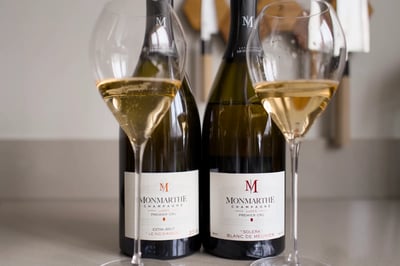
The solera method in Champagne, explained
The solera method in Champagne: how a perpetual reserve works, why it is rare, and how Monmarthe ages 100% Meunier in one. Borrowed from sherry in Jerez.
Read on →