

Torres Is Now a B Corp. What the Score Really Means
Familia Torres earned B Corp with 121.3 points. What that number is worth, why the label itself is under fire, and what it means for your glass.

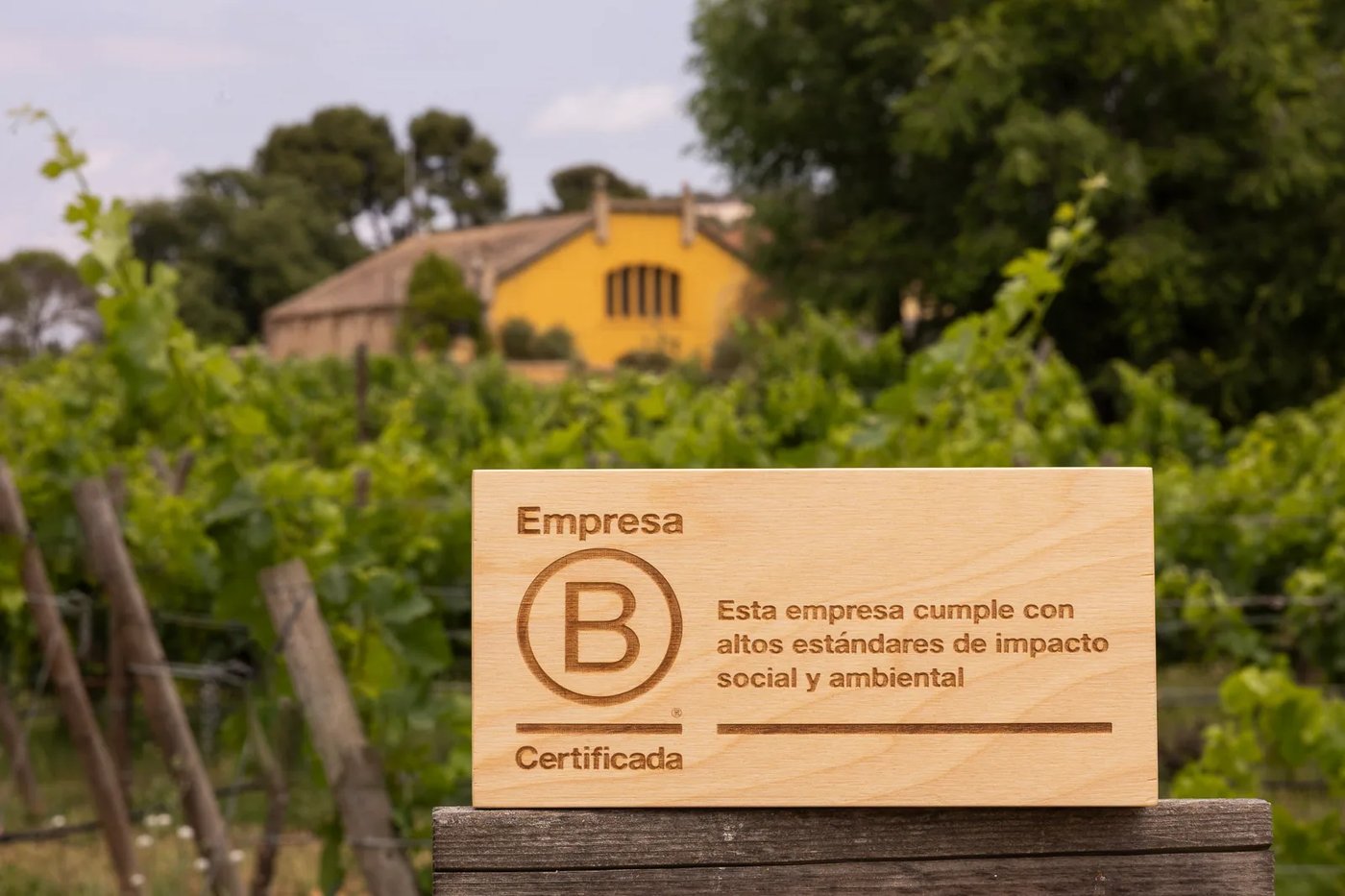
A score of 121.3 against a pass mark of 80. It reads like a top grade. It is not.
In April 2026, Familia Torres announced that every one of its wineries in Spain and Chile had earned B Corp certification, with that 121.3 figure attached to the press release. The number is real and it is genuinely high. But a number means little without the scale it sits on, and almost no one is offering the scale. So let me.
B Corp is a certification run by the non-profit B Lab. Companies fill in the B Impact Assessment, a long questionnaire covering governance, workers, community, environment and customers. Under the older legacy model the questionnaire was scored out of 200, and you needed 80 to pass. The median score for the ordinary companies that bother to complete it is 50.9. So Torres did not scrape through. It cleared the bar by roughly fifty per cent and sat well above the typical applicant. That part of the story holds up.
What does not hold up is reading 121.3 as a verdict on quality, or as proof that Torres is best in class on everything. Under the legacy scoring, strong performance in one area could offset weakness in another. The total is a sum, not a report card per subject. A company could be excellent on environment and merely adequate on supply-chain labour and still post an impressive headline figure. Treat 121.3 as comfortably above the threshold. Do not treat it as perfection, because the methodology does not let you.
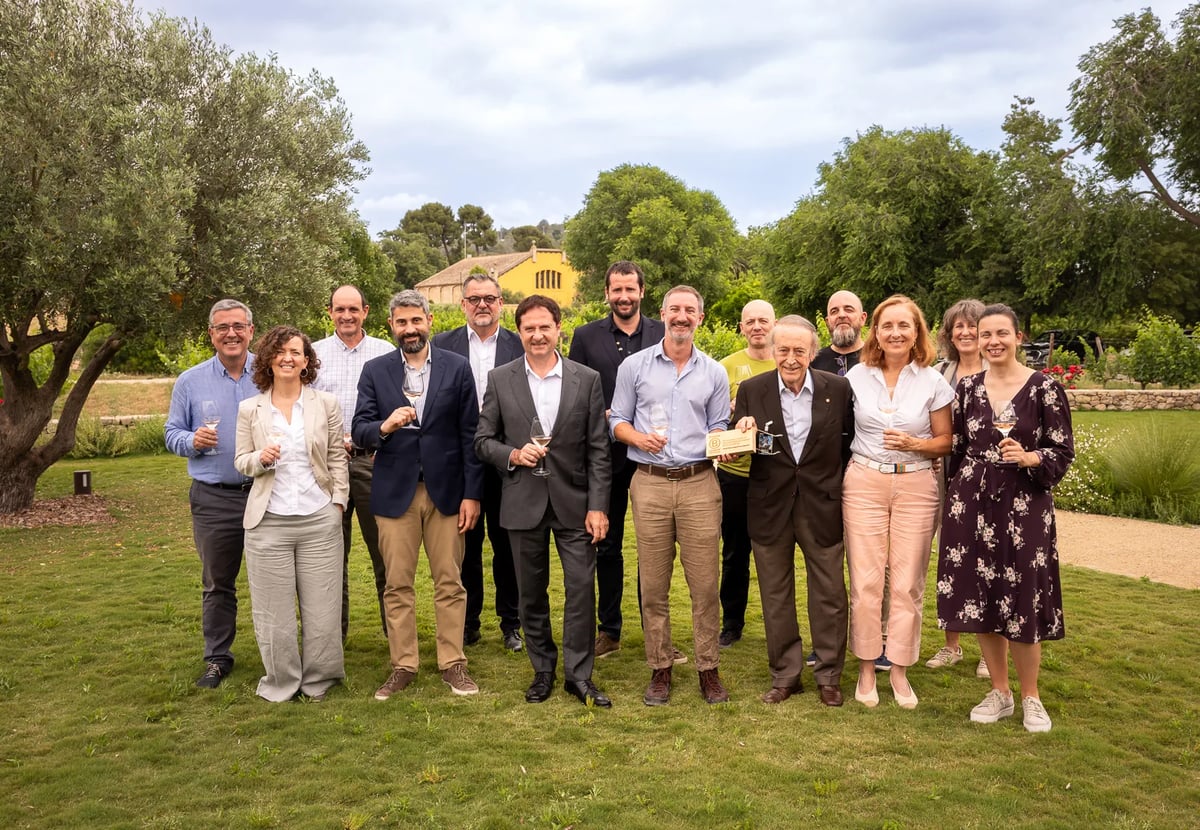
The Familia Torres team at the B Corp award. Photo: Familia Torres.
The certification is new. The work underneath is not
Here is the part that actually matters, and it is the part the headline buries. Torres did not become a serious environmental operator in April 2026. It applied a stamp to something that has been running since 2008.
That year Torres launched Torres & Earth and pledged eleven per cent of annual profit to climate projects. Since then the company reports investing more than 23 million euros, and an independently audited 2024 figure puts the reduction in CO2 per bottle at around 40 per cent against the 2008 baseline, with direct emissions down by close to 60 per cent. The targets ahead are 60 per cent per bottle by 2030, with a climate-positive operation as the longer-term goal. Torres co-founded the International Wineries for Climate Action in 2019 alongside Jackson Family Wines, an alliance that is a partner in the UN Race to Zero and that requires third-party verification of emissions data. This is not a marketing club. It is a science-based one.
Miguel Torres put it plainly: becoming a B Corp does not change the company’s DNA, it formalises it. That is a more honest sentence than most certification press releases manage. The real achievement is the two decades of capital, the recovered old vines, the captured fermentation CO2, the 5,000 hectares acquired in Chilean Patagonia for reforestation. The B Corp score is the receipt, not the work.
The stamp itself is under fire
Now for the second thing the announcement does not mention. B Corp as a label is in trouble with its own constituency.
In May 2022, B Lab certified Nespresso, a Nestlé subsidiary, against a backdrop of documented child-labour concerns in the coffee supply chain. Its score was 84.3, a whisker over the minimum. More than thirty existing B Corps, together with the Fair World Project, signed an open letter against the certification. The criticism was straightforward: a label built to signal that small, mission-led businesses were doing better than the rest had just admitted a multinational with a documented human-rights problem in its chain.
B Lab responded. In April 2025 it introduced new standards with minimum thresholds in each impact area, precisely so that a high score in one domain could no longer paper over a failure in another. For some that was too little, too late. Dr. Bronner’s, one of the most committed B Corps and a vocal critic, let its certification lapse in September 2025, accusing the scheme of enabling purpose-washing by large corporations.
Torres, it should be said, is itself a large corporation. Around 44 million bottles a year, more than 1,300 hectares of owned vineyard with over 1,100 of them organic, exports to more than 150 countries, one of the largest family wine producers in Spain and for years a fixture near the top of Drinks International’s World’s Most Admired Wine Brands. A label originally pitched at the small and the scrappy now belongs to one of the biggest names in Spanish wine. That is not a reason to doubt Torres. It is a reason to ask what the label still signals when it covers everything from a two-person bakery to a producer of this size.
There is one more wrinkle worth flagging. The assessment begins as self-reported. The company answers first, then B Lab verifies those answers and asks for supporting documentation. It is not self-certification, and the verification is real, but the foundation is the company’s own account of itself. That matters when you are deciding how much weight a single number deserves.
What it means in the glass
Nothing. That is the honest answer, and it is the point.
B Corp certifies governance and procurement. It says nothing about acidity, fruit or ageing. The Torres reds taste exactly as they did before April 2026. A drinker who buys on flavour will notice no difference, because there is none to notice. A drinker who buys on values gets a verified signal, but a verified signal is not an infallible one, and you have just read why.
It is also worth knowing that “regenerative viticulture”, a phrase that travels alongside this kind of announcement, has no legal definition the way “organic” does. Anyone can use the term. There is now a specific certification, the scheme set up by an association Torres co-founded with the Regenerative Viticulture Foundation and verified by Ecocert, which is a real step. But the word itself is not protected, so treat it as a direction of travel rather than a guarantee.
So where does that leave you, holding a bottle in a Dutch shop? Torres is widely available here, from supermarket-level Sangre de Toro to the serious single-estate wines like Mas La Plana, across importers and specialists, from a few euros to well over forty. The certification should not move your buying decision much in either direction. If the wine is good and the price is fair, buy it. If you care about the climate work, the case was already strong in 2007, never mind 2026, and it rests on audited numbers rather than a logo.
Be honest about both halves. The track record is real, audited and rare at this scale. The stamp is contested, self-reported before it is checked, and increasingly questioned by the very companies it was built for. Admire the first. Read the second with your eyes open. And do not let either one tell you how the wine tastes.
Frequently asked questions
What does Torres’ B Corp score of 121.3 mean?
Under the legacy B Corp model the pass mark was 80 out of 200, and the median company that completes the assessment scores 50.9. So 121.3 clears both comfortably. It is a single total rather than a per-category report card, and under the old model strong performance in one area could offset weakness in another.
Does B Corp certification change how Torres wine tastes?
No. B Corp assesses governance, sourcing and how a company treats its people and the environment, not flavour or quality. A wine like Mas La Plana or Sangre de Toro does not taste different because of the label. Buy on flavour and you will notice nothing; buy on values and you get a verified, though not infallible, signal.
Why is the B Corp label controversial?
In 2022 B Lab certified Nestlé’s Nespresso at a score of 84, just over the minimum, despite documented child labour in its coffee supply chain. More than 30 B Corps signed a protest letter and Dr. Bronner’s left the scheme in 2025, accusing it of purpose-washing by large corporations. Critics argue a high total too easily masks weak individual areas.
Sources
- Primary source: Press release, Familia Torres, “Familia Torres joins the global B Corp community”, Vilafranca del Penedès, 2 June 2026
- B Corp / B Lab: B Impact Assessment knowledge base (kb.bimpactassessment.net); B Lab company profile (bcorporation.net); Armanino B Corp Certification Guide (armanino.com)
- Criticism of the label: Organic Insider; FoodPrint.org; Fortune (20 July 2023); Dr. Bronner’s (info.drbronner.com); Trellis.net; Beauty Independent
- Torres & Earth and climate figures: The Drinks Business (June 2025); torres.es; 3ds.com
- IWCA and regenerative viticulture: iwcawine.org; jacksonfamilywines.com; regenerativeviticulture.org; wine-searcher.com
- Torres scale: vinissimus.co.uk; spanishwinelover.com; Wikipedia (Bodegas Torres); Drinks International
More on News

Champagne Can Now Buy In 15 Percent. Or Can It?
The champagne purchase derogation of 7 August triples the buying ceiling. It governs excise law, though, not what the label is allowed to say.
Read on →
Fino can now go to 14 percent: what changed in Jerez
The new sherry rules drop the minimum for Fino and Pale Cream to 14 percent, tighten the yield threshold and add three pagos to the register.
Read on →
Champagne Harvest 2026: Less Wine, Better Acidity
The champagne harvest 2026 opened on 6 August, the earliest on record. Less wine than the quota allows, and acidity that held better than feared.
Read on →