Wat is natuurwijn echt?
The term means everything and nothing — here’s how to actually understand it
A sommelier once poured me something that smelled faintly of a farmyard. “It’s natural,” he said, in a tone that closed the conversation. I drank it anyway. It was strange, then interesting, then genuinely good. It took me another hour to figure out whether that was because of the farming, the winemaking, or just the grape.
Die ervaring is, in het klein, het hele debat rond natuurwijn.
The term gets used to sell wine, to justify faults, to signal identity, and occasionally to describe something that actually is remarkable. What it never does is mean the same thing twice. There is no legal definition of natural wine anywhere in the world. No certification body, no official standard, no protected label. Which means when you see “natural” on a bottle or a wine list, you are entirely at the mercy of whoever put it there.
That’s not a reason to dismiss it. It’s a reason to understand what’s actually going on.
De boerderijkant: waar natuurwijn begint
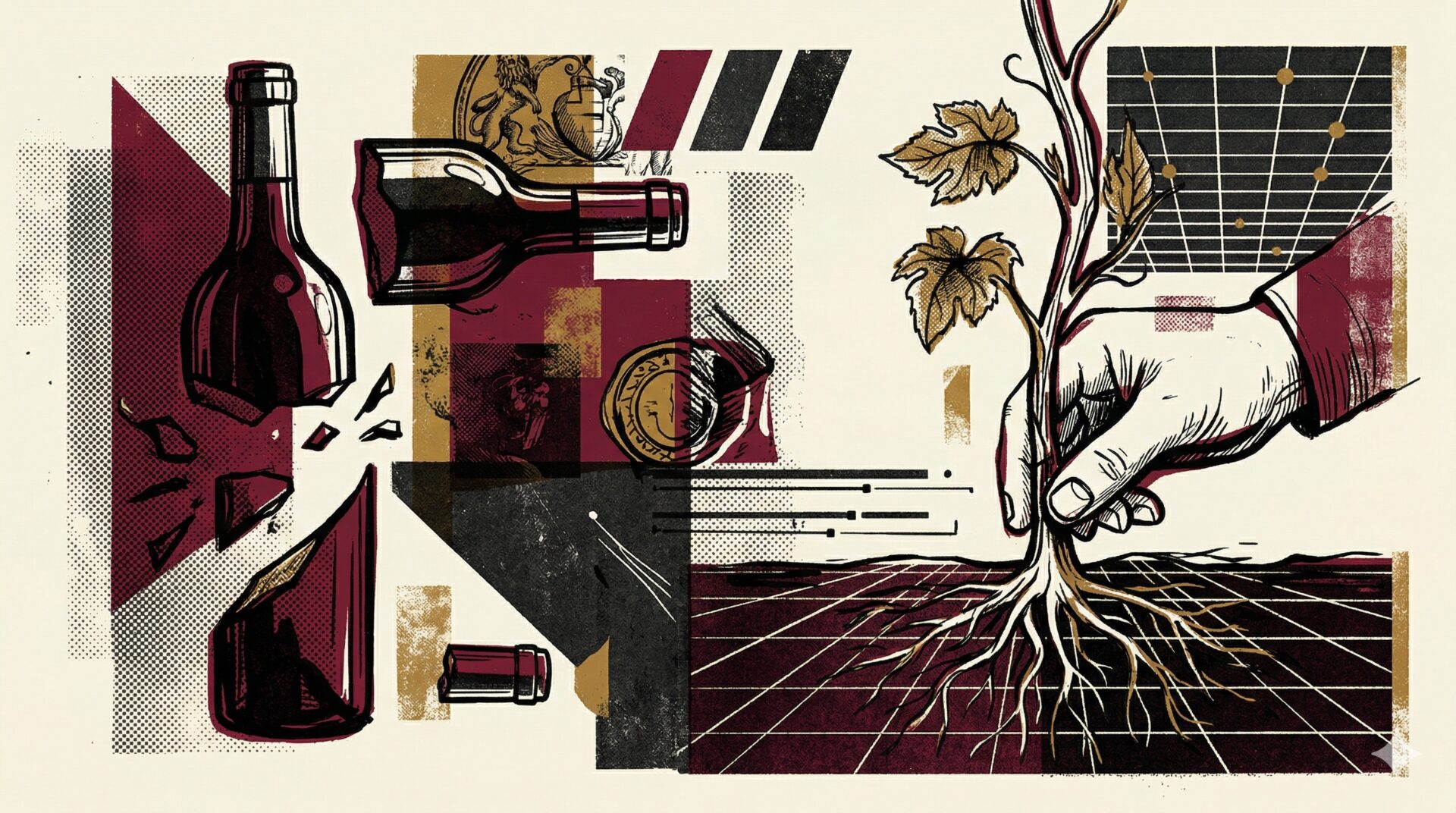
De meeste mensen die natuurwijn maken, beginnen met dezelfde premisse: de wijngaard komt eerst. Dat betekent telen zonder synthetische pesticiden, herbiciden of chemische meststoffen. In de praktijk betekent dit meestal biologische landbouw als minimum – en vaak biodynamisch.
Biologische wijnbouw vormt de basis. Het verbiedt de meeste synthetische middelen en is certificeerbaar onder EU-regelgeving. Biodynamische landbouw gaat verder: het behandelt de boerderij als een zelfvoorzienend ecosysteem, werkt volgens een maankalender en gebruikt preparaten gemaakt van kruiden, mineralen en mest. Rudolf Steiner ontwikkelde de filosofie in 1924. Of je de maankalender nu geloofwaardig vindt of niet, de resultaten van deze landbouw – gezondere bodem, sterkere immuunsystemen van de wijnstok, betere microbiële diversiteit – zijn moeilijk te betwisten.
Natuurwijnproducenten werken doorgaans biologisch of biodynamisch, maar niet alle biologische of biodynamische producenten maken natuurwijn. De teelt is noodzakelijk, maar niet voldoende.
De kelderzijde: waar het ingewikkeld wordt
Het meest betwiste deel is wat er na de oogst gebeurt. Conventionele wijnproductie omvat een lange lijst van toegestane toevoegingen en interventies: sulfiet als conserveermiddel, gekweekte gist om de fermentatie te controleren, enzymen, klaringsmiddelen, filtering om deeltjes en microben te verwijderen. Niets hiervan is schadelijk. Alles vormt de wijn.
Natuurlijke wijnbouwers proberen deze interventies te minimaliseren of te elimineren. De kernprincipes, zoals de meeste beoefenaars ze beschrijven:
Wilde gistfermentatie. In plaats van een pakje commerciële gist toe te voegen — geselecteerd op voorspelbaarheid en efficiëntie — laat je de fermentatie gebeuren met de gisten die op de druivenschillen en in de kelder leven. Dit levert complexere, onvoorspelbare smaken op. Het vergroot ook het risico op vastlopende fermentaties en onaangename geuren.
Weinig tot geen zwaveldioxide. Zwaveldioxide is het meest gebruikte conserveermiddel in de wijnindustrie, en met goede reden: het remt oxidatie en doodt ongewenste bacteriën. Natuurlijke producenten gebruiken veel minder, of helemaal geen. Dit is waar houdbaarheid een reëel probleem wordt — flessen hebben zorgvuldige temperatuurregeling nodig en bij voorkeur consumptie binnen een redelijke termijn.
Geen klaring of filtering. The wine goes into the bottle without being stripped of its texture. This is why natural wines are often cloudy or hazy. That’s not a fault — it’s particles of grape skin, yeast, and other organic matter. Aesthetically unfamiliar. Not harmful.
The loose consensus in the natural wine community is wines made from organically farmed grapes, fermented with wild yeast, with minimal sulphur additions. But — and this is important — none of this is legally enforced. The word “natural” on a label costs nothing and proves nothing.
Waarom natuurlijke wijnen anders smaken
Natuurwijnen kunnen buitengewoon smaken. Ze kunnen ook smaken alsof er iets mis is gegaan.
Fankiness. Een reeks geuren van boerderij tot leer tot licht zuur. Vaak veroorzaakt door Brettanomyces, een gist die van nature voorkomt in wijnomgevingen. In kleine doses voegt Brett complexiteit toe - het soort aardse diepte dat je vindt in oude Bourgogne. In grotere doses overstemt het het fruit en wordt het als een gebrek ervaren.
Volatiliteit. Een lichte azijnsmaak – azijnzuur – die ontstaat wanneer azijnzuurbacteriën betrokken raken tijdens de fermentatie. Lage niveaus dragen bij aan complexiteit. Hogere niveaus zijn een fout.
Oxidatie. Natural wines without sulphur protection are more exposed to oxygen. This can produce a nutty, Sherry-like quality that some producers pursue deliberately. In skin-contact (orange) wines, it’s often a feature. In light reds, it can mean the wine is simply tired.
Not all natural wines show these characteristics. The best ones don’t. But the natural wine movement has sometimes been reluctant to call a fault a fault — and that intellectual dishonesty has cost it credibility with sceptics. A wine that smells of mouse cage is not complex. It’s a mouse cage.
That said: I’ve drunk natural wines that were among the most vivid, alive, and memorable things I’ve ever tasted. The philosophy produces something real when the producer gets it right.
Het spectrum, niet de binaire
De meest nuttige manier om over natuurwijn na te denken, is als een spectrum in plaats van een categorie.
Aan de ene kant: conventioneel geproduceerde wijn, verbouwd met agrochemicaliën, gefermenteerd met commerciële gist, aangepast met additieven, gefilterd voor stabiliteit. Aan de andere kant: biodynamisch verbouwde wijnen, met de hand geoogst, gefermenteerd met wilde gist in open vaten, gerijpt zonder toevoegingen, ongefilterd gebotteld zonder zwavel.
Most interesting wine sits somewhere in between. “Low-intervention” is a more honest term than “natural” for the middle ground — producers who farm carefully and interfere as little as possible in the cellar, without necessarily meeting every criterion of the natural wine canon. Many of the best wine producers in the world work this way without calling themselves natural. They don’t need the label. The wine speaks clearly enough.
Hoe navigeer je het in de praktijk
Waar komt de wijn vandaan?. Natural wine is not a style — it’s an approach. A natural wine from Muscadet will taste nothing like one from the Jura or Georgia. Understanding the region tells you far more than the “natural” label.
Zoek naar transparantie. Producenten die hun landbouw- en kelderpraktijken publiceren, doen een verifieerbare claim. Producenten die alleen het woord gebruiken, doen dat niet.
Durf het vreemde te proberen. Some of the best discoveries in wine come from bottles that don’t smell like you expect. Give the funk ten minutes before writing it off.
Weet wanneer je de grens moet trekken. A wine that smells of nail polish remover (ethyl acetate) or mouse (4-ethylphenol at high concentration) is flawed. Natural production doesn’t make those acceptable. Send it back.
Waar te beginnen
Als je wilt ervaren wat natuurwijn op zijn best werkelijk betekent, dan zijn deze de moeite waard om te zoeken:
- Pierre Goiset, Muscadet — oude wijnstokken, wilde gisting, geen toevoegingen. Een van de eerlijkste wijnen van Frankrijk.
- Fattoria Fibbiano, Toscane — biodynamische landbouw, inheemse druivensoorten, wijnen met ware helderheid.
- 1979 Wijnen, Attica — bewijs dat minimale interventie en oude Retsina-druiven iets echt moderns produceren.
- Patis Pluriel, Champagne — Artisanal champagne met kelderpraktijken met lage interventie.
Natuurwijn beloont nieuwsgierigheid meer dan de meeste categorieën. Ga er met vragen naartoe in plaats van met verwachtingen.