

Künstler Hölle GG: Rheingau Riesling from Clay Marl
The Hochheimer Hölle Grosses Gewächs from Weingut Künstler sits on heavy clay marl above the Main. What the GG label means here, and why it matters.

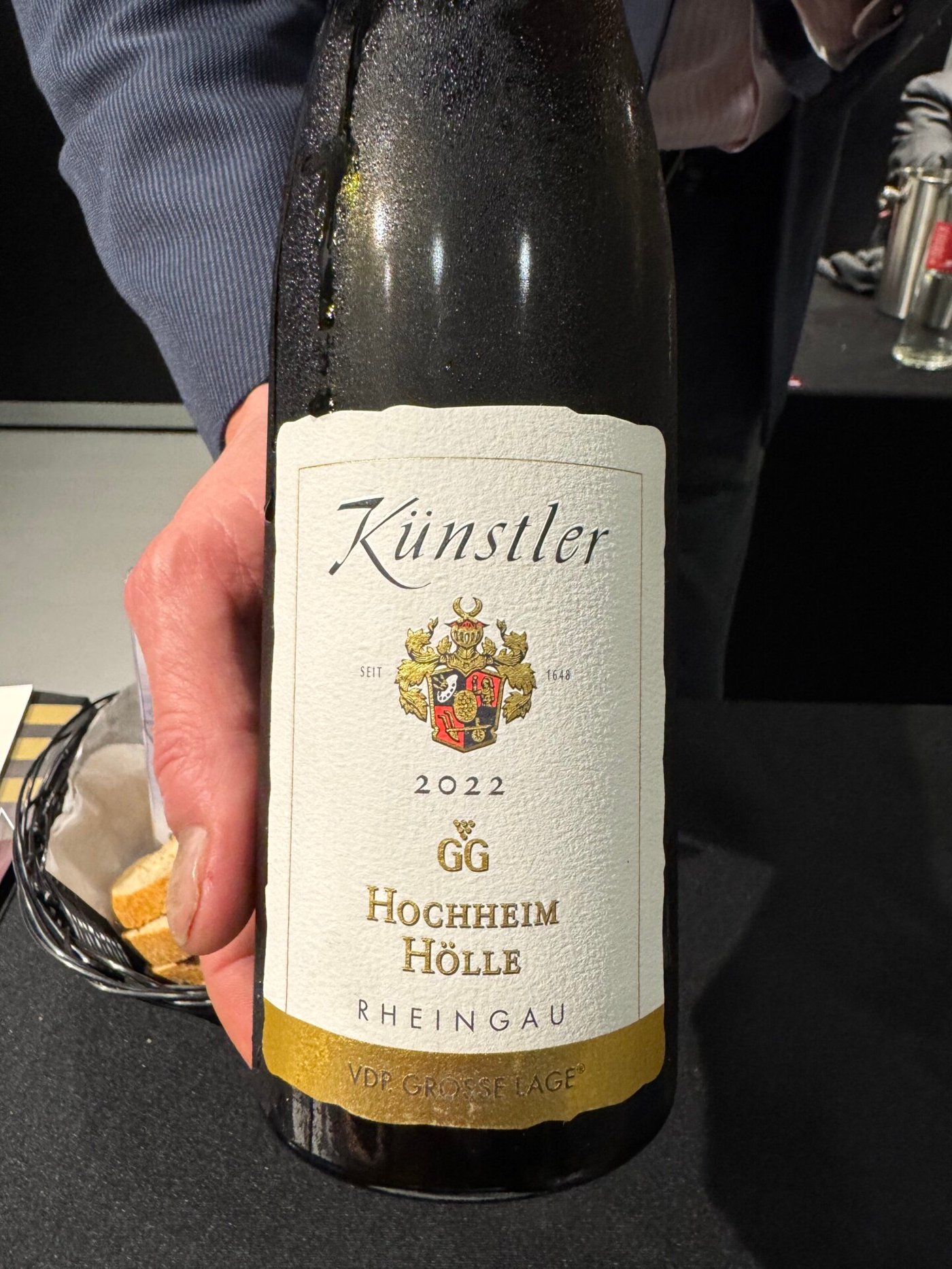
Hochheim sits at the edge of the Rheingau where the Main flows into the Rhine. Geographically and stylistically a corner of its own: more southerly exposure than Rüdesheim or Erbach, closer to the river, with soils carrying more clay marl than the schist of the Mittelrhein. The Hölle vineyard (literally “hell”, referring to the heat it traps in summer) sits on a 15% south-facing slope, with heavy Cyrenian marl topped by loess. Not a schist Riesling but a denser, fuller profile.
The house
Weingut Künstler was founded in Hochheim in 1965 by Franz Künstler, after the pre-war family history in Untertannowitz, Southern Moravia. Since 1992 his son Gunter Künstler runs the estate, with a focus on terroir Riesling and Spätburgunder. The estate is a member of the VDP, the German quality association that has run its own pyramid classification since 2012: VDP.Gutswein → Ortswein → Erste Lage → Grosse Lage. A dry wine from a Grosse Lage may carry Grosses Gewächs (GG) on the label, embossed onto the bottle as an emblem.
In the Rheingau, GG applies only to Riesling and Spätburgunder. Künstler holds 9.6 hectares in Hölle, a vineyard of roughly 48 to 66 hectares in total (sources vary). About 76% of that surface is classified as Erste Lage within the VDP system.
What GG means here
The VDP system works like a French Grand Cru model but without a legal basis: it is a private classification within the association. For Hölle GG that means hand-harvest, capped yields (~50 hl/ha), minimum must weight matching the Lage, and an outspoken dry style (max 9 g/l residual sugar at sufficient acidity).
In practice that delivers a Riesling at 13 to 14.5% alcohol, with a density not typical for the region. Warmer vintages (2015, 2018, 2019, 2020, 2022) lean to the upper end of that scale. 2021 and 2024 yield leaner, acid-driven versions, better for the fifteen-to-twenty-year cellaring arc.
Price and positioning
International retail for Künstler’s Hochheimer Hölle GG sits between €45 and €55 per bottle for recent vintages. That is GG-tier pricing: comparable to a village-level white Burgundy from a serious producer, or a top Cru Beaujolais. Below that you find Künstler’s Ortswein (Hochheim) and Erste Lage cuvées; above are only the genuine rarities like late-harvest Auslese or TBA.
UK and Dutch availability runs through specialist importers (Vinites and Henri Bloem in the Netherlands; Howard Ripley and The Wine Society in the UK). For systematic comparison: Künstler bottles Hölle GG, Domdechaney GG and Kirchenstück GG. All three from Hochheim, all three GG, each with its own slope and soil. A trio costs just under €150 and is instructive for anyone wanting to understand what a few hundred metres of terroir variation within one village does.
What I tasted at Wine Professional 2025
On a cold January afternoon in Amsterdam I sat at a vertical tasting of nine Hölle vintages, organised by Anfors Imperial, with Gunter Künstler walking us through each bottle. Nine wines, more than twenty-two years of wine history on one table.
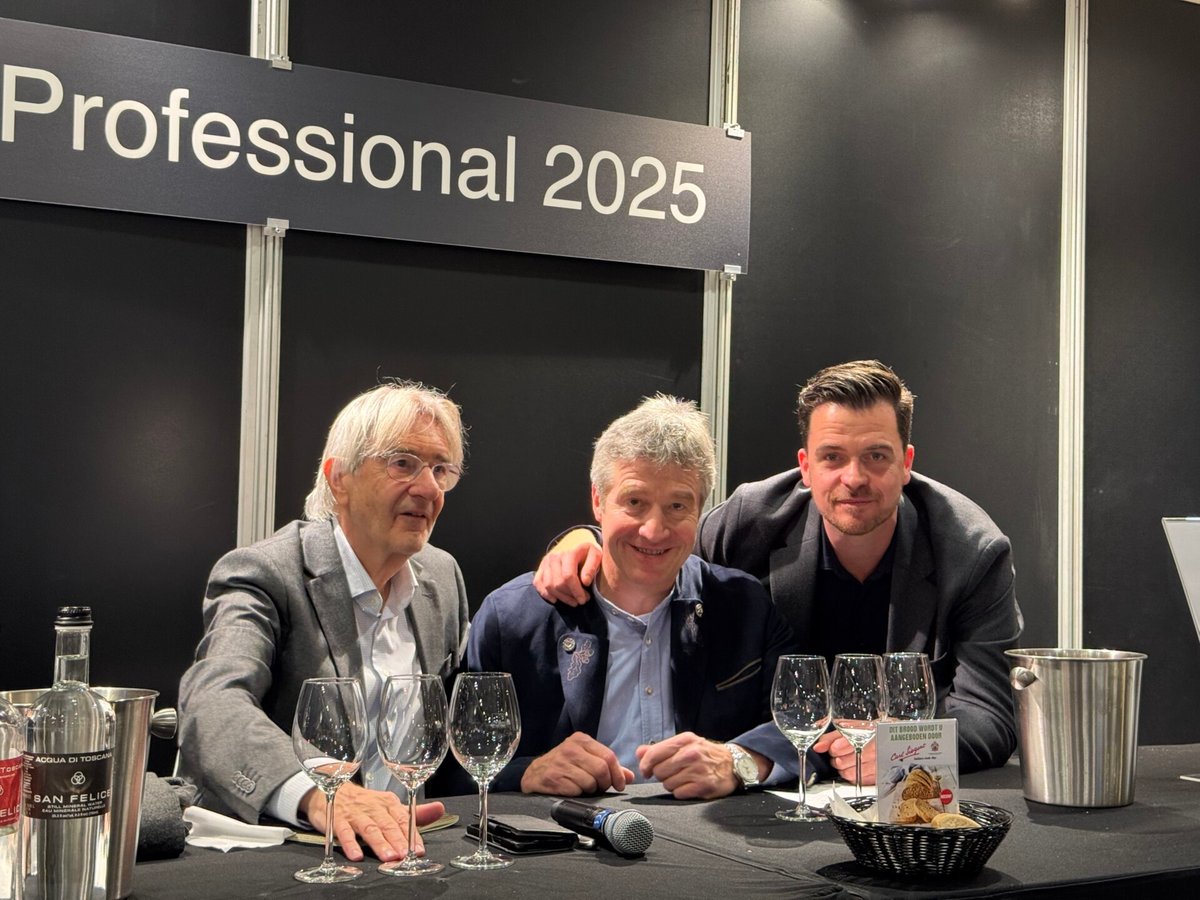
What stood out: the wine takes its time becoming itself. A two-year-old Hölle GG drinks mostly citrus, chalk, a hint of petrol on the finish. From year five a second layer arrives, denser, with yellow stone fruit and quince. At ten years the wine reaches somewhere a classical Mosel Riesling rarely does: petrol that doesn’t turn sharp, a creaminess that doesn’t come from wood but from years of rest. At fifteen-plus years it shifts toward honey and dried apricot, with acidity still carrying.
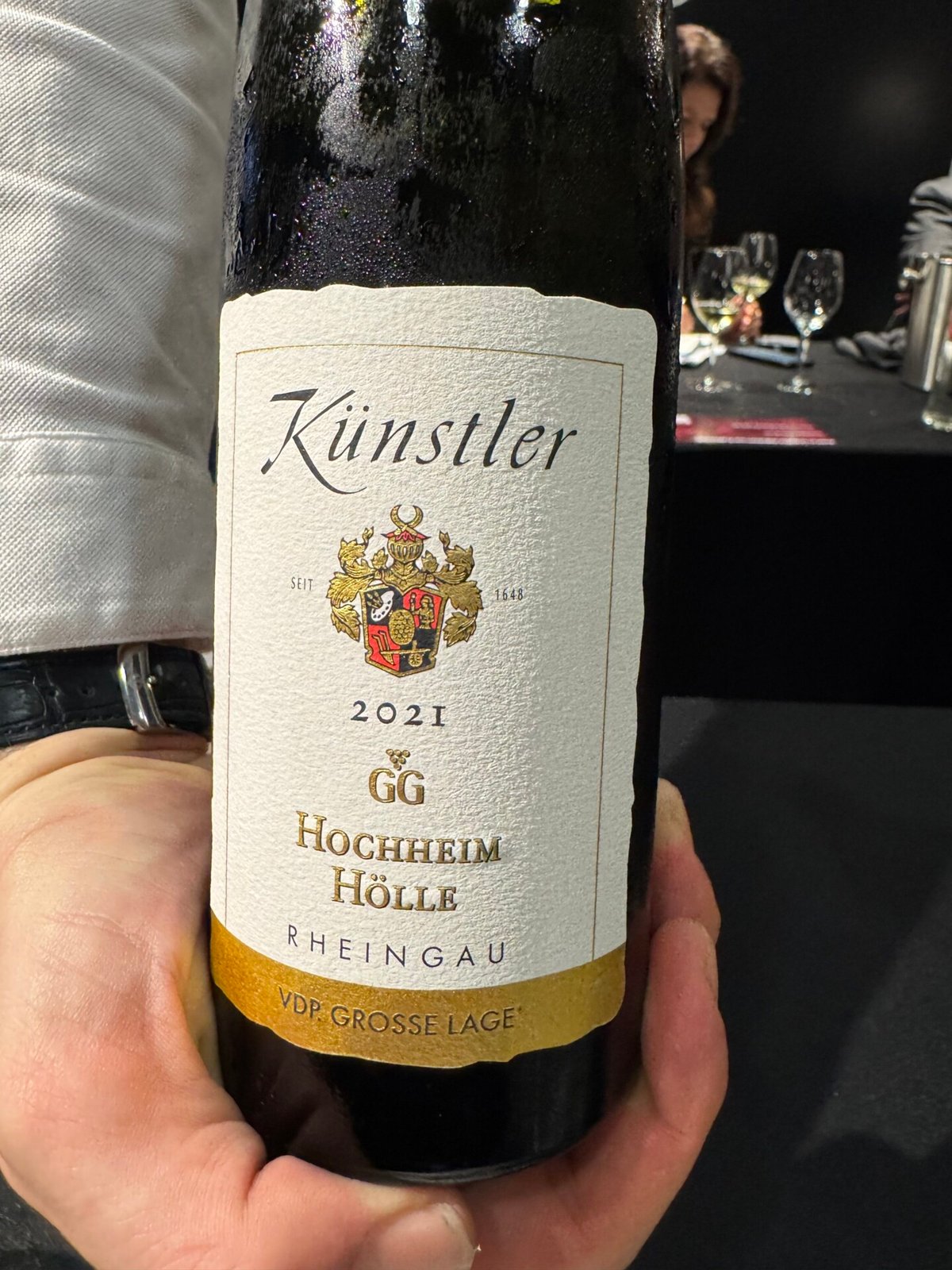
For the full vintage-by-vintage notes and the story behind the estate since 1965, read my masterclass write-up:
Where Hölle GG gets misread
The average drinker associates Riesling with sharp, citrus and pale. A Hölle GG doesn’t fit that profile. It is a dense, ripe, sometimes almost oily wine that carries more texture and alcohol than the standard Mosel or Nahe-style Riesling. Anyone expecting all German Riesling to sit on the acid-driven Saar axis sometimes leaves disappointed. The problem isn’t with the wine but with the expectation.
The second misconception lies in the name Grosses Gewächs itself. VDP marketing sometimes presents GG as a quality guarantee. It is a classification of the Lage (vineyard site), not the vintage or the specific bottling. A weaker vintage in Hölle is still a Hölle GG; an exceptional vintage from an Ortswein vineyard cannot carry the GG label even if the bottle drinks just as well. For systematic learning: compare a GG with an Erste Lage from the same producer.
In practice
Hölle GG is a kitchen Riesling. Fish works, but the wine also holds up to grilled veal with a cream-mustard sauce or Asian dishes with deep umami. Serve between 10 and 12°C. Below 8°C the texture closes and you taste mostly acidity. Above 14°C the alcohol surfaces in the finish.
Cellaring potential: fifteen to twenty years for top vintages, ten for the average release. Typical evolution: citrus and peach shift toward petrol, quince and honey, with acidity that slowly rounds without dropping away.
Sources
- Weingut Künstler official site: weingut-kuenstler.de
- VDP Rheingau classification: vdp.de
- Terry Theise Selections (importer profile): terrytheise.com/weingut-kunstler
- bkwine.com producer profile Künstler
More on Wine Review
Barbadillo Salicornia: Organic Manzanilla en Rama
Salicornia, Barbadillo's organic manzanilla en rama: flor, baked apple, salt and a brand-new solera. €25.95 at Granada Wijnen, with discount code.
Read on →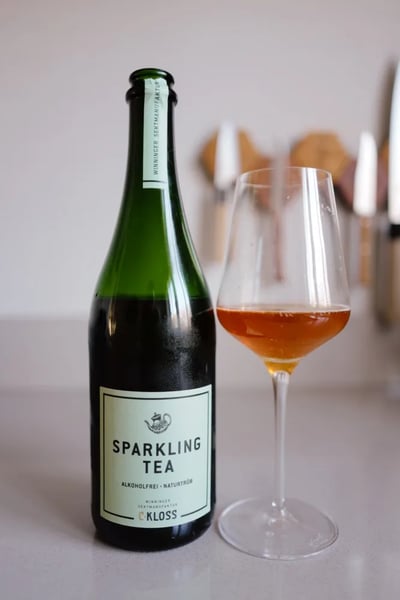
C. Kloss Sparkling Tea Weiss: Fermented Celery
Non-alcoholic sparkling tea Weiss from C. Kloss: linden blossom, nettle and fermented celery. Dry, 2.7 g sugar per 100 ml, €14.99 at Amavine.
Read on →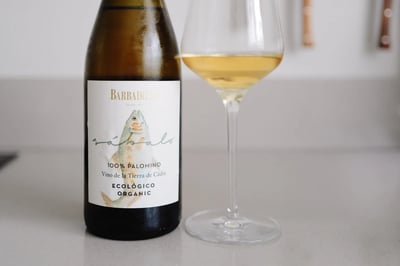
Barbadillo Sábalo: Organic Palomino Without Flor
Organic Palomino Sábalo from Barbadillo: no flor, salt from albariza soil. Chamomile, apple, sea. €17.95 at Granada Wijnen, with discount code.
Read on →