

C. Kloss Sparkling Tea Rosé: 96 Falstaff Points
Non-alcoholic Sparkling Tea Rosé from C. Kloss: lavender, cinnamon and bramble, with pear juice instead of apple. 3.4 g sugar, 0.0%, €14.99.
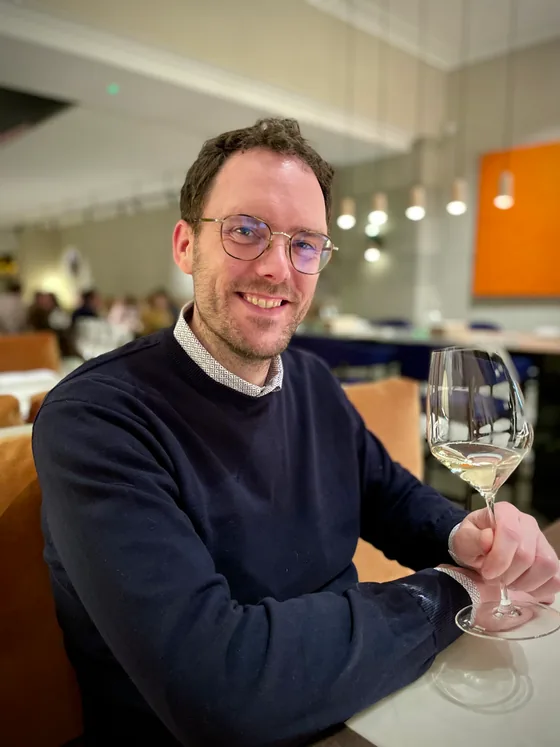
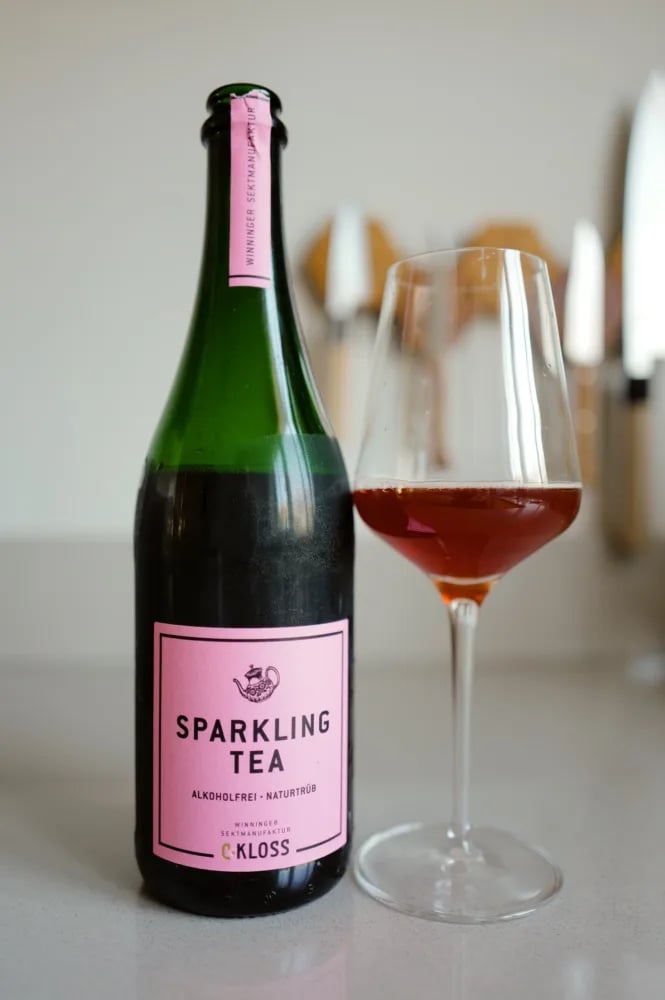
A warm blanket, Christian Kloss said as he poured it. Cinnamon and bramble, and three glasses later I still thought he had it right. This is a non-alcoholic sparkling tea Rosé that belongs by the fire more than on a terrace.
Falstaff, the largest wine magazine in the German-speaking world, gave it 96 points. A few weeks before we recorded, Kloss was also named the best non-alcoholic wine alternative in that market. Christian Kloss calls it his favourite child without hedging. That is normally the kind of line that makes me suspicious.
Why this one is softer
The base is the same as the Weiss: blackberry and nettle leaf. The difference is the juice. Pear goes in instead of apple, and Christian puts it simply. Bite into a pear and it is soft. Bite into an orchard apple and you get acid.
That makes this rounder and easier while barely being sweeter on paper: 3.4 grams per 100 ml against 2.7. Lavender leads, growing in the fields along the Mosel, with crushed fennel as the exotic edge.
Christian pictures this bottle with a vegetable dish, something vegan. That suited me, since I was cooking a lot of vegetables that evening.
Proefnotities
Uiterlijk
Deep rosé, almost red in the glass, with the finest mousse of the five.
Neus
Cinnamon and bramble, stewed pear behind them, and lavender holding it together.
Mond
Round and warm, with enough acid underneath to stay clear of sweetness. The fennel arrives late.
Afdronk
Keeps stretching itself out. The longest of the range, and the reason you pour a second glass.
Waardering
The bottle that gives the most for its money, and the easiest one to give as a present.
Two reservations
The bubble is added, not fermented in the bottle. Kloss does it slowly and the mousse is fine, but if a Champagne-shaped bottle makes you expect bottle fermentation, you will not find it here. Christian himself calls a bottle-fermented version his goal.
And that roundness costs something. Anyone who knows the Weiss and wants that bitter edge will find this one too soft. Beside a hearty dish it disappears sooner than you would like. Pour it as an aperitif, and reach for the Weiss or the Bergkräuter once the food arrives.
Sugar also varies from one bottling to the next. Every gram comes from juice, so a warm year pushes it up and a cold year pulls it down. My bottle read 3.4 grams and 14 kcal per 100 ml; yours may differ.
Where to buy
- Producer
- Winninger Sektmanufaktur C. Kloss
- Drink
- Sparkling Tea Rosé
- Region
- Winningen, Mosel
- Base
- Blackberry leaf, nettle, lavender, crushed fennel, pear juice
- Alcohol
- 0.0%
- Sugar
- 3.4 g per 100 ml
- Calories
- 14 kcal per 100 ml
- Price
- €14.99
- Importer
- Amavine
The sparkling teas that sell well in the Netherlands usually cost €20 to €35. For the price of one of those you get nearly two of these. If you want one to give as a present, make it this one.
This article is based on a press sample sent by Christian Kloss. No payment was made and the assessment is independent. I introduced Christian to Amavine and receive nothing for it.
More on Wine Review
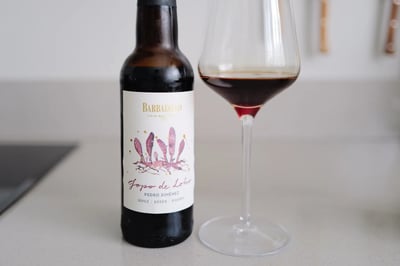
Barbadillo Jopo de Lobo: Organic Pedro Ximénez
Jopo de Lobo from Barbadillo: organic Pedro Ximénez from sun-dried grapes. Coffee, dark fruit, blossom. €15.95 for a half bottle of 0.375 litres.
Read on →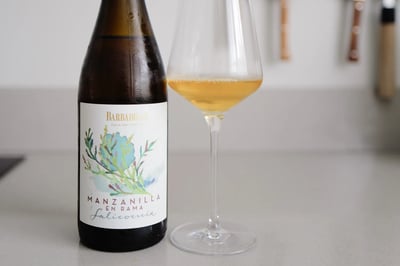
Barbadillo Salicornia: Organic Manzanilla en Rama
Salicornia, Barbadillo's organic manzanilla en rama: flor, baked apple, salt and a brand-new solera. €25.95 at Granada Wijnen, with discount code.
Read on →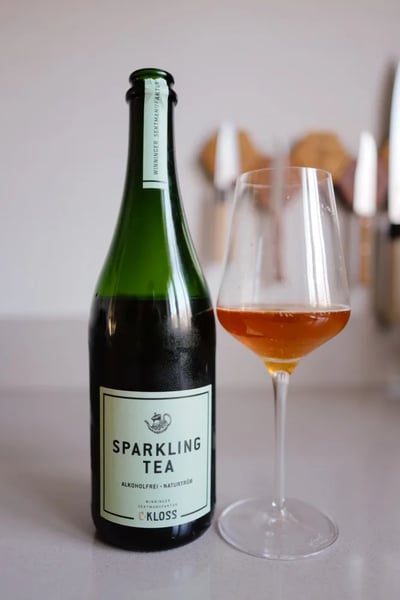
C. Kloss Sparkling Tea Weiss: Fermented Celery
Non-alcoholic sparkling tea Weiss from C. Kloss: linden blossom, nettle and fermented celery. Dry, 2.7 g sugar per 100 ml, €14.99 at Amavine.
Read on →