

Argea Habitat 2025: Sustainability Report Reviewed
Italy's largest private wine group commits to 42% emissions cuts by 2030. The progress is real. The supply chain pact still covers only 60.5%.

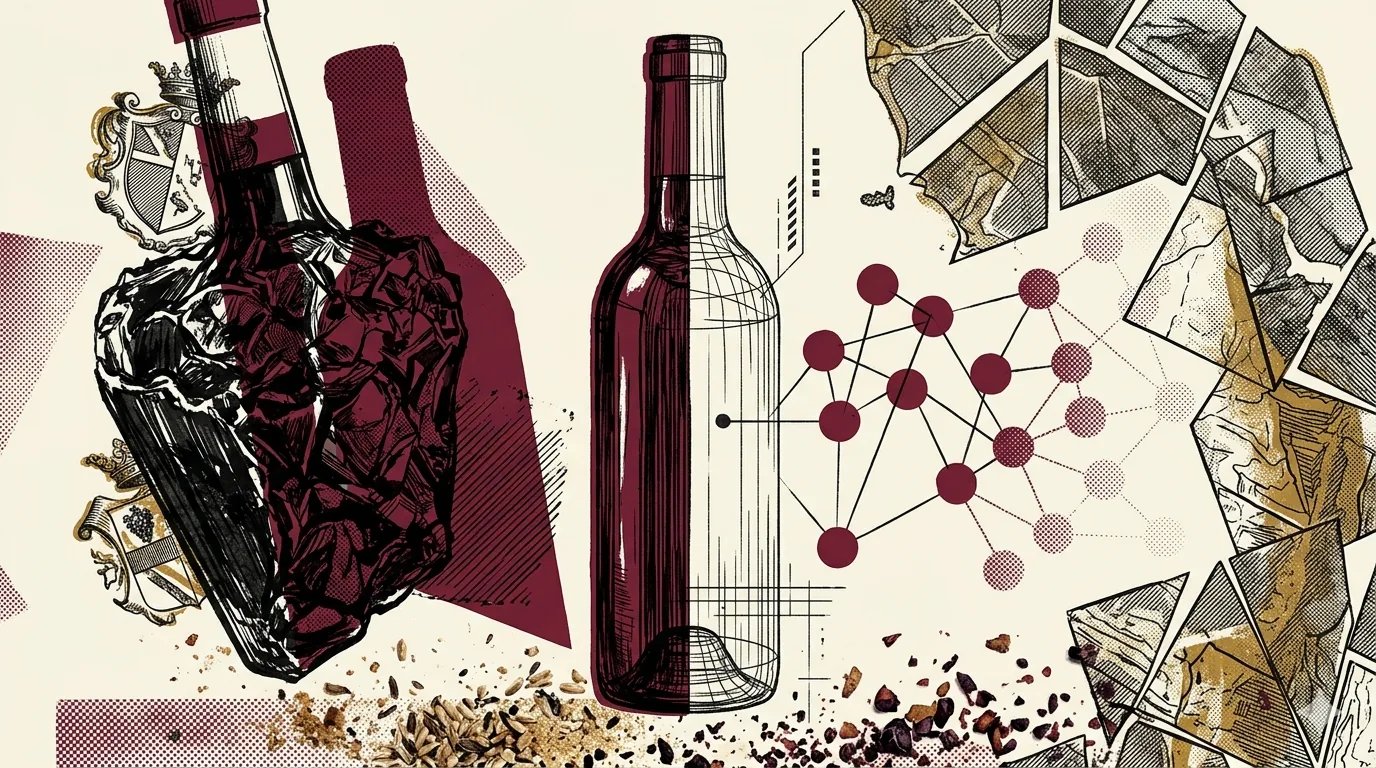
Italy’s largest private wine group dropped a 287-page document this morning. The Argea sustainability report Habitat 2025 is the second annual ESG filing since the group was formed in 2022, and the first since its climate targets were formally approved by the Science Based Targets initiative.
For UK and US trade buyers who only knew the company through WinesU, Mondodelvino or Cantina Zaccagnini brands, this is a useful entry point into how the Italian wine sector is starting to report climate progress at scale. Argea exports to 85 countries. The portfolio reaches further into US, UK, German and Scandinavian retail than most Italian wine drinkers realise.
The report is substantively built. The numbers are real. The questions they raise are too.
What the report shows
The headline figures from Habitat 2025:
- SBTi approval for the group’s climate targets: a 42% absolute reduction in Scope 1, 2 and 3 emissions by 2030, against a 2023 baseline, and Net-Zero by 2050.
- 100% renewable electricity, a line held since 2022.
- Total emissions down approximately 2.6% versus 2024.
- The Argea Wine Supply Chain Sustainability Pact now covers 60.5% of externally sourced wine, with 28 supplying wineries and 424 audit hours in 2025.
- 88% of wine suppliers completed the ESG qualification process.
- Total waste down by more than 20%, with 89.3% sent for recycling.
- Net water consumption down approximately 24%.
- Voluntary turnover dropped from 7.3% to 5.2%.
- Women now make up 34.7% of the workforce, with the WEPs gender equality score moving from 36% to 40%.
- All production sites certified to IFS, BRC, ISO 9001, 14001, 45001, SA8000, VIVA, Equalitas and organic standards.
For an Italian wine group at this scale, the breadth of disclosure is unusual. Many large Italian wine producers still publish sustainability data without this level of granularity on gender and voluntary turnover. That is not necessarily a comment on practice. It is a comment on reporting format.
The strong side: SBTi and Gualdo
SBTi approval is not a rubber stamp. It is an external validation that a company’s targets are consistent with the pace science requires for 1.5°C. In Italian wine, approvals like this are still scarce. Argea commits to a 42% absolute reduction in Scope 1, 2 and 3 emissions by 2030, with a 30.3% target for FLAG emissions (Forest, Land and Agriculture) covering land use and the primary agricultural supply chain.
The most visible ecodesign experiment is Gualdo Romagna DOC Sangiovese Predappio Biosimbiotico by Poderi dal Nespoli. The bottle moved from 540 grams to 300 grams of glass, a 44% reduction per bottle. The label uses cellulose derived from grape-processing residues alongside FSC-certified paper. The capsule is beeswax-based. The closure is a microgranulated technical cork with a binder produced from cereal supply chain residues.
The wine comes from Italy’s first certified biosymbiotic district. A biosymbiotic district is an area where growers commit to maintaining the ecological coherence between plots, not just inside their own vineyards. This is not packaging theatre. The Università di Chieti-Pescara leads a national research programme (PRIN) where Gualdo is the wine industry case study.
That project is the proof that Argea treats ecodesign as more than a marketing line. The question it raises sits below.
Critical #1: 60.5% is not 100%
Argea frames it as: the Supply Chain Pact covers 60.5% of externally sourced wine. The mirror version: 39.5% of purchased wine sits outside the pact. For a group whose Scope 3 emissions make up more than 98% of its total carbon footprint, that 39.5% is exactly where the largest climate impact lives.
The pact launched in 2023 with 24 wineries, grew to 26 in 2024, and now sits at 28. Four new wineries in two years. At that pace, full coverage is a decade away, while the 2030 target is half that distance. The report does not commit to a date for full pact coverage. That is a question worth asking in 2026, ideally by retailers and importers on the buying side.
Critical #2: Scope 3 is 98%, the reduction is 2.6%
Total emissions fell by approximately 2.6% in 2025 versus 2024. On a linear path to minus 42% by 2030 from a 2023 baseline, the annual reduction needs to be roughly 6%. Argea is running below pace.
The report itself states that Scope 3 makes up more than 98% of the footprint. That means all operational wins, the energy efficiency in the wineries, transport inside the group, machinery upgrades, barely move the total. The real reduction has to come from the supplying wineries, glass and packaging suppliers, and logistics partners. And those are precisely the actors where pact coverage stands at 60.5%.
This is not just an Argea problem. It is the structural reality of the wine industry. Glass, transport and agriculture carry most of the footprint and they are spread across the value chain. But the SBTi signature only counts if the annual reduction accelerates. Right now, Argea is behind its own glide path.
Critical #3: qualification is not change
In 2025, 88% of wine suppliers completed the ESG qualification process. The report cites this as an achievement. The question it does not answer: what did the qualification deliver in measurable change at those suppliers? Which wineries lowered their water or emissions profile after the audit? Which switched energy suppliers, lighter packaging, or regenerative cultivation practices?
A qualification is a baseline measurement. The change comes after. Argea’s next report should publish per-pact-participant impact figures, otherwise the process stays in administration rather than reduction.
What else stands out
The recycling rate climbed from 77% to 89.3%. That is a real jump, close to the medium-term target of 90%. Total waste fell by more than 20% and net water consumption dropped roughly 24%. On the water number, one caveat: 2024 was a drought year across parts of Italy, with production constraints that can distort the baseline year. The report would benefit from showing this against a multi-year average rather than year-on-year alone.
On materials: 22.6% overall recycling rate, 62% recycled glass, cork and aluminium closures with 55% recycled components, and cardboard at 69.9%. Solid work. The biggest lever remains glass. The Gualdo move to 300 grams shows it is possible. The question is when Argea makes that the portfolio default rather than a pilot on one SKU from a 13.74-hectare plot.
No-alcohol and RTD: a mixed signal
Argea is expanding into the No and Low Alcohol category. Tralcetto Sparkling no-alcohol from Zaccagnini and Brilla! no-alcohol launched in 2025. For 2026, a new Angelow brand and a Ready-to-Drink range including Brilla! Mimosa are on the roadmap. The report frames these as part of “responsible consumption”.
That framing is half right and half marketing. The sparkling route via Tralcetto sits inside a broader move toward drinking less and choosing better, which Vinovonk has covered. The RTD-Mimosa lives on a different track: low-barrier consumption, less craft, often higher residual sugar. Grouping both lines under one “responsible” banner blurs the picture. It would help if Argea differentiated more strictly here.
People and certification
Voluntary turnover fell from 7.3% to 5.2%, a drop of about 30%. Women now make up 34.7% of the workforce, against 32.4% in 2024. The WEPs Gender Gap score climbed from 36% to 40%. Safety indicators stayed inside target, with no fatal injuries recorded. The group ran 3,853 training hours and 245 audit days in 2025, with 167 in quality and 53 in sustainability and the Supply Chain Pact.
100% of production sites are certified across all the major standards. Food safety logged zero recalls in 2025. For a group operating at this scale, that is a result worth naming.
What to watch in 2026
Three questions to keep an eye on:
- Will Argea name a hard deadline for 100% pact coverage? 60.5% is not the destination.
- Will the annual Scope 3 reduction accelerate to at least 5%? Otherwise the SBTi targets slip out of reach.
- Will the Gualdo blueprint (300-gram glass, grape-pulp label, beeswax capsule) scale to more SKUs? An ecodesign pilot only matters at portfolio level.
Habitat 2025 shows that Argea is counting the path in evidence, not in intentions. That is refreshing in a wine industry where too many sustainability claims float without a number behind them. At the same time, a good report measures pace, and pace is the open question here. The next twelve months will decide how much weight the SBTi commitment carries.
The full report is available at argea.com. For readers who want to verify the figures, that is the primary source.
Sources
- Argea Sustainability Report 2025 “Habitat”, argea.com
- Argea press release on Habitat 2025, 18 May 2026 (issued by Well Com, [email protected])
- Science Based Targets initiative, corporate registry of validated targets, sciencebasedtargets.org
More on News

Sherry exports to the Netherlands fall 38 percent
Sherry exports to the Netherlands dropped from 2.55 to under 1.6 million litres in a year. Jerez blames private label. What the figures do and don't show.
Read on →
Arctic Barolo: Rivetto Ages Barolo Under the Sea
Arctic Barolo spent a year 34 metres down off northern Norway. What Rivetto and Hurtigruten did, what the taster found, and why I am not convinced yet.
Read on →
Champagne 2026: the same picking plan as 1959
Roederer put its 2026 picking plan beside 1959 and found only the date had moved. What the first vins clairs suggest, and what they cannot prove.
Read on →