What if I told you there’s a village in Champagne where you can taste wines that challenge everything you think you know about the region? Hidden in the rolling hills of southern Champagne, just three kilometers from Burgundy’s border, lies Les Riceys—a wine village that defies every expectation. This remote corner stands as the only place in all of Champagne where winemakers can legally produce wines under three different Appellations d’Origine Contrôlée, a unique privilege that speaks to extraordinary terroir.
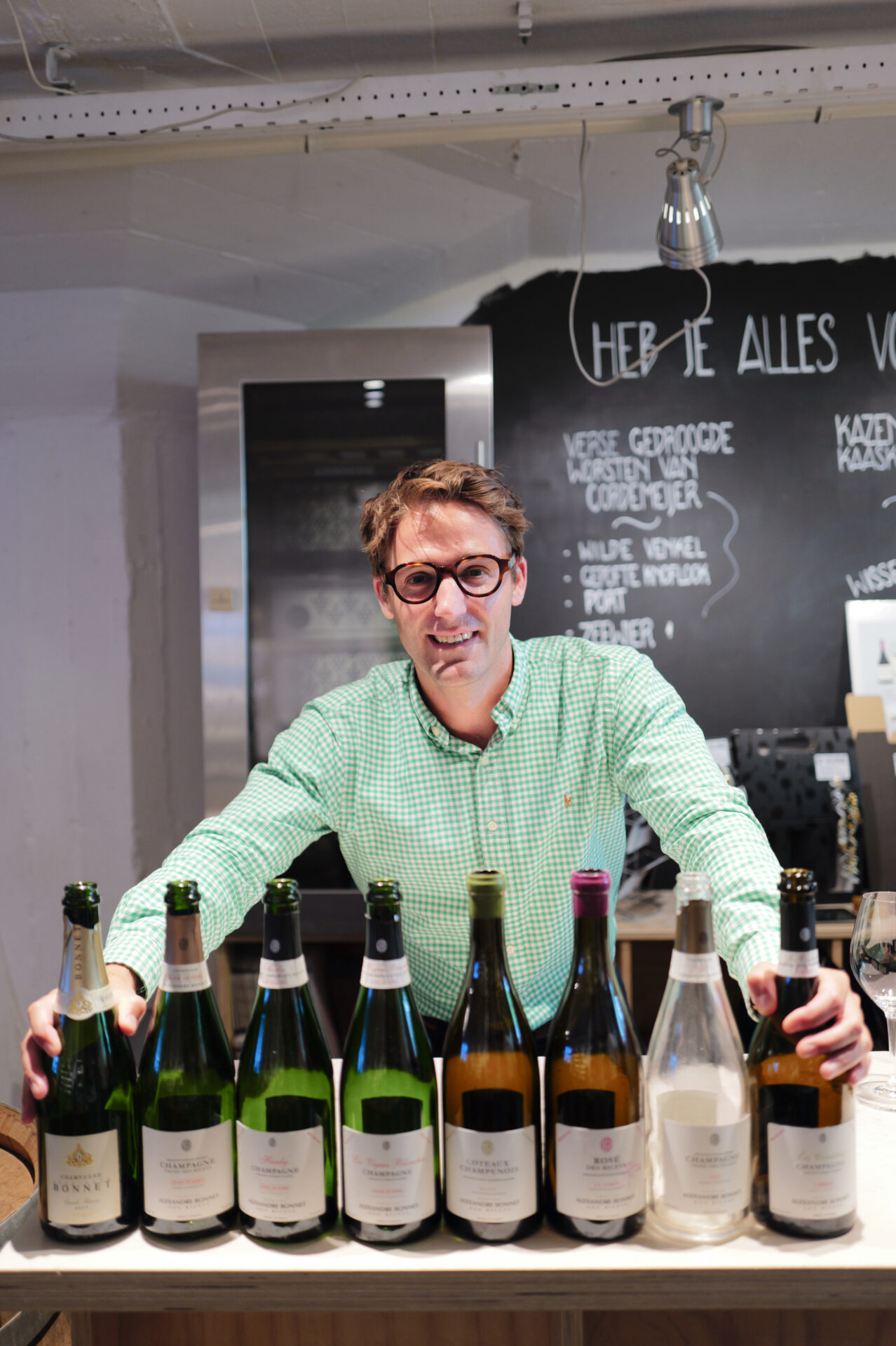
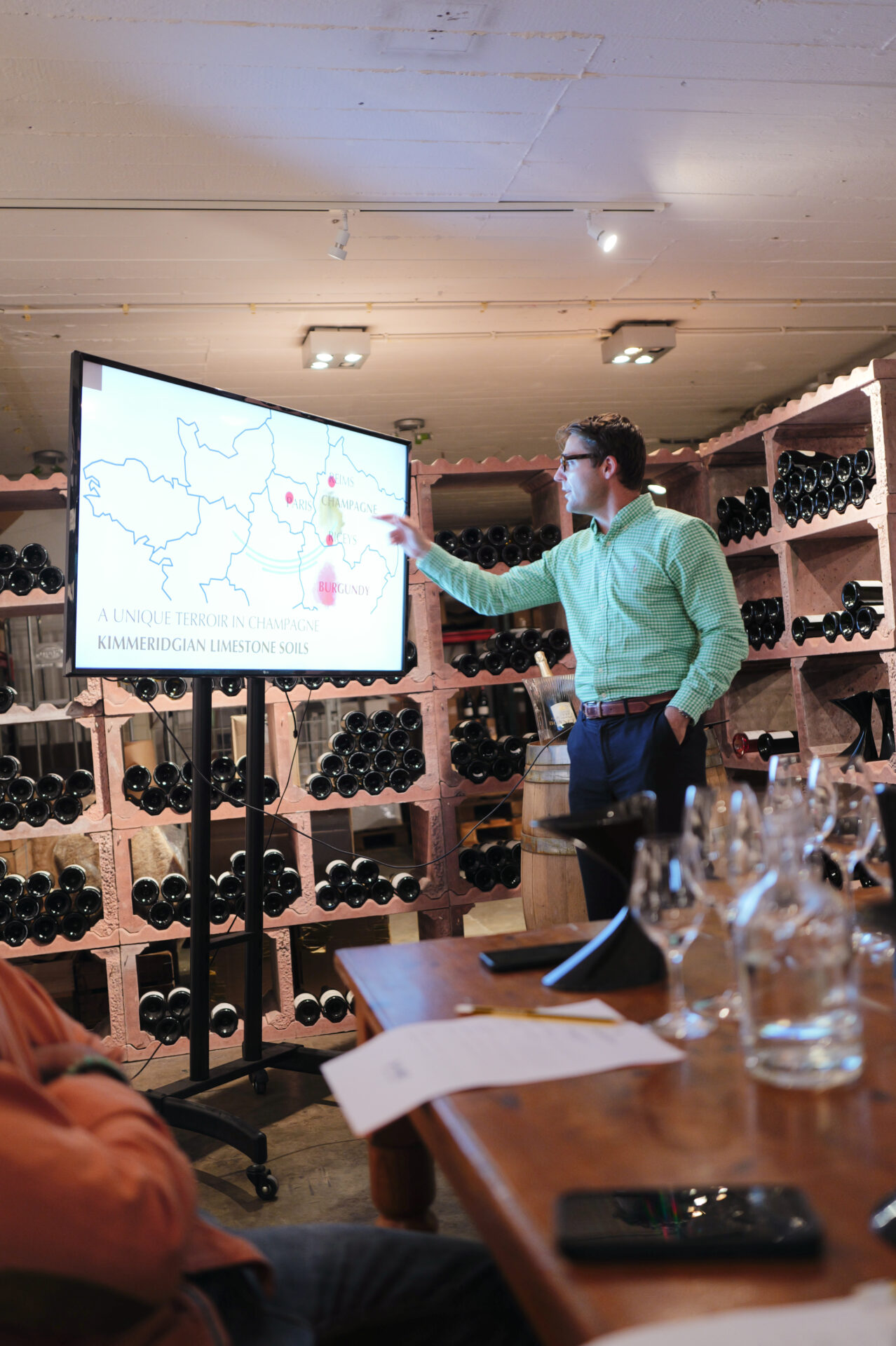
Last month, I had the privilege of attending an exclusive masterclass on Les Riceys, organized by D-Vine Amsterdam. Nicolas Dupuis from Domaine Alexandre Bonnet guided us through a fascinating journey into this extraordinary wine region, showcasing eight exceptional wines that told the complete story of this unique terroir.
A Terroir Apart
The landscape here feels worlds away from the familiar chalk hills of Reims and Épernay. Steep slopes plunge dramatically into valleys carved by ancient rivers, creating some of Champagne’s most challenging vineyard sites. But here’s what makes it special: beneath these slopes lies Kimmeridgian limestone and clay subsoil—the same geological foundation that gives Chablis and Sancerre their distinctive character.
This shared terroir creates an unmistakable signature—crystalline minerality, vibrant acidity, and that distinctive saline finish that makes you reach for food. As Nicolas explained during our tasting, “In Champagne, sometimes cellar masters are looking for neutral wine to do the final blend, but this cannot happen in Les Riceys because there is a taste in the grape that you like or you don’t like.” The continental climate, moderated by altitude and aspect, produces grapes with remarkable concentration, particularly Pinot Noir, which has thrived here for over a millennium.
Three Expressions, One Village
The three AOCs tell Les Riceys’ complete story. Champagne production follows traditional methods but delivers a distinctly southern character—fuller-bodied, more structured wines that actually pair beautifully with food. These aren’t the light, ethereal bubbles of the north, but rather muscular sparklers with genuine aging potential.
Côteaux Champenois represents the region’s still wine heritage, producing reds and whites that could fool you into thinking you’re in Burgundy. However, it’s the Rosé des Riceys that genuinely captures the essence of this place. This rare AOC, produced from just 40-50 hectares within the 860-hectare appellation, creates wines that walk the line between rosé and light red—intense, spicy, and capable of aging for decades.
Here’s the catch: Rosé des Riceys production remains fiercely traditional. Whole-cluster fermentation, brief skin contact, and local judges who determine whether each vintage meets strict standards. It’s essentially wine archaeology in action.
What’s particularly fascinating, as Nicolas revealed during the tasting, is that even prestigious Champagne houses recognize the exceptional quality of Les Riceys. Krug, the legendary house, owns six hectares of vineyards in Les Riceys specifically for their Krug Rosé, drawn to the region’s distinctive fruitiness and spicy characteristics that only this limestone-clay terroir can provide.
A Journey Through Eight Wines
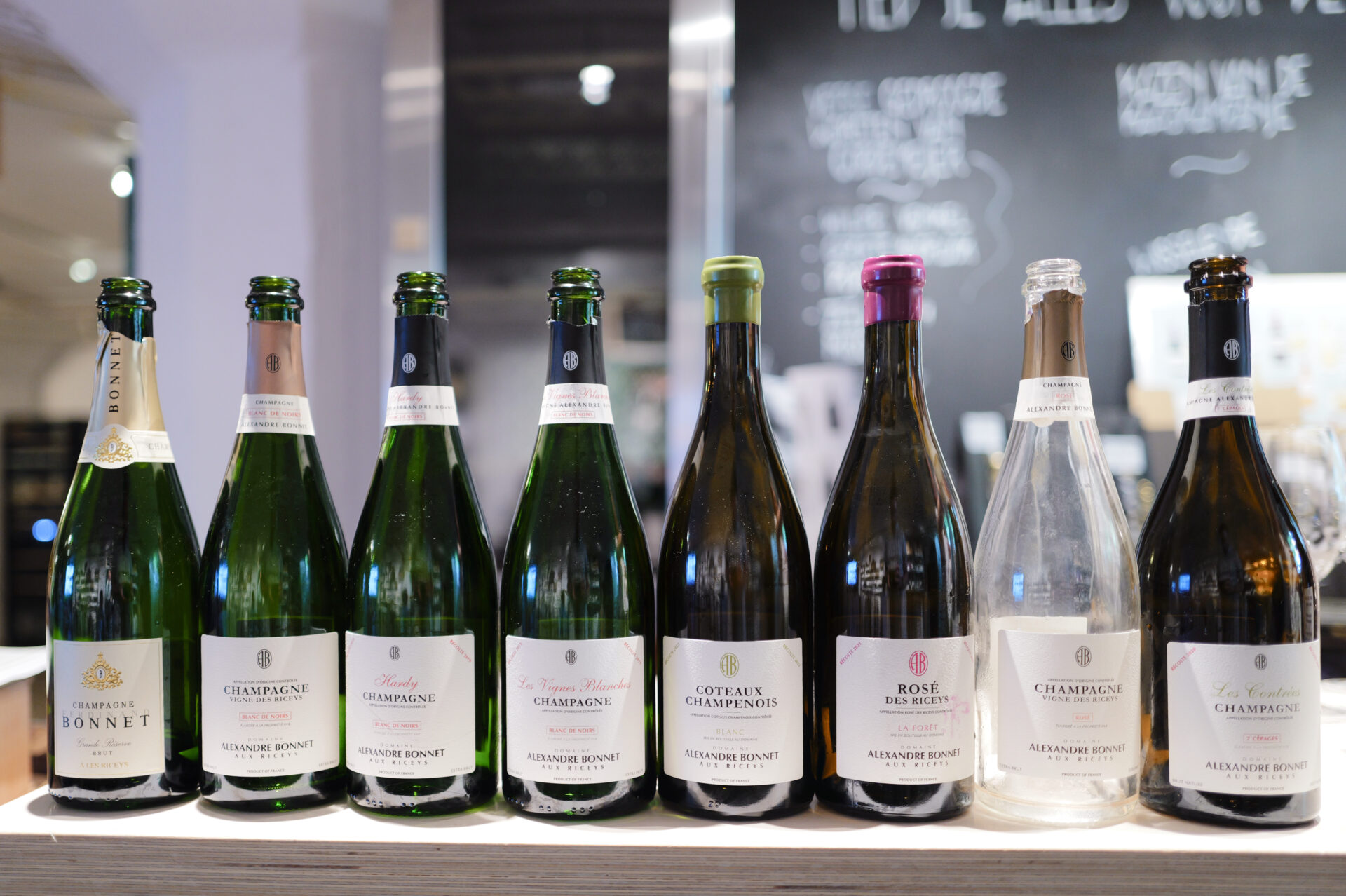
Our tasting began with Ferdinand Bonnet Grande Réserve (80% Pinot Noir, 20% Chardonnay), representing the more approachable side of the portfolio. Fresh and fruity with classic Pinot Noir structure, this 36-month-aged Champagne reveals the house’s commitment to quality, even at the entry level—no shortcuts, just honest winemaking with that characteristic Côte des Bars saltiness calling out for food.
The Alexandre Bonnet Blanc de Noir Extra Brut showcased the pure expression of Les Riceys terroir. Made from 100% Pinot Noir with a dosage of just 4 grams, this wine displayed remarkable depth—white peach and pear on the nose, with the signature mineral backbone and saline finish. The color alone, distinctly golden with reddish reflections, announced its Pinot Noir heritage.
The real revelation came with the single vineyard comparison: “Hardy” and “Vigne Blanche,” both vintage 2019 Blanc de Noir from different exposures. Hardy, from north-facing slopes, delivered crystalline precision—almost Chablis-like with its razor-sharp minerality and citrus focus. Vigne Blanche, from southeast-facing slopes, offered more completeness and umami complexity, with exotic fruit notes and that distinctive saltiness that defines Les Riceys.
The Côteaux Champenois Blanc 2022 surprised with its Burgundian character—a blend of 60% Pinot Noir and 40% Chardonnay that could easily pass for a village-level white Burgundy. Floral and fresh with remarkable aging potential, it demonstrated the versatility of this unique terroir.
Rosé des Riceys from the single-vineyard “La Forêt” proved why this AOC deserves special recognition. Wild strawberries, red berries, and subtle spice created a wine that straddles the line between rosé and light red—intense enough to age for decades yet fresh enough for immediate pleasure.
The Alexandre Bonnet Rosé Champagne (vintage 2019, 94% white wine and 6% red wine, both from Pinot Noir) showcased the more traditional approach to Champagne rosé, delivering the house’s signature fruitiness with elegant bubbles and a food-friendly structure.
Finally, the Sept Cépages (Seven Grapes) showcased Nicolas’s experimental spirit—all seven permitted Champagne varieties from a single vineyard, making Alexandre Bonnet the world’s largest owner of rare Arbane grapes. This Brut Nature revealed unexpected floral and herbal complexity, with each grape variety contributing its unique personality to an utterly distinctive blend.
When Tradition Meets Challenge
Producers like Alexandre Bonnet exemplify the region’s philosophy—terroir-driven, low-intervention methods that prioritize authenticity over marketability. Extended lees aging, minimal dosage, and careful vineyard selection create wines with remarkable depth. Nicolas shared fascinating insights about their experimental approach, including their ambitious “Sept Cépages” (Seven Grapes) project—a single vineyard planted with all seven permitted Champagne varieties, making Alexandre Bonnet the world’s largest owner of the rare Arbane grape variety with 1.4 hectares.
Yet this pursuit of quality isn’t without challenges. The region’s isolation limits recognition, while climate change tests even the most experienced vignerons, forcing them to make complex adaptations. Nicolas candidly shared the harsh reality of 2024, when Alexandre Bonnet lost 95% of their harvest despite being largely organic, forcing painful decisions between principles and practicality. “When you have really bad vintages, being organic is not always the perfect solution,” he admitted, highlighting the constant balancing act between sustainability and survival.
Why Les Riceys Matters
Les Riceys represents everything compelling about French wine diversity—where geological accident creates liquid poetry, and passionate vignerons preserve ancient methods against commercial pressure. These aren’t wines for casual consumption but rather expressions of place that demand attention and reward patience.
For wine lovers seeking authenticity in an increasingly homogenized world, Les Riceys offers a glimpse into Champagne’s soul before marketing eclipsed terroir. When you find these rare bottles, don’t hesitate—they tell the story of a village that chose character over convenience.
Special thanks to D-Vine Amsterdam for organizing this enlightening masterclass and to Nicolas Dupuis for sharing his knowledge and passion for Les Riceys. Visit: www.d-vine.eu/ for more information about Alexandre Bonnet wines.