

Vignerons du Terroir: Forty Grower Champagnes Tasted
Report from Vignerons du Terroir 2023 in Utrecht. Forty grower champagnes tasted, the trends, and a 2009 Maison Jean Laurent that lingers.
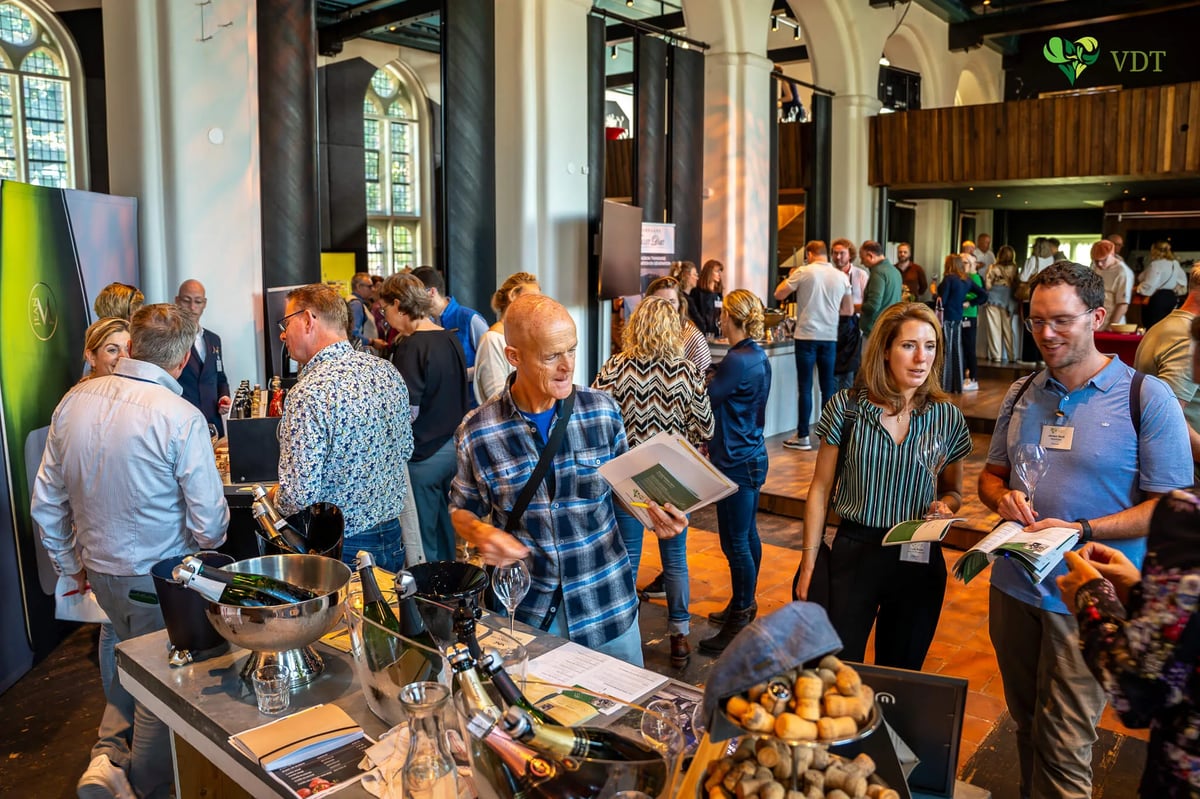
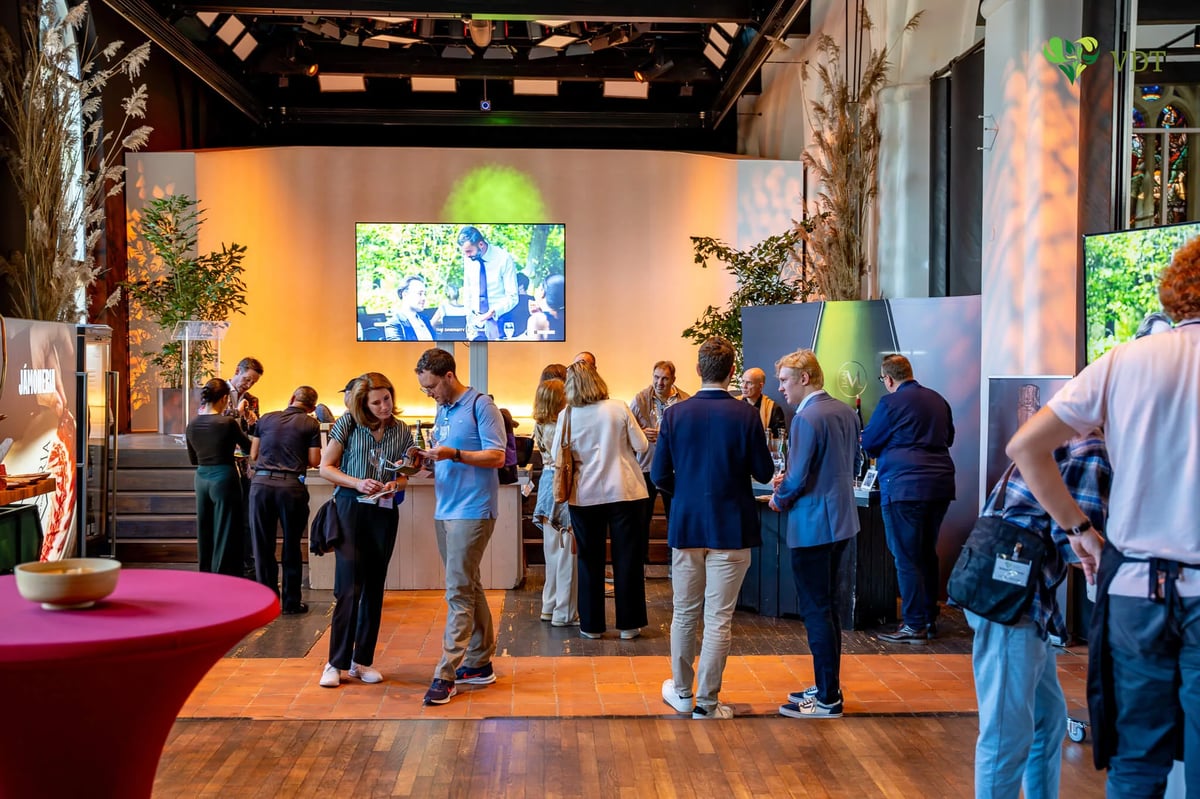
Sunday October 1st 2023, Gasthuis Leeuwenbergh in Utrecht is full of vignerons. No big brands, no marketing machines. A hundred grower champagnes, ham from Pyrenean black pigs, masterclasses by Anja Vondenhoff, and organisers Jaqueline Smit, Jasper Tasseron and Manon de Boer running the event for the third year. This is Vignerons du Terroir, and the tone is different from the larger champagne fairs.
The Event
A handpicked group of importers presents champagnes from small families. Alongside the wines: masterclasses and stands with cheese, chocolate and specialties. A hundred bottles open. Forty I could taste with attention.
What Is a Vigneron Champagne?
A vigneron makes champagne from their own grapes on their own estate. No bulk-buying, no industrial scale. From pruning to disgorgement, the same family does everything. On the label you spot it as RM, Récoltant-Manipulant.
The difference with the major houses sits in scale and voice. A vigneron has no room for anonymity; every bottle carries the signature of a parcel.
Highlights
Tasted at Bubbelbroeders | bubbelbroeders.nl
René Rutat | Blanc de Blancs Millésime 2019 (€36.95). Fresh and wild, brioche, apple, pear, medium acidity.
Michel Rutat | Lignum Millésime 2019 (€39.95). Fresh and dry, coconut, vanilla, fine tension.
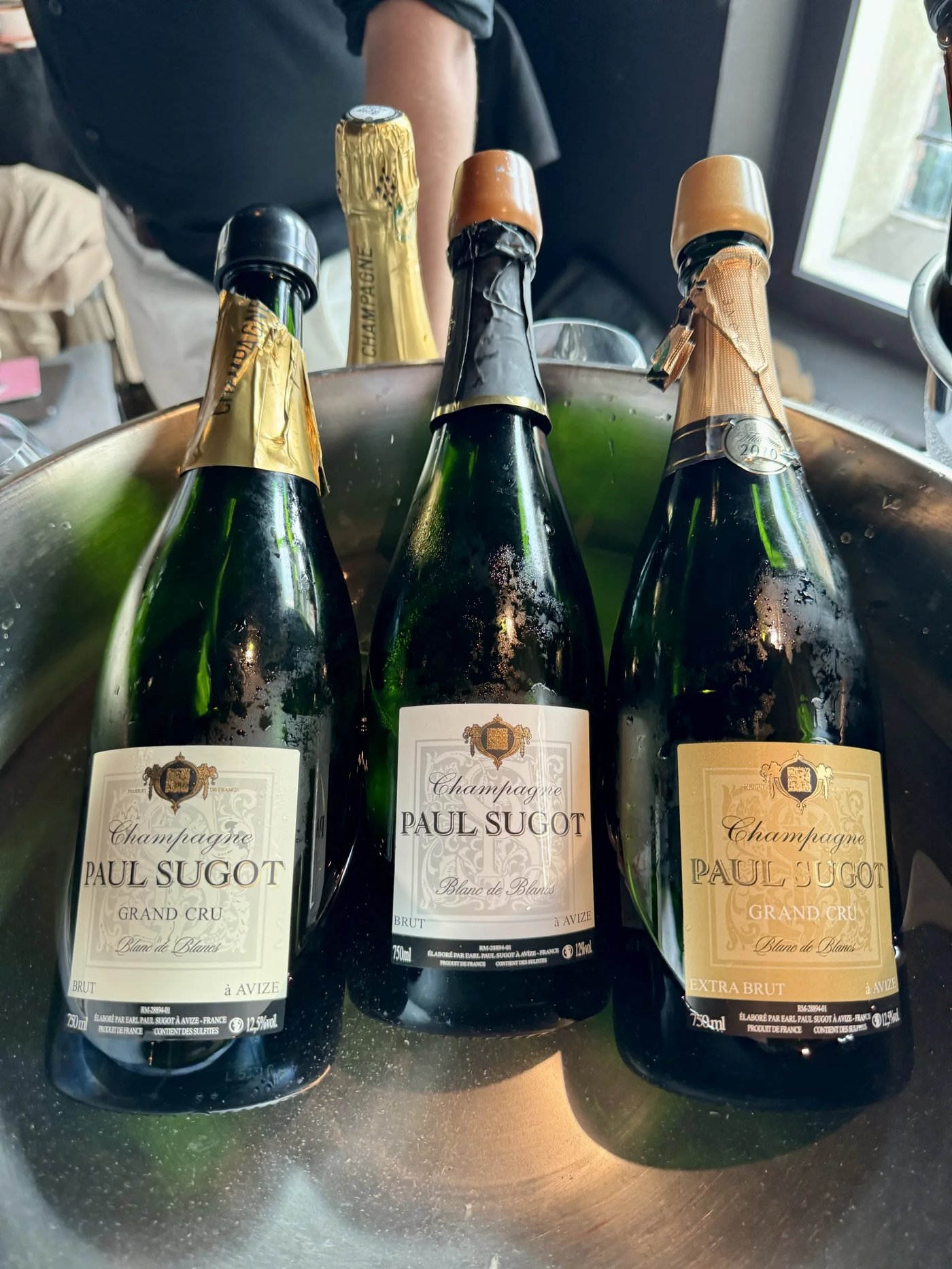
Paul Sugot | Grand Cru Vieilles Vignes (€46.95). Best of three Sugots. Full but not woody, refined mousse, vanilla and brioche, fruit and spice in balance.
Tasted at Dis Donc | disdonc.nl
Marie Copinet | Blanc de Blancs Côte de Sézanne (€90 magnum). Soft, pure, fresh, pear and apple, medium acidity.
Solemme | Plénitude de Solemme (€45). Blissfully fresh, creamy, wild peach.
Henri Blin | Blanc de Noirs Extra Brut (€34.50). Elegant, mineral, refined acidity, full finish.
R. Pouillon | Grande Vallée Extra Brut (€54). Spicy and herbaceous, sage, ripe pear, full-bodied.
Tasted at Halfes | halfes.nl
Jean Baillette Prudhomme | Brut Réserve (€17.99 for 37.5 cl). Fine mousse, soft, ideal aperitif. Pear, subtle yeast, spicy finish.
Jean Baillette Prudhomme | Millésimé 2012. A powerful champagne full of energy. Fruit, spice, brioche, yeast, fine mousse.
Tasted at My Champagne Moment | mijnchampagnemoment.nl
Maison Jean Laurent | Blanc de Noirs Millésime 2009 (€85). Voted best champagne in the world in 2022, and you understand why. Fine mousse, bubbles that move gently in the mouth. Aromas range from pear and spice to brioche and wet stone. Flint, peach, dried herbs, long refined finish.
Maison Jean Aubry & Fils | Brut Tradition (€33.95). Smooth, refined notes of pear and apple.
Maison Jean Aubry & Fils | Cuvée Prestige (€37.95). Soft on the nose, brioche, vanilla, pear, apple, coconut. Layers that alternate.
Maison Philippe Legout | Cuvée Louis Desprez (€37.50). Price-quality knockout of the day. Dried green herbs, fine mousse, ripe pear and apple, medium-plus acidity, long finish. Served at owner Joshua’s wedding, which says enough.
Tasted at Jámoneria by Rick | jamoneria.nl
Not wine, but ham. Rick de Moed works with European hams and French specialties. Jambon Noir Bigorre, Rosette Lyonaise Porc Noir, Chorizo Porc Noir Bigorre, and a fresh ham whose name escapes me. Watch his site, something new is coming.
2023 Trends
Organic and biodynamic. More houses going for certification. A long, costly process, but more labels carry it now.
Own equipment. Vignerons investing in their own kit for second fermentation in bottle. Look for RM on the label.
New generations. Innovation alongside craft, with more freshness in the glass.
Freshness matters. Eye-opener: drink champagne within six months after disgorgement. Many makers say quality drops after that. Don’t cellar, open.
Food pairing. Not just aperitif. Anja Vondenhoff’s masterclass showed how bubbles play with food. Trickier than still wine because the mousse adds its own character.
What I Take Home
Major brands buy grapes from many growers, often vignerons.
Vignerons keep their best grapes and sell the rest.
Vigneron champagne reflects terroir; everything in one hand.
Strong years yield a Millésime, vintage on the label.
Sometimes vignerons blend across strong years for extra expression.
Single-grape champagnes (Chardonnay, Pinot Noir, or Pinot Meunier) show both grape and terroir more clearly. Several cuvées from the same maker, same village, different grapes, is a direct lesson in origin.
Price-quality typically lands €30-€35. Major brands cost more and aren’t automatically better.
Closing
Vigneron champagnes tell a story the big houses can’t. Land, vines, terroir, one hand. The diversity on this floor makes it tangible. Thanks to Jaqueline, Jasper and Manon for organising and inviting VinoVonk. Cheers.
More information:
Dis Donc: disdonc.nl Champagne Moutardier Netherlands: champagne-moutardier.nl Manon de Boer: toostaantafel.nl
Sources
- Vignerons du Terroir (tasting event organiser): vigneronsduterroir.nl
- Comité Champagne (CIVC), grower champagne: champagne.fr
More on Events
Dutch Vineyard Open Days 2026: 36 Vineyards Open
36 Dutch vineyards open their gates this September. Every participant, date and opening time, plus what the official calendar leaves out.
Read on →
A sherry course in the Netherlands, four nights
A dedicated sherry course in the Netherlands, taught by certified Sherry Educator Nadien de Visser. Four sessions, 28 wines, 290 euros. What it covers.
Read on →
La Grande Bellezza 2026: Italian Wines in Amsterdam
La Grande Bellezza 2026 brought eight top Italian wines to Amsterdam. My day across Alto Adige and Tuscany, with two Brunello 2021s side by side.
Read on →