

Mullay-Hofberg Riesling: A Century of Old Vines
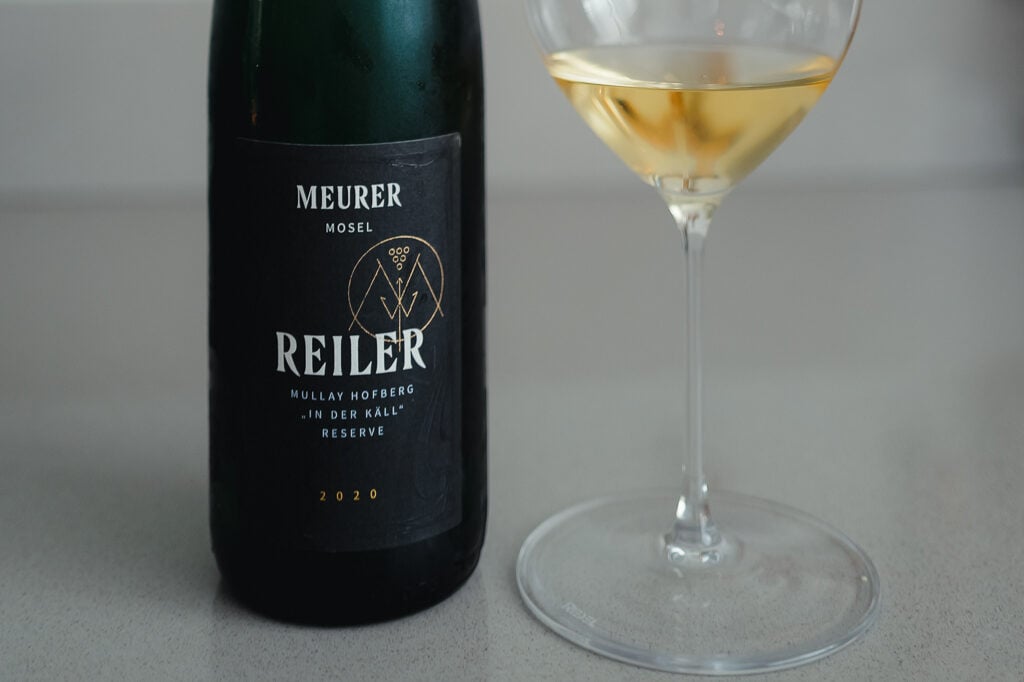
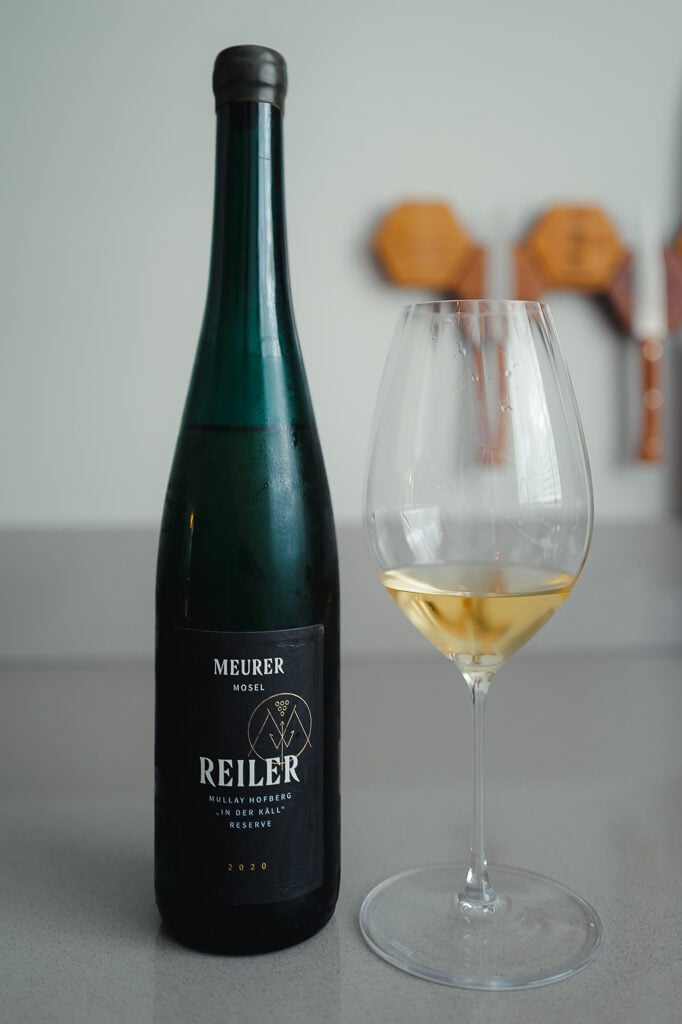
Reiler Mullay-Hofberg 'In der Käll' Reserve 2020 from Weingut Meurer: Mosel Riesling from vines planted 1900-1970, raised 18 months in fuder.

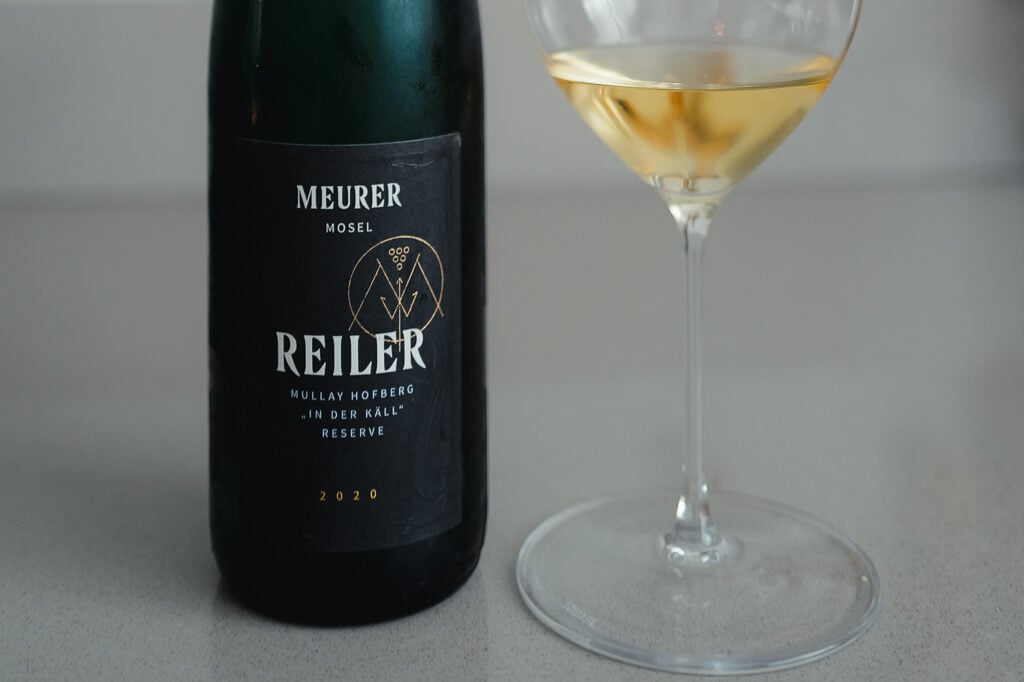
Vines planted between 1900 and 1970, at 9,000 per hectare against the standard 4,000. Some have lived through two world wars, two currency resets, and a century of climate swing. The Reiler Mullay-Hofberg “In der Käll” Reserve 2020 from Weingut Meurer is not an entry-level pour you finish and forget; this is Riesling from a specific site with more than a hundred years of root memory.
“In der Käll”: the site
The name means “in the cool place.” The vineyard sits in a natural amphitheatre formed by old slate quarry walls that block wind. The Burger Bach runs underneath and cools on hot days. The combination of warmth (rock-face reflection), drainage (disturbed mining soils) and cooling (running water) keeps vines not only alive but productive, well past the age at which most riesling stocks are pulled.
What old vines actually do
Mature 50+ year roots reach metres deep and mine minerals younger plants don’t access. At century-old vines, natural yield reduction kicks in too; the plant carries less fruit, with more concentration. That’s separate from anything the grower can force through pruning.
Vinification
Harvest 19 October 2020. By hand, in 30-litre crates to avoid bruising on slopes too steep for machines. Four hours skin contact to extract aromatics. Pneumatic press, fifteen hours gravity settling, no fining.
Nine months of spontaneous fermentation on full lees in 1,000-litre stainless tanks; no commercial yeast, no temperature forcing. Then nine months on fine lees in traditional 1,000-litre German fuder. Unlike barriques, fuder add almost no oak flavour; they give gentle oxidation and texture. Bottled unfiltered in June 2022.
In the glass
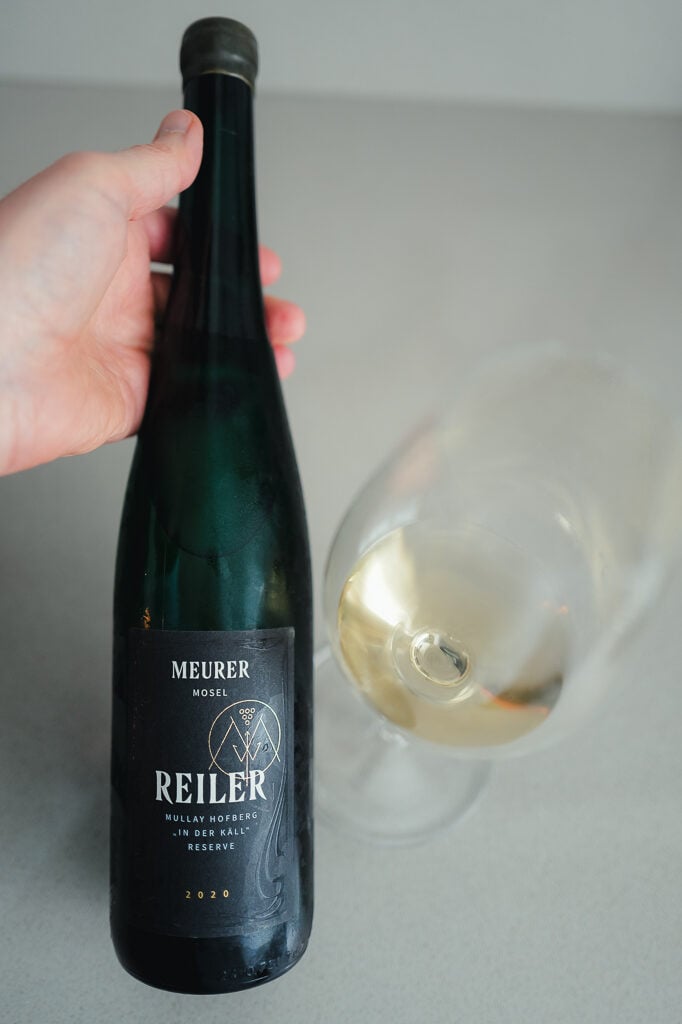
Deep yellow. The nose opens with yellow stone fruit and citrus, with a herbal layer beneath built up by the lees. Each swirl shifts the picture; slate becomes wet stone, lemon zest turns into yellow peach.
The palate brings creamy texture against sharp Mosel minerality. High acid, fine weave, no residual sugar pulling focus. The finish is long and mineral, with the saline bite that marks the Mosel of Reil. 12% alcohol; enough weight without losing balance.
At the table
Roast goose or duck (German classic, for good reason). Wild mushrooms, smoked salmon, slow-cooked pork shoulder. For modern direction: scallops with cauliflower purée, truffle pasta, aged German Bergkäse.
Buy and cellar
Around €40-50 per bottle. Limited production, unfiltered, with at least ten years of evolution in the bottle. Drinking peak estimated 2030-2035, given cool storage out of light.
Verdict
Not every bottle needs stories about age, terroir or cellar potential to make an impression. This one does, and it earns it. For drinkers wanting to know Riesling at its most mineral-driven, and willing to give it time in the glass, a direct recommendation.
Thanks to Amelie Meurer for the bottle.
Sources
- Wines of Germany: germanwines.de
- VDP: vdp.de
More on Wine Review
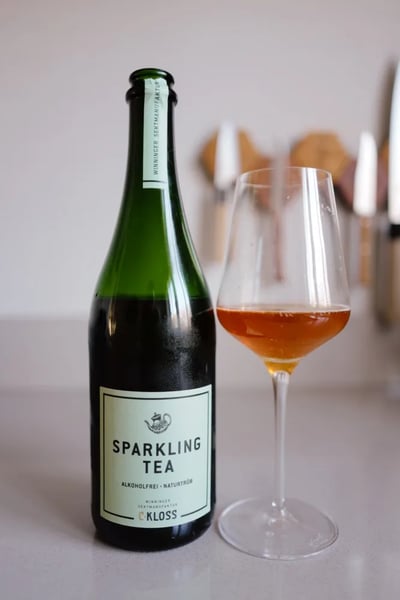
C. Kloss Sparkling Tea Weiss: Fermented Celery
Non-alcoholic sparkling tea Weiss from C. Kloss: linden blossom, nettle and fermented celery. Dry, 2.7 g sugar per 100 ml, €14.99 at Amavine.
Read on →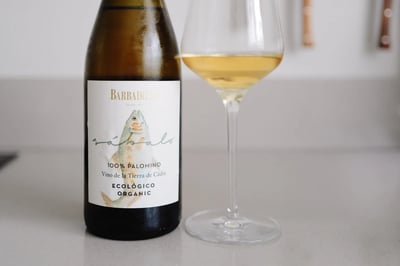
Barbadillo Sábalo: Organic Palomino Without Flor
Organic Palomino Sábalo from Barbadillo: no flor, salt from albariza soil. Chamomile, apple, sea. €17.95 at Granada Wijnen, with discount code.
Read on →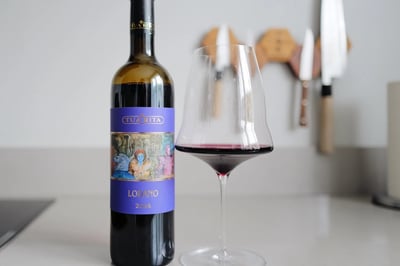
Tua Rita Lodano Rosso 2024: Petit Verdot Leads
A €50.95 Super Tuscan built on 60 percent Petit Verdot and 18 months of barrique. Why I chill it, decant it and never drink it without food.
Read on →