

French Bloom + LVMH: how alcohol-free grew up
Moët Hennessy took a minority stake in French Bloom. A year later the brand bought 25 hectares in Limoux. What does that say about premium alcohol-free?
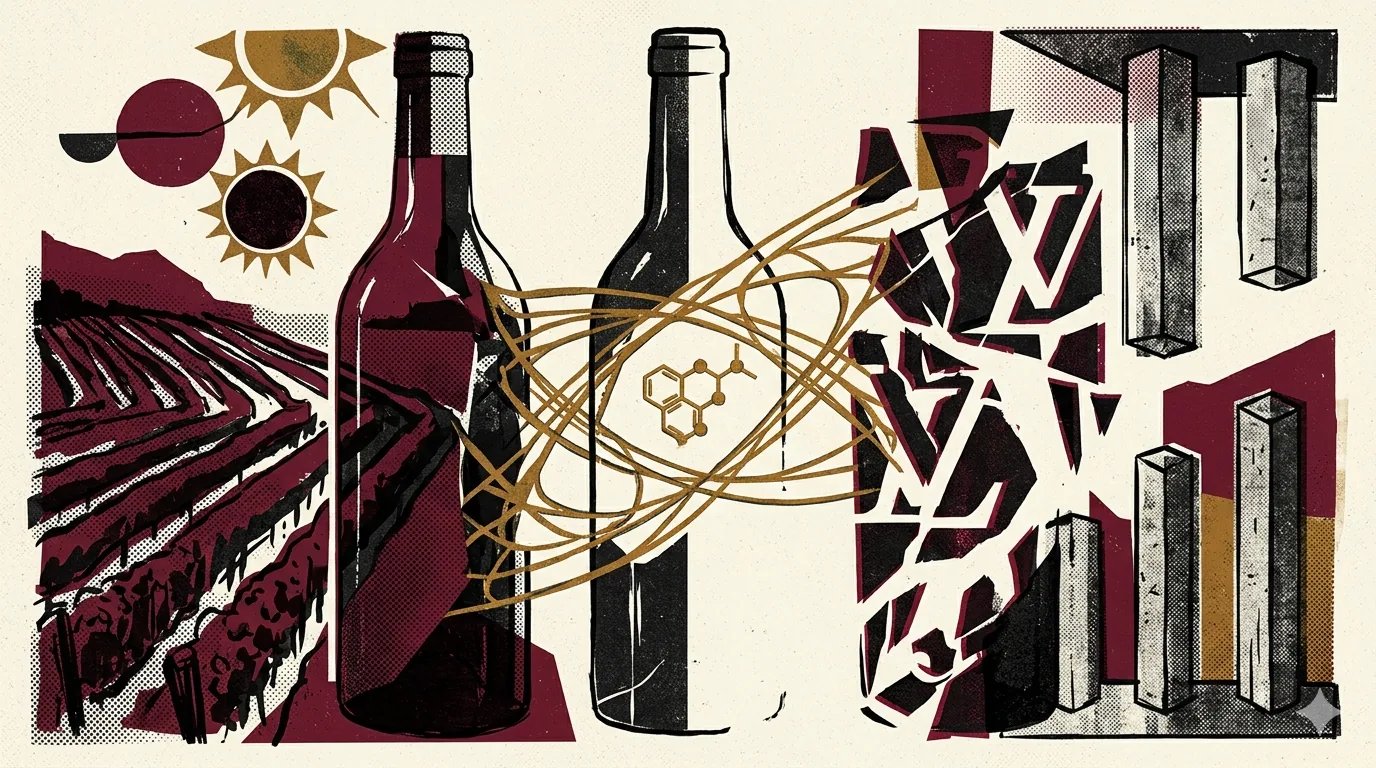
LVMH is buying into an alcohol-free sparkling brand.
The same group that owns Dom Pérignon, Krug and Moët & Chandon. The same group whose wine division is called Moët Hennessy. On 2 October 2024 it became official: minority stake in French Bloom, the Paris brand that has now won World’s Best Non-Alcoholic Sparkling Wine three years running.
A year later, that same brand bought 25 hectares in Limoux. Organic, fully operational by September 2026. No longer a grape buyer, own vineyard, own harvest, own dealcoholisation.
That’s how a new wine category grows up. Not through the tenth lifestyle bottle on a supermarket shelf, but through the world’s largest luxury conglomerate buying a vineyard for wine without alcohol.
The deal: what officially stands
The Moët Hennessy press release is clear about what it is and what it isn’t. Verbatim: “Moët Hennessy, the Wines and Spirits division of LVMH, is pleased to announce a strategic investment in French Bloom, the market leader in prestige alcohol-free sparkling wines, through the acquisition of a minority stake.”
What’s missing: the percentage. And the transaction value. Both deliberately undisclosed. The Wall Street Journal (via Shanken News Daily) reported 30 percent, without official confirmation that remains an editorial estimate.
What is public: the strategic rationale. Philippe Schaus, CEO of Moët Hennessy, in the official press release: “This investment aligns with Moët Hennessy’s key strategic initiatives, demonstrating our commitment to offering high-quality alcohol-free choices to consumers who moderate their alcohol intake.”
The press release itself positions the investment explicitly as a response to structural change in consumer behaviour, not a passing trend. That framing, structural, not cyclical, runs through all official communications. That’s where the entire investment lives.
Two women, no wine background
French Bloom starts in 2019 in Paris as an idea between two friends living on different continents. Maggie Frerejean-Taittinger comes from the Frerejean-Taittinger family (Rodolphe Frerejean-Taittinger leads Champagne Frerejean Freres), a Champagne family connection, no formal role at that house. Constance Jablonski is an international model with Estée Lauder campaigns in her portfolio and no wine background. Official launch: October 2021.
What they did differently from earlier alcohol-free sparkling brands: they did not position the product as a pregnancy drink, not as a sobriety alternative, not as a health product. Premium, lifestyle, “everyone at the table”. A bottle to sit next to your Champagne, not instead of it.
Production method: low-temperature vacuum distillation under 32°C. Preserves aromatics, no oxidative flavour loss that earlier dealcoholisations typified. Organic grapes, vegan, no sulphites, no added sugars. One calorie per glass.
In three consecutive years, through 2025, French Bloom was named World’s Best Non-Alcoholic Sparkling Wine at the World Sparkling Wine Awards. Three years running is not luck, that’s a product winning blind against the field.
Limoux: why there, why now
The Limoux move is more than a real-estate purchase. Limoux is one of France’s oldest sparkling wine regions, with method-traditions older than Champagne on paper (Blanquette de Limoux, 1531). Decanter describes the area as a place of “great purity, precision and aromatic complexity” in organic viticulture.
French Bloom was already sourcing grapes here under contract. Ownership means: control over picking timing, organic certification down to the field, traceability for the premium consumer who increasingly demands it.
What is not public: which grape varieties specifically will be planted or managed on the 25 hectares. No official statement. What is clear: the entire dealcoholisation step remains in-house. That means the proprietary vacuum distillation method is no longer dependent on external contracts.
The market context
The global non-alcoholic wine market stood at $2.5 billion in 2025 according to Grandview Research. Projection for 2026: $2.7 billion, growth of 6.8 percent. Longer term, the same report projects a CAGR of 10 percent through 2033, with the market heading toward $5.3 billion.
Two sub-figures that support the French Bloom strategy:
- Sparkling = 59.6 percent of the non-alcoholic wine category globally in 2025
- North America = 48.4 percent of that global market
In other words: more than half the non-alcoholic wine sold globally is sparkling, and nearly half of that volume is sold in the US. The Southern Glazer’s distribution deal of October 2025, French Bloom across 22 US states, fits exactly that geographic logic.
Familia Torres and the other side of the proof
French Bloom is not alone in this space. Familia Torres has been selling Natureo, the dealcoholised line, for years, and at Mundus Vini Non-Alcoholic 2026 the producer took “Best Producer Spain” plus a Best of Show recognition.
The difference is framing and positioning. Torres positions Natureo as a brand extension of an established family company with heritage. French Bloom was built from the ground up for the alcohol-free category. Both approaches work, Torres has heritage, French Bloom has authentic category positioning without the shadow of an alcoholic parent line.
For the consumer this means the premium alcohol-free category now has two globally distributable anchors: one from a Spanish family wine company, one from a Paris founder-driven brand with LVMH backing.
What’s actually happening here
LVMH doesn’t invest in scepticism. When Moët Hennessy writes publicly about “structural change in consumption behaviour, well beyond a mere passing trend”, alongside their Dom Pérignon portfolio, Krug portfolio, Moët & Chandon portfolio, that’s internal acknowledgement that the alcohol-free segment isn’t a cannibalisation risk but a complementary portfolio opportunity.
For you as a consumer this means three things:
- Prices stay high. $40 to $100+ per bottle at French Bloom. Not coincidence, positioning.
- Distribution gets broader. Expect French Bloom in more hotels and specialist retailers, not in mass-market grocery.
- Competition is coming. Freixenet launched its first super-premium alcohol-free sparkling (Diamond 0.0%) in April 2026. Other houses will follow.
For the wine industry as a whole it means: the premium alcohol-free sparkling category is no longer in the phase where you debate whether it exists. That phase is over. The question now is who becomes the second and third major player, alongside French Bloom and Torres Natureo.
And perhaps more importantly: whether LVMH’s investment becomes a blueprint for other large conglomerates. Pernod Ricard, Diageo, Constellation Brands, all of them are watching what was set in motion on 2 October 2024.
Frequently asked questions
How much of French Bloom did LVMH buy?
That has not been disclosed. Moët Hennessy’s press release describes a strategic investment through a minority stake, with no percentage and no amount. The Wall Street Journal reported 30 percent, picked up by Shanken News Daily, but without official confirmation that remains an editorial estimate.
Why is French Bloom buying vineyards in Limoux?
For control of the chain. French Bloom already sourced fruit there under contract; owning the 25 hectares brings control over picking dates, organic certification down to the field, and the traceability premium buyers increasingly demand. Limoux is also one of France’s oldest sparkling regions, with Blanquette de Limoux dating to 1531, older on paper than the Champagne method.
What does this investment say about alcohol-free?
That the largest luxury groups treat it as structural rather than a fad. That framing runs through all the official communication: a shift in consumer behaviour, not a passing trend. What stays undisclosed is which grapes go on those 25 hectares; what is clear is that dealcoholisation stays in-house.
Sources
- Official LVMH/Moët Hennessy investment announcement (2 Oct 2024): PRNewswire, Moët Hennessy announces strategic investment in French Bloom
- Schaus quote + Southern Glazer’s deal: just-drinks, French Bloom & Southern Glazer’s distribution
- Reported 30% stake (Wall Street Journal via Shanken): Shanken News Daily, Moët Hennessy to take 30% stake in French Bloom
- Drinks Business no/low sparkling analysis: Are sparkling wine producers worried about no/low fizz?
- Limoux estate (25 ha, operational Sep 2026): Trendwatching, French Bloom becomes world’s first alcohol-free sparkling wine with its own estate · Shanken News Daily, news briefs December 2, 2025
- French Bloom origin + founders story: French Bloom official story
- Non-alc wine market data: Grandview Research: Non-Alcoholic Wine Market Report
- Torres Mundus Vini 2026 awards: Torres, Best Producer Spain at Mundus Vini Non-Alcoholic 2026
- Freixenet Diamond 0.0% launch (April 2026): The Drinks Business, Freixenet launches super-premium alcohol-free sparkling wine
- Limoux region context: Decanter, Limoux latest releases tasted
- IWSR 2026 outlook: IWSR, Six key drivers shaping beverage alcohol in 2026 and beyond
More on Non-Alcoholic
Ron Gastrobar's alcohol-free wine list, minus the wine
The Ron Gastrobar alcohol-free wine list runs on tea and fermented drinks. Sommelier Jacob van Benthem explains why that beats dealcoholised wine.
Read on →
Non-Alcoholic Sparkling Tea, Rewritten by Kloss
Non-alcoholic sparkling tea from the Mosel: fermented celery, wild orchard apples, 0.0%. Five bottles from C. Kloss tasted, with pricing and where to buy.
Read on →
Drink Less, Drink Better: The No/Low Shift of 2026
Drinking less but better is a taste decision, not a diet. What the 2026 no/low numbers mean, and when alcohol-free actually holds up in the glass.
Read on →