

Cul Sec 2025: When Unripe Grapes Become Gold
Cul Sec's 2025 cuvée builds an alcohol-free wine alternative on verjus from unripe grapes. What changed, what it costs and what remains unproven.
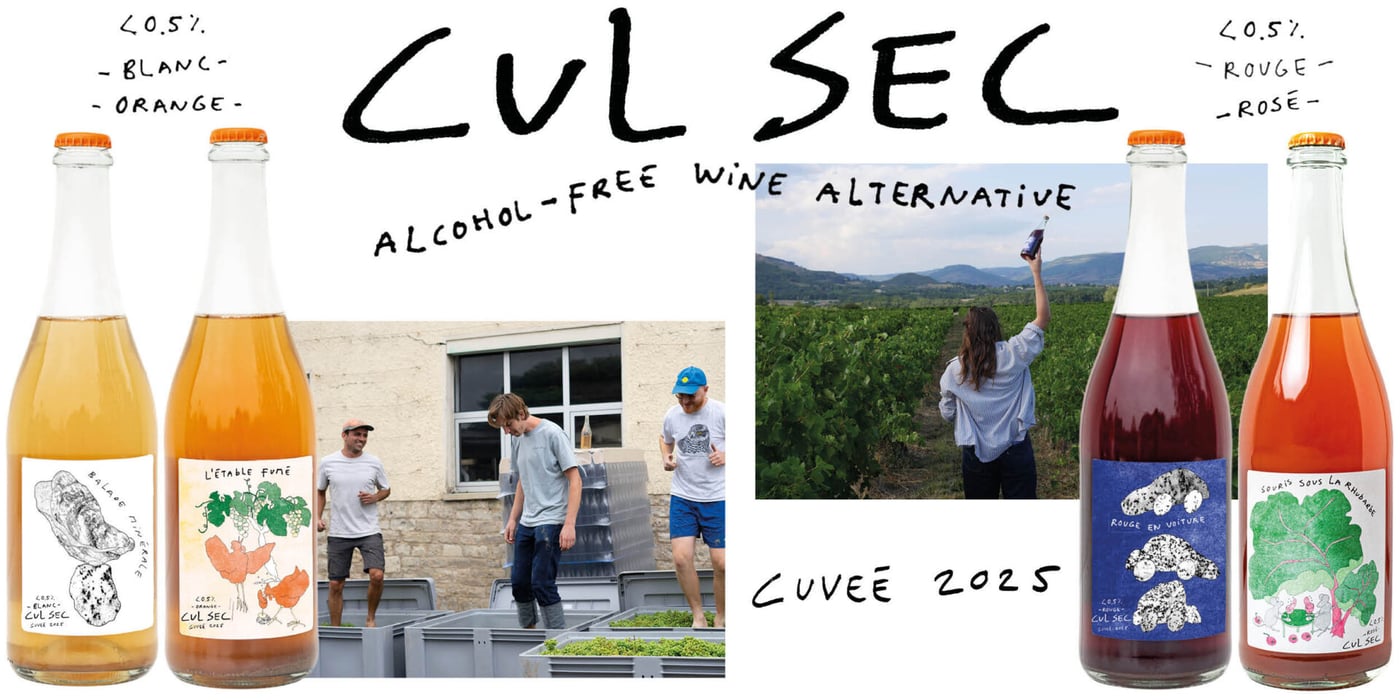
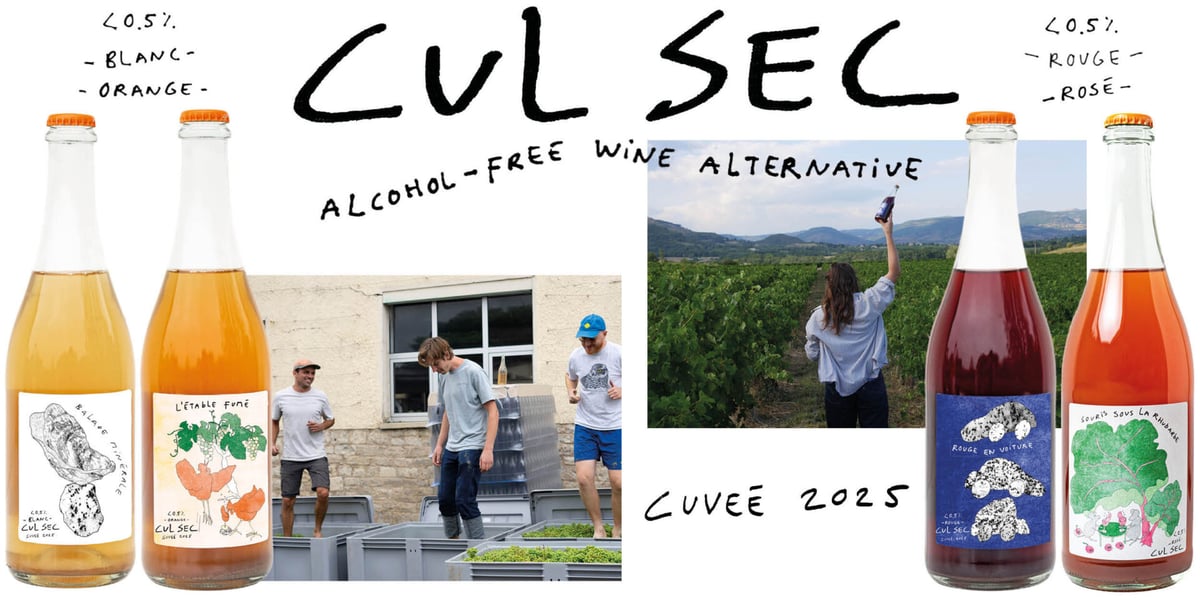
Cul Sec’s first cuvée, the 2024, sold out within four months, according to the makers. For 2025 the Fruitslagers in Culemborg made ten times as much of their alcohol-free alternative to wine. This time the acidity comes from unripe grapes, the bunches a grower cuts away.
The waste that wasn’t
In summer, growers drop unripe bunches so the rest of the crop has room to ripen. The sharp juice pressed from those bunches is verjus. The Fruitslagers use it as the acid in the 2025 cuvée. A year earlier that role went mostly to green gooseberry and Japanese quince, they write on their Substack.
The grape juice is never fermented, Tom of the Fruitslagers writes on Substack. According to the press release, the makers looked for grapes with less sugar and plenty of tannin and acid. The Netherlands gets fewer hours of sun than the classic wine countries, and in their view that makes local grapes a good fit for Cul Sec.
Most of the 2025 grapes were grown outside the Netherlands. The Fruitslagers website lists Müller-Thurgau and Bacchus from Kitzingen in Germany, Viognier and Sauvignon from the Ardèche, and Pinot Noir and Kékfrankos from Nemesgulács in Hungary. Dutch grapes are in there too, some of them from Dassemus in Chaam. The makers do not say how large that share is.
Juice and pulp each have a job. According to the press release the pulp goes into lacto-fermentations on water kefir and kombucha, the lactic process familiar from sauerkraut. The verjus brings acidity and, in the makers’ words, mineral and oxidative notes.
Lab technique alongside craft
In September 2025, six weeks before the release, Emile of the Fruitslagers described on Substack what was going on in the test kitchen. One trial was extraction in an ultrasonic bath. High sound frequencies pull flavour out of an ingredient in a short time, where it would otherwise take a week or two. Blackcurrant leaf went in, and Douglas fir for the white.
Emile added that they were still testing. I found no confirmation that the technique made it into the finished bottles.
The wood changed as well. In 2024 the makers mostly used torrefied oak, chips from old barrels. For 2025 they tested fresher oak, oak bark and other kinds of wood. Vinegar sat in oak barrels and was then blended with the skins of unripe grapes, which gave a sour, tannic base for L’étable Fumé among others.
According to the label, that orange bottle also holds an infusion of alfalfa, chamomile and lemon verbena. The website says the hay is grown at the Schevichoven food forest.
There are four bottles: Balade Minérale (white), L’étable Fumé (orange), Souris sous la Rhubarbe (rosé) and Rouge en Voiture (red). The makers wanted the sugar lower. Emile writes that the red therefore has less straight juice and more lacto-fermented juice. Teas made from grape skins are meant to add tannin and body without extra sugar.
Scale and price
Making ten times as much is the first caveat, and the makers raise it themselves. Emile wrote that they were still testing the ultrasonic bath and curious how it would work at larger scale. The makers have not said how that turned out.
The second concerns the word dry. The cuvée would be drier than the last one, Emile wrote in September 2025. The label gives 3.5 grams of sugars per 100 millilitres, and 4.1 grams for the red. That is far less than grape juice and more than a dry wine.
Price is the third. In October 2026 the Fruitslagers webshop listed all four bottles at €17.50 for 75 centilitres. That money also buys a bottle of wine. Anyone who thinks of alcohol-free as the cheaper choice will have to adjust.
The sustainability story is the makers’ own account. They name blackcurrant leaf from De Nieuwe Bodem, hay from Schevichoven, apple cider vinegar from the cider maker Elegast and oak from Lanou Lanou. The bottle carries no organic certification. In Sparks episode 8, Fleur of the Fruitslagers explained that the grapes are organic but not every other ingredient is.
What I tasted myself
The cuvée has been on sale since 20 October 2025. I tasted all four bottles. So far I have written about one, the Rouge en Voiture. The tannins had grip, the acidity was bright and the sweetness of fruit juice was absent.
I have not yet written tasting notes for the other three. What this piece says about origin and technique comes from the label, the website and the press release. It is the makers’ account, and I could not check it.
Sources
- Cul Sec at the Fruitslagers (grapes per bottle, growers and partners): fruitslagers.nl/bedrijven/culsec
- Fruitslagers webshop, price: fruitslagers.shop/webshop
- Press release on the 2025 cuvée (sold out in four months, volume times ten, water kefir and kombucha), in Dutch, carried by De RestaurantKrant
- Emile of the Fruitslagers, Shaping the 2025 Cuvée, Substack, 8 September 2025 (ultrasonic bath, oak, sugar, scaling up)
- Tom of the Fruitslagers, The sour search, Substack, 28 July 2025 (verjus, unfermented juice)
- A Look Inside the Bottle, Substack, 7 January 2026 (label ingredients and nutritional values)
- Fête! Cul sec est arrivé!, Substack, 20 October 2025 (release)
- Conversation with Fleur of the Fruitslagers, Sparks episode 8
More on Non-Alcoholic
Ron Gastrobar's alcohol-free wine list, minus the wine
The Ron Gastrobar alcohol-free wine list runs on tea and fermented drinks. Sommelier Jacob van Benthem explains why that beats dealcoholised wine.
Read on →
Non-Alcoholic Sparkling Tea, Rewritten by Kloss
Non-alcoholic sparkling tea from the Mosel: fermented celery, wild orchard apples, 0.0%. Five bottles from C. Kloss tasted, with pricing and where to buy.
Read on →
Drink Less, Drink Better: The No/Low Shift of 2026
Drinking less but better is a taste decision, not a diet. What the 2026 no/low numbers mean, and when alcohol-free actually holds up in the glass.
Read on →